
Navigating the financial landscape of a foreign country often begins with a fundamental question: what is the money called? In the United Kingdom, the answer is steeped in over a thousand years of history, blending formal nomenclature with vibrant local slang. For investors, travelers, and those interested in personal finance, understanding the terminology, structure, and usage of UK money is essential.
The official currency of the United Kingdom is the Pound Sterling. It is the oldest currency in continuous use and remains one of the most traded and influential currencies in the global financial market. This guide provides an in-depth exploration of what UK money is called, how it is structured, and the cultural nuances that define its daily use.
The Formal Identity: Pound Sterling and the GBP
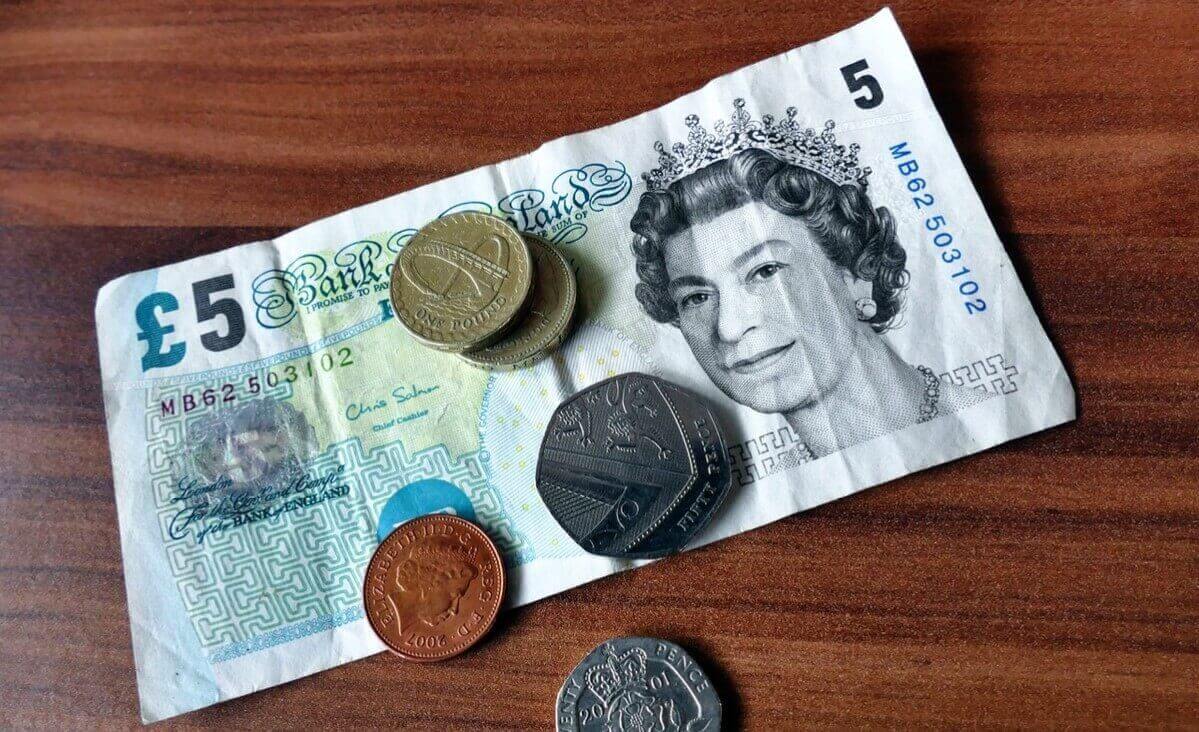
To understand what UK money is called, one must first distinguish between its formal names and its technical designations. The official full name of the currency is the Pound Sterling. However, in most contexts, it is simply referred to as “the pound.”
The Origins of “Sterling” and the Symbol (£)
The term “Sterling” is used to distinguish the British unit of account from other currencies that also use the name “pound,” such as the Egyptian pound or the Lebanese pound. Historically, the word is believed to derive from “Easterling,” referring to North German merchants who traded in silver during the 12th century, or perhaps from “steorra,” the Old English word for star, which appeared on early Norman coins.
The symbol for the pound is £. This symbol derives from the letter “L,” standing for libra, the Latin word for a pound of weight. Historically, a pound of currency was literally worth one pound of high-quality silver. In the international financial world, the currency is identified by the ISO code GBP (Great British Pound).
The Decimal System and the Penny
While the pound is the primary unit, it is subdivided into smaller units. Since “Decimal Day” on February 15, 1971, the pound has been divided into 100 pence. The singular form of pence is penny.
Before 1971, the UK used a much more complex non-decimal system involving pounds, shillings, and pence (where 12 pence made a shilling and 20 shillings made a pound). Today, the “new pence” (as they were called in the 70s) are simply referred to as “p” (pronounced “pee”). For example, a 50p coin is frequently called a “50p piece.”
The Language of the Street: Common Slang and Colloquialisms
In the UK, you will rarely hear people use the full term “Pound Sterling” in casual conversation. Instead, the British have a rich vocabulary of slang that is widely accepted in shops, markets, and even some business settings.
“Quid”: The Universal Alternative
The most common slang term for a pound is a quid. One quid equals one pound, and the term is used for both singular and plural amounts (e.g., “That coffee cost three quid”). The origin of the word is debated, but many historians believe it comes from the Latin phrase quid pro quo, meaning “something for something.” Unlike “pound,” the word “quid” never takes an “s” at the end; you would never say “five quids.”
Fivers, Tenners, and Beyond
Specific denominations of banknotes have their own nicknames based on their value:
- Fiver: A £5 note.
- Tenner: A £10 note.
- Pony: A slang term for £25 (though less common today).
- Monkey: London-centric slang for £500.
- Grand: A common term used across the English-speaking world for £1,000.
Understanding these terms is not just a matter of cultural curiosity; it is a practical necessity for managing personal finances and transactions within the UK.
Physical Currency: Notes and Coins in Circulation
The physical manifestation of UK money is managed by two primary entities: The Royal Mint, which produces coins, and the Bank of England, which issues banknotes. In recent years, the UK has undergone a significant technological shift in how its money is manufactured.
The Transition to Polymer Banknotes
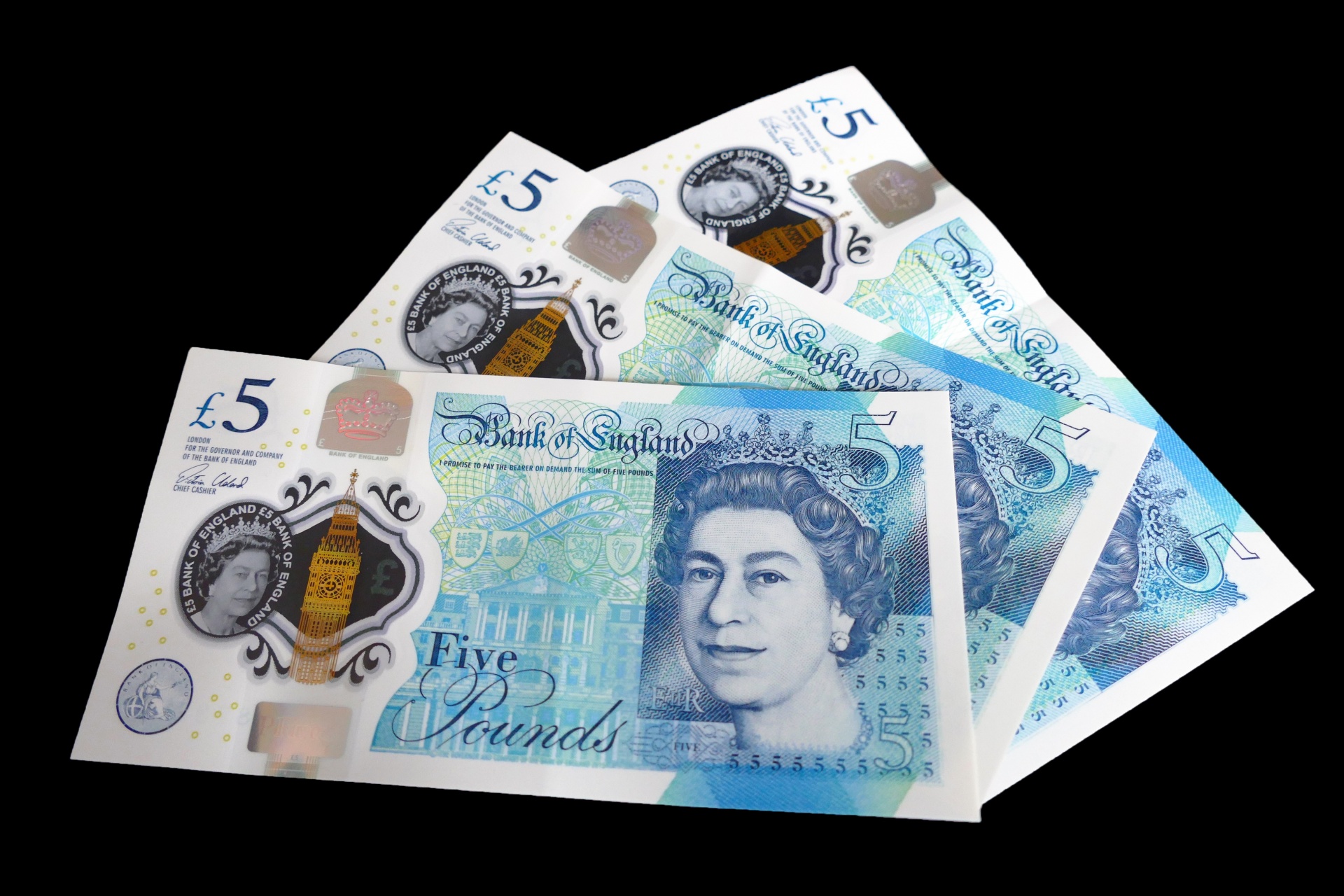
Between 2016 and 2021, the Bank of England phased out traditional paper banknotes in favor of polymer (plastic) notes. These notes—available in denominations of £5, £10, £20, and £50—are cleaner, more durable, and significantly harder to counterfeit.
Each note features a prominent historical figure alongside the reigning monarch. Following the passing of Queen Elizabeth II, new banknotes featuring King Charles III began entering circulation in 2024. It is important for those handling UK money to know that both versions (the Queen and the King) remain legal tender, provided they are the polymer variety.
The Breakdown of UK Coinage
The coins currently in circulation in the UK are:
- 1p and 2p: Copper-plated steel coins (often called “coppers”).
- 5p, 10p, 20p, and 50p: Silver-colored cupro-nickel coins. The 20p and 50p are distinct for their heptagonal (seven-sided) shape, making them easily identifiable by touch.
- £1: A distinctive 12-sided bimetallic coin introduced in 2017 to replace the older, easily counterfeited round pound.
- £2: The largest and heaviest circulating coin, also bimetallic.
For those tracking their small-change savings, “coppers” are often collected in jars and taken to “Coinstar” machines or banks, a common practice in British personal finance.
Regional Variations: Scotland and Northern Ireland
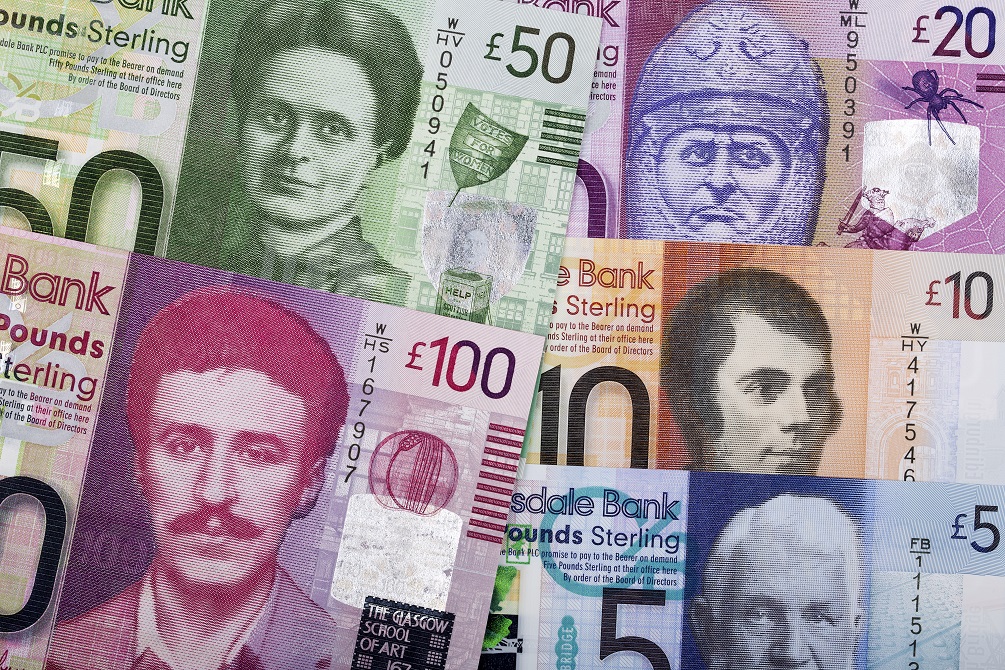
One of the most confusing aspects of UK money for outsiders is the existence of regional banknotes. While the Bank of England is the central bank for the UK, several retail banks in Scotland and Northern Ireland are also authorized to issue their own banknotes.
Scottish and Northern Irish Notes
In Scotland, the Bank of Scotland, the Royal Bank of Scotland, and Clydesdale Bank all issue notes. In Northern Ireland, banks like Danske Bank and Ulster Bank do the same. These notes are denominated in pounds sterling and have the same value as Bank of England notes.
However, they look entirely different. They feature different historical figures, landscapes, and color schemes. While they are used interchangeably with Bank of England notes within their respective regions, travelers often find that small shops in England or Wales may be hesitant to accept a Scottish £20 note simply because they are unfamiliar with its security features.
The “Legal Tender” Debate
From a technical financial standpoint, the concept of “legal tender” is often misunderstood in the UK. Legally, Scottish and Northern Irish banknotes are not “legal tender” anywhere in the UK, including Scotland and Northern Ireland themselves. Instead, they are “legal currency.”
In the UK, “legal tender” has a very narrow technical meaning regarding the settlement of debt in a court of law. For everyday transactions, any form of payment (cash, card, or even bartering) is acceptable as long as both the buyer and the seller agree on it. Consequently, you can use any UK pound note anywhere in the country, provided the merchant is willing to accept it.
The Modern Financial Context: Digital and Contactless Payments
While the physical pound remains an icon of British identity, the way people interact with UK money has shifted drastically toward digital platforms. Understanding “what UK money is called” in the modern era requires looking at how it is moved electronically.
The Rise of Contactless and “Card Only” Culture
The UK is one of the world leaders in contactless payment adoption. Most transactions under £100 are handled with a simple tap of a debit card, credit card, or smartphone (via Apple Pay or Google Pay). In many major cities, particularly London, cash is becoming increasingly rare. In fact, many businesses, including cafes and public transport (like the London Underground), operate on a “cashless” basis.
Personal Finance Tools and “Britcoin”
As the UK explores the future of money, the Bank of England and HM Treasury are currently investigating a Central Bank Digital Currency (CBDC), colloquially dubbed “Britcoin.” Unlike volatile cryptocurrencies, this would be a digital version of the pound sterling, pegged 1:1 to the physical pound.
For the average consumer, managing money in the UK now involves sophisticated fintech apps like Revolut, Monzo, or Starling Bank. These platforms allow users to hold “pots” of pounds, track spending in real-time, and exchange GBP for other currencies at interbank rates. Despite these technological advancements, the unit of account remains the same: the venerable Pound Sterling.
Conclusion
Whether you call it the pound, the sterling, or a quid, the currency of the United Kingdom is a robust and multifaceted financial tool. Its nomenclature reflects a bridge between a storied past and a digitized future. From the polymer notes featuring the monarchy to the heptagonal coins and the “Britcoin” of tomorrow, UK money is more than just a medium of exchange—it is a symbol of the nation’s economic resilience and cultural heritage. By mastering the names, denominations, and regional quirks of the pound, you can navigate the British financial system with confidence and insight.
aViewFromTheCave is a participant in the Amazon Services LLC Associates Program, an affiliate advertising program designed to provide a means for sites to earn advertising fees by advertising and linking to Amazon.com. Amazon, the Amazon logo, AmazonSupply, and the AmazonSupply logo are trademarks of Amazon.com, Inc. or its affiliates. As an Amazon Associate we earn affiliate commissions from qualifying purchases.