
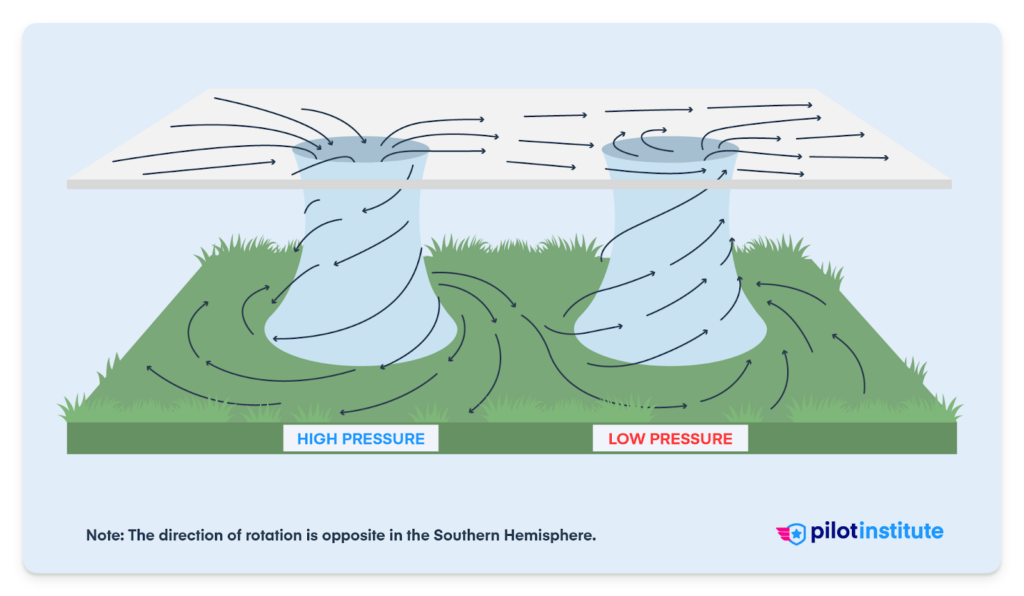
The atmosphere is a complex, fluid machine, and perhaps nothing dictates our daily digital and physical lives more than the fluctuations of atmospheric pressure. In meteorological terms, a low-pressure system—or a cyclone—is characterized by rising air that typically results in cloud formation, precipitation, and turbulent wind patterns. However, in the modern era, “what type of weather is associated with low-pressure systems” is no longer just a question for a textbook; it is a challenge for high-performance computing, artificial intelligence, and sophisticated sensor networks.
As we move deeper into the decade, the technology used to monitor these systems has evolved from simple barometers to global IoT ecosystems and machine learning models. Understanding the tech behind the weather is essential for industries ranging from logistics and aviation to software development and urban planning.

The Digital Atmosphere: Data Acquisition and IoT Integration
To understand the weather associated with low-pressure systems, we must first look at how we capture data from the environment. Modern meteorology relies on a vast, interconnected web of hardware that monitors the “pulse” of the planet in real-time.
Satellite Imagery and Remote Sensing
The first line of defense in identifying a developing low-pressure system is the satellite array orbiting Earth. Geostationary satellites, such as the GOES-R series, utilize advanced “Advanced Baseline Imagers” (ABI) to track cloud formation and moisture levels. These satellites operate as sophisticated remote sensors, capturing data across multiple spectral bands. By analyzing infrared and water vapor channels, meteorologists can visualize the counter-clockwise rotation (in the Northern Hemisphere) characteristic of low-pressure cells long before they reach land.
The Role of Ground-Based IoT Sensors
While satellites provide the macro-view, the Internet of Things (IoT) provides the granular data necessary for “nowcasting.” Thousands of automated weather stations (AWS) globally are now connected via low-power wide-area networks (LPWAN). These devices measure barometric pressure, humidity, and wind velocity with high precision. When a low-pressure system approaches, these IoT nodes detect a drop in millibars and transmit that data to centralized cloud servers via APIs, allowing for hyper-local alerts that were impossible twenty years ago.
Lidar and Doppler Radar Software
To see “inside” the storm, tech professionals use Doppler radar and Lidar (Light Detection and Ranging). Modern radar software uses dual-polarization technology to distinguish between rain, snow, and hail within a low-pressure system. This tech-heavy approach allows for the creation of 3D renderings of storm cells, enabling software to predict where the heaviest precipitation will fall with kilometer-level accuracy.
Processing the Storm: High-Performance Computing (HPC) and Numerical Weather Prediction
Once the data is collected, the heavy lifting begins. Predicting the unstable weather associated with low pressure—such as thunderstorms, gale-force winds, or heavy snowfall—requires immense computational power.
Supercomputers: The Engines of Forecasting
Numerical Weather Prediction (NWP) involves solving complex mathematical equations that describe the movement of fluids in the atmosphere. This is done on some of the world’s most powerful supercomputers, such as those operated by the National Oceanic and Atmospheric Administration (NOAA) or the European Centre for Medium-Range Weather Forecasts (ECMWF). These machines process petabytes of data, running simulations that divide the atmosphere into a 3D grid. Each “cell” in the grid calculates variables like temperature and pressure to predict how a low-pressure system will evolve over time.
Reducing Error Margins through Algorithmic Complexity
The challenge with low-pressure systems is their inherent volatility. A small change in sea-surface temperature can drastically change the intensity of a cyclone. To combat this, tech teams use “Ensemble Forecasting.” Instead of running a single simulation, the supercomputer runs dozens of simulations simultaneously with slightly different starting conditions. The software then analyzes the “spread” of these outcomes to provide a probability-based forecast, a process that requires massive GPU acceleration and optimized parallel processing.
Cloud Computing and Scalability
The shift toward cloud-based infrastructures (AWS, Azure, Google Cloud) has democratized access to weather data. Startups can now spin up virtual instances to process specific weather models without owning a physical supercomputer. This scalability is vital during extreme weather events, where the demand for data processing spikes as low-pressure systems intensify.
The AI Revolution in Meteorological Forecasting

In recent years, the most significant trend in weather tech has been the integration of Artificial Intelligence (AI) and Machine Learning (ML). These tools are changing how we answer the question of what weather follows a drop in pressure by finding patterns that human analysts might miss.
Machine Learning for Pattern Recognition
Traditional models rely on physics-based equations. However, AI models, such as Google DeepMind’s GraphCast or Huawei’s Pangu-Weather, take a different approach. They are trained on decades of historical weather data. By “learning” how previous low-pressure systems behaved, these neural networks can predict future movements in seconds rather than hours. This speed is critical for issuing “Short-Term Forecasts” for severe weather events associated with low-pressure troughs.
Neural Networks and Real-Time Storm Tracking
Computer vision—a subset of AI—is now used to analyze satellite feeds automatically. Algorithms can identify the “eye” of a hurricane or the signature “hook echo” of a tornado-producing cell within a larger low-pressure area. By automating this detection, software can trigger emergency alerts to mobile devices through integrated apps, significantly reducing response times for emergency services.
Predictive Maintenance and Business Intelligence
For the tech industry, weather AI isn’t just about safety; it’s about optimization. Logistics companies use ML-powered software to reroute ships and planes away from the high-wind zones of low-pressure systems. Energy companies use these models to predict how much wind power will be generated by an incoming front, allowing for better management of the power grid.
Software Ecosystems and Digital Security in Meteorology
As weather data becomes more integrated into our digital infrastructure, the software used to visualize this data and the security protocols protecting it have become paramount.
Visualizing the Vortex: GIS and Interactive Dashboards
Geographic Information Systems (GIS) like Esri’s ArcGIS allow tech professionals to overlay weather data onto topographical maps. When a low-pressure system brings heavy rain, GIS software can predict flash flooding by analyzing soil saturation and elevation data. This creates a “Digital Twin” of a city, allowing planners to simulate the impact of a storm before it hits. Furthermore, interactive web-based dashboards provide real-time visualizations for the public, using WebGL and advanced JavaScript libraries to render wind patterns and pressure gradients smoothly in any browser.
API Economies and Integration
Weather data is now a commodity. Companies like The Weather Company (IBM) or AccuWeather provide robust APIs that developers integrate into everything from ride-sharing apps to smart home thermostats. If a low-pressure system is detected, your smart home software might automatically close the shutters or adjust the HVAC system to compensate for the drop in outside temperature.
Protecting Vital Infrastructure: Cybersecurity in Weather Tech
The systems that track low-pressure weather are considered critical infrastructure. A cyberattack on weather sensors or forecasting models could lead to catastrophic loss of life if warnings are not issued. Consequently, digital security is a major focus. This includes securing the “Edge” devices (sensors), using blockchain for data integrity in decentralized weather networks, and implementing rigorous encryption for satellite-to-ground communications.
The Future of Weather Tech: Quantum Computing and Beyond
While current tech is impressive, the future of monitoring low-pressure systems lies in the realm of experimental science.
Quantum Simulation of Atmospheric Fluid Dynamics
One of the biggest limitations of current forecasting is “chaos theory”—the idea that tiny changes in the atmosphere can lead to massive changes in the weather (the Butterfly Effect). Quantum computing has the potential to solve these non-linear equations far more efficiently than classical binary computers. By utilizing qubits, these systems could simulate the molecular interactions of the atmosphere, providing a near-perfect forecast of how a low-pressure system will manifest.
Hyper-Spectral Imaging and Nano-Satellites
The deployment of “CubeSats”—miniaturized satellites—is creating a more dense observation network. These fleets of small, low-cost satellites can provide higher temporal resolution, meaning we can get updates on a low-pressure system every few minutes rather than every hour.
Final Thoughts on the Tech-Weather Intersection
Understanding what type of weather is associated with low-pressure systems is no longer a matter of looking at a glass tube filled with mercury. It is a multi-disciplinary tech endeavor involving global sensor arrays, AI-driven insights, and massive computational power. As we continue to refine these tools, our ability to predict, visualize, and respond to the clouds, rain, and wind of the low-pressure world becomes a testament to the power of modern technological innovation. In an era of climate volatility, this “Weather Tech” is not just a luxury; it is the fundamental software of human survival.
aViewFromTheCave is a participant in the Amazon Services LLC Associates Program, an affiliate advertising program designed to provide a means for sites to earn advertising fees by advertising and linking to Amazon.com. Amazon, the Amazon logo, AmazonSupply, and the AmazonSupply logo are trademarks of Amazon.com, Inc. or its affiliates. As an Amazon Associate we earn affiliate commissions from qualifying purchases.