
Yellowstone National Park, a jewel of the American West, is renowned for its breathtaking geysers, vibrant hot springs, and abundant wildlife. But beneath this stunning natural beauty lies a geological phenomenon of immense power and significance: a supervolcano. The question of “what type of volcano is Yellowstone National Park?” leads us down a fascinating path of understanding volcanic processes, geological history, and the sheer scale of this remarkable geological feature.
While it might not fit the typical cone-shaped image we often associate with volcanoes, Yellowstone is, in fact, a supervolcano. This classification isn’t based on its current visual appearance, but rather on its potential for eruptions of an extraordinary magnitude, capable of ejecting more than 1,000 cubic kilometers of material. To truly grasp what this means, we need to delve into the science behind it, exploring its formation, its eruptive history, and the implications of its existence.

The Unseen Giant: What Defines a Supervolcano?
The term “supervolcano” isn’t a formal scientific classification in the same way that “stratovolcano” or “shield volcano” are. Instead, it’s a descriptive term used for volcanoes capable of producing eruptions that are orders of magnitude larger than typical volcanic events. These eruptions are characterized by:
- Massive Ejecta Volume: Supervolcano eruptions expel over 1,000 cubic kilometers of magma, ash, and rock. To put this into perspective, the 1980 eruption of Mount St. Helens, a significant stratovolcano, ejected about one cubic kilometer of material. A supervolcano eruption dwarfs this by a factor of a thousand.
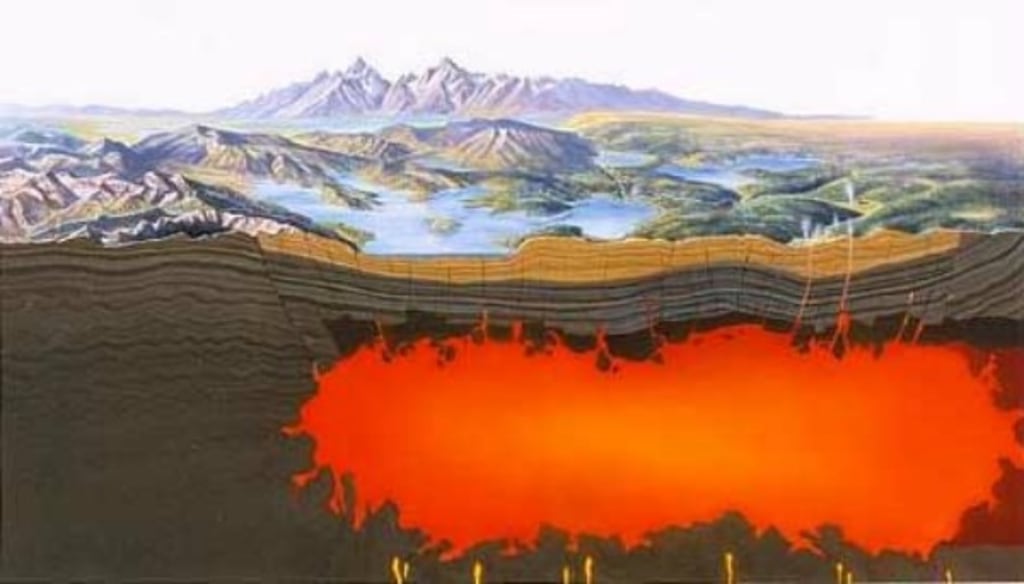
- Caldera Formation: Instead of building a cone, a supervolcano eruption typically results in the collapse of the ground above the emptying magma chamber, forming a vast, bowl-shaped depression known as a caldera. Yellowstone’s vast caldera is not immediately obvious to the casual observer, being mostly filled with sediment and the park’s famous geyser basins.
- Global Impact: The sheer volume of ash and gases released into the atmosphere during a supervolcano eruption can have profound and lasting effects on global climate, potentially leading to “volcanic winters” that disrupt agriculture and ecosystems for years.
The Hotspot Beneath: The Engine of Yellowstone’s Volcanic Activity
Yellowstone’s supervolcanic nature is directly linked to a geological feature known as a mantle plume, or a hotspot. This is an area where unusually hot rock rises from deep within the Earth’s mantle. As the North American tectonic plate slowly drifts over this stationary hotspot, the plume melts the overlying crust, creating a reservoir of molten rock – a magma chamber – that fuels volcanic activity.
The movement of the tectonic plate over the hotspot is crucial to understanding Yellowstone’s geological history and future. This continuous process has left a trail of volcanic calderas across the western United States, each representing a past supereruption. The oldest visible evidence of this trail stretches back millions of years, moving in a generally southwest direction. Yellowstone, being the most recent and currently active manifestation of this hotspot, is where the most significant volcanic activity is concentrated.
Yellowstone’s Explosive Past: A History of Supereruptions
Yellowstone hasn’t always been the relatively calm, geyser-filled landscape we see today. Its history is punctuated by colossal eruptions that have shaped the very topography of the region. The three most significant known supereruptions from the Yellowstone hotspot are:
- Huckleberry Ridge Tuff Eruption (approximately 2.1 million years ago): This was the largest and most ancient of the documented Yellowstone eruptions. It ejected an astonishing 2,500 cubic kilometers of material, blanketing vast swathes of North America in ash and forming the Island Park Caldera.
- Mesa Falls Tuff Eruption (approximately 1.3 million years ago): While smaller than the Huckleberry Ridge eruption, this event still released a substantial 280 cubic kilometers of magma and ash, creating the Henrys Fork Caldera.
- Lava Creek Tuff Eruption (approximately 640,000 years ago): This eruption formed the Yellowstone Caldera, the massive depression that covers much of the park. It ejected approximately 1,000 cubic kilometers of material, making it the most recent supereruption at Yellowstone.
These past eruptions provide critical data for scientists studying volcanic hazards. The sheer scale and frequency of these events underscore the immense power contained within the Yellowstone hotspot. Understanding the patterns and magnitudes of these past eruptions is a key aspect of monitoring and assessing the potential risks associated with Yellowstone today.
More Than Just a Volcano: Yellowstone’s Geothermal Wonderland
While the supervolcano aspect is scientifically profound, the everyday experience of Yellowstone is defined by its extraordinary geothermal activity. The same heat from the mantle plume that fuels potential supereruptions also drives the park’s iconic geysers, hot springs, mudpots, and fumaroles. These features are not merely tourist attractions; they are direct windows into the volcanic system beneath.
The intricate network of underground plumbing, heated by the magma chamber, brings superheated water and steam to the surface. The diverse mineral content of the Earth’s crust in the region contributes to the vibrant colors seen in many of Yellowstone’s hot springs, such as the Grand Prismatic Spring.
Geothermal Features as Indicators: Monitoring the Pulse of the Supervolcano

The geothermal activity in Yellowstone serves as a vital, ongoing monitoring system for the underlying volcanic system. Scientists at the Yellowstone Volcano Observatory (YVO), a collaboration between the U.S. Geological Survey (USGS) and several universities, meticulously track a range of parameters to assess the volcano’s activity.
- Seismic Activity: Earthquakes are a constant feature of the Yellowstone region. The monitoring of seismic swarms – clusters of small earthquakes – provides insights into the movement of magma and fluids beneath the surface. An increase in the frequency or intensity of seismic activity can signal changes within the volcanic system.
- Ground Deformation: The ground above a magma chamber can swell and subside as the pressure of magma and fluids changes. Precise GPS and satellite-based radar measurements detect these subtle shifts, offering crucial data about the magma reservoir’s state.
- Hydrothermal Activity: Changes in the temperature, chemistry, and discharge patterns of geysers and hot springs can also indicate shifts in the underground heat and fluid flow. For example, a geyser that has been dormant for a long time suddenly becoming active, or a hot spring’s temperature drastically changing, can be signals of underlying geological processes.
These interconnected monitoring efforts provide a comprehensive picture of Yellowstone’s dynamic nature. While the prospect of a supereruption is a statistically low probability event in any given year, understanding and tracking these geothermal indicators are paramount for scientific assessment and public safety.
The Future of Yellowstone: A Dynamic and Evolving System
Yellowstone National Park is not a static geological feature; it is a continuously evolving system. The hotspot that created it remains active, and the North American plate continues its inexorable movement. This means that volcanic and geothermal activity will persist in the park for millennia to come.
While the dramatic scenario of a supereruption captures the imagination, the more likely future involves continued hydrothermal activity and smaller, more localized volcanic events. These might include lava flows, which have occurred relatively recently in Yellowstone’s history (e.g., the Pitchstone Plateau lava flows around 70,000 years ago), and steam explosions.
Technological Advancements in Volcanic Monitoring and Prediction
The study of Yellowstone, and indeed volcanoes worldwide, has been revolutionized by advancements in technology. The field of volcanology is increasingly leveraging tools and methodologies that were once the domain of cutting-edge tech and data analysis.
- AI and Machine Learning: Artificial intelligence is being employed to analyze the vast datasets generated by seismic sensors, GPS stations, and gas detectors. AI algorithms can identify subtle patterns and anomalies that might be missed by human analysis, potentially providing earlier warnings of changes in volcanic behavior. This ties directly into the “Tech” and “AI Tools” categories of the website’s main topics.
- Remote Sensing and Satellite Technology: Sophisticated satellite imagery and remote sensing techniques allow scientists to monitor ground deformation, thermal anomalies, and gas emissions over large areas, even in remote and inaccessible terrain. This provides a bird’s-eye view of the volcano’s health and is a testament to the power of advanced “Gadgets” and “Digital Security” in data acquisition.
- Advanced Sensor Networks: The deployment of highly sensitive and durable sensor networks, capable of operating in extreme environments, provides continuous streams of real-time data. The development and maintenance of these networks represent significant achievements in “Technology Trends.”
The ongoing research and technological innovation in volcanology are crucial for not only understanding Yellowstone but also for developing more effective early warning systems for volcanic hazards globally. This integration of high-tech solutions into geological science highlights the interconnectedness of different fields.
Branding Yellowstone: From Geothermal Wonder to Supervolcano Awareness
The “Brand” aspect of Yellowstone National Park is multifaceted. Primarily, it’s a brand of unparalleled natural beauty, wildlife, and unique geothermal wonders. However, with increasing scientific understanding, there’s also an emerging brand awareness around its supervolcano status. This isn’t about sensationalism, but about educating the public and stakeholders about a significant geological reality.
- Responsible Communication: The National Park Service and the USGS have a crucial role in “Brand Strategy” when communicating about Yellowstone’s volcanic nature. This involves balancing the message of awe-inspiring natural phenomena with factual information about potential risks, fostering understanding without causing undue alarm.
- Reputation Management: The reputation of Yellowstone as a safe and awe-inspiring destination must be carefully managed in light of its supervolcano designation. This requires clear, consistent, and scientifically accurate communication.
- Case Studies in Earth Science: Yellowstone serves as a compelling “Case Study” for geologists, volcanologists, and climate scientists worldwide. Its unique characteristics offer invaluable lessons about Earth’s dynamic processes.
The park’s brand, therefore, extends beyond its immediate visual appeal to encompass its significant scientific importance. This dual identity requires sophisticated branding and marketing efforts to ensure public understanding and support for ongoing research and conservation.
The Financial and Economic Impact of a Supervolcano’s Presence
The presence of a supervolcano like Yellowstone, even in its current state of relative dormancy, has significant economic and financial implications, both positive and negative.
- Tourism and Personal Finance: Yellowstone National Park is a massive draw for tourism, contributing billions of dollars to local and national economies annually. The planning and budgeting for trips to Yellowstone, for individuals and families, involve “Personal Finance” considerations for travel expenses, accommodation, and park activities. This consistent influx of tourists supports numerous local businesses.
- Investing in Research and Infrastructure: Significant “Money” is invested annually in scientific research, monitoring equipment, and park infrastructure to ensure the safety and understanding of Yellowstone. This includes funding for the USGS, academic research grants, and the maintenance of sensor networks, all contributing to “Business Finance” within the scientific and governmental sectors.
- Potential for “Side Hustles” and Local Economies: The economic ecosystem surrounding Yellowstone is robust. “Side Hustles” for local residents can include guiding tours, offering lodging, or selling handcrafted goods to tourists, demonstrating the economic ripple effects of the park’s existence.
- Risk Assessment and Insurance: While a supereruption is a low-probability, high-consequence event, the potential economic impact is astronomical. This necessitates advanced risk assessment and preparedness strategies, which have financial implications for disaster management and potentially “Financial Tools” related to risk mitigation.
In conclusion, the question “what type of volcano is Yellowstone National Park?” opens a gateway to understanding a complex and powerful geological system. It is a supervolcano, driven by a persistent mantle hotspot, with a history of cataclysmic eruptions and a present characterized by vibrant geothermal activity. The ongoing monitoring of this dynamic system relies heavily on technological advancements and interdisciplinary scientific effort, while its unique status influences its “Brand” and carries significant financial implications. Yellowstone is not just a park; it is a living testament to the Earth’s immense power and a crucial site for scientific discovery.
aViewFromTheCave is a participant in the Amazon Services LLC Associates Program, an affiliate advertising program designed to provide a means for sites to earn advertising fees by advertising and linking to Amazon.com. Amazon, the Amazon logo, AmazonSupply, and the AmazonSupply logo are trademarks of Amazon.com, Inc. or its affiliates. As an Amazon Associate we earn affiliate commissions from qualifying purchases.