
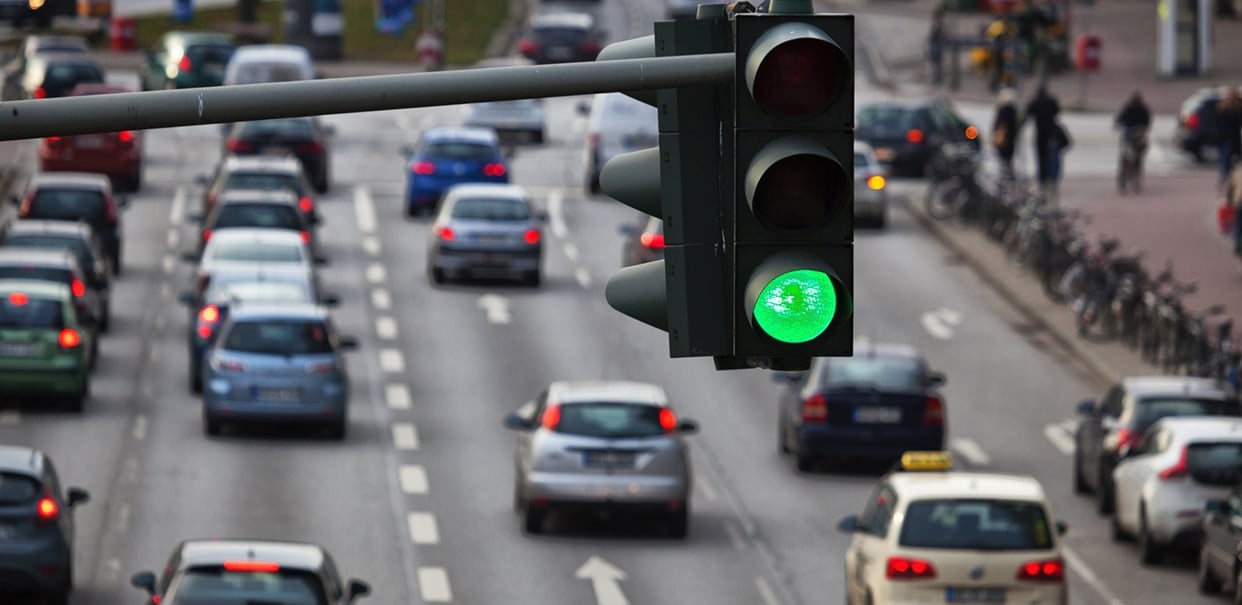
In the intricate tapestry of modern urban and regional transportation, the flow of traffic is not always a democratic process. While most road users operate under a universal set of rules governed by standard traffic lights, certain vehicles are endowed with a unique technological advantage: the ability to command their own exclusive traffic signals or to manipulate existing ones to their immediate benefit. This prioritization is not merely a convenience but a critical design choice rooted in principles of public safety, operational efficiency, and the strategic allocation of resources. The underlying technologies that enable this selective control represent a fascinating facet of intelligent transportation systems (ITS) and smart city infrastructure.
The Core Principle: Prioritization Through Technology
The fundamental reason for granting exclusive signal access or pre-emption capabilities to specific vehicles revolves around enhancing safety and optimizing traffic flow for critical services or high-capacity transport. This isn’t about privilege for its own sake, but a calculated engineering decision to improve the overall functionality of a transportation network.
Enhanced Safety and Operational Flow
For emergency services, every second counts. Delaying an ambulance, fire truck, or police vehicle by even a few moments at an intersection can have life-or-death consequences. Similarly, public transit vehicles like buses or trams, which carry hundreds or thousands of passengers daily, benefit from priority signaling because it ensures they maintain schedules, reduces passenger delays, and makes public transport a more attractive and reliable option compared to private vehicles. This ultimately reduces overall road congestion and carbon emissions. The technology behind these systems acts as a silent coordinator, ensuring that critical vehicles move through intersections unimpeded, thus preventing potential collisions that might arise from drivers trying to clear a path in chaotic situations.
The Role of Intelligent Transportation Systems (ITS)
At the heart of exclusive traffic signaling lies Intelligent Transportation Systems (ITS). These advanced applications integrate various technologies—including communications, computing, and sensor technology—to provide innovative services relating to different modes of transport and traffic management. For exclusive signal control, ITS components work in concert: vehicle detection systems identify the presence of a prioritized vehicle, communication systems relay this information to the traffic signal controller, and sophisticated algorithms determine the appropriate signal phase adjustments. This can range from extending a green light (phase extension) to immediately switching to a green light (pre-emption) or coordinating a series of green lights along a route (green wave).
From Inductive Loops to V2I Communication
The evolution of vehicle detection and communication for traffic signal priority has been continuous. Early systems relied on basic inductive loops embedded in the pavement, which could detect the presence of metal and thus a vehicle. While still in use, these are often augmented or replaced by more sophisticated technologies. Modern systems frequently employ radar, lidar, or optical sensors (cameras) at intersections to identify specific vehicles or classes of vehicles. More advanced setups leverage GPS receivers on priority vehicles to transmit their location and trajectory to traffic management centers or directly to signal controllers via dedicated short-range communication (DSRC) or cellular networks. This Vehicle-to-Infrastructure (V2I) communication is a cornerstone of future smart city developments, allowing for highly dynamic and precise signal management based on real-time data rather than static programming.
Public Transit’s Edge: Bus Rapid Transit (BRT) and Trams
Public transit systems are often granted preferential treatment at intersections to enhance their efficiency, reliability, and attractiveness. This contributes significantly to urban mobility goals by promoting sustainable transport options.
Bus Priority Systems
Bus Rapid Transit (BRT) systems, designed for speed and efficiency akin to light rail, are prime examples of vehicles with exclusive signal advantages. Buses operating within a BRT corridor often utilize on-board transponders or GPS units that communicate with traffic signal controllers as they approach an intersection. This communication requests either a “green extension” (prolonging an existing green light to allow the bus to pass) or a “green pre-emption” (changing a red light to green immediately). The goal is to minimize dwell time at intersections, keeping buses on schedule and reducing overall journey times for passengers. Some advanced systems use predictive algorithms that consider bus speed, passenger load, and upcoming traffic conditions to make optimal signal adjustments, ensuring a smooth flow across multiple intersections, creating a “green wave” for the bus route.
Light Rail and Tramway Pre-emption
Light rail vehicles (LRVs) and trams, which typically run on dedicated tracks within urban environments, also frequently benefit from exclusive traffic signals. Their fixed routes and higher passenger capacities make uninterrupted movement even more critical. At road crossings, light rail systems often have their own dedicated signal heads, distinct from standard vehicle signals, indicating whether the track ahead is clear. These signals are typically integrated with the broader traffic management system, operating on a pre-emption basis. As a tram approaches, a detection system (which could be track circuits, inductive loops, or optical sensors) triggers a request to the intersection controller, which then prioritizes the tram’s movement by stopping cross-traffic. This is analogous to railroad crossing signals but integrated into urban traffic flows. The technological underpinnings are robust, often involving fail-safe mechanisms to ensure the tram’s right-of-way, reflecting the higher potential impact of a collision involving a heavy rail vehicle.
Technological Enablers
The technology empowering transit priority includes a mix of established and emerging solutions. Automatic Vehicle Location (AVL) systems, often GPS-based, provide real-time location data for buses and trams. Radio Frequency Identification (RFID) tags on vehicles and readers at intersections can also trigger priority requests. Optical detection systems use cameras and image processing to identify transit vehicles and signal for priority. More recently, connected vehicle technology (V2I) is being integrated, allowing transit vehicles to communicate directly with traffic controllers over secure wireless networks. These systems often operate within a broader smart city framework, where traffic signal timings are dynamically adjusted based on real-time traffic conditions, special events, and the demands of multiple transit lines, optimizing flow for all road users while prioritizing high-capacity vehicles.
Emergency Vehicle Pre-emption Systems
Perhaps the most critical application of exclusive traffic signaling is for emergency vehicles. The ability for ambulances, fire trucks, and police cruisers to navigate intersections quickly and safely is paramount for public safety.
Saving Lives Through Green Lights
Emergency vehicle pre-emption (EVP) systems are designed to provide a clear path through intersections, overriding regular signal cycles to grant immediate right-of-way. This dramatically reduces response times, which can be the difference between life and death in medical emergencies, fire incidents, or active crime scenes. Beyond speed, EVP systems enhance safety by reducing the need for emergency vehicle operators to navigate against red lights or rely solely on sirens and flashing lights to clear intersections, which can be hazardous for both the emergency vehicle and cross-traffic. The controlled change of signals provides a predictable environment, minimizing the risk of collisions.
How It Works
Modern EVP systems primarily operate through several technological modalities:
- Infrared (Optical) Systems: These are among the most common. An emitter on the emergency vehicle sends out a coded infrared signal towards a receiver mounted on or near the traffic signal head. Upon detection, the receiver communicates with the traffic signal controller, which then initiates a pre-emption sequence, typically turning the light green for the approaching emergency vehicle and red for all conflicting directions.
- Radio Frequency (RF) Systems: Some systems use radio transmitters on emergency vehicles to send signals to RF receivers at intersections. These systems can have a longer range and are less susceptible to line-of-sight issues than infrared.
- GPS-based Systems: Increasingly, systems leverage GPS technology. An emergency vehicle’s GPS location is transmitted to a central traffic management system or directly to signal controllers. This allows for more precise control, as the system knows the vehicle’s exact position, speed, and direction, enabling predictive pre-emption sequences even before the vehicle is in direct line of sight of an optical or RF sensor. These systems can also be integrated with CAD (Computer-Aided Dispatch) systems for enhanced coordination.
- Acoustic Systems: Though less common for full pre-emption, acoustic sensors can detect the unique siren patterns of emergency vehicles, providing an additional layer of information to signal controllers, often used in conjunction with other systems.
Upon receiving a valid pre-emption request, the signal controller executes a programmed sequence. This typically involves clearing the intersection by turning conflicting lights red, holding them red for a predetermined period, and then turning the emergency vehicle’s approach light green. Once the emergency vehicle has passed, the signal controller returns to its standard operation or a recovery phase.
The “Opticom” System and its Successors
The “Opticom” system, pioneered by 3M, is a well-known example of an optical EVP system that has been widely adopted globally. While still prevalent, newer generations of EVP technology are emerging, often integrating multiple detection methods and leveraging secure, networked communication. Cybersecurity is a significant concern for these systems, as unauthorized pre-emption could lead to chaos and danger. Therefore, robust authentication and encryption protocols are built into modern EVP solutions to prevent misuse.
Specialized Applications and Future Trends
Beyond standard public transit and emergency services, other niche applications and future technological advancements continue to shape the landscape of exclusive traffic signaling.
Railroad Crossings
One of the oldest and most universally recognized forms of exclusive signaling is found at railroad crossings. Trains, due to their immense mass, long stopping distances, and inability to swerve, are given absolute priority over road traffic. Detection systems (often track circuits) identify an approaching train, triggering warning lights, audible bells, and lowering gate arms to completely halt vehicular and pedestrian traffic well in advance of the train’s arrival. While not “traffic signals” in the conventional sense, these are dedicated signaling mechanisms designed exclusively for the safe passage of trains, highlighting a long-standing precedent for prioritizing certain modes of transport.
Port and Industrial Zones
Within large private industrial complexes, airports, and shipping ports, specialized heavy-duty vehicles, autonomous guided vehicles (AGVs), or oversized cargo carriers often operate within their own dedicated traffic management systems. These systems might include internal traffic lights that are exclusively controlled based on the movement of these specialized vehicles, ensuring safety in areas where human-driven vehicles might not always have the necessary awareness or maneuverability. As automation increases in these environments, these exclusive signal systems become more sophisticated, integrating with fleet management and logistics software.
The Horizon of Autonomous Vehicles
The advent of autonomous vehicles (AVs) promises to revolutionize traffic management, including the concept of exclusive signals. With V2X (Vehicle-to-Everything) communication, AVs will be able to communicate directly with traffic signal controllers, other vehicles, and the broader infrastructure. This could lead to highly dynamic signal prioritization, where an AV’s trajectory, destination, and even its “importance” (e.g., carrying critical cargo) could influence signal timing in real-time. In a fully autonomous future, some predict “signal-less” intersections where vehicles seamlessly coordinate their movements without the need for traditional traffic lights, managed by powerful edge computing and AI algorithms that optimize flow for all participants, effectively granting “exclusive” passage to every vehicle in a dynamic, micro-managed fashion. This paradigm shift would move from static, programmed signals to an adaptable, fluid transportation network.

Smart City Integration
Ultimately, exclusive traffic signals are becoming integral components of broader smart city initiatives. By integrating these priority systems with urban planning, public transport networks, emergency services, and environmental monitoring, cities can achieve unprecedented levels of efficiency and sustainability. Real-time data from these systems can inform decisions on everything from reducing energy consumption at intersections to dynamically rerouting traffic during emergencies or major events, contributing to a more responsive, resilient, and livable urban environment. The technological journey from simple inductive loops to predictive AI-driven traffic management illustrates a continuous pursuit of safer, more efficient, and increasingly intelligent transportation systems.
aViewFromTheCave is a participant in the Amazon Services LLC Associates Program, an affiliate advertising program designed to provide a means for sites to earn advertising fees by advertising and linking to Amazon.com. Amazon, the Amazon logo, AmazonSupply, and the AmazonSupply logo are trademarks of Amazon.com, Inc. or its affiliates. As an Amazon Associate we earn affiliate commissions from qualifying purchases.