
To understand the financial landscape of Europe, one must first understand the political engine that drives it. When investors and business leaders ask, “What type of government does Germany have?” they are rarely looking for a simple civics lesson. Instead, they are inquiring about the structural stability, the regulatory predictability, and the fiscal philosophy that governs the world’s third-largest economy.
Germany is a federal parliamentary republic. While that definition covers the “what,” the “how” is far more significant for those interested in personal finance, corporate investment, and global business strategy. The German government is built on a foundation of checks and balances designed to prevent radical shifts in policy, ensuring a slow-moving but incredibly reliable environment for capital.

1. The Mechanics of the Federal Parliamentary Republic: A Framework for Fiscal Predictability
At its core, Germany’s government is a representative democracy where the executive branch derives its legitimacy from the legislative branch. Unlike the presidential system of the United States, the German system is designed to favor coalition-building and consensus over unilateral executive action. For the financial world, this translates to one thing: predictability.
The Role of the Chancellor and the Bundestag
The Chancellor is the head of government and holds the most significant political power. However, they are elected by the Bundestag (the lower house of parliament), which means they must maintain a majority through coalition agreements. From an investment perspective, this is vital. Because German governments are almost always coalitions (typically between two or three major parties), economic policy tends to remain centrist. Radical fiscal swings that might occur in two-party systems are rare here, providing a “safe haven” status for international investors.
The Bundesrat and Regional Financial Autonomy
Germany consists of 16 federal states (Länder), and the Bundesrat (the upper house) represents these states at the federal level. This federalist structure means that power is decentralized. For businesses, this means that while federal law provides a national framework, states have significant say in regional economic development, education (crucial for the labor market), and infrastructure. This competition between states often leads to specialized “clusters”—such as the automotive hub in Bavaria or the financial center in Hesse—allowing for diversified investment opportunities across the country.
The Ceremonial Presidency and Moral Authority
While the Federal President is the head of state, the role is primarily ceremonial. In the context of “Money” and business, the President serves as a symbol of continuity and constitutional integrity. By keeping the role of “State” separate from “Politics,” Germany ensures that even during periods of intense political debate over budgets or taxes, the fundamental legitimacy of the nation’s institutions remains unquestioned.
2. The “Schuldenbremse” and Fiscal Discipline: The Government’s Role in Financial Markets
One of the most defining characteristics of the German government’s approach to money is its constitutional commitment to fiscal restraint. Known as the Schuldenbremse (Debt Brake), this policy is a cornerstone of the German financial identity and has profound implications for global markets.
Understanding the Debt Brake
Introduced in 2009, the Debt Brake is a constitutional amendment that limits the federal government’s structural deficit to just 0.35% of GDP. For an investor, this represents a government that is legally bound to live within its means. This discipline is why German government bonds (Bunds) are considered the “gold standard” of safe-haven assets in Europe. When global markets are volatile, capital flows into German debt because the government’s structure virtually guarantees its ability to repay.
Implications for Personal Finance and Taxation
The government’s focus on balanced budgets often limits the scope for massive tax cuts, but it also prevents the kind of inflationary spending seen in other major economies. For individuals living and working in Germany, or those with German-based income streams, this results in a stable currency environment (within the Eurozone) and a predictable tax trajectory. While the tax burden is relatively high, the social services and infrastructure it funds provide a “social wage” that reduces the individual’s long-term financial risk in areas like healthcare and higher education.
The Debate Over Modernization and Investment
In recent years, the rigidity of the German government’s fiscal policy has become a topic of intense business debate. Critics argue that the obsession with “Black Zero” (balanced budgets) has led to underinvestment in digital infrastructure and green energy. For the business-minded observer, this represents a transition period. The government is currently navigating how to maintain its reputation for fiscal sobriety while authorizing the massive capital expenditures required for the “Zeitenwende” (historic turning point) in energy and defense.
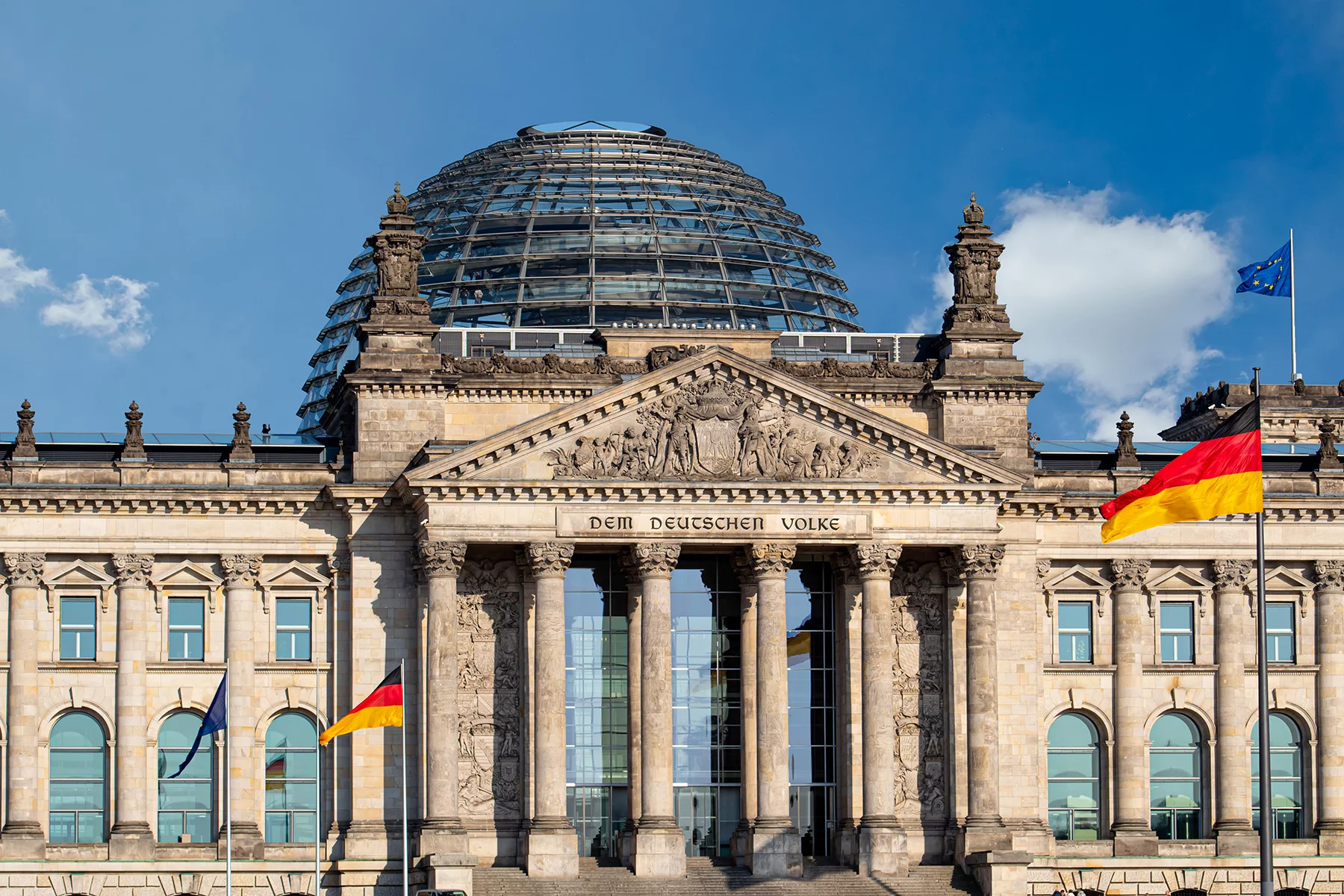
3. The Social Market Economy (Soziale Marktwirtschaft): A Unique Business Framework
Germany does not practice “unfettered capitalism.” Instead, the government operates under the principle of the Social Market Economy. This model seeks a middle ground between free-market competition and social balance, creating a unique environment for corporate governance and labor relations.
Co-determination and Corporate Stability
One of the most striking features of German corporate finance and governance is Mitbestimmung (co-determination). Large German companies are required by law to have worker representatives on their supervisory boards. While this might seem counterintuitive to a pure profit-maximization model, it creates a “Money” environment characterized by long-termism. Labor and management collaborate to ensure the company’s survival through economic cycles, leading to fewer strikes and a more loyal, highly-skilled workforce.
The “Mittelstand”: The Backbone of the Economy
The German government provides significant structural support to the Mittelstand—the small-to-medium-sized enterprises that comprise the majority of the nation’s economic output. Unlike many economies where the government focuses on “too big to fail” conglomerates, German policy is designed to protect these family-owned businesses. This includes specialized research grants, vocational training systems (the Dual Education System), and a banking landscape dominated by local Sparkassen (savings banks) that prioritize regional lending over speculative global trading.
Regulatory Governance and the Rule of Law
When you invest in Germany, you are investing in a government that prioritizes the “Rechtsstaat” (Rule of Law). The regulatory environment is dense but transparent. Whether it is the BaFin (Federal Financial Supervisory Authority) overseeing markets or the strict enforcement of contract law, the government ensures that the “rules of the game” are applied equally. For international businesses, this reduces the “hidden costs” of corruption or unpredictable legal shifts that are common in emerging markets.
4. Investment Climate and Regulatory Governance: Navigating the German Market
For those looking to generate wealth or expand a business within Germany, understanding the government’s regulatory stance on technology, energy, and finance is essential. The German government acts as both a referee and a strategic architect in the marketplace.
The Role of BaFin and Financial Oversight
The Bundesanstalt für Finanzdienstleistungsaufsicht (BaFin) is the federal agency responsible for supervising banks, insurance companies, and stock exchanges. Following several high-profile financial scandals, the German government has significantly empowered BaFin to ensure market integrity. For investors, this increased oversight provides a layer of security, knowing that the German government is actively working to maintain the reputation of its financial centers, particularly Frankfurt, as transparent and reliable.
Energy Policy and the “Green” Economy
The German government has committed to a massive economic overhaul known as the Energiewende (Energy Transition). This is not just an environmental policy; it is a fundamental shift in where money flows within the economy. Through a series of subsidies, carbon pricing mechanisms, and infrastructure mandates, the government is incentivizing billions of euros in private investment toward renewables and hydrogen technology. Understanding the government’s legislative timeline in this sector is perhaps the most important factor for industrial investors in the current decade.
Navigating the Bureaucracy
While the German government offers stability, it is also known for its extensive bureaucracy. From a business finance perspective, “red tape” is a factor that must be budgeted for. The government has recognized this as a bottleneck for digital growth and has launched initiatives like the “Online Access Act” to digitize administrative services. For entrepreneurs, the government’s shift toward a “digital-first” administration represents a significant reduction in the future cost of doing business.

Conclusion: A Government Built for the Long Term
To answer the question “What type of government does Germany have?” is to describe a system built for durability over speed. Its federal parliamentary structure ensures that power is shared, its constitutional debt limits ensure fiscal responsibility, and its commitment to a social market economy ensures a stable and productive workforce.
For the person focused on money—whether through personal investing, corporate expansion, or financial analysis—Germany represents a unique proposition. It is an environment where the government’s primary role is to provide a stable, predictable, and fair framework in which capital can grow steadily. While it may lack the rapid-fire deregulation seen in some other markets, it offers a level of systemic security that few other nations can match. In the world of finance, where risk management is as important as profit generation, the German government’s architecture of stability remains one of its greatest economic assets.
aViewFromTheCave is a participant in the Amazon Services LLC Associates Program, an affiliate advertising program designed to provide a means for sites to earn advertising fees by advertising and linking to Amazon.com. Amazon, the Amazon logo, AmazonSupply, and the AmazonSupply logo are trademarks of Amazon.com, Inc. or its affiliates. As an Amazon Associate we earn affiliate commissions from qualifying purchases.