
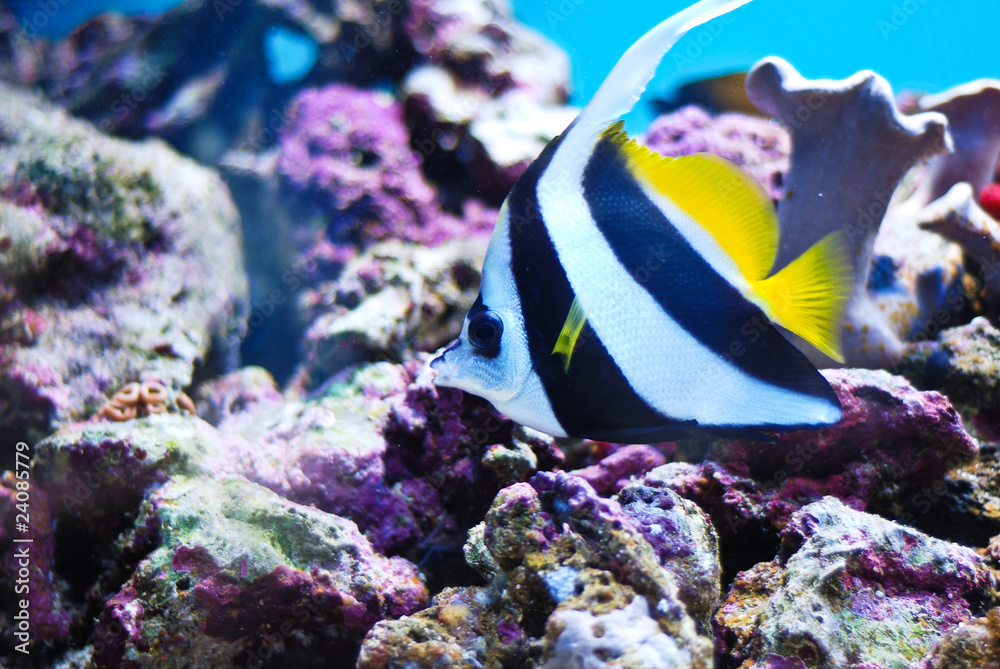
In the pantheon of modern animation, few characters command as much immediate respect and intrigue as Gill, the grizzled leader of the “Tank Gang” in Pixar’s 2003 masterpiece, Finding Nemo. While a casual viewer might simply identify him as the “scarred fish with the deep voice,” those looking through the lens of brand strategy recognize him as a masterclass in visual identity and character positioning. Gill is a Moorish Idol (Zanclus cornutus), a species known for its striking beauty and notoriously difficult temperament in captivity.
By choosing this specific species, Pixar didn’t just select a fish; they selected a brand archetype. Understanding why Gill is a Moorish Idol requires an exploration of how visual cues, narrative positioning, and market impact converge to create a brand that resonates decades after its initial launch.
Beyond the Moorish Idol: The Anatomy of Character Branding
The selection of a Moorish Idol for the character of Gill was a deliberate branding decision that leaned heavily into the psychological associations of the species. In the world of marine biology, the Moorish Idol is often confused with the Bannerfish, yet it carries a much higher “brand equity” due to its elegance and the extreme difficulty of keeping it alive in artificial environments.
Visual Semiotics: Why the Moorish Idol?
In branding, visual semiotics refers to the use of signs and symbols to communicate a message. The Moorish Idol possesses a distinct silhouette: a compressed, disc-like body with bold vertical stripes of black, white, and yellow, topped with a long, trailing dorsal filament called a “pennant.”
From a brand design perspective, these sharp angles and high-contrast colors signal authority and sophistication. Unlike the rounded, friendly orange of Nemo (a Clownfish), Gill’s aesthetic is sharp and jagged. This visual contrast immediately positions him as the “anti-Marlin.” Where Marlin represents the “Safe/Parental” brand, Gill represents the “Edgy/Experience” brand. The black stripes serve as a visual anchor, suggesting a gravity and seriousness that aligns with his role as a tactical leader.
The Scars of Experience: Branding Resilience
One of Gill’s most defining physical features—and a brilliant stroke of brand identity—is his scarring. In corporate branding, “heritage” and “longevity” are often touted as markers of quality. For Gill, his tattered fins and the scars from his failed escape attempts act as a “provenance” of his character.
These visual markers tell a story without a single word of dialogue. They transform the Moorish Idol from a mere exotic specimen into a “Battle-Hardened Veteran” brand. This teaches us a vital lesson in personal and corporate branding: imperfections, when framed correctly, do not detract from a brand; they add authenticity and depth, making the entity more relatable and trustworthy to its target audience.
Narrative Positioning: Gill as the “Mentor” Archetype
Effective brand strategy relies on positioning a product or persona within a recognizable framework. In the narrative landscape of Finding Nemo, Gill is positioned as the “Mentor” archetype, a role that requires a specific blend of distance, expertise, and underlying empathy.
Establishing Authority through Design
A brand’s authority is often established through its environment and its peers. Within the “Tank Gang,” Gill is the only fish who does not belong to a common “beginner” species. While the others are relatively hardy aquarium staples (like the Damselfish or the Royal Gramma), Gill is the “High-End” brand.
His rarity in the tank establishes an immediate hierarchy. In branding, this is known as “prestige positioning.” By being the most difficult fish to maintain, Gill naturally assumes the leadership role. His brand promise is one of liberation; he doesn’t just offer companionship, he offers a vision of a “better world” (the ocean). This is synonymous with “Visionary Branding,” where a leader or company wins loyalty by promising to take their followers to a place they couldn’t reach alone.
The Contrast Strategy: Gill vs. Marlin
A core tenet of brand strategy is differentiation. Pixar uses Gill as a foil to Marlin to highlight different approaches to “The Hero’s Journey.” Marlin’s brand is built on fear and risk-aversion, whereas Gill’s brand is built on calculated risk and the pursuit of freedom at any cost.
By positioning Gill as the catalyst for Nemo’s growth, Pixar demonstrates the power of “Challenger Branding.” Gill challenges Nemo to exceed his perceived limitations. For marketers, this reflects the “Outlaw” or “Hero” brand archetypes—think Harley Davidson or Nike—which encourage the consumer to break boundaries. Gill isn’t just a fish; he is a manifestation of the “Just Do It” philosophy applied to a 1.5-gallon glass box.

The “Finding Nemo” Effect: The Brand’s Real-World Impact on the Aquarium Industry
The success of Finding Nemo created a phenomenon that brand strategists still study today: the “Nemo Effect.” However, while Clownfish sales skyrocketed, the “Gill Brand” (the Moorish Idol) faced a much more complex market reality.
The Surge in Demand for Exotic Brands
When a brand becomes iconic, consumers often ignore the technical specifications in favor of the emotional connection. Following the film’s release, there was a massive surge in demand for Moorish Idols. Consumers wanted to own a piece of the “Gill Brand.”
However, this is where the brand promise collided with reality. Moorish Idols are notoriously difficult to feed and often die shortly after being introduced to home aquariums. This serves as a cautionary tale in brand strategy: if your product’s “user experience” (UX) cannot live up to its “brand image,” the result is a catastrophic loss of brand equity (and, in this case, ecological harm). The Gill brand was so powerful that it drove a market for a product that most consumers were ill-equipped to handle.
The Ethical Dilemma of Biological Branding
The Moorish Idol’s struggle in captivity actually mirrors Gill’s story in the film—his singular obsession is escaping the “box.” Paradoxically, the brand’s message of “all fish belong in the ocean” was overshadowed by the audience’s desire to “brand” their own living rooms with these characters.
From a marketing perspective, this represents a “Brand Misinterpretation.” When a brand’s message is so aesthetically pleasing that the core values (freedom, conservation) are lost, the strategy has succeeded visually but failed ethically. Modern brands now work harder to ensure that their “Call to Action” (CTA) aligns with the long-term well-being of their community and the environment, a lesson learned in part by the unintended consequences of the Finding Nemo franchise.
Scaling the Pixar Brand: Consistency Across the Franchise
The longevity of Gill as a character—returning for a cameo in Finding Dory—speaks to the importance of brand consistency. Whether a brand is a logo or a scarred Moorish Idol, maintaining its core attributes over time is essential for long-term recognition.
Maintaining Legacy Characters in Modern Marketing
When Pixar brought Gill back for the sequel, they didn’t change his design or his “brand voice” (voiced by Willem Dafoe). They understood that Gill’s value lay in his consistency as the “unbreakable strategist.”
In corporate branding, this is akin to “Legacy Brand Management.” Even as a company evolves, its flagship products must retain the “DNA” that made them successful. Gill remains the same stoic, planning-oriented Moorish Idol, ensuring that the emotional bridge between the 2003 audience and the 2016 audience remained intact. This consistency builds “Brand Trust,” a commodity that is incredibly difficult to earn and remarkably easy to lose.
Technical Excellence as a Brand Pillar
Finally, the “Tech-Brand” synergy of Pixar cannot be ignored. The Moorish Idol was one of the most difficult fish to animate due to the way light interacts with its scales and the physics of its long dorsal filament.
By successfully rendering Gill, Pixar reinforced its own brand as the “Gold Standard” of animation technology. Every frame of Gill moving through the water served as a “case study” for Pixar’s technical prowess. In this way, Gill was not just a character; he was a demonstration of the company’s “Core Competency.” For any business, your products should not only serve a function but also serve as a testament to your highest technical standards.
Conclusion: The Lasting Legacy of the Gill Brand
What type of fish is Gill? He is a Moorish Idol, yes. But in the world of brand strategy, he is a symbol of resilience, a masterpiece of visual semiotics, and a cautionary tale about the power of influence.
Gill’s character design—from the choice of the Zanclus cornutus species to the tactical placement of his scars—was designed to communicate authority, experience, and a relentless drive for excellence. He teaches us that a strong brand is built on a foundation of clear differentiation, consistent narrative positioning, and a visual identity that tells a story at a glance. As we look at the legacy of Finding Nemo, Gill stands as a reminder that the most enduring brands are those that challenge us to look beyond the glass of our own limitations.
aViewFromTheCave is a participant in the Amazon Services LLC Associates Program, an affiliate advertising program designed to provide a means for sites to earn advertising fees by advertising and linking to Amazon.com. Amazon, the Amazon logo, AmazonSupply, and the AmazonSupply logo are trademarks of Amazon.com, Inc. or its affiliates. As an Amazon Associate we earn affiliate commissions from qualifying purchases.