
In the lexicon of classical physics, potential energy is often defined as “stored energy”—the capacity to do work based on an object’s position or configuration. However, in the high-stakes world of modern technology, potential energy has evolved from a textbook definition into the fundamental bottleneck and the greatest opportunity for innovation. Whether it is the chemical potential stored in a smartphone battery, the gravitational potential of a grid-scale storage facility, or the latent “potential” of unprocessed big data, understanding what type of energy potential energy is provides a roadmap for the future of tech.
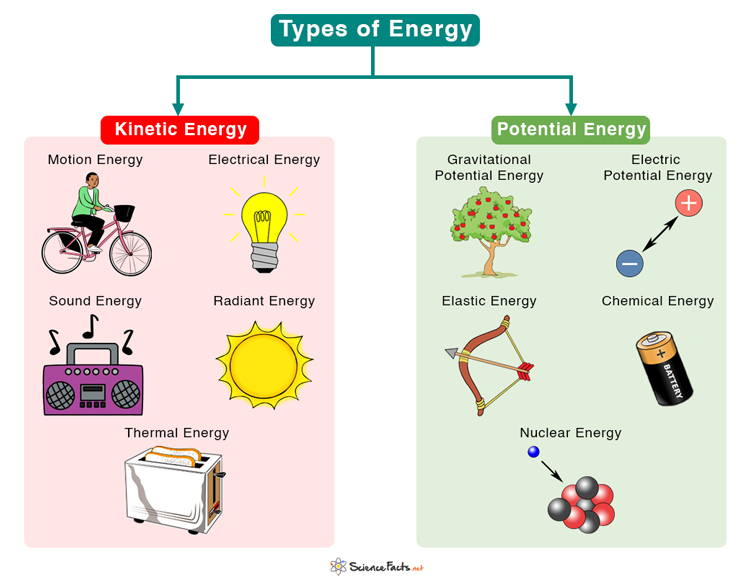
For engineers, software architects, and hardware designers, potential energy is not a static state; it is a pressurized reservoir of possibility. As we transition toward a more mobile, electrified, and AI-driven economy, our ability to capture, store, and release this energy efficiently determines the success of every gadget and system we create.
The Hardware Perspective: Chemical and Elastic Potential in Consumer Tech
At the core of the mobile technology revolution is chemical potential energy. This is the energy stored within the chemical bonds of a substance. In the context of technology, this primarily refers to the lithium-ion (Li-ion) batteries that power everything from wearable rings to high-performance electric vehicles (EVs).
Chemical Potential: The Science of Lithium-Ion
In a battery, potential energy is stored in the form of ions moving between an anode and a cathode. When your device is fully charged, it is at its highest state of “potential.” The tech industry is currently obsessed with increasing the “energy density” of this potential. The more potential energy we can cram into a smaller physical footprint, the thinner our phones become and the further our cars can drive.
Current tech trends are pushing toward Solid-State Batteries. Unlike traditional batteries that use liquid electrolytes, solid-state tech uses solid materials to facilitate ion movement. This increases the potential energy capacity while significantly reducing the risk of fire, marking a major leap in digital security and hardware reliability.
Elastic Potential and Haptic Engineering
While chemical potential dominates the power discussion, elastic potential energy—energy stored as a result of applying a force to deform an elastic object—plays a subtle but crucial role in hardware design. We see this in the “butterfly” mechanisms of keyboards or the sophisticated haptics in modern game controllers.
Tech giants like Apple and Sony use microscopic actuators that store and release tiny bursts of elastic potential to mimic the feel of a physical button on a flat glass surface. This marriage of mechanical physics and digital feedback is what makes modern user interfaces (UI) feel tactile and intuitive.
Grid-Scale Storage: Gravitational and Thermal Potential Energy
As the world shifts toward renewable energy, the tech sector faces a massive challenge: the sun doesn’t always shine, and the wind doesn’t always blow. This has led to a boom in “Energy Tech” startups focused on gravitational and thermal potential energy as a means of backing up the power grid.
Gravitational Potential: The Rise of Gravity Batteries
What type of energy is potential energy when it’s scaled to the size of a city? It is often gravitational. New technology is being deployed that uses excess solar or wind power to lift massive concrete blocks or pump water into high-elevation reservoirs.
This is “Pumped Hydro” or “Gravity Storage.” When the grid needs power, the blocks are lowered or the water is released, converting that gravitational potential energy back into kinetic energy to spin turbines. Companies like Energy Vault are using AI-driven software to automate these massive “gravity towers,” ensuring that the potential energy is released at the exact millisecond it is needed by the digital economy.
Thermal Potential: Molten Salt and Phase-Change Tech
Another burgeoning tech niche is thermal potential energy. This involves storing energy by heating materials (like molten salt) to extreme temperatures. The tech here lies in the insulation and the heat-exchange software.
By holding this heat in a “potential” state, data centers—which are notorious energy hogs—can draw on stored thermal reserves to manage their cooling systems or power their servers during peak demand. This type of energy management is becoming a cornerstone of “Green Tech” and sustainable corporate infrastructure.

Data as the New Potential Energy: AI and Latent Information
If hardware is the body of the tech world, data is its fuel. In a metaphorical but increasingly practical sense, unprocessed data is the potential energy of the information age. Just as a rock sitting at the top of a hill has the potential to move, a massive dataset sitting in a cloud server has the potential to generate insights, automate tasks, and drive revenue.
Latent Value in Big Data and AI Training Sets
In the realm of Artificial Intelligence, “potential” takes the form of latent variables and training weights. When an AI model like a Large Language Model (LLM) is trained, it stores the “potential” to answer questions, write code, or create art. This energy isn’t released until an “inference” (a prompt) is made.
The tech trend here is Edge Computing. By moving the “potential energy” of AI models from centralized servers to “the edge” (the actual device in your hand), developers reduce latency. This ensures that the potential energy of the data is converted into the kinetic action of a user’s request almost instantaneously, without the “friction” of long-distance data transmission.
Cloud Infrastructure and Elasticity
Cloud service providers like AWS, Azure, and Google Cloud operate on the principle of elastic potential. They maintain massive amounts of “buffer” hardware—servers that are powered on but not fully utilized. This is potential computational energy.
Through virtualization and containerization (like Docker and Kubernetes), these tech platforms allow businesses to “stretch” their resource usage. When a website gets a surge of traffic, the system taps into that stored potential capacity, expanding and contracting like a digital spring. This prevents system crashes and optimizes the financial efficiency of modern digital enterprises.
Digital Security and the “Potential” of System Vulnerabilities
In the niche of digital security, potential energy takes on a more cautionary meaning. Every line of code written contains potential vulnerabilities. These are latent flaws that do nothing until an exploit (the kinetic force) is applied by a malicious actor.
Zero-Day Latency and Threat Potential
The “Zero-Day” market is essentially a marketplace for potential energy. Security researchers and hackers look for “potential” entry points into software. From a tech perspective, the goal of modern cybersecurity is to minimize the “potential energy” available to an attacker.
We do this through DevSecOps, a methodology where security is baked into the development cycle from day one. By using AI-driven automated testing, developers can identify and “neutralize” the potential energy of a bug before it can be converted into a kinetic security breach.
Quantum Potential and the Future of Encryption
As we look toward the future, Quantum Computing introduces a new type of potential: superposition. A quantum bit (qubit) exists in a state of potentiality—it is neither a 1 nor a 0, but both at once.
The tech industry is currently in a race to develop “Quantum-Resistant Encryption.” The potential energy of a quantum computer to crack current RSA encryption is a looming threat. Transitioning our digital security to a quantum-secure framework is perhaps the most important tech migration of the next decade, as we attempt to manage the sheer “computational potential” that quantum breakthroughs will bring.

Conclusion: Mastering the State of Potential
What type of energy is potential energy? In the context of 21st-century technology, it is the invisible force that allows for portability, scalability, and intelligence. It is the charge in our batteries, the gravity in our power grids, the latent insights in our data, and the security of our code.
As we have seen, the most successful technology trends are those that find more efficient ways to store and release this potential. From the solid-state battery revolution to the elastic scaling of the cloud, our digital world is defined by how we manage energy in its stored state. For developers, engineers, and tech enthusiasts, the goal remains the same: to turn the vast, untapped potential energy of the universe into the kinetic progress of human innovation.
aViewFromTheCave is a participant in the Amazon Services LLC Associates Program, an affiliate advertising program designed to provide a means for sites to earn advertising fees by advertising and linking to Amazon.com. Amazon, the Amazon logo, AmazonSupply, and the AmazonSupply logo are trademarks of Amazon.com, Inc. or its affiliates. As an Amazon Associate we earn affiliate commissions from qualifying purchases.