
In the modern world of high-frequency trading, cryptocurrency, and digital banking, it is easy to forget that the global financial system has its roots in much simpler structures. When we ask what type of economy includes bartering and customs, we are referring to the traditional economy. This economic system is the oldest in the world and continues to exist in various pockets of the globe today.
From a personal finance and business perspective, understanding the traditional economy is more than just a history lesson. it provides a profound look at how value is perceived, how resources are allocated without the intervention of central banks, and how modern concepts like the “circular economy” and “peer-to-peer” lending are actually echoes of these ancient practices.

The Core Characteristics of a Traditional Economy
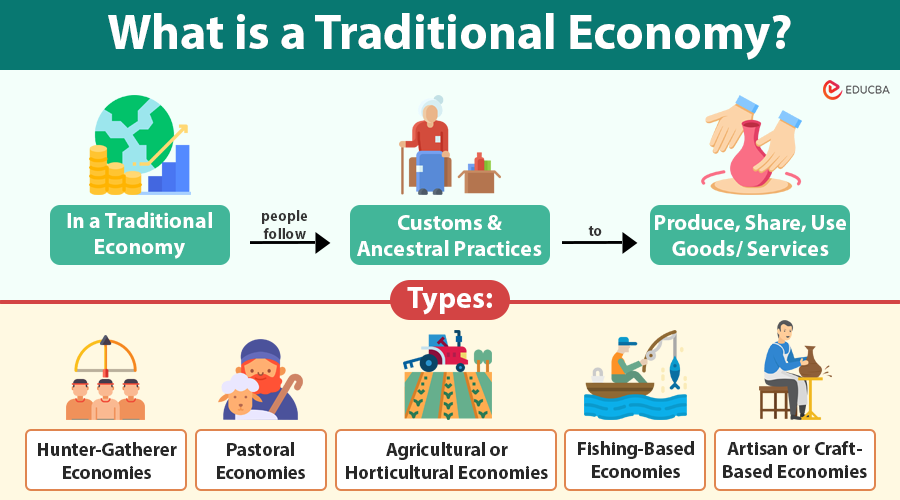
A traditional economy is an economic system in which traditions, customs, and beliefs help shape the goods and services the economy produces, as well as the rules and manner of their distribution. Unlike market or command economies, the traditional model relies on historical precedent and community-driven stability.
The Role of Barter in Local Trade
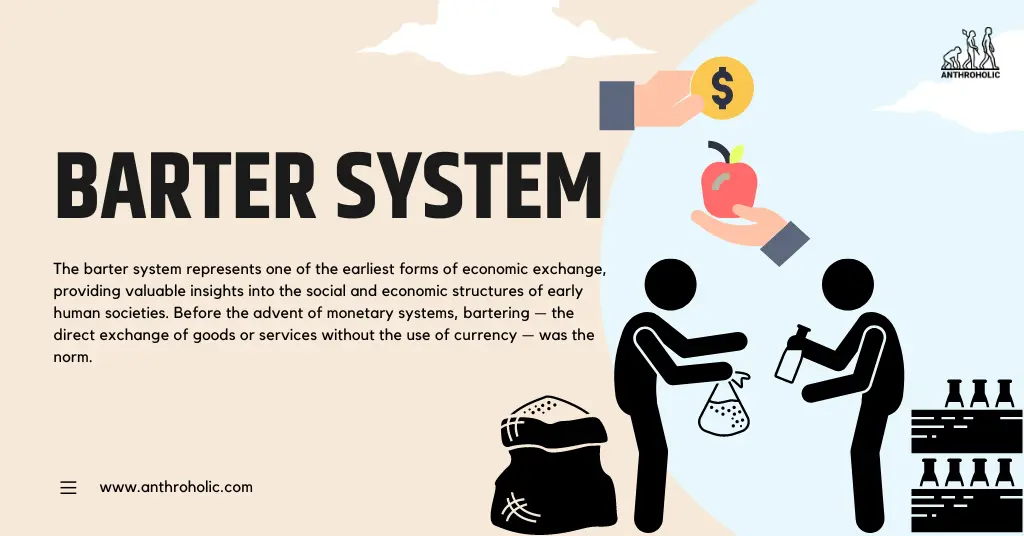
At the heart of a traditional economy lies the barter system. Barter is the direct exchange of goods and services without the use of a medium of exchange, such as money. In a financial sense, this requires a “double coincidence of wants”—both parties must have exactly what the other needs at the same time. While this may seem inefficient compared to modern credit systems, it fosters deep community ties. In these economies, wealth is not measured by digits in a bank account but by tangible assets: livestock, grain, tools, or specialized skills.
How Customs and Beliefs Shape Resource Allocation
In a traditional economy, the “business finance” of the community is dictated by social roles. If your father was a fisherman, you are likely to be a fisherman. This lack of upward mobility or career diversification creates a highly predictable economic environment. Resource allocation isn’t determined by a “market price” or a “government mandate,” but by what has worked for generations. This provides a level of financial security and social cohesion that modern, volatile market economies often lack, albeit at the cost of rapid growth and innovation.
The Mechanics of Barter in a Modern Financial Context
While traditional economies are often viewed as “primitive,” the mechanics of barter have never truly disappeared. In fact, savvy business owners and individuals looking for side hustles often turn to barter to preserve cash flow and maximize the value of their inventory or time.
Challenges of Direct Exchange and the Valuation Problem
In a traditional economy, the lack of a standardized currency makes “investing” difficult. If you have an excess of wheat, you must trade it for something that won’t spoil, or you lose your wealth. This is the valuation problem. In modern personal finance, we use money as a store of value. However, the traditional economy teaches us the importance of utility. In a crisis, a tangible asset (like a tool or food) may have more “real” value than a depreciating currency.
Modern Barter as a Side Hustle and Business Strategy
Today, many professionals use traditional economic principles to build wealth outside the traditional banking system. For instance, a graphic designer might trade a logo design for legal services from an attorney. In the world of business finance, this is known as a trade exchange. It allows businesses to acquire needed services without an immediate cash outlay, effectively improving their bottom line. It is important to note, however, that from a tax perspective, the IRS and other tax authorities often view bartered services as taxable income, requiring a professional approach to record-keeping.
Transitioning from Tradition to Market Economies
The shift from a traditional economy to a market or command economy marks a turning point in how a society handles its money and growth. This transition is usually driven by the need for scalability and the desire for a more versatile medium of exchange.
The Evolution of Money and Mediums of Exchange
As communities grew, the limitations of bartering became apparent. This led to the creation of “commodity money”—items like salt, shells, or precious metals that everyone agreed had value. This was the first step toward the modern financial tools we use today. By standardizing value, societies moved away from purely custom-based trade and toward a system where prices could be compared across different regions, allowing for the birth of global trade and complex investing.
Why Some Societies Retain Traditional Financial Structures
Even in 2024, some indigenous populations and rural communities in parts of Africa, Asia, and South America retain traditional economic structures. They do so because these systems are inherently sustainable. Because they rely on local resources and proven methods, they are often more resilient to global stock market crashes or inflationary spikes. For the modern investor, this highlights the importance of “diversification” not just in stocks, but in the types of systems one relies on for survival and prosperity.
Comparative Analysis: Traditional vs. Command vs. Market Economies
To understand the financial implications of a traditional economy, one must compare it to the other two major economic pillars: the Market Economy (capitalism) and the Command Economy (centralized planning).
Stability vs. Growth in Business Finance
In a market economy, the primary goal is growth and profit. This leads to innovation but also to “boom and bust” cycles. In a command economy, the government controls the money, which can lead to rapid industrialization but often results in inefficiencies.
The traditional economy, by contrast, prioritizes stability. There is no such thing as a “recession” in a traditional economy in the way we understand it; there are only seasons of plenty and seasons of scarcity. For those interested in sustainable business models, the traditional economy offers a blueprint for operating within one’s means and maintaining a long-term perspective.
Sustainability and Circular Economies
Modern “green” finance and the concept of a circular economy (where waste is eliminated and resources are continually reused) are essentially sophisticated versions of traditional economic customs. In a traditional setting, nothing is wasted because resources are perceived as finite and precious. Modern businesses are increasingly adopting these “ancient” customs to improve their corporate social responsibility (CSR) profiles and reduce long-term operational costs.
The Future of Exchange: Digital Barter and Peer-to-Peer Finance
As we look toward the future of money, we see a fascinating trend: technology is allowing us to return to the principles of the traditional economy, but on a global scale.
Blockchain and the “New Traditionalism”
Blockchain technology and smart contracts are, in many ways, a high-tech version of the trust-based barter system. In a traditional economy, trade happens because of a social contract and mutual trust. In a decentralized finance (DeFi) ecosystem, code replaces the “custom,” but the result is the same: a peer-to-peer exchange that bypasses central banks. This allows for a more direct form of “digital bartering” where assets can be swapped instantly without a fiat currency intermediary.
Lessons for Personal Finance and Investing
What can the modern individual learn from the traditional economy?
First, the importance of tangible skills. In a world where AI and automation are changing the job market, having a “custom-based” skill—something you can do with your hands or provide directly to your community—is a powerful hedge against economic instability.
Second, the value of community-based wealth. While personal investing is important, the traditional economy reminds us that social capital—your network of people who can help you in times of need—is just as valuable as financial capital.
In conclusion, the traditional economy, defined by its reliance on bartering and customs, is far from an obsolete relic. It is the bedrock upon which all modern financial systems are built. By understanding its mechanics, we can become more versatile in our approach to money, recognizing that while the tools of exchange have changed, the fundamental principles of value, trust, and community remains the same. Whether you are looking to start a side hustle through bartering or seeking to diversify your investment portfolio with tangible assets, the lessons of the traditional economy are as relevant today as they were thousands of years ago.
aViewFromTheCave is a participant in the Amazon Services LLC Associates Program, an affiliate advertising program designed to provide a means for sites to earn advertising fees by advertising and linking to Amazon.com. Amazon, the Amazon logo, AmazonSupply, and the AmazonSupply logo are trademarks of Amazon.com, Inc. or its affiliates. As an Amazon Associate we earn affiliate commissions from qualifying purchases.