
In the complex world of global finance, few currencies have garnered as much international attention in recent years as the Russian Ruble (RUB). As the official currency of the Russian Federation, the ruble is not just a medium of exchange for over 140 million people; it is a barometer for geopolitical shifts, commodity market fluctuations, and the resilience of emerging market financial systems. For investors, business travelers, and finance enthusiasts, understanding what type of currency Russia uses—and how that currency functions within the modern economic framework—is essential.

The Russian Ruble is one of the oldest currencies in the world, with a history spanning several centuries. However, its modern iteration is a sophisticated fiat currency managed by the Central Bank of the Russian Federation. This article explores the nuances of the ruble, from its physical denominations to its digital future, and its role in the global financial ecosystem.
The Fundamentals of the Russian Ruble (RUB)
The official currency of Russia is the Russian Ruble, denoted by the ISO code RUB and the symbol ₽. While many people are familiar with the name, the mechanics of the currency and its internal structure are vital for anyone engaging with the Russian financial system.
Denominations and Sub-units
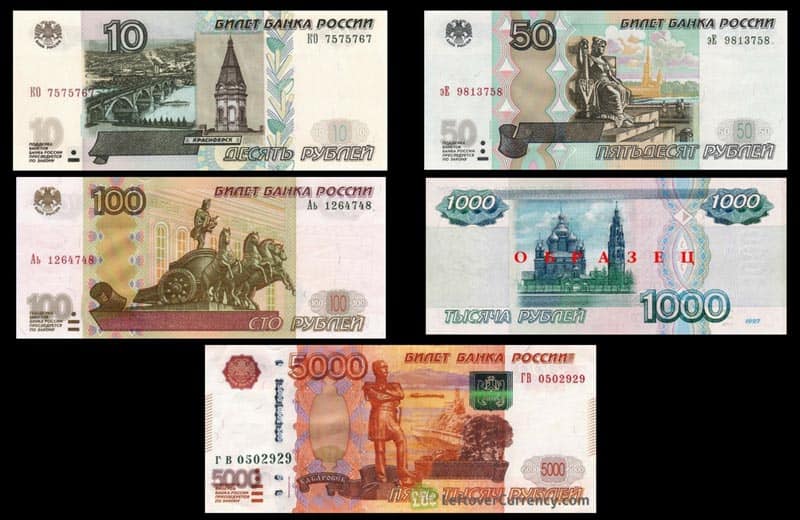
The ruble is divided into 100 kopeks (kopeyka). While inflation over the decades has made the kopek less relevant for everyday transactions, it remains the formal accounting unit. Banknotes currently in circulation include denominations of 5, 10, 50, 100, 200, 500, 1,000, 2,000, and 5,000 rubles. In recent years, the Central Bank has updated the design of these notes—most notably the 200 and 2,000 ruble notes—to include enhanced security features and modern imagery.
The Central Bank’s Role
The Central Bank of Russia (CBR) is the sole issuer of the currency and the primary architect of the nation’s monetary policy. Unlike many Western central banks that focus strictly on inflation targeting, the CBR has historically had to balance inflation control with the management of extreme exchange rate volatility. In a “Money” context, understanding the CBR’s interventions—such as interest rate hikes and capital controls—is crucial for assessing the ruble’s stability as a financial asset.
Currency Markets and Exchange Rate Dynamics
For those interested in forex trading or international business finance, the ruble represents a unique case study in market volatility and state intervention. Its value is deeply intertwined with the global price of commodities, particularly oil and natural gas.
The Commodity Connection
Russia is one of the world’s largest exporters of energy. Historically, the ruble has functioned as a “commodity currency.” When global Brent crude prices rise, the ruble typically strengthens due to increased export revenues. Conversely, a drop in oil prices often leads to a depreciation of the currency. For investors, this creates a correlation that must be factored into any portfolio involving Russian assets or companies.
Geopolitical Factors and Capital Controls
In recent years, the ruble has moved away from a purely market-driven floating exchange rate to a more managed regime. Following international sanctions and the freezing of a significant portion of Russia’s foreign exchange reserves, the Russian government implemented strict capital controls. These measures—such as requiring exporters to sell foreign currency and limiting the amount of money citizens can move abroad—have created a “de-coupled” market. While the official exchange rate might appear stable, the liquidity available to international investors is often restricted, making the ruble a complex tool for traditional currency speculation.
The Ruble in International Trade
A significant shift in “Business Finance” regarding Russia is the move toward “de-dollarization.” Russia has increasingly sought to settle international trade in “friendly” currencies like the Chinese Yuan (CNY) or the ruble itself. This transition affects how multinational corporations manage their currency risk when dealing with Russian counterparts.

The Evolution of Payment Systems and Financial Tools
Understanding the currency is only half the battle; one must also understand the infrastructure used to move it. The financial landscape in Russia has undergone a radical transformation, moving away from Western-centric systems toward domestic alternatives.
The Mir Payment System
Following the exit of major international payment networks like Visa and Mastercard from the Russian market, the domestic “Mir” payment system became the backbone of personal finance in Russia. Mir (which means both “world” and “peace” in Russian) is a national card system established by the Central Bank. For anyone looking at the “Financial Tools” niche, Mir is a fascinating example of financial sovereignty. It allows for seamless domestic transactions, though its international acceptance is currently limited to a handful of partner countries.
The Faster Payments System (FPS)
Russia has one of the most advanced peer-to-peer (P2P) payment infrastructures in the world. The Faster Payments System (FPS) allows users to transfer rubles instantly using only a phone number, regardless of which bank the sender or receiver uses. This has significantly reduced the cost of financial services for the average consumer and streamlined “Online Income” pathways for freelancers and small businesses within the country.
Banking and Digital Interfaces
Russian banks have long been pioneers in digital banking. Apps from major institutions often integrate stock trading, insurance, and tax payments into a single interface. Even as these institutions face international restrictions, their internal financial technology (FinTech) remains robust, providing a high level of utility for ruble-denominated transactions within the domestic economy.
The Digital Ruble and the Future of Money
As the world moves toward digitalization, Russia is not lagging. The Central Bank of Russia has been aggressively developing the “Digital Ruble,” a Central Bank Digital Currency (CBDC) that represents a new frontier for the nation’s money.
What is the Digital Ruble?
Unlike cryptocurrencies such as Bitcoin, which are decentralized, the Digital Ruble is a digital form of the national currency issued directly by the Central Bank. It is a third form of money, coexisting alongside physical cash and electronic bank deposits. From a “Personal Finance” perspective, the digital ruble aims to make transactions cheaper and more transparent, as the Central Bank can track the lifecycle of each digital unit.
Strategic Implications of a CBDC
For the Russian government, the digital ruble is a tool for bypassing traditional international banking rails like SWIFT. By creating a digital currency that can be exchanged directly with the CBDCs of other nations (such as the Digital Yuan), Russia aims to create a new financial architecture. This has significant implications for global “Investing” and “Business Finance,” as it could potentially create a parallel financial system insulated from Western oversight.
Risks and Considerations for Investors
While the digital ruble offers efficiency, it also presents risks related to privacy and centralized control. For those holding ruble-denominated assets, the transition to a digital-first economy means staying abreast of new regulations regarding how digital assets are taxed and stored.
Conclusion: Navigating the Ruble Niche
The Russian Ruble is far more than just “the type of currency Russia uses.” It is a dynamic financial instrument that sits at the intersection of traditional commodity markets and cutting-edge FinTech. Whether you are analyzing it from a personal finance perspective—wondering how to manage expenses in a fluctuating market—or from a business finance perspective—evaluating the risks of de-dollarized trade—the ruble requires a nuanced understanding.
As the global financial landscape continues to fragment, the ruble’s journey from a commodity-dependent currency to a pioneer in sovereign digital payments serves as a critical case study for the future of money. For those engaged in investing and global finance, keeping a close eye on the Russian Central Bank’s policies and the expansion of the Mir and Digital Ruble systems is not just an academic exercise—it is a practical necessity in a rapidly changing world.
aViewFromTheCave is a participant in the Amazon Services LLC Associates Program, an affiliate advertising program designed to provide a means for sites to earn advertising fees by advertising and linking to Amazon.com. Amazon, the Amazon logo, AmazonSupply, and the AmazonSupply logo are trademarks of Amazon.com, Inc. or its affiliates. As an Amazon Associate we earn affiliate commissions from qualifying purchases.