
Understanding the Material Science of Liquid Rubber Coatings
When addressing the technical requirements of liquid rubber application, one must first analyze the chemical composition of the sealant itself. Flex Seal, a high-performance, thick-bodied liquid rubber coating, operates on a different rheological scale than standard latex or oil-based paints. Because it is engineered to form a thick, waterproof, and flexible membrane, its viscosity is significantly higher than traditional architectural coatings. This high viscosity dictates a specific set of mechanical requirements for any application tool, particularly the brush.
The physics of applying a rubberized sealant involves managing the “drag” and “leveling” properties of the material. As the liquid rubber is spread across a substrate, it undergoes a curing process that transitions it from a high-viscosity liquid to a solid elastomer. If the applicator tool—the brush—lacks the necessary structural integrity, the user will experience “clumping” or “shedding,” both of which compromise the technical integrity of the seal. Therefore, selecting the correct brush is not merely a matter of convenience; it is a technical necessity to ensure the polymer chains within the sealant bond correctly to the surface without air entrapment or thin spots.
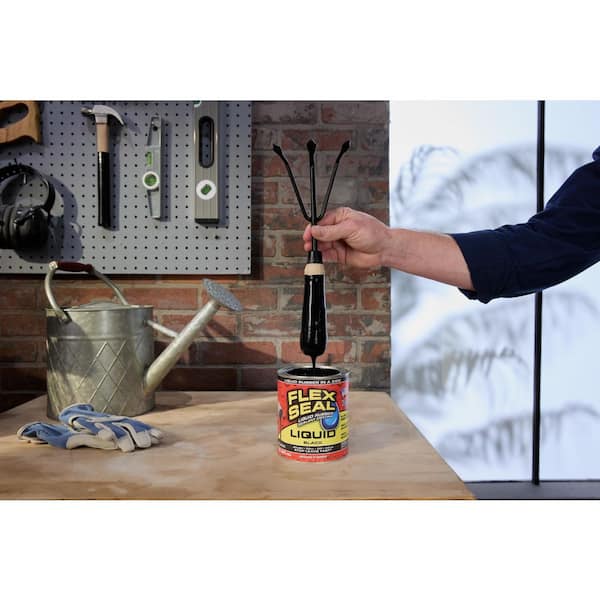
To achieve a professional-grade finish that meets the manufacturer’s performance specifications, the brush must be able to withstand the chemical solvents used to keep the rubber in a liquid state. Traditional natural fibers often fail in this environment, as they are too porous and lack the “spring” required to move a heavy, viscous mass effectively across a textured or uneven surface.
The Tech-Forward Approach to Tool Selection: Synthetic vs. Natural
In the world of material application technology, the debate between synthetic and natural bristles is settled by the chemistry of the coating. For Flex Seal and similar rubberized membranes, synthetic bristles—specifically those made from high-quality Nylon or Polyester blends—are the industry standard.
The Engineering Behind Synthetic Nylon and Polyester Bristles
Nylon and polyester filaments are engineered through an extrusion process that allows for precise control over the stiffness, taper, and “flagging” (splitting of the tips) of the bristles. For thick coatings like Flex Seal, a “stiff” or “extra-stiff” synthetic brush is required. The stiffness provides the mechanical leverage necessary to push the thick liquid into cracks, crevices, and porous surfaces.
Nylon is particularly valued for its durability and abrasion resistance. When working with the rough surfaces where sealants are often applied—such as concrete, rusted metal, or weathered wood—nylon bristles maintain their shape better than any other material. Polyester, on the other hand, is known for its ability to maintain stiffness even when exposed to high-humidity environments or water-based additives. A blend of these two materials creates a brush that is both chemically resilient and physically robust enough to handle the heavy load of a rubberized sealant.
Avoiding the Pitfalls of Natural Boar Hair
Natural bristles, often made from hog or boar hair, are highly prized in the world of fine oil-based varnishes due to their natural “flags” and soft touch. However, they are fundamentally incompatible with liquid rubber technology. Natural fibers are organic and porous; they absorb the solvents and the rubber solids themselves. This causes the bristles to swell, lose their shape, and eventually become a gummy, unusable mass within minutes of application. Furthermore, the high viscosity of Flex Seal creates significant tension on the bristles. Natural hair is prone to snapping or shedding under this tension, leaving organic debris embedded within the waterproof membrane, which can create points of failure where water might eventually penetrate.
Step-by-Step Tutorial: Precision Application for Maximum Seal Integrity
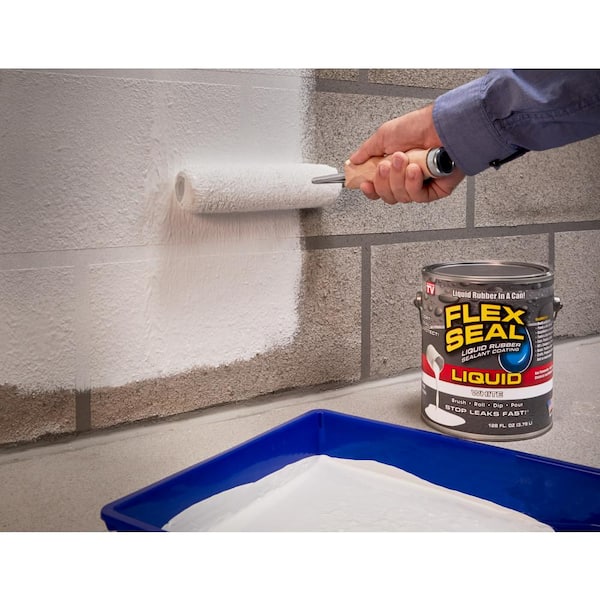
Achieving a hermetic seal requires more than just the right tool; it requires a systematic approach to application. This tutorial focuses on maximizing the technical performance of the liquid rubber through proper brush technique and layer management.
Surface Preparation and Initial Gadgetry
Before the brush even touches the product, the substrate must be technically sound. This involves using mechanical cleaners or chemical degreasers to ensure a high-energy surface that the rubber can bond to. In technical terms, we are looking for a clean “profile.” If the surface is too smooth, a light abrasion with a high-grit sandpaper or a wire brush (a specialized metal-tech tool) can increase the surface area for better mechanical adhesion.
The Cross-Hatch Application Technique
Once the surface is prepared, the first coat should be applied using a technique known in the industry as “cross-hatching.”
- The First Pass: Dip the synthetic brush approximately one-third of the way into the sealant. Do not overload the brush, as this leads to “pooling,” which interferes with the curing process. Apply the material in vertical strokes, ensuring that you are “massaging” the rubber into the substrate rather than just letting it sit on top.
- The Secondary Pass: While the first layer is still wet (or “open”), immediately go over the area with horizontal strokes. This cross-hatch pattern ensures that any micro-voids or “holidays” (uncoated spots) are filled.
- Layer Thickness: Technical data suggests that several thin layers are superior to one thick layer. A thick layer can develop a “skin” that prevents the underlying material from outgassing and curing properly, leading to a soft, unstable core. Using a stiff synthetic brush allows you to maintain a consistent “millage” (thickness) across the entire project.
Maintenance and Longevity: A Technical Guide to Tool Recovery
One of the most frequent questions regarding liquid rubber application is whether the brush can be saved or if it must be treated as a consumable. From a technical standpoint, Flex Seal is designed to be permanent, which makes tool recovery a race against the curing clock.
Chemical Solvents and Cleaning Protocols
To clean a synthetic brush after use with Flex Seal, you must use a solvent that can break down the rubber polymers before they fully cross-link. Mineral spirits or acetone are the most effective agents for this. The process involves a deep-soak and agitation, using a brush comb to pull the liquid rubber from the “heel” of the brush (the area near the metal ferrule).
However, there is a technical trade-off. Repeated exposure to heavy solvents can eventually degrade the epoxy used to hold the synthetic bristles in the ferrule. For most users, unless the brush is a high-end professional model, the cost-to-benefit ratio of cleaning often leans toward disposal. If the project is being performed in stages, a technical “hack” is to wrap the wet brush tightly in airtight plastic film or foil to prevent oxygen exposure, which can stall the curing process for a few hours.
The Disposable “Chip Brush” Strategy
In many industrial and DIY scenarios, the “chip brush”—a low-cost, disposable brush with synthetic or semi-synthetic bristles—is the preferred gadget. While they lack the refined finish of a professional sash brush, they are technically sufficient for utility sealing. The primary advantage is the elimination of solvent waste. Given the environmental and health considerations of using large quantities of acetone or mineral spirits for cleaning, utilizing a fresh, inexpensive synthetic chip brush for each coat is often the more “efficient” technological choice.
The Material Future: Advanced Applicators and Specialized Coatings
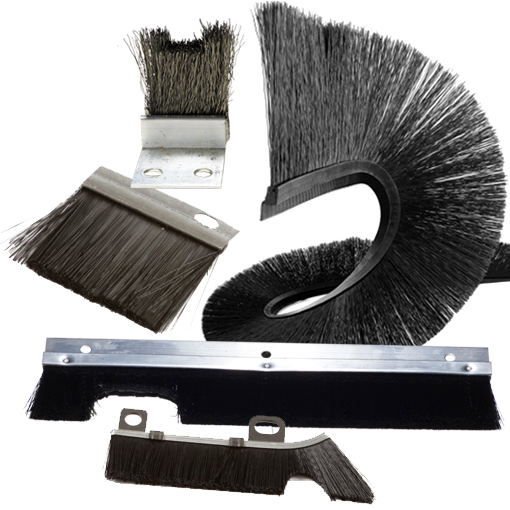
As the technology behind liquid membranes evolves, so too does the equipment used to apply them. While the synthetic brush remains the most accessible and precise tool for detail work, we are seeing a shift toward specialized foam applicators and high-pressure spray systems for larger surface areas.
Flex Seal, due to its unique “self-leveling” properties, reacts well to the sheer forces applied by a stiff-bristle brush. This sheer actually helps the material “wet out” the surface, creating a more intimate bond at the molecular level. Future developments in “smart” coatings may include materials that change color when the correct thickness is achieved or brushes with integrated sensors to monitor application pressure.
For now, the technical consensus remains firm: the synergy between a high-viscosity liquid rubber and a high-stiffness synthetic filament brush is the gold standard. By understanding the mechanical requirements of the coating and the structural properties of the applicator, users can ensure that their waterproofing efforts are not just temporary fixes, but long-term engineering successes. Whether you are sealing a leaking pipe or reinforcing a structural joint, the technical precision of your brush choice is the foundation upon which the entire seal is built.
aViewFromTheCave is a participant in the Amazon Services LLC Associates Program, an affiliate advertising program designed to provide a means for sites to earn advertising fees by advertising and linking to Amazon.com. Amazon, the Amazon logo, AmazonSupply, and the AmazonSupply logo are trademarks of Amazon.com, Inc. or its affiliates. As an Amazon Associate we earn affiliate commissions from qualifying purchases.