
The seemingly simple question, “What two countries share the longest border?”, belies a complex web of history, geopolitics, and national identity. While geographical facts are often presented in isolation, the sheer scale of a shared border speaks volumes about the enduring relationship between nations. It’s a testament to shared landscapes, intertwined histories, and, crucially, the distinct yet coexisting national brands that have been forged over centuries. Understanding this longest border isn’t just about mapping lines on the earth; it’s about deciphering the deep-seated cultural, economic, and political forces that shape how nations present themselves to the world and how they are perceived – in essence, their national brand.
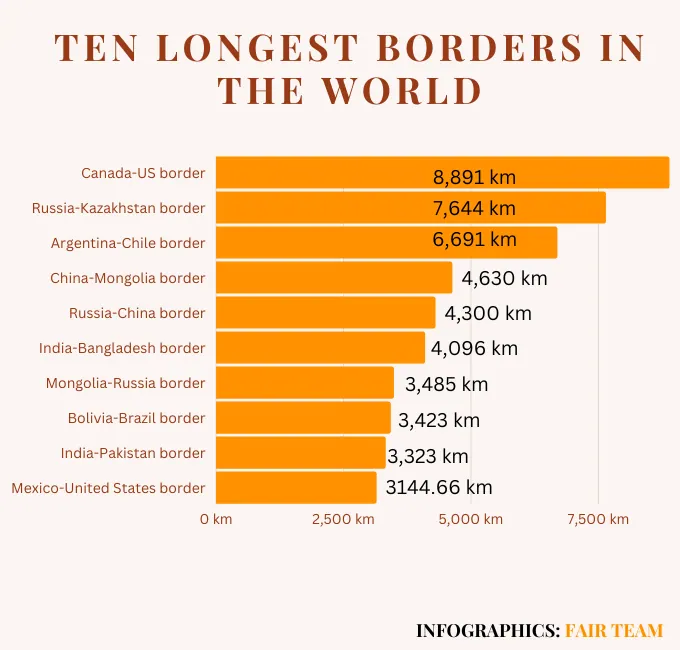
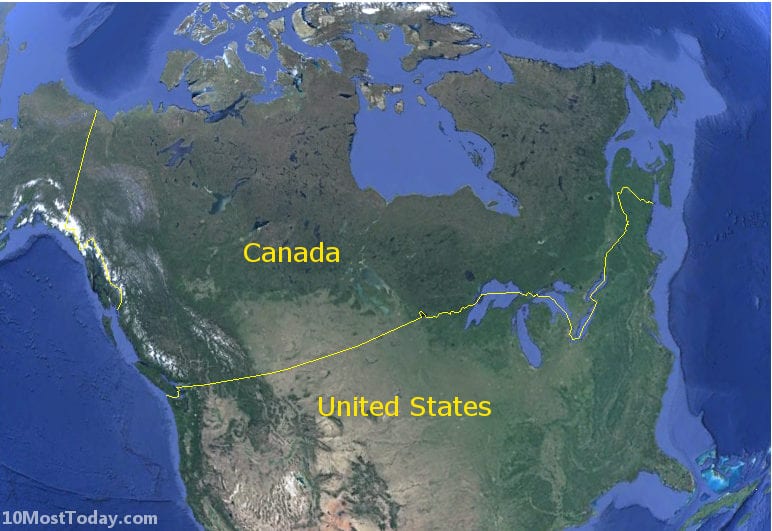
The answer to this persistent geographical query is the border between Canada and the United States. Stretching for an astounding 8,891 kilometers (5,525 miles), including the border with Alaska, this is not merely a line drawn on a map. It is a dynamic entity that has profoundly influenced the national brands of both Canada and the United States, shaping their economies, cultures, and their very identities on the global stage. This article will delve into the significance of this monumental border, exploring how its sheer length has acted as a catalyst for the development and evolution of the distinct yet interconnected national brands of Canada and the United States.
The Genesis of a Colossal Frontier: Historical Underpinnings of a Shared Identity
The very existence of such an extensive shared border is a product of historical happenstance and strategic decisions made over centuries. Understanding its origins is crucial to appreciating the long-term impact on the national brands of both countries.
The Legacy of Colonial Expansion and Shifting Sovereignties
The foundation of the Canada-US border can be traced back to the colonial era. Initially, the vast territories were claimed by European powers – primarily France and Great Britain in North America, and Spain in the southern regions that would eventually become the United States. The Seven Years’ War (French and Indian War) in the mid-18th century led to British dominance in North America, laying the groundwork for a future relationship between British North America (eventually Canada) and the newly formed United States.
Following the American Revolution, the border between the nascent United States and British North America was established. Subsequent treaties, including the Treaty of Paris (1783) and later agreements in the 19th century, gradually defined and refined the boundary. This process was not without its disputes, notably the Oregon boundary dispute, which was ultimately settled peacefully, a testament to an early commitment to diplomatic resolution – a key element in the nascent “brand” of both nations as responsible global actors. The continuous negotiation and peaceful resolution of territorial claims, despite their vast scale, began to shape a narrative of responsible governance and stability, contributing positively to their respective national brands.
The Unspoken Alliance: A Shared Defense and Economic Symbiosis
The sheer length of the border, especially after the US acquired Alaska from Russia in 1867, presented both nations with unique security considerations. The concept of an “undefended border,” a symbol of trust and cooperation, emerged over time. This has become a cornerstone of the Canadian national brand, projecting an image of peaceful coexistence and a commitment to diplomacy. For the United States, it reinforced its image as a benevolent northern neighbor, though its global “brand” has been more defined by its military and economic power.
This shared frontier has fostered an unparalleled economic interdependence. The free flow of goods, services, and people across this vast expanse has been a significant driver of economic growth for both nations. This economic synergy has become an integral part of their respective national brands. Canada often leverages its stable economic relationship with the US as a signifier of its reliability and as a platform for its own international trade ventures. The US, in turn, benefits from a secure and prosperous northern neighbor, contributing to its image of regional stability and economic partnership.
The Border as a Brand Differentiator: Crafting Distinct National Identities
While the shared border fosters interdependence, it has also been a powerful force in accentuating the distinct national brands of Canada and the United States. The sheer proximity and the continuous interaction have highlighted key differences, which both nations have strategically used to define themselves.
Canada: The Harmonious Neighbor and the Culture of Accommodation
For Canada, the shared border has, in many ways, helped to define its national identity by contrast. Its “brand” has often been built on the narrative of being a more peaceful, multicultural, and socially progressive nation than its southern neighbor. The “undefended border” is a potent symbol of this. It projects an image of Canada as a welcoming, stable, and diplomatic country, a stark contrast to the more assertive and sometimes interventionist global persona of the United States.
The Canadian brand emphasizes multilateralism, a commitment to social safety nets, and a distinctive cultural mosaic, often seen as a deliberate choice in contrast to the American “melting pot” narrative. This differentiation is not about superiority but about establishing a unique identity that resonates with international audiences seeking alternative models of governance and societal organization. The sheer scale of the border interaction, while a constant reminder of American influence, has also spurred a conscious effort by Canada to cultivate and promote its own distinct cultural and political brand.
The United States: The Global Powerhouse and the Influence of Proximity
The United States, on the other hand, has historically defined its brand more by its global aspirations and its economic and military might. The vast northern border, while requiring significant management, has not been the primary driver of its international image in the same way it has for Canada. Instead, the US brand is often characterized by innovation, opportunity, and a sometimes-unilateral approach to global affairs.
However, the long border undeniably plays a role. It represents a stable and prosperous North American economic bloc, a key component of the US’s global economic influence. The cultural exchange across the border, while often seen as Canada absorbing American culture, also means that aspects of American culture are filtered and adapted within Canada, subtly reinforcing certain aspects of the US brand. Furthermore, the sheer economic power emanating from the US, and its influence on Canadian policy and consumer trends, further solidifies its position as a dominant regional and global player, influencing the very “brand” of its northern neighbor.
The Economic Tapestry Woven Across the Frontier
The economic implications of such a colossal border are profound and have shaped the economic narratives – the economic “brand” – of both Canada and the United States. It’s a story of mutual benefit, but also of strategic economic positioning.
Intertwined Economies: Trade, Investment, and Labor Mobility
The Canada-US border facilitates the largest bilateral trading relationship in the world. This immense volume of trade is not just a statistic; it’s a cornerstone of both economies and a critical element in their respective national brands. For Canada, its economic brand is intrinsically linked to its stable and robust trade relationship with the US, often being promoted as a reliable partner for international investment. The flow of goods and services across this long frontier underpins industries from manufacturing and agriculture to technology and natural resources.
For the United States, this economic partnership contributes to its image as a global economic leader, with a vast and integrated North American market. The ability to source resources, manufacture goods, and access markets across this immense border reinforces its economic might. The movement of skilled labor and investment further deepens this integration, creating a complex economic ecosystem that benefits both nations and contributes to their perceived economic stability and strength on the world stage.
Beyond Trade: The Role of Infrastructure and Security in National Branding
The management of such an extensive border requires massive investment in infrastructure, including ports of entry, roads, and communication networks. This infrastructure development, while primarily functional, also subtly contributes to national branding. It signals efficiency, connectivity, and a commitment to facilitating cross-border commerce. The smooth and efficient operation of these border crossings becomes a silent endorsement of the logistical capabilities and administrative competence of both nations, enhancing their reputations for effective governance.
Furthermore, border security, while a necessity, also plays a role in national branding. Canada’s emphasis on a relatively open and welcoming border policy, contrasted with the more stringent security measures implemented by the United States, contributes to their distinct images. Canada’s brand often emphasizes trust and cooperation, while the US brand, particularly in the post-9/11 era, has had to balance security concerns with its image as an open society. The effectiveness and perceived fairness of border security operations are thus indirectly linked to the broader national brands being projected.
Conclusion: A Border as a Brand Cornerstone
The longest border in the world, shared by Canada and the United States, is far more than a geographical demarcation. It is a living entity that has profoundly shaped the national brands of both countries. It has fostered an unprecedented level of economic integration, serving as a testament to their mutual reliance and contributing to their respective images as stable and prosperous economic powers.
Simultaneously, this colossal frontier has acted as a powerful force in differentiating their national identities. Canada has strategically leveraged its unique position to cultivate a brand of peaceful diplomacy, multiculturalism, and social progressiveness, often in contrast to its powerful southern neighbor. The United States, while its brand is more globally driven, benefits from the immense economic engine that this border represents, reinforcing its image as a dominant economic force.
In essence, the Canada-US border is a constant, silent dialogue about identity, economics, and governance. It demonstrates how geographical realities, when understood through the lens of national branding, can offer profound insights into the enduring narratives that nations construct about themselves and present to the world. The enduring ties that bind these two nations across thousands of kilometers of land serve as a compelling case study in how even the most fundamental geographical features can become integral pillars of a nation’s brand.
aViewFromTheCave is a participant in the Amazon Services LLC Associates Program, an affiliate advertising program designed to provide a means for sites to earn advertising fees by advertising and linking to Amazon.com. Amazon, the Amazon logo, AmazonSupply, and the AmazonSupply logo are trademarks of Amazon.com, Inc. or its affiliates. As an Amazon Associate we earn affiliate commissions from qualifying purchases.