
Navigating the labyrinthine world of tax preparation can be daunting, and for millions of Americans, TurboTax stands as a familiar beacon, promising simplicity and accuracy. Yet, the initial question often isn’t how to use TurboTax, but which TurboTax to use. With multiple editions tailored to different financial situations, choosing the right one is crucial for both maximizing your deductions and ensuring compliance without overspending on unnecessary features. This comprehensive guide will dissect the various TurboTax offerings, helping you pinpoint the ideal solution for your unique financial profile, ultimately empowering you to file with confidence and efficiency.
Understanding Your Tax Profile: The First Step
Before you even think about opening the TurboTax software, the most critical step is to accurately assess your own tax situation. Your income sources, deductions, and financial activities throughout the year dictate the complexity of your return and, consequently, the TurboTax edition you’ll require. Misjudging this can lead to missed deductions or, conversely, paying for features you don’t need.
Simple Filers: W-2 Income and Standard Deductions
If your financial life is relatively straightforward, you likely fall into the “simple filer” category. This typically includes individuals whose primary income comes from a single employer (reported on a W-2), do not own a home, have no significant investments, and plan to take the standard deduction. Common scenarios include students, young professionals, and retirees with basic income streams like Social Security. For these individuals, tax filing is usually confined to Form 1040, possibly with a few basic schedules for student loan interest or specific tax credits like the Child Tax Credit. Opting for a more advanced version of TurboTax would be an unnecessary expense in these cases.
Moderate Complexity: Itemized Deductions and Investment Income
Many taxpayers find themselves a step beyond simple, entering the realm of moderate complexity. This usually applies to homeowners who might itemize deductions for mortgage interest and property taxes, individuals with significant charitable contributions, or those with investments that generate capital gains or losses, dividends, or interest income. If you receive forms such as Schedule A (Itemized Deductions), Schedule B (Interest and Ordinary Dividends), or Schedule D (Capital Gains and Losses), your tax profile leans towards this category. While not as intricate as business filings, these elements require more detailed reporting and calculations than what a basic free edition can typically handle. Choosing an edition that explicitly supports these schedules ensures all relevant financial activities are accurately captured.
Complex Filers: Self-Employment, Rental Properties, and Business Income
The most intricate tax situations often involve self-employment, rental property ownership, or operating a small business. Freelancers, independent contractors, gig economy workers, and small business owners typically report their income and expenses on Schedule C (Profit or Loss from Business). Landlords, on the other hand, manage rental income and related expenses on Schedule E (Supplemental Income and Loss). These scenarios come with a multitude of specific deductions, depreciation calculations, and the added responsibility of self-employment taxes (Social Security and Medicare). For these taxpayers, accurate expense tracking and maximizing legitimate deductions are paramount, making a specialized TurboTax edition not just convenient but financially essential. Trying to force a complex return into a basic software version is a recipe for errors, missed savings, and potential IRS scrutiny.
Special Situations: Tax Credits and Unique Deductions
Beyond the primary income and deduction types, many taxpayers qualify for various tax credits and unique deductions that can significantly impact their final tax liability or refund. This includes credits for education expenses, dependent care, retirement savings contributions (Saver’s Credit), energy-efficient home improvements, and health savings account (HSA) deductions. While some basic credits are covered by simpler editions, a more comprehensive understanding of your eligibility for various credits often requires an edition with a broader range of forms and intelligent guidance. Identifying and claiming all eligible credits is a key strategy for reducing your tax burden, and the right TurboTax version can guide you through the process, ensuring you don’t leave money on the table.
A Deep Dive into TurboTax Editions
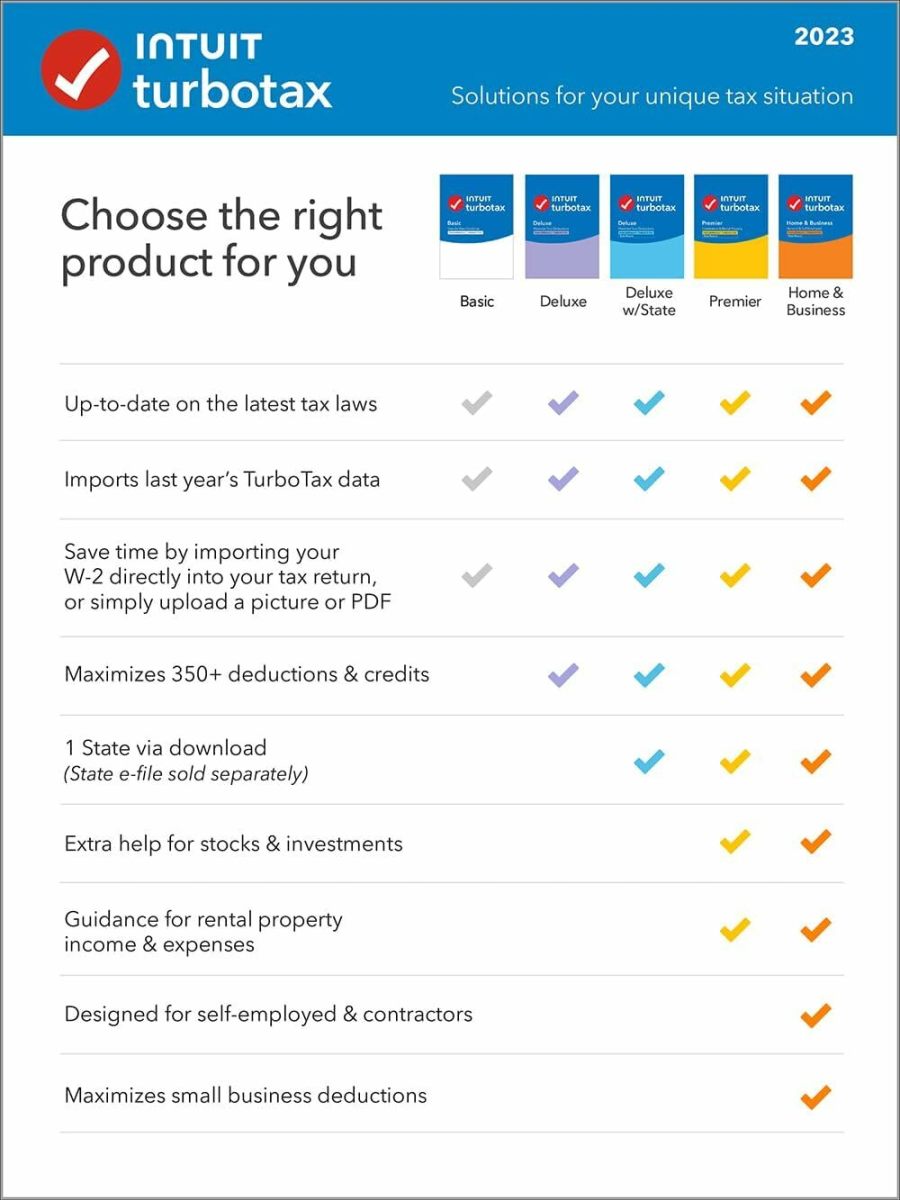
Once you have a clear understanding of your tax profile, it’s time to match it with the specific TurboTax edition that best meets your needs. TurboTax offers a tiered system, with each level providing more features and supporting a broader range of tax forms and scenarios.
TurboTax Free Edition: For the Basics
As the name suggests, the TurboTax Free Edition is designed for the simplest tax situations. It is ideal for individuals with W-2 income, who take the standard deduction, and may claim basic credits like the Child Tax Credit or Earned Income Tax Credit. It handles student loan interest deductions and includes support for Form 1040. However, it explicitly does not support itemized deductions, rental property income, or self-employment income (Schedule C). It’s a fantastic option for those just starting their careers or with very uncomplicated financial lives, providing a quick and easy way to file without any cost.
TurboTax Deluxe: Beyond the Basics
TurboTax Deluxe is arguably the most popular choice, as it caters to the needs of the majority of taxpayers who own homes, make charitable contributions, or have significant medical expenses that allow them to itemize deductions. This edition unlocks Schedule A, making it essential for homeowners, and includes features designed to help maximize over 350 deductions and credits. While it supports some basic investment income (interest and dividends), it does not fully cover complex investment sales (like stocks or mutual funds) or rental property income. For many middle-income families and individuals who own property, Deluxe strikes a balance between comprehensive features and affordability.
TurboTax Premier: Investing and Rental Properties
For investors and landlords, TurboTax Premier is the go-to solution. This edition builds upon the Deluxe features by adding comprehensive support for investments and rental property income. It handles capital gains and losses (Schedule D), employee stock plans (ESPPs), cryptocurrency transactions, and other complex investment scenarios. Crucially, it also includes support for Schedule E (rental property income and expenses), making it indispensable for anyone earning income from a rental property. Premier is designed to guide users through the intricacies of investment reporting and rental deductions, helping to ensure accuracy and optimize financial outcomes in these areas.
TurboTax Self-Employed: For Entrepreneurs and Freelancers
If you are a freelancer, independent contractor, small business owner, or anyone who receives a 1099-NEC or 1099-K, TurboTax Self-Employed is tailored specifically for you. This edition provides comprehensive support for Schedule C (Profit or Loss from Business), guiding you through the process of reporting business income and expenses. It features industry-specific deduction identification, mileage tracking, and tools for estimating quarterly taxes. Given the complexities of self-employment tax and the potential for numerous business deductions, this edition is invaluable for ensuring compliance and maximizing legitimate write-offs, which can significantly impact your net income and overall tax liability.

TurboTax Live: Expert Help When You Need It
For those who desire an extra layer of confidence or require personalized guidance, TurboTax Live offers integrated access to a tax expert. Available across all core editions (Live Basic, Live Deluxe, Live Premier, Live Self-Employed), this feature allows you to connect with a CPA or Enrolled Agent (EA) on demand. You can ask questions, get advice, or even have a tax expert review your entire return before you file, providing assurance that everything is accurate and optimized. For an additional fee, you can opt for TurboTax Live Full Service, where an expert handles your entire tax preparation from start to finish, essentially providing a virtual tax preparation service. This option is perfect for those who want professional expertise without the hassle of an in-person appointment.
TurboTax Business: For Corporations and Partnerships
While primarily focused on individual filers, TurboTax also offers a separate product, TurboTax Business. This edition is distinct from the personal tax software and is designed for more complex business structures, such as S corporations (Form 1120-S), C corporations (Form 1120), partnerships (Form 1065), and multi-member LLCs. It is not generally included in the common “What TurboTax do I need” discussion, which typically pertains to individual income tax returns (Form 1040). If your business operates under one of these entity types, you’ll need the specialized TurboTax Business software, not one of the personal editions.
Key Factors Beyond Your Tax Profile
While your tax profile is the primary determinant, several other factors should influence your decision when selecting a TurboTax edition. These considerations can impact your overall experience, cost, and peace of mind.
Price vs. Value: Weighing the Costs
Each TurboTax edition comes with a different price tag, increasing with the level of complexity and features. While it might be tempting to opt for the cheapest version, consider the value proposition. Paying a bit more for an edition that accurately captures all your deductions and credits could result in a significantly larger refund or a smaller tax bill, far outweighing the initial cost difference. Conversely, paying for features you don’t need is simply wasted money. Always balance the upfront cost with the potential financial benefits and the assurance of accurate filing. Look out for promotions and discounts, especially early in the tax season, which can reduce your out-of-pocket expenses.
User Experience and Support: Your Comfort Level
TurboTax is renowned for its intuitive, interview-style interface that guides users step-by-step. However, the depth of guidance and the availability of specific explanations can vary between editions. If you’re new to certain types of income or deductions (e.g., first-time landlord), an edition with robust explanatory content might be more valuable. Furthermore, consider the level of support you might need. The “Live” options provide direct access to tax experts, which can be invaluable for complex questions or simply for peace of mind. If you prefer to handle everything independently and are comfortable researching tax laws, the standard editions will suffice.
Accuracy Guarantees and Audit Support
All TurboTax editions typically come with an Accuracy Guarantee, promising to reimburse you for any penalties and interest if their software makes a calculation error. This provides a safety net. Additionally, many editions offer some level of audit support. This might range from guidance on how to respond to an IRS notice to representing you in front of the IRS. If you have a complex return or a situation that might be prone to audit, understanding the specific audit support included with your chosen edition can be a significant factor in your decision-making.
Making the Final Decision: A Step-by-Step Approach
Selecting the correct TurboTax edition doesn’t have to be a shot in the dark. By following a structured approach, you can confidently arrive at the best choice for your financial circumstances.
Gather Your Documents First
Before you even begin to interact with the TurboTax software, collect all your tax-related documents. This includes W-2s, 1099s (for interest, dividends, stock sales, self-employment), 1098s (for mortgage interest, student loan interest), receipts for deductions (charitable contributions, business expenses), and any other relevant statements. Having these documents organized and at hand will provide a complete picture of your income and expenses, making it far easier to determine your tax profile and, subsequently, the appropriate TurboTax edition.
Utilize TurboTax’s Free Assessment Tool
TurboTax, like many tax software providers, often includes a free online questionnaire or tool that helps assess your tax situation and recommend the most suitable product. Start with this. Many users can even begin their return with the Free Edition. As you input your information, TurboTax will prompt you if your situation requires an upgrade to a more advanced version. This “start for free and upgrade if needed” model is an excellent way to ensure you only pay for what you truly require.
Don’t Be Afraid to Upgrade
One of the biggest mistakes taxpayers make is trying to fit a complex return into a simpler, cheaper edition to save a few dollars. This can lead to missed deductions, calculation errors, or the inability to file certain required forms, potentially resulting in an audit or underpayment penalties. If TurboTax indicates you need to upgrade, view it not as an added expense, but as an investment in accuracy and potentially greater tax savings. The cost difference is often negligible compared to the financial benefits of proper filing. Remember, you can usually upgrade seamlessly within the software if your tax situation proves more complex than initially anticipated.

Consider Your Future Tax Needs
While your current tax situation is paramount, it’s also wise to consider any foreseeable changes in the upcoming year. Are you planning to start a side hustle? Buy a home? Make significant investments? If your financial landscape is likely to evolve, keeping these future needs in mind can help you better understand the scope of support you might eventually require from your tax software, even if it doesn’t directly impact your current year’s choice. Proactive planning can make subsequent tax seasons much smoother.
In conclusion, the “best” TurboTax edition isn’t a universal answer; it’s the one that precisely aligns with your unique financial narrative. By diligently assessing your income sources, deductions, and investment activities, and then carefully matching these with the capabilities of each TurboTax product, you can ensure a tax filing experience that is both accurate and economically sensible. Make an informed choice, file with confidence, and secure the financial peace of mind you deserve.
aViewFromTheCave is a participant in the Amazon Services LLC Associates Program, an affiliate advertising program designed to provide a means for sites to earn advertising fees by advertising and linking to Amazon.com. Amazon, the Amazon logo, AmazonSupply, and the AmazonSupply logo are trademarks of Amazon.com, Inc. or its affiliates. As an Amazon Associate we earn affiliate commissions from qualifying purchases.