
The transportation industry is currently undergoing its most significant transformation since the invention of the internal combustion engine. At the heart of this revolution is autonomous trucking technology. While the dream of self-driving passenger cars often captures the mainstream headlines, the real-world application of autonomous driving is moving much faster in the long-haul freight sector. The question is no longer “if” trucks will drive themselves, but “which” technologies are currently leading the charge and how they function.
The Technological Foundation of Autonomous Trucking
To understand which trucks drive themselves, one must first understand the complex technological “stack” that makes autonomy possible. Unlike human drivers, who rely on sight and intuition, an autonomous truck utilizes a multi-layered sensor suite and massive computational power to navigate highways.

Sensor Fusion: The Eyes of the Machine
The most advanced autonomous trucks do not rely on a single type of sensor. Instead, they use a concept called “sensor fusion.” This involves combining data from LiDAR (Light Detection and Ranging), traditional Radar, and high-resolution optical cameras.
LiDAR provides a 3D point cloud of the truck’s surroundings, allowing the system to “see” the shape and distance of objects with millimeter precision, even in total darkness. Radar excels at detecting the velocity of other vehicles, particularly in poor weather conditions like heavy rain or fog where cameras might struggle. Cameras, powered by computer vision algorithms, are essential for reading road signs, identifying lane markings, and recognizing the color of traffic lights.
The AI “Brain” and Edge Computing
At the center of the vehicle is an onboard supercomputer. Companies like NVIDIA and Qualcomm provide the hardware capable of processing terabytes of data in real-time. This “brain” runs sophisticated machine learning models that have been trained on millions of miles of simulated and real-world driving data. This software must make split-second decisions—such as whether to change lanes to avoid a stalled vehicle or how to modulate braking on a slick surface—faster and more reliably than a human could.
High-Definition Mapping and Localization
A self-driving truck doesn’t just use GPS; it uses High-Definition (HD) maps. These maps contain information down to the centimeter, including curb heights, lane widths, and the exact position of overhead bridges. By comparing real-time sensor data to these pre-existing maps, the truck can achieve “localization,” knowing its exact position on the earth within a few centimeters.
Leading Players: Which Companies Are Winning the Race?
The landscape of autonomous trucking is populated by a mix of specialized tech startups and legacy automotive manufacturers. Each has a different approach to how a truck should “drive itself.”
Aurora Innovation and the Aurora Driver
Aurora is widely considered a frontrunner in the “Tech” category of autonomous freight. Founded by former leads from Google, Tesla, and Uber’s self-driving programs, Aurora developed the “Aurora Driver.” This is a hardware and software platform designed to be integrated into trucks from major manufacturers like PACCAR (Peterbilt and Kenworth) and Volvo.
The Aurora Driver focuses on Level 4 autonomy, meaning the truck can drive itself entirely within a specific “Operational Design Domain” (usually a highway) without human intervention. Their proprietary FirstLight LiDAR is a key differentiator, allowing the truck to see objects over 400 meters away, which is critical for the long stopping distances required by a 80,000-pound semi-truck.
Kodiak Robotics: The Modular Approach
Kodiak Robotics has gained traction by focusing on a “modular” sensor system. Their technology, known as the Kodiak Driver, features “SensorPods” that replace the traditional side-view mirrors. These pods house all the necessary sensors and can be swapped out in minutes if they become damaged. This focus on “maintainability” makes their technology particularly attractive to fleet operators who cannot afford long periods of downtime for technical repairs.
Gatik: Dominating the “Middle Mile”
While Aurora and Kodiak focus on long-distance highway hauling, Gatik has carved out a niche in the “middle mile.” Gatik’s self-driving box trucks move goods between distribution centers and retail locations (like Walmart stores). Because these routes are repetitive and short, Gatik has been able to remove the safety driver entirely in certain jurisdictions, making them one of the first companies to achieve truly “driverless” commercial operations on public roads.
Plus and the Evolution of Driver-In-The-Loop Tech
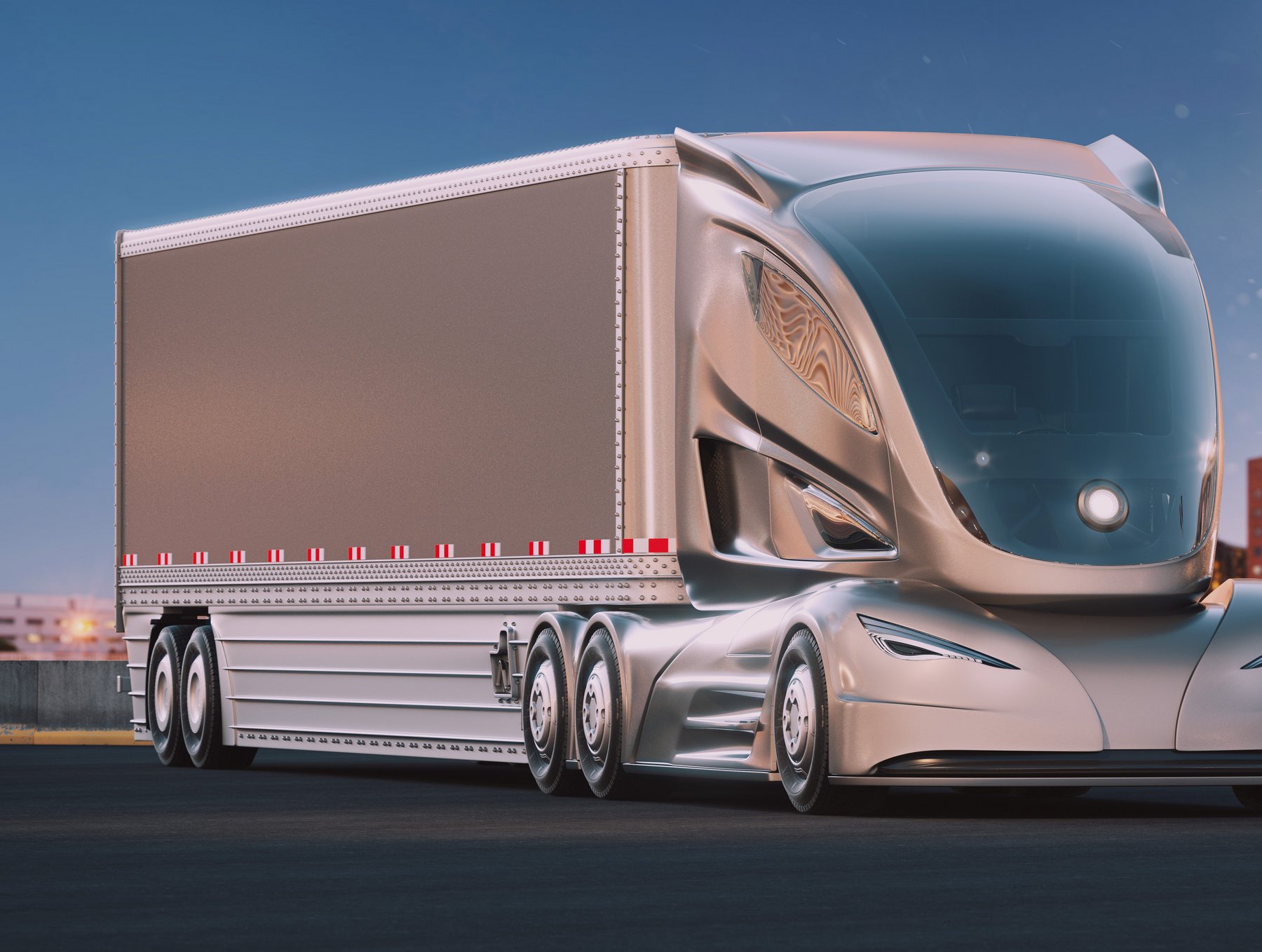
Plus (formerly Plus.ai) takes a tiered approach. While they are developing fully autonomous Level 4 systems, they also offer “PlusDrive,” a highly advanced driver-assist system. This allows current trucks to handle highway steering, braking, and lane changes while a human remains in the seat to monitor the system. This “tech-first” approach allows them to gather massive amounts of data today while the industry waits for the regulatory green light for fully driverless operations.
The Operational Logic: Hub-to-Hub Autonomy
When we talk about trucks that drive themselves, we are primarily discussing a “hub-to-hub” model. This is the most technically viable path for autonomy today.
The Highway vs. The City Street
Technologically, it is much easier to teach a truck to drive on a highway than on a crowded city street. Highways lack pedestrians, cyclists, and complex four-way intersections. Because of this, the first wave of self-driving trucks is designed to operate solely on interstate corridors.
In the hub-to-hub model, a human driver brings a trailer from a factory to a “transfer hub” located just off the highway. The trailer is hitched to an autonomous tractor, which drives it hundreds of miles across the state or country to another hub. From there, another human driver takes over for the “last mile” delivery to the final destination.
Redundancy and Safety Systems
A critical piece of the tech stack in these trucks is “redundancy.” For a truck to drive itself safely, every critical system must have a backup. If the primary electronic steering fails, a secondary system must be able to take over instantly. The same applies to braking and power. These redundant mechanical and electrical architectures are what separate a modern autonomous truck from a standard truck equipped with simple cruise control.
Overcoming Technical and Environmental Challenges
Despite the rapid progress, there are several technological “edge cases” that engineers are still working to solve before self-driving trucks become a ubiquitous sight on every road.
Dealing with Weather Extremes
Sensors like LiDAR and cameras can be “blinded” by heavy snow, thick fog, or even excessive road spray from rain. Engineers are currently developing advanced “perception cleaning” systems—essentially tiny windshield wipers or air jets for sensors—and more robust algorithms that can “see” through the noise of a snowstorm using thermal imaging or sophisticated radar filtering.
Unpredictable Human Behavior
The greatest challenge for an AI driver is the unpredictability of human drivers. Whether it’s a car cutting off a semi-truck or a construction worker using hand signals that aren’t in the standard traffic manual, the software must be able to interpret social cues and “expect the unexpected.” This requires a level of “behavioral AI” that goes beyond simple object detection; the truck must predict what other road users are likely to do next.
Cybersecurity in Autonomous Logistics
As trucks become “computers on wheels,” digital security becomes a primary concern. The tech stack of an autonomous truck must be hardened against hacking. This includes encrypted communication between the sensors and the central computer, as well as secure over-the-air (OTA) software updates. Ensuring that a 40-ton vehicle cannot be remotely hijacked is perhaps the most vital technical requirement for public acceptance of the technology.
Conclusion: The Roadmap to Full Adoption
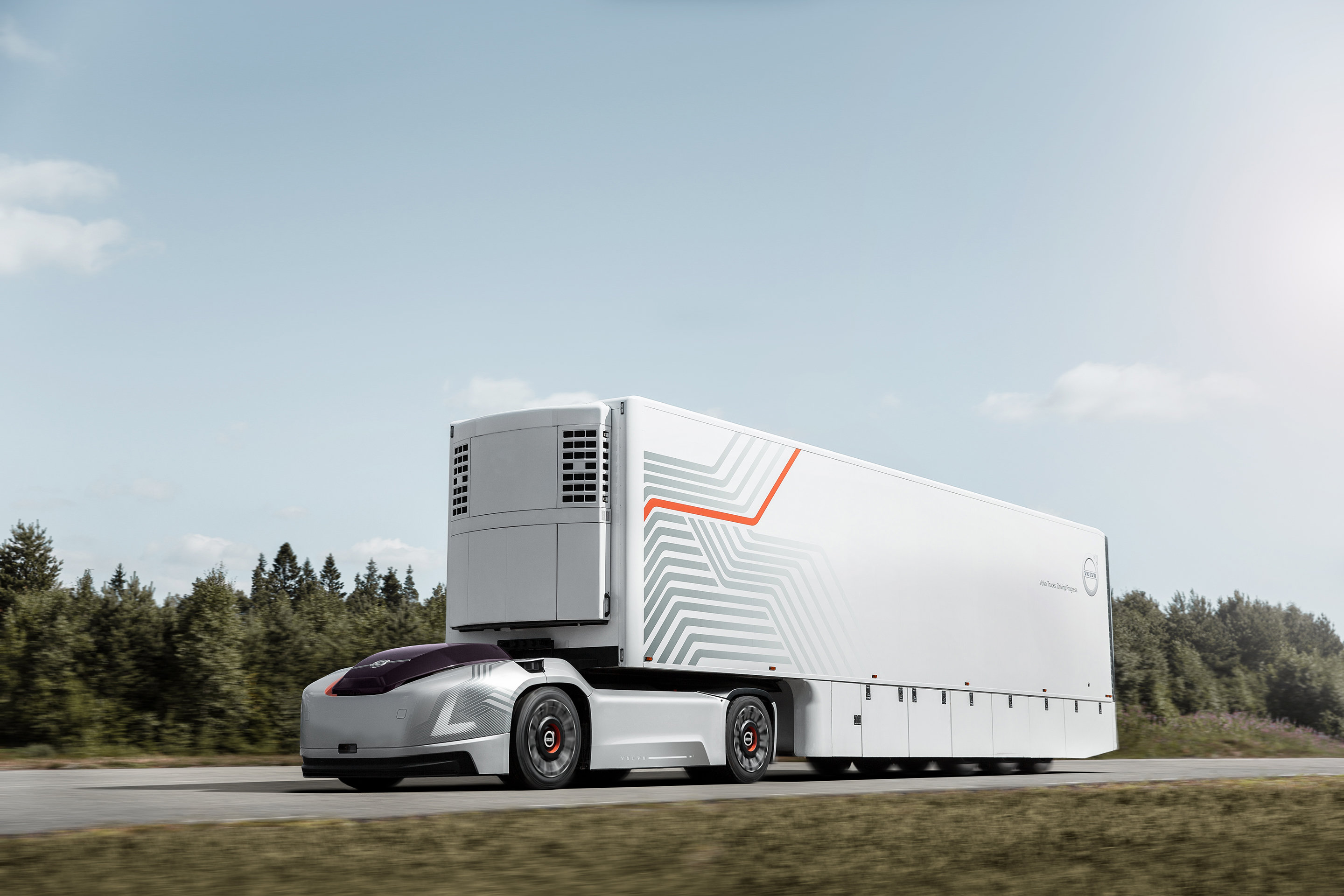
The trucks that drive themselves are no longer a project of the distant future; they are currently undergoing rigorous testing on public highways in states like Texas, Arizona, and California. From the high-powered LiDAR systems of Aurora to the middle-mile efficiency of Gatik, the technology is maturing at an exponential rate.
As we move toward the middle of the decade, the focus will shift from “can it drive?” to “how can it scale?” The integration of AI, 5G connectivity for remote monitoring, and advanced sensor fusion is creating a freight ecosystem that promises to be safer, more efficient, and more reliable than ever before. While we may still be a few years away from seeing empty driver seats on every highway, the technological foundation has been firmly laid, and the autonomous trucking revolution is officially in high gear.
aViewFromTheCave is a participant in the Amazon Services LLC Associates Program, an affiliate advertising program designed to provide a means for sites to earn advertising fees by advertising and linking to Amazon.com. Amazon, the Amazon logo, AmazonSupply, and the AmazonSupply logo are trademarks of Amazon.com, Inc. or its affiliates. As an Amazon Associate we earn affiliate commissions from qualifying purchases.