
Navigating the world of automotive technology can be complex, and few components are as critical yet often misunderstood as the torque converter. Far from being a simple fluid coupling, this vital link between your engine and automatic transmission profoundly impacts your vehicle’s performance, fuel efficiency, and drivability. Choosing the right torque converter isn’t a one-size-fits-all decision; it requires a deep understanding of your vehicle’s specifications, intended use, and performance goals. This guide delves into the technical intricacies, helping you make an informed decision to optimize your ride.
Understanding the Core Function: More Than Just a Fluid Coupling
At its heart, a torque converter allows your engine to spin independently of the transmission while the vehicle is stationary (like when you’re stopped at a red light in drive). However, its role extends far beyond this basic function, acting as a crucial element in how power is transferred and multiplied.
The Basics: Bridging Engine and Transmission
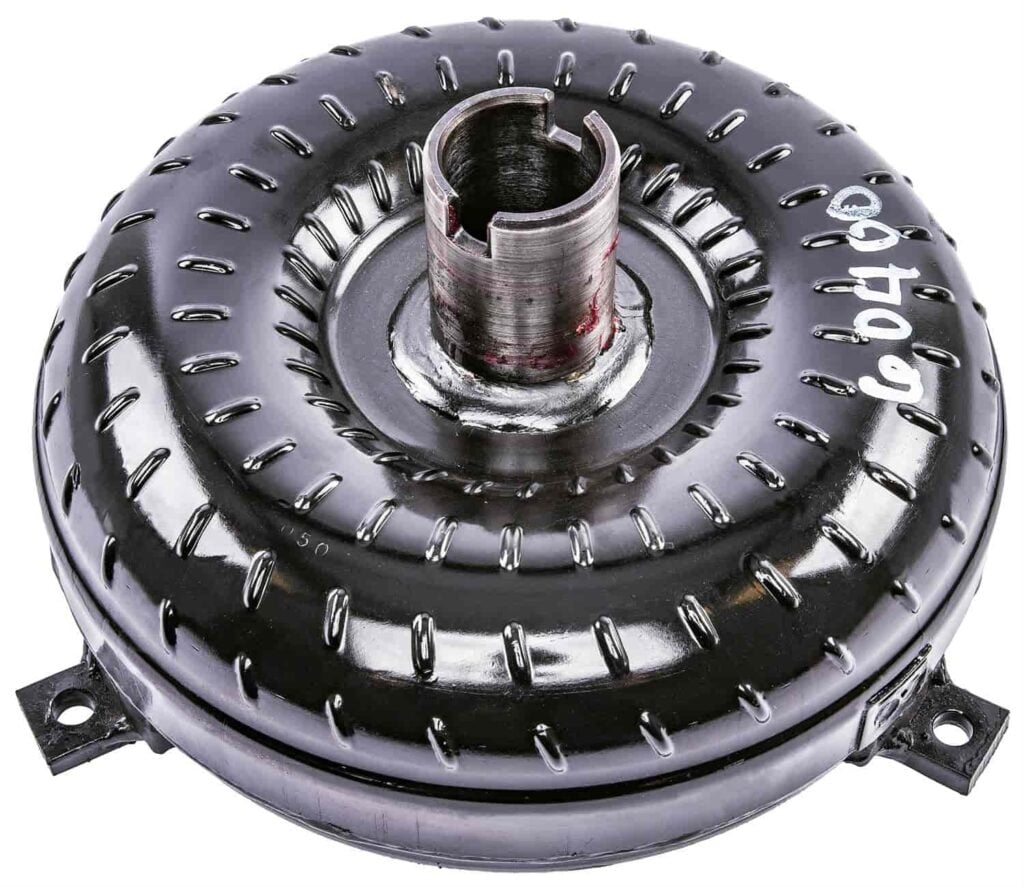
The torque converter is housed within the bell housing, bolted to the engine’s flywheel. It’s essentially a doughnut-shaped device filled with transmission fluid, comprising three main rotating elements:
- Impeller (Pump): Connected to the engine via the converter housing, it spins with the crankshaft, pushing fluid outward.
- Turbine: Connected to the transmission’s input shaft, it receives fluid from the impeller, causing it to spin and drive the transmission.
- Stator: Located between the impeller and turbine, it’s mounted on a one-way clutch that prevents it from spinning in one direction. Its primary job is to redirect the fluid flow from the turbine back to the impeller, multiplying engine torque at lower speeds.
This fluidic connection allows for smooth power transfer and torque multiplication, essential for an automatic transmission.
Slip and Efficiency: The Trade-offs
A fundamental characteristic of a torque converter is “slip.” When the engine is idling, the impeller spins, but the turbine remains stationary (or spins very slowly), resulting in 100% slip. As you accelerate, the turbine begins to catch up, reducing slip. Some slip is inherent and necessary for smooth operation and torque multiplication. However, excessive slip at cruising speeds leads to wasted energy, increased heat generation, and reduced fuel efficiency. Modern lock-up torque converters address this by mechanically locking the impeller and turbine together at certain speeds, eliminating slip and improving efficiency.
Key Components: Impeller, Stator, Turbine
The design and construction of these components are paramount. The number and angle of the blades on the impeller and turbine, along with the stator’s design, dictate the converter’s characteristics, such as stall speed and torque multiplication capabilities. High-performance converters often feature furnace-brazed fins for increased durability and specific blade angles to optimize fluid flow under extreme conditions.
Factors Influencing Torque Converter Selection
Choosing the correct torque converter requires a holistic view of your vehicle and its intended purpose. Ignoring any of these factors can lead to suboptimal performance, increased wear, or even component failure.
Vehicle Application: Daily Driver, Towing, Racing
The first and most crucial consideration is how the vehicle will be used.
- Street/Daily Driving Converters: These prioritize smooth engagement, comfortable drivability, and fuel efficiency. They typically have lower stall speeds (closer to stock) to maintain a broad power band for everyday conditions without excessive revving.
- Towing/Heavy-Duty Converters: Designed for vehicles that regularly haul heavy loads, these converters are built for durability and heat dissipation. They often feature reinforced components, larger friction surfaces for lock-up, and specific stall speeds to keep the engine in its optimal torque range when pulling. Excessive stall can lead to heat issues, while too low can strain the engine.
- Performance/Racing Converters: These are engineered for maximum acceleration and power delivery. They feature higher stall speeds, allowing the engine to rev higher into its power band before fully engaging the transmission. They are built to withstand immense heat and stress, often incorporating billet components and multi-disc lock-up clutches.
Engine Specifications: Horsepower, Torque, RPM Range
The torque converter must be matched to your engine’s specific output and characteristics.
- Matching Stall Speed to Engine Characteristics: The most critical aspect is aligning the converter’s stall speed with your engine’s power band. For a stock engine, a stock-like stall speed is appropriate. However, if you’ve installed performance camshafts, headers, or boosted the engine, your engine’s peak torque and horsepower will likely occur at higher RPMs. A higher stall converter allows the engine to reach these RPMs before the transmission fully engages, launching the vehicle more effectively. A common mistake is using a converter with too low a stall for a high-performance engine, leading to sluggish launches and an engine operating outside its optimal power range.
Transmission Type and Modifications
The type of automatic transmission (e.g., 4L60E, 4L80E, TH350, 6R80) dictates the physical fitment and specific converter designs available.
- Compatibility and Input Shaft Considerations: Ensure the converter’s splines match your transmission’s input shaft. If you’ve upgraded your transmission with a stronger input shaft, you’ll need a converter compatible with that modification. Also, consider the transmission’s fluid pump capacity, as high-stall converters place a greater demand on it.
Gear Ratios and Tire Size
These factors indirectly affect the effective stall speed your vehicle experiences.
- Impact on Effective Stall Speed: Taller (numerically lower) rear end gears or larger diameter tires will increase the load on the engine, making a given converter feel like it has a lower stall speed. Conversely, shorter (numerically higher) gears or smaller tires will reduce the load, making the converter feel like it stalls higher. Factor these into your calculations, especially for heavily modified vehicles.
Vehicle Weight and Intended Use
A heavier vehicle requires more torque to get moving, which can pull down the engine’s RPM more significantly. If you’re building a heavy vehicle for performance, you’ll likely need a higher stall converter than a lighter vehicle with the same engine to achieve similar launch characteristics. Similarly, a drag racer will require a much higher stall than a street/strip car.
Decoding Stall Speed: The Heart of the Decision
Stall speed is perhaps the most talked-about and often misunderstood characteristic of a torque converter. It’s not a fixed number but rather a range, influenced by various factors.

What is Stall Speed?
Stall speed refers to the maximum RPM an engine can achieve with the transmission in gear, the brakes fully applied, and the throttle wide open, before the output shaft begins to spin. In practical terms, it’s the RPM at which the torque converter starts to transfer significant power to the transmission. It’s crucial for launching the vehicle efficiently, allowing the engine to rev into its power band before the full load of the drivetrain is applied.
Low Stall vs. High Stall: Performance Implications
The choice between a low and high stall converter depends entirely on your performance goals and engine characteristics.
- Low Stall (Closer to Stock): Typically stalls from 1200-2000 RPM.
- Benefits: Excellent drivability for daily driving, better fuel economy, less heat generation, smooth engagement, good for towing or heavy vehicles with stock or mild engines.
- Drawbacks: Can make a performance engine feel sluggish off the line, doesn’t allow the engine to reach its optimal power band quickly.
- High Stall (Above 2500 RPM): Can range from 2500 RPM to 6000+ RPM for dedicated race applications.
- Benefits: Allows the engine to rev higher before fully engaging, providing a harder launch, excellent for engines with aggressive camshafts or forced induction that make power at higher RPMs, improves quarter-mile times.
- Drawbacks: Decreased drivability for daily use (engine revs higher before engaging), increased heat generation (requiring a robust transmission cooler), reduced fuel economy, can cause the tires to break traction easily, may “blow through” the converter if stall is too high for the engine’s torque.
Calculating Your Ideal Stall Speed (General Guidance)
There isn’t a single formula for the “perfect” stall speed, but experienced builders and manufacturers recommend considering:
- Cam Profile: High-performance camshafts push the engine’s power band higher. Match the stall speed to the RPM where your engine begins to make significant torque.
- Compression Ratio: Higher compression often means more low-end torque, which might allow for a slightly lower stall if you prioritize drivability, or help a higher stall converter feel less “loose.”
- Power Band: Identify the RPM range where your engine produces its peak torque and horsepower. Your torque converter’s stall speed should ideally put you right into or just below that range on launch. Consult with torque converter manufacturers, provide them with your complete engine and vehicle specs, and they can offer tailored recommendations.
Exploring Torque Converter Technologies and Features
Modern torque converters incorporate various technologies and features designed to enhance performance, durability, and efficiency.
Lock-up vs. Non-Lock-up Converters
- Non-Lock-up Converters: Older designs that rely solely on fluid coupling. They always have some degree of slip, leading to lower efficiency and more heat. Still common in older performance applications where simplicity and robust fluid flow are prioritized.
- Lock-up Converters: Feature a clutch inside the converter that mechanically locks the impeller and turbine together at cruising speeds.
- Benefits: Eliminates slip, significantly improves fuel economy, reduces heat, and provides a more direct feel.
- Considerations: The lock-up clutch itself must be strong enough to handle the engine’s torque, especially in performance applications.
Single-Disc vs. Multi-Disc Lock-up
For lock-up converters, the design of the clutch mechanism is crucial.
- Single-Disc Lock-up: Standard for most OEM and mild aftermarket applications. One friction surface engages to lock the converter. Adequate for stock to moderately powerful engines.
- Multi-Disc Lock-up: Utilizes multiple friction plates (like a multi-plate clutch in a manual transmission) to distribute the load over a larger surface area.
- Benefits: Dramatically increased holding capacity, essential for high-horsepower engines or heavy-duty towing applications where the lock-up clutch is subjected to immense torque. Reduces the risk of clutch slippage and overheating.
Billet vs. Stamped Steel Construction
The materials and construction methods define a converter’s strength and durability.
- Stamped Steel: Standard OEM construction. Cost-effective and suitable for stock power levels. Can warp or fail under high horsepower, excessive heat, or aggressive launches.
- Billet Construction: Converters machined from solid billet aluminum or steel.
- Benefits: Superior strength, precision balancing, and heat resistance. Essential for performance and racing applications where components are subjected to extreme forces. Reduces flex and distortion under load.
Anti-Ballooning Plates and Furnace Brazing
These are critical reinforcements for high-performance and heavy-duty converters.
- Anti-Ballooning Plates: Internal steel plates that reinforce the converter’s housing, preventing it from “ballooning” or expanding under high RPM and internal pressure, which can lead to catastrophic failure.
- Furnace Brazing: A process where the impeller and turbine fins are permanently bonded to their hubs and shells using a high-temperature brazing alloy. This significantly strengthens the internal components, preventing fin flex or detachment under extreme fluid forces, improving efficiency and durability.
The Installation and Break-in: Ensuring Longevity
Even the best torque converter can fail prematurely without proper installation and care.
Pre-Installation Checks
Always inspect the converter for any shipping damage. Ensure the transmission fluid pump stator tube is not bent and that the converter seats correctly into the transmission, engaging both the pump and input shaft splines. Many failures are due to improper seating, leading to pump damage upon initial startup.
Proper Fluid Selection
Use the transmission fluid specified by your transmission manufacturer. For high-performance applications, consider synthetic fluids designed for higher heat resistance and lubrication, especially if your converter generates more heat.

Break-in Procedures and Initial Monitoring
After installation, follow the manufacturer’s recommended break-in procedure, which typically involves a series of gentle accelerations and decelerations to seat the lock-up clutch (if applicable) and ensure proper fluid circulation. Monitor transmission fluid temperature closely, especially during the initial drives. An external transmission cooler is highly recommended, if not essential, for any upgraded torque converter, particularly high-stall or towing units, to manage the increased heat generation effectively.
Choosing the right torque converter is a blend of technical understanding and matching components to your specific needs. By meticulously considering your vehicle’s application, engine specifications, and the various technologies available, you can select a converter that optimizes performance, enhances drivability, and ensures the longevity of your drivetrain.
aViewFromTheCave is a participant in the Amazon Services LLC Associates Program, an affiliate advertising program designed to provide a means for sites to earn advertising fees by advertising and linking to Amazon.com. Amazon, the Amazon logo, AmazonSupply, and the AmazonSupply logo are trademarks of Amazon.com, Inc. or its affiliates. As an Amazon Associate we earn affiliate commissions from qualifying purchases.