
The Form W-4, officially titled the “Employee’s Withholding Certificate,” is one of the most consequential documents you will sign during your professional life. Yet, for many taxpayers, it remains a source of confusion and anxiety. Whether you are starting a new job or adjusting your financial strategy mid-year, understanding exactly what to withhold on your W-4 is essential for maintaining healthy cash flow and avoiding a surprise bill from the IRS come April.
Optimizing your withholding is not just about compliance; it is a vital component of personal finance. If you withhold too much, you are essentially providing the government with an interest-free loan. If you withhold too little, you face the prospect of underpayment penalties and a stressful tax season. Achieving the “sweet spot”—where you owe nothing and receive a minimal refund—requires a strategic approach to the information you provide your employer.
Understanding the Fundamentals of the Redesigned Form W-4
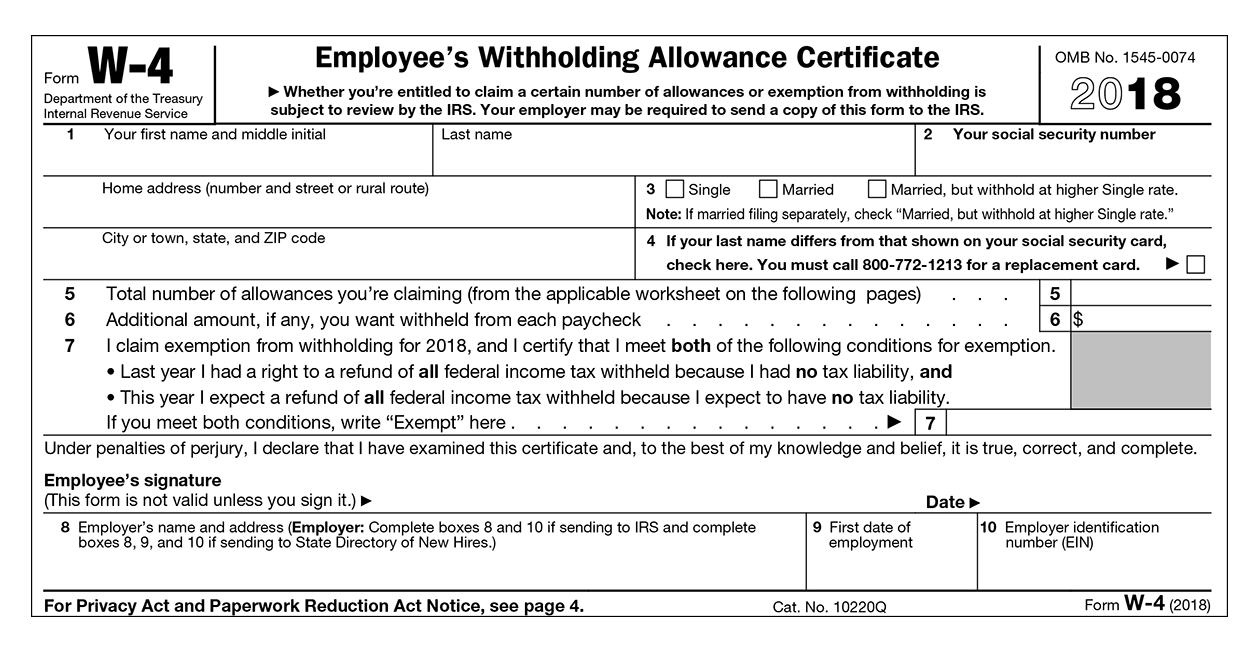
In 2020, the IRS introduced a significant redesign of Form W-4. The most notable change was the elimination of “allowances.” Previously, taxpayers calculated a specific number of allowances to reduce the amount of tax withheld. Today, the process is more transparent but requires more specific data. The current form is designed to increase accuracy by using actual dollar amounts rather than abstract allowance units.
The Shift from Allowances to Dollar Amounts
The modern W-4 focuses on your total anticipated income, filing status, and specific tax credits. Instead of guessing how many allowances correlate to your life situation, the form asks you to input dollar amounts for items like non-job income, itemized deductions, and child tax credits. This change was implemented to align the withholding process more closely with the Tax Cuts and Jobs Act, ensuring that the amount taken from your paycheck more accurately reflects your actual tax liability.
Why Accuracy Matters for Your Financial Health
Accuracy in withholding is the cornerstone of effective budgeting. For many Americans, the federal income tax is their largest annual expense. If your withholding is inaccurate, your monthly budget is built on a false premise. By fine-tuning your W-4, you can ensure that you have the maximum amount of “working capital” available in each paycheck to pay down high-interest debt, contribute to a high-yield savings account, or invest in the market, where that money can earn a return throughout the year.
Key Factors Determining Your Withholding Levels
To determine what to withhold on your W-4, you must look beyond your primary salary. The IRS considers your household as a single economic unit, meaning your spouse’s income and your own secondary income streams play a pivotal role in your final tax bracket.
Filing Status and Multiple Jobs
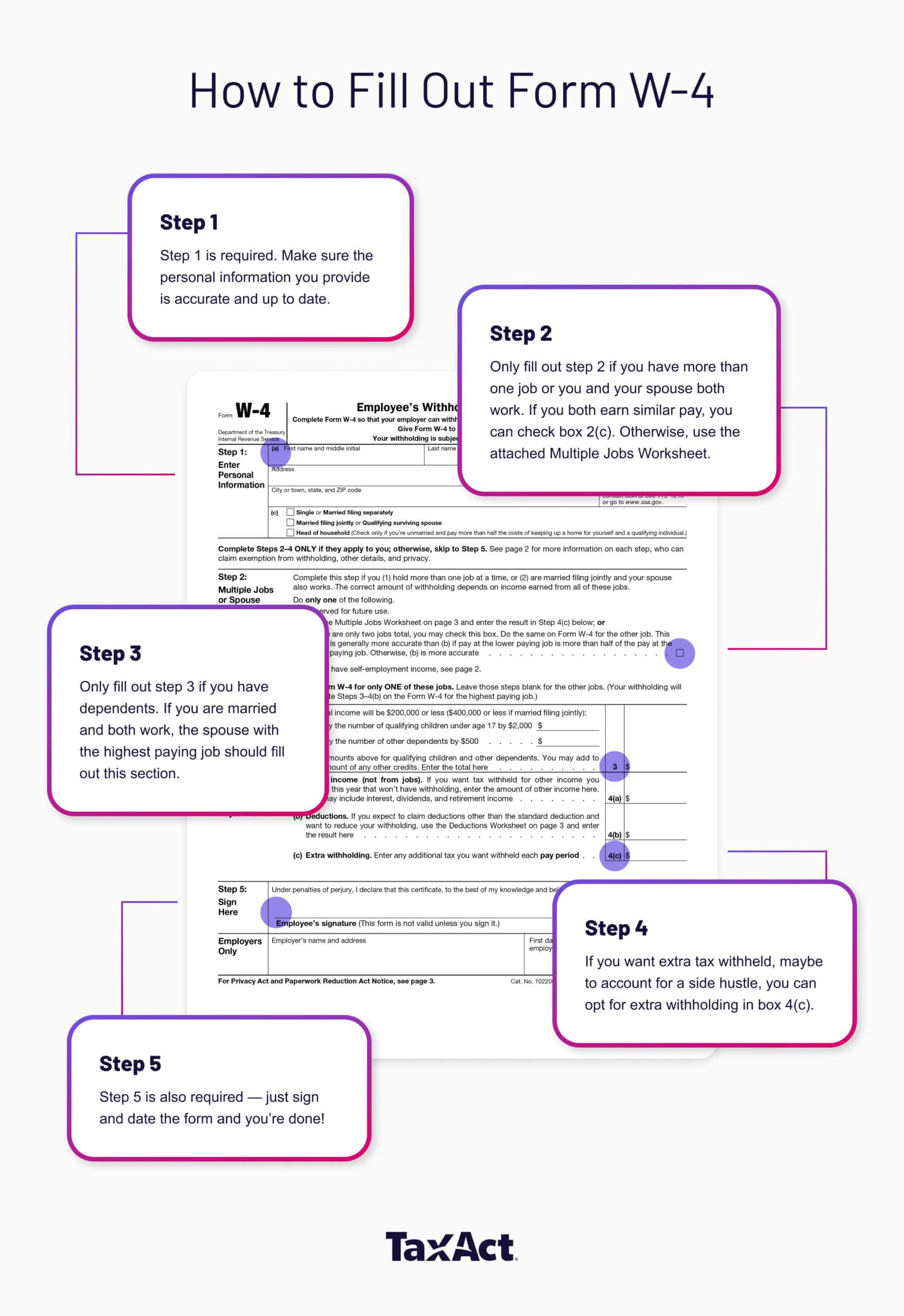
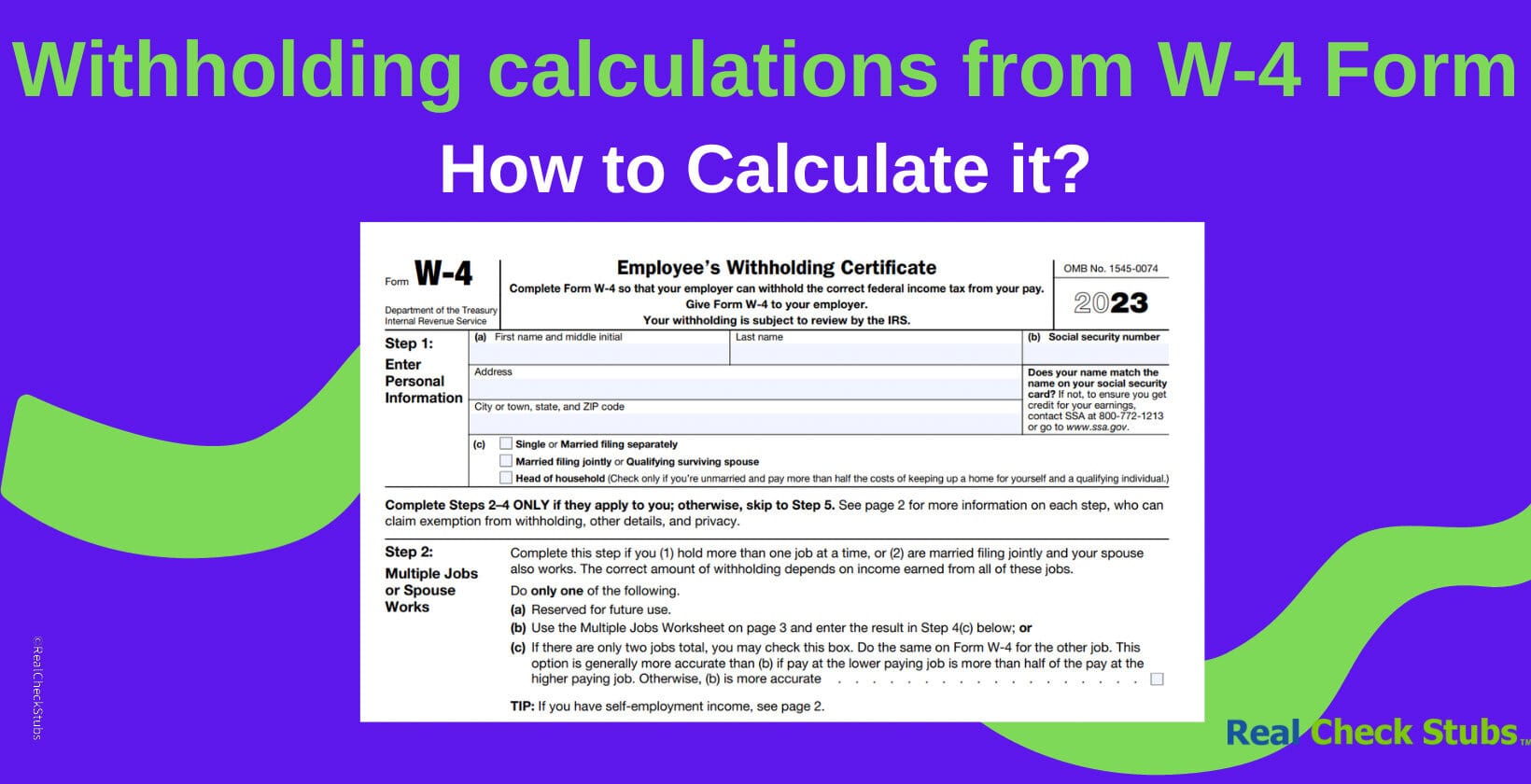
Step 1 of the W-4 asks for your filing status (Single, Married Filing Jointly, or Head of Household). This is the most significant factor in determining your standard deduction and tax brackets. However, complexity arises in Step 2 if you hold multiple jobs or if you are married and both spouses work.
If you have more than one job, or a working spouse, you must account for the combined income. If you fail to do this, each employer will apply a full standard deduction to your individual salary, leading to significantly lower withholding than what is actually required for your combined income bracket. To fix this, you can use the Multiple Jobs Worksheet, check the box in Step 2(c) for similar pay scales, or use the IRS online estimator to determine an “extra withholding” amount to enter in Step 4(c).
Accounting for Dependents and the Child Tax Credit
Step 3 is where you can significantly reduce your withholding if you qualify for the Child Tax Credit or credits for other dependents. For 2024, the credit is typically $2,000 for each qualifying child under age 17 and $500 for other dependents.
By entering these amounts on your W-4, your employer reduces the amount of federal tax withheld from your check. It is important to note that if you and your spouse both work, only one of you should claim the dependents on your W-4 to avoid “double-counting” the credit, which would result in owing money at the end of the year.
Adjustments for Other Income and Deductions
Step 4 is the “fine-tuning” section of the W-4. Here, you can account for income that isn’t subject to withholding, such as interest, dividends, and retirement distributions.
- Step 4(a): Use this if you expect significant non-job income. This tells your employer to withhold extra tax from your salary to cover the liability from these other sources.
- Step 4(b): This is for deductions. If you plan to itemize (because your mortgage interest, charitable gifts, and state taxes exceed the standard deduction) or if you have deductible expenses like student loan interest, you can enter them here. This reduces the amount withheld, putting more money in your pocket today.
Strategies for Managing Extra Withholding
Sometimes, the standard calculations are not enough. High-income earners, freelancers with a side hustle, or those with significant capital gains may need to request “Extra Withholding” in Step 4(c).
Avoiding the Underpayment Penalty
The IRS requires that you pay as you go. If you expect to owe more than $1,000 at the end of the year after subtracting your withholding and credits, you may be hit with an underpayment penalty. To avoid this, ensure your withholding covers at least 90% of your current year’s tax liability or 100% of the tax shown on your return for the prior year (110% if your adjusted gross income was over $150,000). Using Step 4(c) to add a specific dollar amount of extra withholding per pay period is the most effective way to reach these “safe harbor” thresholds.
The “Big Refund” vs. “Monthly Cash Flow” Debate
In the world of personal finance, there are two schools of thought regarding tax refunds. The first group views a large refund as a “forced savings plan.” They enjoy the windfall in the spring to pay for vacations or large purchases.
However, from a wealth-building perspective, the second school of thought is more efficient: aiming for a $0 refund. By maximizing your monthly cash flow, you have the opportunity to invest that money monthly. Over a 30-year career, the compound interest earned on $200 a month (that would have otherwise been held by the IRS) can amount to tens of thousands of dollars in a retirement account.
When and How to Update Your W-4
A W-4 is not a “set it and forget it” document. Your financial life is dynamic, and your withholding should reflect that reality.
Major Life Events That Require a Review
Certain milestones should trigger an immediate update of your W-4:
- Marriage or Divorce: Changing your filing status significantly alters your tax liability.
- Birth or Adoption of a Child: This adds a dependent and qualifies you for new credits.
- Buying a Home: Significant mortgage interest may make itemizing more beneficial than taking the standard deduction.
- Starting a Side Business: If you have 1099 income, you may need to increase your W-4 withholding at your 9-to-5 job to cover the self-employment taxes of your side hustle.
Using the IRS Tax Withholding Estimator
The most accurate way to determine what to withhold is to use the IRS Tax Withholding Estimator available on the IRS website. This tool allows you to input your most recent pay stubs and your most recent tax return to get a real-time recommendation. It will tell you exactly what numbers to put on each line of the W-4 to achieve your desired outcome—whether that is a specific refund amount or a $0 balance.
Long-Term Financial Implications of Withholding Decisions
Your W-4 decisions ripple through your entire financial plan. When you optimize your withholding, you gain control. That control allows you to increase your contributions to employer-sponsored 401(k) plans or Health Savings Accounts (HSAs). Because these contributions are often pre-tax, they further reduce your taxable income, which might even allow you to further adjust your W-4.
Furthermore, for those struggling with debt, the extra $100 or $200 found in a corrected W-4 can be the catalyst for a “debt snowball” or “debt avalanche” strategy. Instead of waiting until April to make a lump-sum payment on a credit card, you can reduce the principal every month, saving significantly on interest charges.
In conclusion, knowing what to withhold on your W-4 is a fundamental skill in the toolkit of any financially savvy individual. By understanding the components of the form—from filing status to extra withholding—you transition from a passive participant in the tax system to an active manager of your own wealth. Take the time once a year, or after any major life change, to review your withholding. Your future self, and your bank account, will thank you.
aViewFromTheCave is a participant in the Amazon Services LLC Associates Program, an affiliate advertising program designed to provide a means for sites to earn advertising fees by advertising and linking to Amazon.com. Amazon, the Amazon logo, AmazonSupply, and the AmazonSupply logo are trademarks of Amazon.com, Inc. or its affiliates. As an Amazon Associate we earn affiliate commissions from qualifying purchases.