
In the modern professional landscape, a job interview is far more than a simple exchange of questions and answers. It is the official launch of your personal brand within a new organization. Just as a global corporation spends millions of dollars on its visual identity, logo, and packaging to convey reliability and value, a job candidate must use their attire as a strategic tool to communicate their professional narrative.
What you wear to a job interview is the visual shorthand for your work ethic, your attention to detail, and your understanding of the company culture. It is the “packaging” of your expertise. In a world where first impressions are formed in a matter of seconds, your sartorial choices serve as the primary messenger of your personal brand strategy before you even utter a single word.

The Psychology of First Impressions: Your Visual Identity as a Strategic Asset
The concept of “thin-slicing”—the ability of our minds to find patterns in events based only on “thin slices” of experience—plays a critical role in the recruitment process. When you walk into an interview room or appear on a high-definition video call, the interviewer’s brain immediately begins to categorize you. Within the niche of personal branding, your appearance acts as a psychological anchor for your competence.
The 7-Second Rule in Professional Settings
Research consistently suggests that humans form a solid impression of a stranger within seven seconds. In a professional context, these seconds are spent evaluating your “brand promise.” Are you organized? Are you respectful of the environment? Do you understand the social nuances of the industry? By choosing an outfit that aligns with the high standards of the role, you are signaling that you possess the self-awareness and social intelligence required to represent the company’s own brand to their clients and stakeholders.
Aligning Your Aesthetic with Corporate Identity
Every company has a visual DNA. A legacy law firm has a brand rooted in stability, tradition, and gravitas. Conversely, a boutique design agency might prioritize innovation, edge, and creative flair. To build a successful personal brand during the interview, you must conduct a “brand audit” of the prospective employer. Your goal is not to mirror them exactly, but to present a version of yourself that fits seamlessly into their existing ecosystem. This alignment reduces “friction” in the interviewer’s mind, making it easier for them to visualize you as a permanent part of the team.
Decoding the Dress Code: Mapping Your Personal Brand to the Industry
Personal branding is not one-size-fits-all. A strategy that works for a Chief Financial Officer will fail for a Lead Product Designer. Understanding the nuances of industry-specific branding is the difference between looking like an outsider and looking like a future leader.
The Formal Executive Brand: Power Dressing and Authority
In sectors like finance, law, and high-level consulting, the brand language remains traditional. Here, “power dressing” is the standard. This usually involves a well-tailored suit in navy, charcoal, or black. The brand message here is one of precision and reliability. A crisp, white button-down shirt signals cleanliness and attention to detail. In this niche, your personal brand should whisper “stability.” Any deviation into overly trendy or loud clothing can be perceived as a brand risk, suggesting a lack of judgment or a misunderstanding of the high-stakes environment.
The Creative and Tech Brand: Balancing Innovation with Professionalism
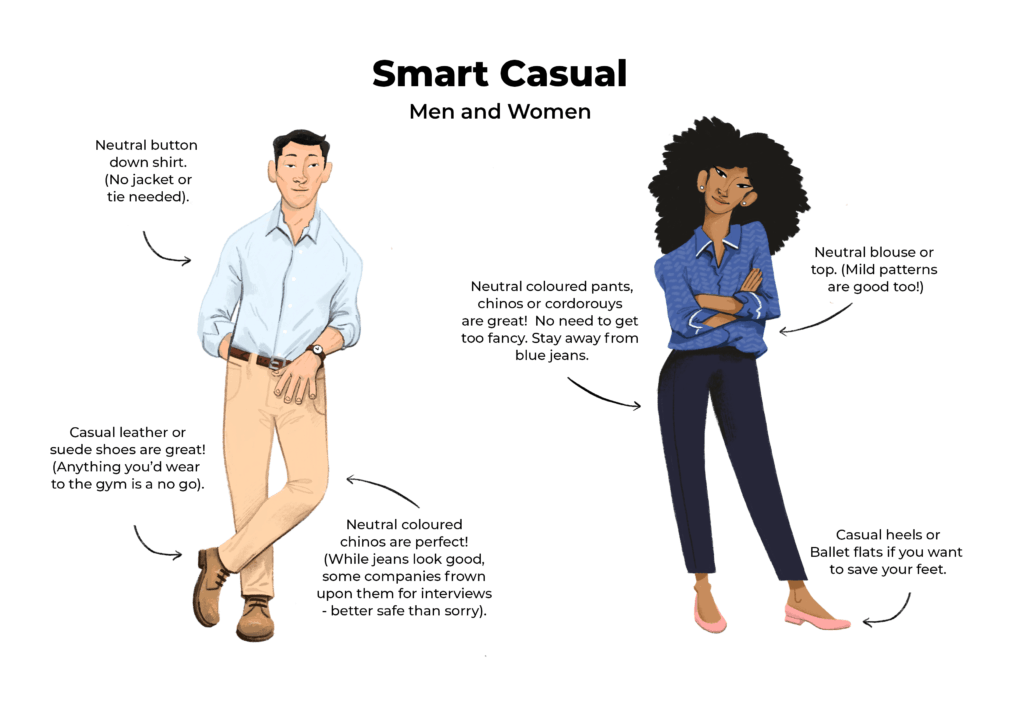
The creative and technology sectors have famously disrupted traditional dress codes, but this does not mean there isn’t a brand standard. In these industries, your personal brand needs to communicate “approachable expertise.” The “Smart Casual” or “Business Casual” aesthetic is often the sweet spot. For a designer, a structured blazer paired with high-quality denim and clean loafers signals a brand that is both professional and aesthetically conscious. In tech, showing up in a full three-piece suit might actually damage your brand, signaling that you are “old school” or out of touch with the agile, fast-paced culture of the modern developer.
The Casual Startup Brand: Polished but Approachable
Startups often pride themselves on a “come as you are” culture, but for an interview, your brand should always be one step above the daily office average. If the office wears t-shirts, you wear a polo or a high-quality knit. If they wear sneakers, ensure yours are pristine and minimalist. This signals a personal brand that is respectful of the opportunity while remaining culturally compatible. It shows you are “one of them,” but with an added layer of professional discipline.
Strategic Details: Using Color and Style to Signal Value
Just as brands choose specific colors for their logos to evoke emotion—red for energy, blue for trust—you can use the color palette of your attire to influence the perception of your personal brand.
The Color Palette of Credibility
-
Navy Blue: The universal color of trust and confidence. It is the safest and most effective color for building an immediate rapport of reliability.
-
Gray: Signals sophistication and neutrality. It is an excellent choice for roles that require high levels of logical thinking and analytical prowess.
-
Black: Communicates high authority and elegance. Best used for leadership roles, though it can sometimes appear “shielded” or overly formal in collaborative environments.
-
White: Represents clarity and precision. A crisp white shirt is the ultimate “clean slate” for your professional narrative.
-
Muted Tones: Soft greens, purples, or maroons can be used to inject personality into a creative brand without being distracting.
Attention to Detail: The “Micro-Branding” of Accessories
Your personal brand is often validated by the small things. A scuffed shoe, a wrinkled collar, or an overly flashy watch can create “brand dissonance”—a conflict between what you say and what people see. Accessories should be “supporting actors” rather than the “main event.” A professional leather portfolio, a clean pen, and subtle jewelry suggest a brand that is meticulous and considers the “user experience” of those interacting with them.
The Digital Persona: Visual Branding in the Virtual Interview Era
As remote work becomes a permanent fixture, the “waist-up” personal brand has become a critical skill. The rules of what to wear to a job interview have shifted into the digital realm, where lighting and framing are just as important as the fabric of your shirt.
Framing and Background as Brand Extensions
In a virtual interview, your environment is part of your attire. Your personal brand is framed by your background. A cluttered room suggests a cluttered mind. To project a professional brand, ensure your background is neutral or organized (a bookshelf or a simple wall). The goal is for your face and your message to be the focal point, not the pile of laundry behind you. This is “environmental branding.”
Adapting Textures and Patterns for the Camera
Cameras struggle with fine patterns like pinstripes or small checkers, which can create a “moiré effect” (a distracting shimmering visual). To maintain a sharp, high-definition personal brand, opt for solid colors. Additionally, because computer screens can wash out skin tones, choosing a color that provides a healthy contrast—like a deep jewel tone or a solid blue—ensures you look energized and engaged. Remember, in a digital interface, you are competing with screen fatigue; your visual brand must be easy on the eyes.
Maintaining Brand Authenticity: The Intersection of Comfort and Professionalism
A fatal mistake in personal branding is wearing a “costume” that makes you feel uncomfortable. If you are physically restricted by your clothes, your non-verbal cues—fidgeting, adjusting your sleeves, or a stiff posture—will signal a lack of confidence.
The Confidence-Competence Loop
There is a psychological phenomenon known as “enclothed cognition,” which suggests that the clothes we wear influence our psychological processes. When you wear clothes that align with your professional brand and fit well, you feel more powerful and focused. This internal confidence translates into external competence. Your personal brand is at its strongest when your internal state (confidence) matches your external projection (professional attire).

Long-term Brand Consistency Post-Hire
Finally, what you wear to the interview sets a “brand promise” for how you will show up every day. While you may dress slightly more formally for the interview than for the daily grind, the core pillars of your visual identity should remain consistent. If your interview brand was “Meticulous and Sharp,” showing up for the first week of work in disheveled clothing creates a brand betrayal. Consistency is the hallmark of any great brand, personal or corporate. By maintaining a high standard of visual presentation throughout your tenure, you reinforce your value and prepare yourself for the next step in your career.
In conclusion, “what to wear to a job interview” is not a question of fashion—it is a question of brand strategy. By intentionally selecting attire that reflects the industry’s values, utilizes the psychology of color, and adapts to the modern digital landscape, you curate a personal brand that commands respect and communicates excellence before the conversation even begins.
aViewFromTheCave is a participant in the Amazon Services LLC Associates Program, an affiliate advertising program designed to provide a means for sites to earn advertising fees by advertising and linking to Amazon.com. Amazon, the Amazon logo, AmazonSupply, and the AmazonSupply logo are trademarks of Amazon.com, Inc. or its affiliates. As an Amazon Associate we earn affiliate commissions from qualifying purchases.