
In the intricate theater of family court, every detail contributes to the narrative you present. Your attire, often overlooked in its strategic importance, is a powerful non-verbal communicator that shapes perceptions and influences credibility. For the female litigant, understanding “what to wear to family court” extends beyond mere decorum; it is a critical component of personal branding, a deliberate choice to project professionalism, respect, and seriousness to the judge, opposing counsel, and potentially, jurors. This is not about fashion trends, but about crafting an image that supports your case and underscores your commitment to the proceedings.

The Courtroom as Your Personal Brand Stage
The courtroom operates on a system of perceived credibility and respect. Before you utter a single word, your appearance has already begun to tell a story. This is the essence of personal branding in a high-stakes environment.
First Impressions and Credibility
Human beings make snap judgments, often subconsciously, based on visual cues. In a legal setting, these initial impressions can significantly impact how your testimony is received, how seriously your arguments are considered, and how respectfully you are treated. A judge, for example, is evaluating not just the facts you present, but also your character, your commitment to the process, and your respect for the institution of justice.
Dressing appropriately signals that you understand the gravity of the situation and take it seriously. It suggests you are organized, thoughtful, and capable of presenting yourself competently. Conversely, attire that is too casual, flashy, or ill-maintained can inadvertently convey disrespect, a lack of seriousness, or even disorganization, potentially eroding your credibility before you even speak. Your clothing becomes an extension of your personal brand, a silent advocate or detractor.
Projecting Respect and Seriousness
The choice of clothing is a profound act of respect — respect for the court, for the legal process, and for the significance of the issues at hand. Family court cases often involve deeply personal and emotionally charged matters, from child custody to financial divisions. Your appearance should reflect the solemnity of these proceedings.
Professional attire communicates that you are approaching the court with a serious mindset, prepared to engage constructively and respectfully. It helps to differentiate the formal legal setting from informal social interactions, setting an appropriate tone for all involved. By presenting yourself as poised and professional, you not only influence how others perceive you but also reinforce your own sense of calm and control in a potentially stressful situation. This outward projection of seriousness can subtly but effectively bolster your overall brand image as a responsible and reliable individual.
Crafting Your Courtroom Persona: Key Elements of Professional Attire
Building your courtroom persona through attire involves strategic choices in silhouette, color, fabric, and accessories. The goal is to create a polished, conservative, and non-distracting image.
The Power of the Professional Silhouette
The foundation of a professional courtroom wardrobe for a female litigant lies in classic, tailored silhouettes that convey authority and composure.
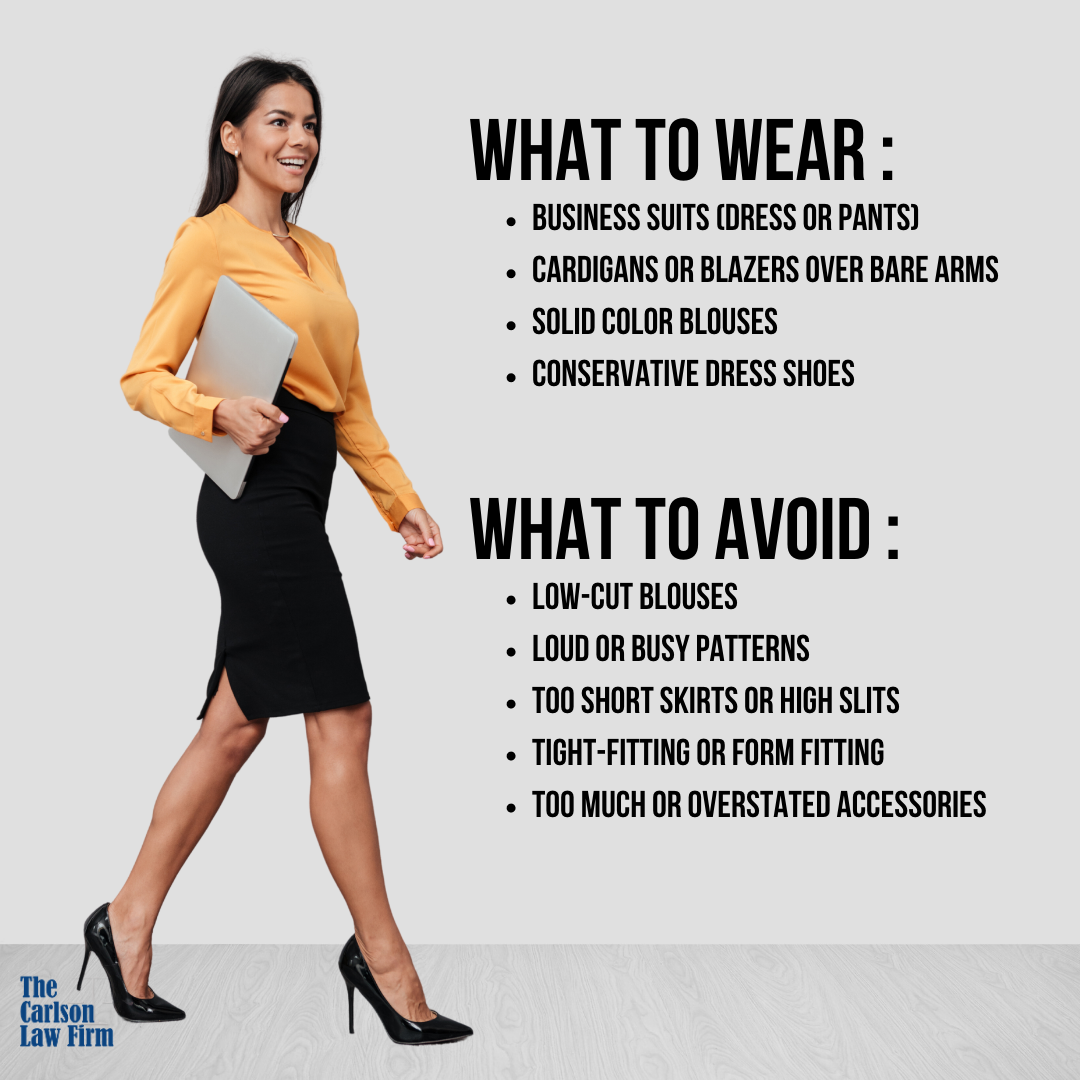
- Skirts and Trousers: Opt for tailored trousers or a knee-length to midi-length skirt. Avoid anything too tight, short, or with excessive embellishments. A straight-leg or boot-cut trouser in a dark, solid color is always appropriate. Skirts should allow for comfortable sitting and movement without riding up.
- Blazers and Jackets: A well-fitting blazer is perhaps the single most impactful item. It instantly elevates an outfit, adding structure and professionalism. Choose blazers in neutral colors that can be mixed and matched with various bottoms. A matching suit (blazer and trousers or skirt) is the gold standard for projecting a strong, cohesive personal brand.
Colors: Neutrals and Their Psychological Effects
Sticking to a palette of neutral colors is crucial. Navy, charcoal grey, black, and deep browns are universally accepted as professional and non-distracting. These colors project seriousness, competence, and reliability. Avoid bright, vivid colors or loud patterns, which can be distracting and undermine the gravitas of the situation. Subtle pinstripes or muted checks on a suit can be acceptable, but err on the side of solid colors.
Fabrics: Quality and Wrinkle-Resistance
Choose fabrics that look crisp and are less prone to wrinkling, such as wool blends, gabardine, or good quality synthetics. Natural fibers like cotton can work if they are structured and well-maintained. A wrinkle-free appearance throughout a long court day reinforces an image of meticulousness and control.
Thoughtful Tops and Layering
What you wear under your blazer is equally important in maintaining your professional brand.
- Blouses and Shells: Select blouses or tailored shells in solid, subdued colors like white, ivory, light blue, or other soft neutrals. The neckline should be modest, avoiding anything too low-cut or revealing. Ensure blouses are opaque and not sheer.
- Layering for Professionalism and Comfort: Layering with a blazer provides warmth, adds depth to your outfit, and allows for flexibility. It also helps manage temperature in potentially unpredictable courtroom environments, ensuring your comfort doesn’t compromise your professional appearance.
Footwear and Accessories: Subtle Statements
Accessories should complement, not detract from, your overall professional image. They are opportunities for subtle branding, reinforcing an image of understated elegance and attention to detail.
- Shoes: Closed-toe shoes are essential. Pumps with a modest heel (1-2 inches) or smart flats are appropriate. Choose neutral colors that match or complement your outfit. Ensure shoes are clean, scuffed-free, and comfortable, as you may be on your feet for extended periods. Avoid open-toe shoes, sandals, overly high heels, or athletic footwear.
- Jewelry: Keep jewelry minimal and understated. A watch, a simple necklace, and stud or small hoop earrings are generally acceptable. Avoid large, flashy, or noisy jewelry that could be distracting. The goal is to project a serious, not decorative, image.
- Bags: A professional, structured handbag or briefcase in a dark, neutral color is appropriate. It should be tidy and not overstuffed, subtly reinforcing your organized brand.
- Hair and Makeup: Your hair should be neat, pulled back if long, and styled in a conservative manner. Avoid elaborate hairstyles. Makeup should be natural and minimal, enhancing your features without being distracting or appearing overdone. Avoid strong perfumes or colognes, as sensitivities vary, and they can be distracting in close quarters.
Understanding Context: Adapting Your Brand to Specific Court Scenarios
While the core principles of professional attire remain constant, understanding the specific context of your court appearance allows for nuanced adjustments to your personal brand strategy.

The Formality Spectrum
Not all court appearances carry the same level of formality, though maintaining a consistent level of professionalism is always wise.
- Initial Hearings and Status Conferences: These are often less formal but still demand professional attire. A blazer with tailored trousers or a skirt, combined with a professional top, is usually sufficient.
- Mediations: While conducted outside the courtroom, mediations are still serious legal processes. Dress as you would for an initial hearing to signal your commitment to a productive resolution.
- Trials and Evidentiary Hearings: These are the most formal settings. A full suit (matching blazer and skirt/trousers) is highly recommended. This elevated attire reinforces the gravity of the proceedings and strengthens your professional brand in the eyes of the decision-makers.
Local Court Culture and Norms
Courtroom dress codes can vary slightly by jurisdiction or even individual judge. If possible, discreetly observe proceedings at the courthouse beforehand or consult with your attorney about local expectations. While a universally professional standard is always safe, being aware of nuances can further refine your branding strategy. For example, some jurisdictions might be slightly more relaxed for routine motions, while others maintain strict adherence to formal business attire for all matters.
Avoiding Common Branding Pitfalls
To ensure your personal brand is impeccable, be mindful of what to avoid:
- Overly Casual Attire: Jeans, t-shirts, shorts, athletic wear, or anything remotely resembling loungewear are strictly inappropriate. They project a lack of respect and seriousness.
- Distracting Elements: Loud patterns, neon colors, excessive jewelry, strong perfumes, or anything that draws undue attention away from your words should be avoided. Your appearance should support your message, not compete with it.
- Ill-fitting or Wrinkled Clothing: Clothes that are too tight, too loose, or visibly wrinkled convey sloppiness and disorganization. Ensure your clothes are clean, pressed, and properly fitted.
Beyond the Garment: The Holistic Personal Brand in Court
While attire is foundational, a truly effective personal brand in court encompasses more than just clothing. It’s a holistic presentation of self.
Poise and Demeanor
Your posture, eye contact, and overall demeanor are powerful non-verbal brand messages. Sit up straight, make appropriate eye contact when speaking or listening, and maintain a calm, respectful expression. Avoid fidgeting or appearing restless. A confident yet humble demeanor amplifies the positive impression made by your attire. This psychological readiness complements your physical presentation, creating a cohesive and impactful personal brand.
Preparation and Organization
Being on time, having your documents neatly organized, and being prepared to answer questions efficiently are silent but potent branding elements. They signal responsibility and competence, reinforcing the image of a serious and capable individual who respects the court’s time. Arriving flustered or disorganized can undermine even the most perfectly chosen outfit.
Consistency Across Interactions
Your professional brand should extend to all interactions within the courthouse. Be polite and respectful to court staff, clerks, and security personnel. Your behavior in the hallways and waiting areas is just as much a part of your personal brand as your direct communication with the judge. Consistency in respectful conduct reinforces your overall image as a trustworthy and responsible individual.
Investing in Your Courtroom Wardrobe: Practical Advice
Building a professional wardrobe for family court is an investment in your personal brand and, by extension, in the outcome of your legal matters.
Building a Core Capsule
If you anticipate multiple court appearances, consider building a small capsule wardrobe. This might include:
- One or two well-fitting blazers in neutral colors.
- Two pairs of tailored trousers (one black, one navy or grey).
- One knee-length skirt.
- Three to four professional blouses or shells.
- One pair of comfortable, closed-toe heels or flats.
- Minimal, classic jewelry.
These versatile pieces can be mixed and matched to create several appropriate outfits, ensuring you always present a consistent and polished brand image.
Prioritizing Comfort Without Sacrificing Style
Court days can be long and emotionally taxing. Choose fabrics that breathe and styles that allow for comfortable movement. Ensure your shoes are broken in. Discomfort can distract you and subtly detract from your composure, impacting your overall brand presentation. Your comfort should never compromise your professional appearance; it should support your ability to maintain it.
Budgeting for Impact
You don’t need an expensive wardrobe to look professional. Focus on fit, cleanliness, and classic styles. Thrift stores, consignment shops, and sales can be excellent sources for good quality professional attire. Investing in tailoring can transform an inexpensive garment into a perfectly fitting piece, significantly enhancing its impact on your personal brand. Remember, the investment is not just in clothes, but in shaping the perception that can favorably influence your legal journey.
aViewFromTheCave is a participant in the Amazon Services LLC Associates Program, an affiliate advertising program designed to provide a means for sites to earn advertising fees by advertising and linking to Amazon.com. Amazon, the Amazon logo, AmazonSupply, and the AmazonSupply logo are trademarks of Amazon.com, Inc. or its affiliates. As an Amazon Associate we earn affiliate commissions from qualifying purchases.