
Low porosity hair, a characteristic defined by tightly closed cuticles that resist moisture absorption, presents a unique challenge for individuals seeking healthy, hydrated strands. Unlike high porosity hair, which readily absorbs and loses moisture, low porosity hair struggles to let water and product penetrate the hair shaft. This can lead to a buildup of products, a greasy or weighed-down feel, and a lack of hydration despite diligent application of moisturizing treatments. Understanding the specific needs of low porosity hair is crucial for effective hair care. This involves not only selecting the right products but also understanding the science behind their effectiveness and how brands strategically formulate and market them to address this distinct hair type.

Understanding the Science of Low Porosity Hair and Product Penetration
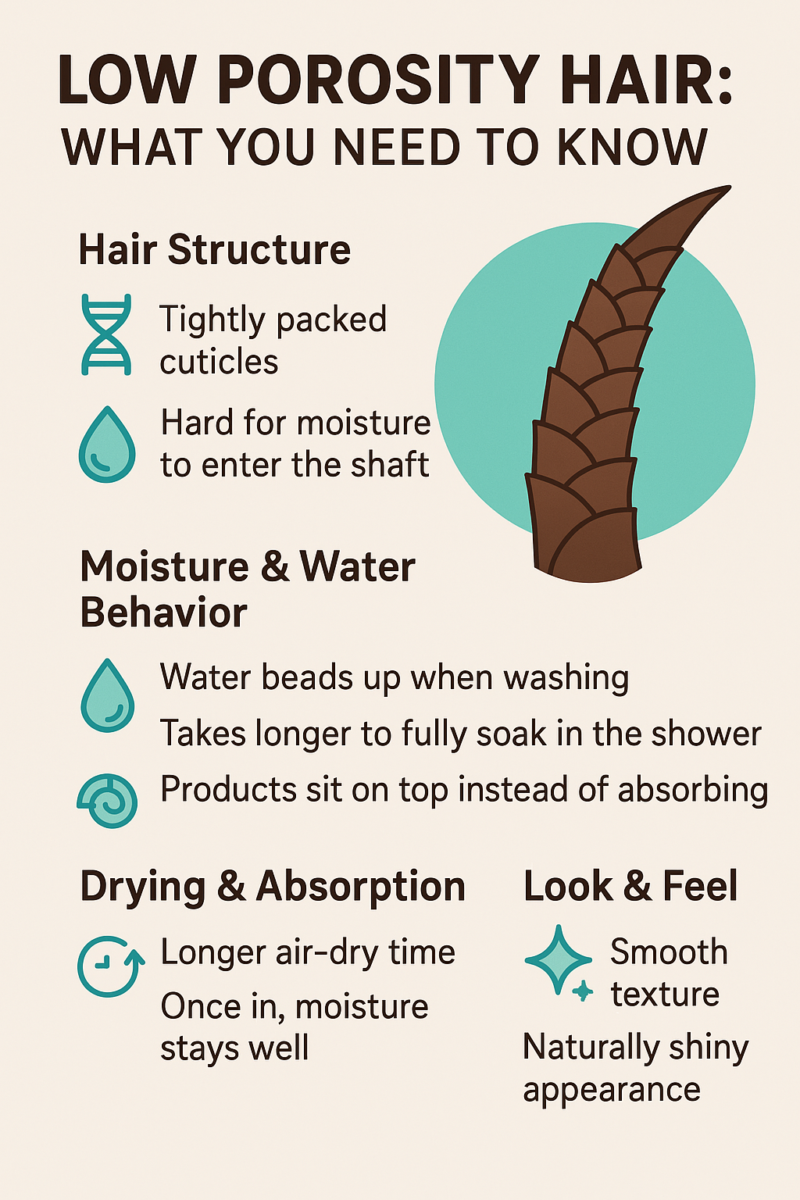
The fundamental challenge with low porosity hair lies in its cuticle structure. The cuticles are flat and overlapping, creating a barrier that prevents moisture from entering easily. This means that while water might sit on the surface, it struggles to seep into the cortex, where hydration is most needed. This is akin to trying to water a dense, tightly packed garden bed; the water tends to run off rather than soak in. Consequently, products that are effective for other hair porosities can often feel like they are just sitting on top of low porosity hair, leading to a greasy residue and a lack of discernible benefit.
The Cuticle Barrier: A Molecular Perspective
From a molecular standpoint, the tightly sealed cuticles of low porosity hair are a result of their structural arrangement. The keratinocytes, the cells that form the hair shaft, are more tightly bound, leaving minimal space for water molecules to pass through. This is in contrast to high porosity hair, where the cuticles are raised or even missing, allowing for rapid absorption but also rapid moisture loss. For low porosity hair, the surface tension of water can also play a role, making it more difficult for it to break through the cuticle layer. This understanding is fundamental for product formulators aiming to create solutions for this hair type.
The Impact of Product Buildup
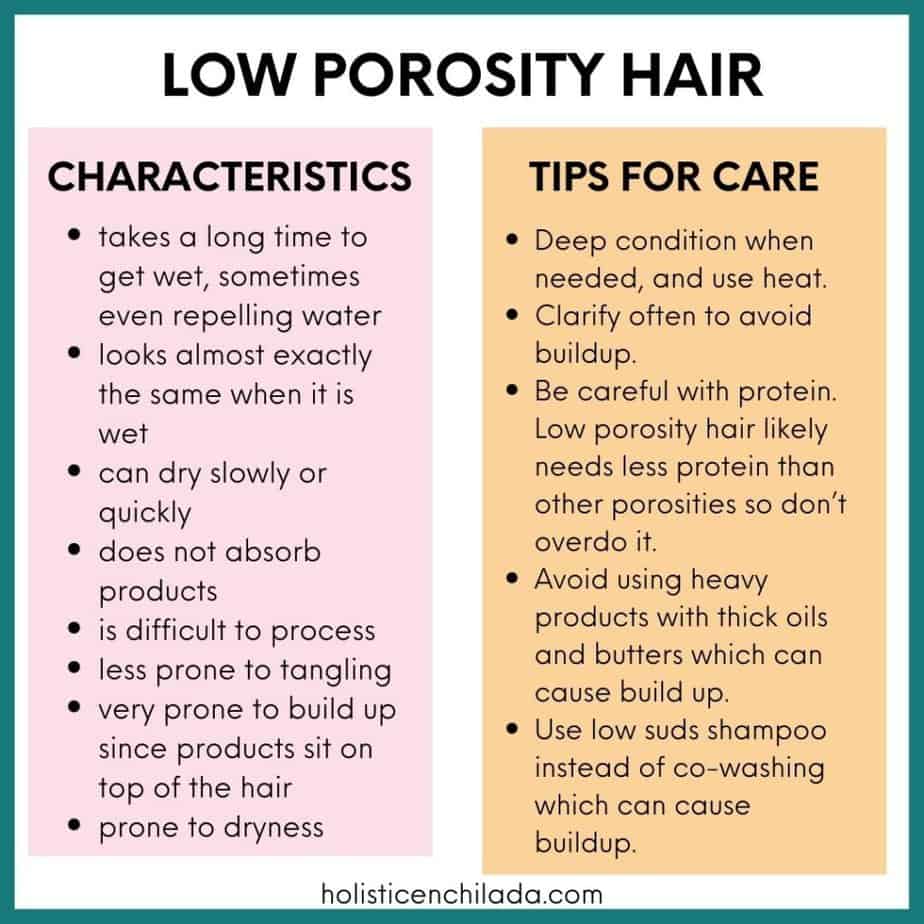
When products designed for other hair types are used on low porosity hair, they often contain heavier emollients or silicones that are intended to seal in moisture. However, on low porosity hair, these ingredients can accumulate on the hair shaft without penetrating, leading to what is commonly known as product buildup. This buildup can clog the hair follicles, weigh down the hair, and make it appear dull and lifeless. It also creates a barrier that further hinders the absorption of beneficial ingredients. Therefore, products that are lightweight and formulated with humectants and smaller molecules are often preferred to avoid this problematic accumulation.
Strategic Product Formulation for Low Porosity Hair
Brands aiming to capture the low porosity market must approach product development with a deep understanding of these hair characteristics. The focus shifts from heavy conditioning to lightweight hydration and enhanced penetration. This involves careful selection of ingredients and innovative formulation techniques that can overcome the natural barrier of low porosity hair.
Lightweight Hydration: The Role of Humectants and Hydrolyzed Ingredients
Humectants are ingredients that attract water from the atmosphere to the hair. For low porosity hair, humectants are invaluable, provided they are delivered in a formulation that allows for absorption. Examples include glycerin, hyaluronic acid, and panthenol. However, the effectiveness of these humectants is amplified when paired with ingredients that can facilitate penetration. This often involves using hydrolyzed versions of proteins and oils. Hydrolyzed ingredients have been broken down into smaller molecules, making them more easily absorbed by the hair shaft, even through the tightly closed cuticles of low porosity hair. Brands often highlight “hydrolyzed” ingredients on their packaging to signal their suitability for this hair type.
Avoiding Heavy Sealants and Emollients
Conversely, ingredients that are designed to create a heavy, occlusive barrier are generally not ideal for low porosity hair. Heavy butters like shea butter or cocoa butter, and certain types of mineral oil or petroleum jelly, can sit on the surface and contribute to buildup. Brands that cater to low porosity hair will often feature lighter oils such as jojoba oil, grapeseed oil, or argan oil, which have a molecular structure that can penetrate more effectively. The marketing of these products will often emphasize “non-greasy” or “lightweight” formulations to appeal to consumers who have experienced the negative effects of heavy products.
Innovations in Delivery Systems
Beyond ingredient selection, brands are also exploring innovative delivery systems to enhance product penetration for low porosity hair. This can include micro-encapsulation, where beneficial ingredients are enclosed in tiny capsules that can break down upon contact with the hair, releasing their contents more effectively. Heat-activated ingredients also play a role, as applying gentle heat (e.g., through a hooded dryer or warm towel) can slightly lift the cuticle, creating a brief window for product absorption. Brands that invest in research and development for advanced delivery systems can differentiate themselves in the market.
Marketing and Communication: Branding for Low Porosity Consumers
The successful marketing of products for low porosity hair hinges on clear, accurate, and empathetic communication. Brands must educate consumers about their specific hair type and position their products as targeted solutions. This involves more than just labeling; it requires a comprehensive brand strategy that resonates with the experiences and needs of the low porosity community.
Educating the Consumer: Content and Messaging
Brands have a significant opportunity to position themselves as educational resources. This can be achieved through blog posts, social media content, and website descriptions that explain the science behind low porosity hair and how their products address its challenges. Messaging should be clear and avoid jargon, focusing on the benefits the consumer will experience: hydration without buildup, shine, and manageability. Instead of simply stating “for low porosity hair,” brands can elaborate on why their product is suitable, highlighting key ingredients and their functions.
Visual Branding and Packaging Design
The visual aspects of a brand play a crucial role in how it is perceived. For low porosity hair products, packaging design can communicate key attributes. Lightweight, airy aesthetics, perhaps utilizing lighter color palettes and clean fonts, can subtly suggest the nature of the product. Clear ingredient lists that highlight beneficial, lightweight components and avoid potentially problematic ones can build consumer trust. Brands might also use imagery that depicts hair that is visibly hydrated but not weighed down, reinforcing the desired outcome.
Community Building and Social Proof
Building a community around a brand can be incredibly effective, especially for niche hair types. Brands can foster this by encouraging user-generated content, testimonials, and Q&A sessions with hair experts. Positive reviews and visible results shared by other consumers with low porosity hair act as powerful social proof, validating the effectiveness of the products and building brand loyalty. When consumers see others with similar hair concerns achieving great results, they are more likely to trust and invest in those brands.
Best Practices for Using Products on Low Porosity Hair
Beyond product selection, the method of application is equally important for maximizing the benefits for low porosity hair. Applying products correctly can significantly enhance their effectiveness and prevent common issues like buildup.
Pre-Poo Treatments and Clarifying Shampoos
Before shampooing, a pre-poo treatment can be beneficial for low porosity hair. This typically involves applying a lightweight oil or conditioner to the hair before washing. The idea is to create a slight barrier that protects the hair from being stripped of all its natural oils during the cleansing process, while still allowing for some conditioning benefits. Equally important is the judicious use of clarifying shampoos. These shampoos are designed to remove product buildup. For low porosity hair, using a clarifying shampoo once or twice a month can be essential to clear away any accumulated residue and allow subsequent moisturizing products to penetrate effectively.
Leave-In Conditioners and Styling Products
When it comes to leave-in conditioners and styling products, the emphasis should always be on lightweight formulas. Look for products that are water-based and contain ingredients like aloe vera, botanical extracts, and hydrolyzed proteins. Applying these products to damp hair, rather than soaking wet, can help minimize dilution and improve absorption. Instead of saturating the hair, start with a small amount and build up as needed. Techniques like “praying hands” or “raking” can help distribute the product evenly without causing excessive tugging.
Deep Conditioning Strategies
Deep conditioning is vital for all hair types, but for low porosity hair, the approach needs to be strategic. Instead of relying on heavy, creamy masks, opt for lighter deep conditioners that are rich in humectants and hydrolyzed ingredients. Applying heat during a deep conditioning treatment can be particularly effective for low porosity hair. Using a hooded dryer on a low setting or wrapping the hair in a warm towel can gently open the cuticles, allowing the conditioning agents to penetrate more deeply. After rinsing, it’s often advisable to follow up with a light leave-in conditioner to seal in the moisture.
aViewFromTheCave is a participant in the Amazon Services LLC Associates Program, an affiliate advertising program designed to provide a means for sites to earn advertising fees by advertising and linking to Amazon.com. Amazon, the Amazon logo, AmazonSupply, and the AmazonSupply logo are trademarks of Amazon.com, Inc. or its affiliates. As an Amazon Associate we earn affiliate commissions from qualifying purchases.