
In the modern professional landscape, the lines between personal conviction and professional identity have become increasingly blurred. For leaders, entrepreneurs, and high-level professionals, every interaction is a component of personal branding. How you handle a sensitive topic—specifically politics—can either fortify your reputation as a composed, emotionally intelligent leader or dismantle years of careful brand building in a single conversation. In an era of heightened polarization, the “brand of you” is constantly under scrutiny. Knowing exactly what to say when someone brings up politics is no longer just a social grace; it is a strategic necessity for brand preservation.
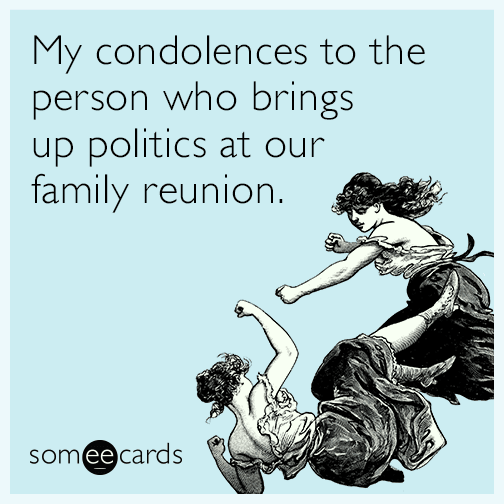
The Intersection of Personal Branding and Political Discourse
Your personal brand is the sum total of how others perceive your values, your reliability, and your temperament. In professional circles, a strong brand is often built on the pillars of objectivity, inclusivity, and strategic thinking. When political topics are introduced into a professional setting, they act as a stress test for these pillars.
The Cost of Polarization to Your Professional Identity
Political discussions are inherently emotionally charged. For a professional brand, the risk of being perceived as reactive, biased, or exclusionary is high. If you lean too heavily into a partisan stance in a non-political business environment, you risk alienating stakeholders, clients, and team members who hold differing views. This doesn’t mean a brand must be void of values, but rather that the expression of those values must be handled with tactical precision. A brand that is seen as “unpredictable” or “combative” loses its premium status.
Consistency in Communication
A hallmark of a strong corporate or personal brand is consistency. If your professional brand is built on being a “unifier” or a “problem solver,” your response to a political provocation must reflect those traits. When someone brings up a divisive policy or a controversial candidate, your response serves as a live demonstration of your brand’s core promise. Are you the person who stays calm under pressure? Are you the person who seeks common ground? The words you choose in these moments are the “marketing copy” of your character.
Strategic Deflection: Scripts for the High-EQ Brand
When a colleague, client, or networking contact initiates a political conversation, the primary goal of a brand-conscious professional is to maintain the relationship without compromising personal integrity. This requires a repertoire of “strategic deflections”—phrases that acknowledge the speaker without committing to a polarizing position.
The “Focus Shift” Technique
The Focus Shift is a powerful tool for redirecting a conversation back to a neutral or professional territory. It acknowledges that the topic is significant but signals that the current setting is not the venue for it.
- What to say: “That’s an incredibly complex issue that people have very strong feelings about. I’ve found that in this setting, I prefer to focus on [Project/Goal/Common Interest] so we can make the most of our time together.”
- Why it works: It positions you as a professional who values time and productivity. It frames your reluctance to engage not as a lack of opinion, but as a commitment to the task at hand.
Setting Boundaries without Burning Bridges
Sometimes, a simple deflection isn’t enough, and a more direct boundary is required. The key is to set the boundary in a way that feels inclusive rather than dismissive.
- What to say: “I’ve made it a personal rule to keep my political insights separate from my professional relationships. I value our work together too much to let a political debate get in the way of our progress.”
- Why it works: This reinforces your brand as someone who prioritizes relationships and professional harmony. It is a “relationship-first” approach that most people will respect, even if they were eager to debate.
The Neutral Curiosity Approach
If you feel that shutting down the conversation entirely might seem cold, you can adopt a stance of neutral curiosity. This involves asking questions about the process of news or the impact on the industry, rather than the politics itself.
- What to say: “It’s certainly a historic time. I’m curious, from a purely industry perspective, how do you see these shifts affecting our market volatility next quarter?”
- Why it works: You are pivoting from “politics” to “business intelligence.” This keeps you in the driver’s seat of your professional brand, transitioning from a potential partisan to an industry analyst.
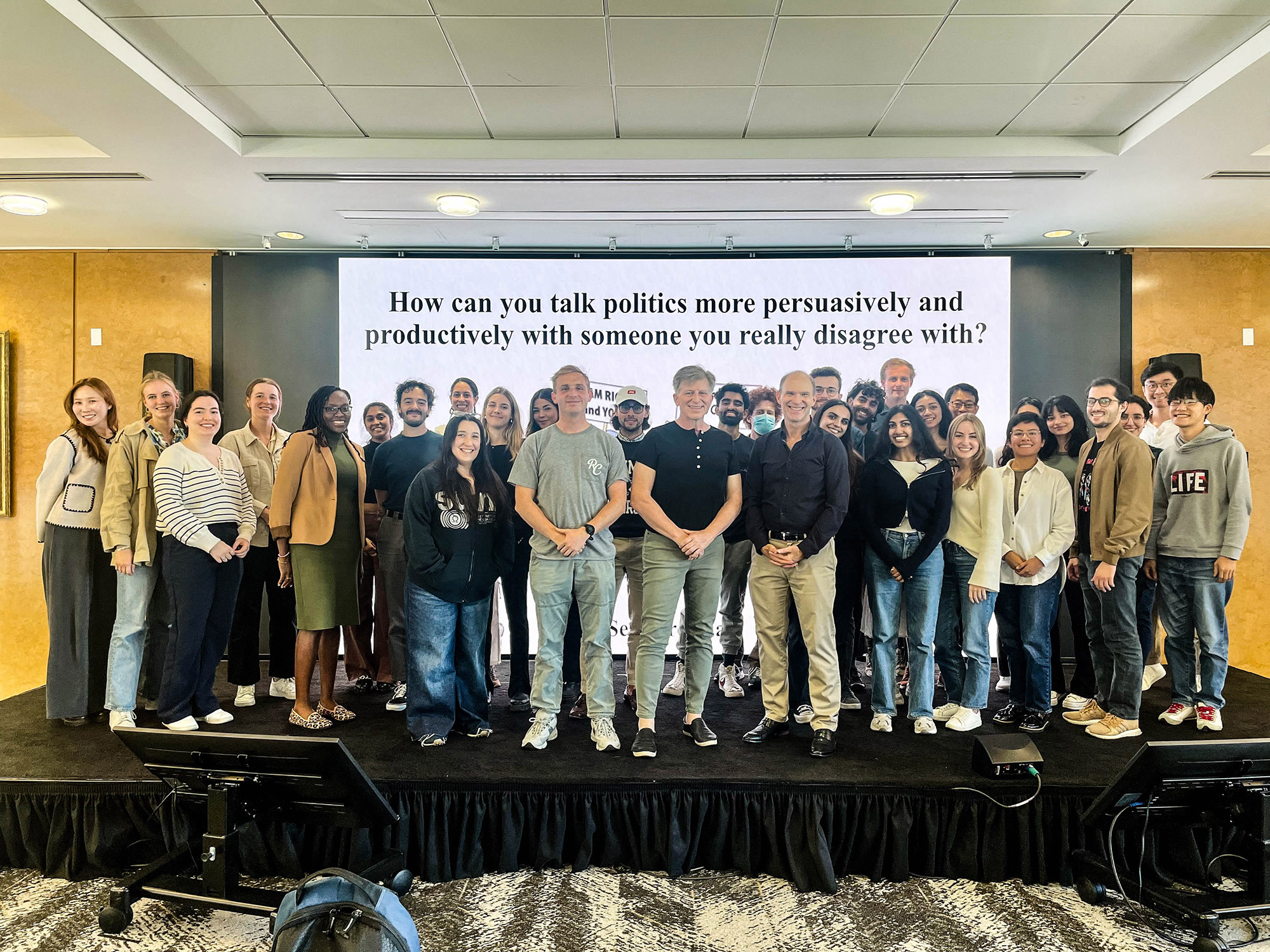
Building a Reputation for Intellectual Humility
In brand strategy, “intellectual humility” is the recognition that one’s knowledge is limited. Incorporating this into your personal brand can make you appear more approachable, wise, and balanced—traits that are highly valued in leadership.
Listening as a Branding Tool
You do not always have to speak to manage your brand. Often, the best thing to say when someone brings up politics is nothing at all. Active listening—nodding, maintaining eye contact, and offering neutral acknowledgments like “I see where you’re coming from”—can allow the other person to feel heard without you having to endorse their view. In the eyes of an observer, the person who listens more than they vent is often perceived as the more powerful and composed individual in the room.
Acknowledging Complexity
Avoid the trap of oversimplification. A brand that recognizes the nuance in the world is a brand that is perceived as sophisticated.
- What to say: “I think there are valid concerns on both sides of that argument, which is why it’s such a difficult puzzle to solve. I’m still in the process of learning more about it before I form a definitive stance.”
- Why it works: This response projects a brand of thoughtfulness. It suggests that you are not someone who jumps to conclusions or follows the crowd, but rather someone who values deep analysis—a highly desirable trait in any corporate identity.
When Your Brand is the Message: Navigating Intentional Political Stances
There are instances where a brand—either personal or corporate—decides to take a public stand on a political or social issue. This is often referred to as “Brand Activism.” When this is the case, the rules of engagement change.
Assessing Values Alignment
Before speaking up, ensure that the political stance is 100% aligned with your established brand values. If a “Green Tech” company speaks on environmental policy, it is brand-consistent. If a software firm speaks on a completely unrelated geopolitical issue, it may appear performative or opportunistic. When someone brings up a topic that your brand does have a stake in, your response should be rooted in your mission statement.
- What to say: “Our company has always been committed to [Value], and we believe that [Policy/Issue] directly impacts our ability to serve our community in that way.”
Transparency and Accountability
If you choose to engage, be prepared for the feedback loop. A professional brand that takes a stance must be ready to defend it with data and logic, not just emotion. When challenged, the brand must remain steady. Flip-flopping on a political stance is the fastest way to erode trust and damage a corporate identity.
Long-Term Brand Resilience in a Polarized Environment
Your reputation is built over decades and can be damaged in seconds. In a world where digital footprints are permanent, the “what to say” extends beyond verbal communication to your digital presence.
Social Media and Brand Perception
When someone tags you in a political post or brings up a trending topic in your LinkedIn comments, the stakes are elevated. The audience is no longer just one person; it is your entire network. The safest brand strategy is to maintain a high level of digital decorum. Avoid “doom-scrolling” or engaging in “comment section wars.” A premium brand does not bicker. If you must respond, use the same strategic deflections mentioned earlier, or move the conversation to a private channel.

The “Mirror Test” for Professional Integrity
Ultimately, how you handle political discourse is a reflection of your internal brand—your integrity. Ask yourself: “Does this response represent the person I want to be known as five years from now?” If the answer is no, then silence is your most effective tool.
By mastering the art of the pivot, maintaining intellectual humility, and prioritizing professional relationships over the need to be “right,” you solidify a personal brand that is resilient, respected, and above the fray. In the high-stakes world of professional branding, your ability to navigate the political minefield with grace is perhaps the ultimate competitive advantage. It demonstrates a level of emotional intelligence and strategic restraint that defines the world’s most influential leaders.
aViewFromTheCave is a participant in the Amazon Services LLC Associates Program, an affiliate advertising program designed to provide a means for sites to earn advertising fees by advertising and linking to Amazon.com. Amazon, the Amazon logo, AmazonSupply, and the AmazonSupply logo are trademarks of Amazon.com, Inc. or its affiliates. As an Amazon Associate we earn affiliate commissions from qualifying purchases.