
Resigning from a position is rarely just a lifestyle choice; it is a significant financial transaction. Whether you are moving toward a higher-paying role, launching a side hustle, or transitioning into full-time entrepreneurship, the way you exit an organization determines the immediate stability of your personal finances. A two-week notice is more than a courtesy—it is a strategic window to secure your final payouts, protect your benefits, and ensure that no money is left on the table.
In the world of personal finance and business strategy, your departure should be handled with the same precision as a contract negotiation. This guide explores exactly what to say during those final fourteen days to maximize your economic position and ensure a seamless transition to your next income stream.
1. The Financial Pre-Check: What to Verify Before Saying a Word
Before you walk into your manager’s office, you must conduct a thorough audit of your current financial standing with the company. What you say in your notice depends heavily on what the company still owes you. If you resign a day before a vesting cliff or a bonus payout, you could inadvertently cost yourself thousands of dollars.
Understanding Your Vesting Schedule and Equity
If your compensation package includes stock options or Restricted Stock Units (RSUs), your resignation timing is critical. Review your equity agreement to identify “cliff” dates. When you deliver your two-week notice, ensure that your final day of employment falls after a major vesting date. In your resignation conversation, you do not necessarily need to mention the stocks, but your choice of “last day” should be non-negotiable to protect these assets.
Calculating Accrued PTO and Commissions
State laws and corporate policies vary wildly regarding the payout of unused Vacation or Paid Time Off (PTO). Before speaking to HR, determine if your state requires employers to pay out accrued leave. If they do not, you may want to strategically use that time before giving notice. Furthermore, if you are in a sales or performance-based role, ensure that all “closed” deals are documented. What you say in your notice should include a clear statement regarding your expectation of final commission payments based on your current contract.
Bonus Eligibility and Timing
Many corporate bonuses require the employee to be “actively employed” on the date of disbursement. If you are three weeks away from a quarterly or annual bonus, it may be financially prudent to delay your notice. When you eventually do give notice, your script should be firm about your final date to ensure it aligns with the payroll cycle that includes your earned incentives.
2. The Resignation Conversation: Professional Scripts for Financial Clarity
The “what to say” part of a two-week notice is often the most stressful, yet it is the most important for maintaining your professional brand—which is, effectively, your long-term earning potential. Your goal is to be concise, firm, and helpful without revealing unnecessary details that could compromise your leverage.
The Face-to-Face Meeting with Your Manager
Your initial announcement should be verbal. Focus on the transition and the timeline.
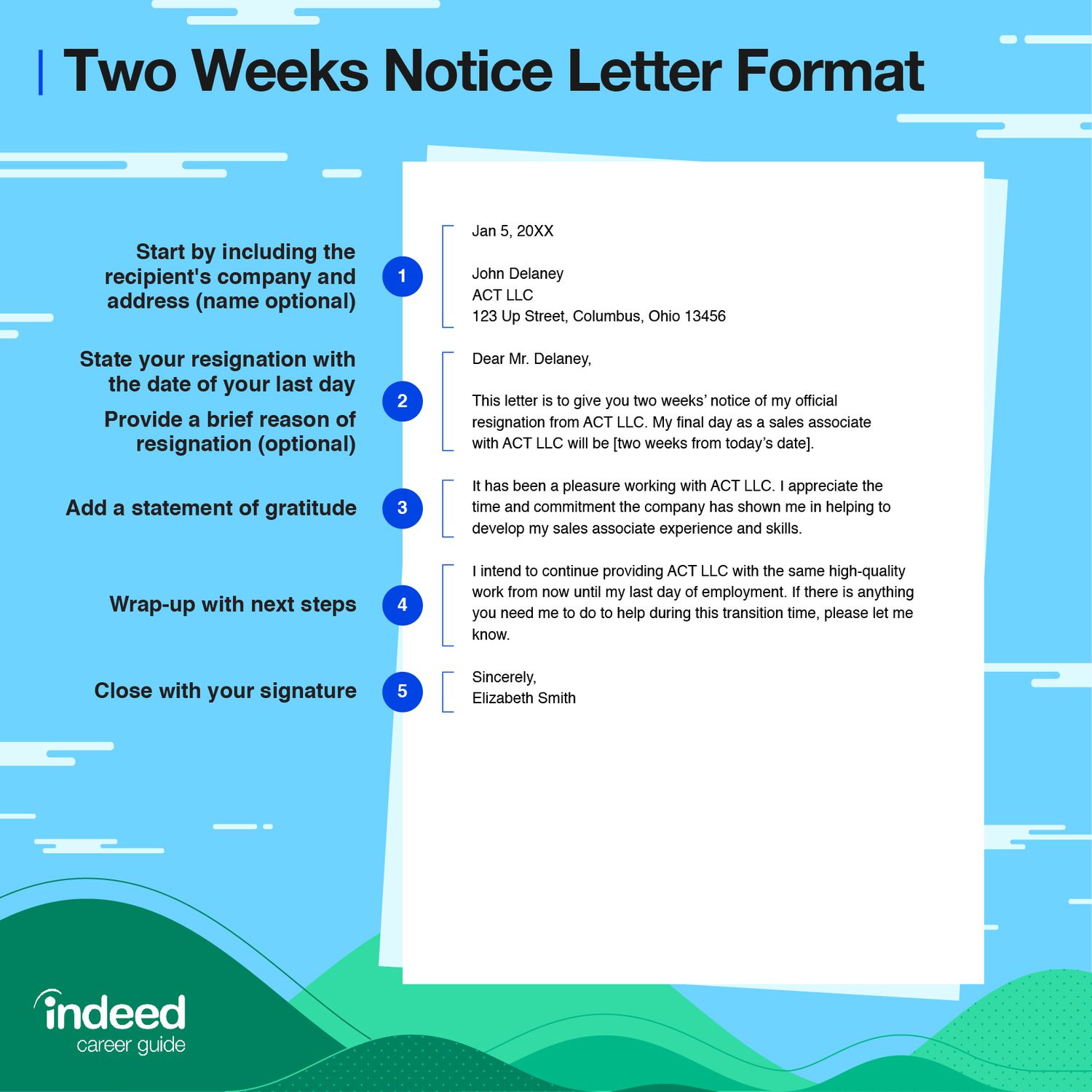
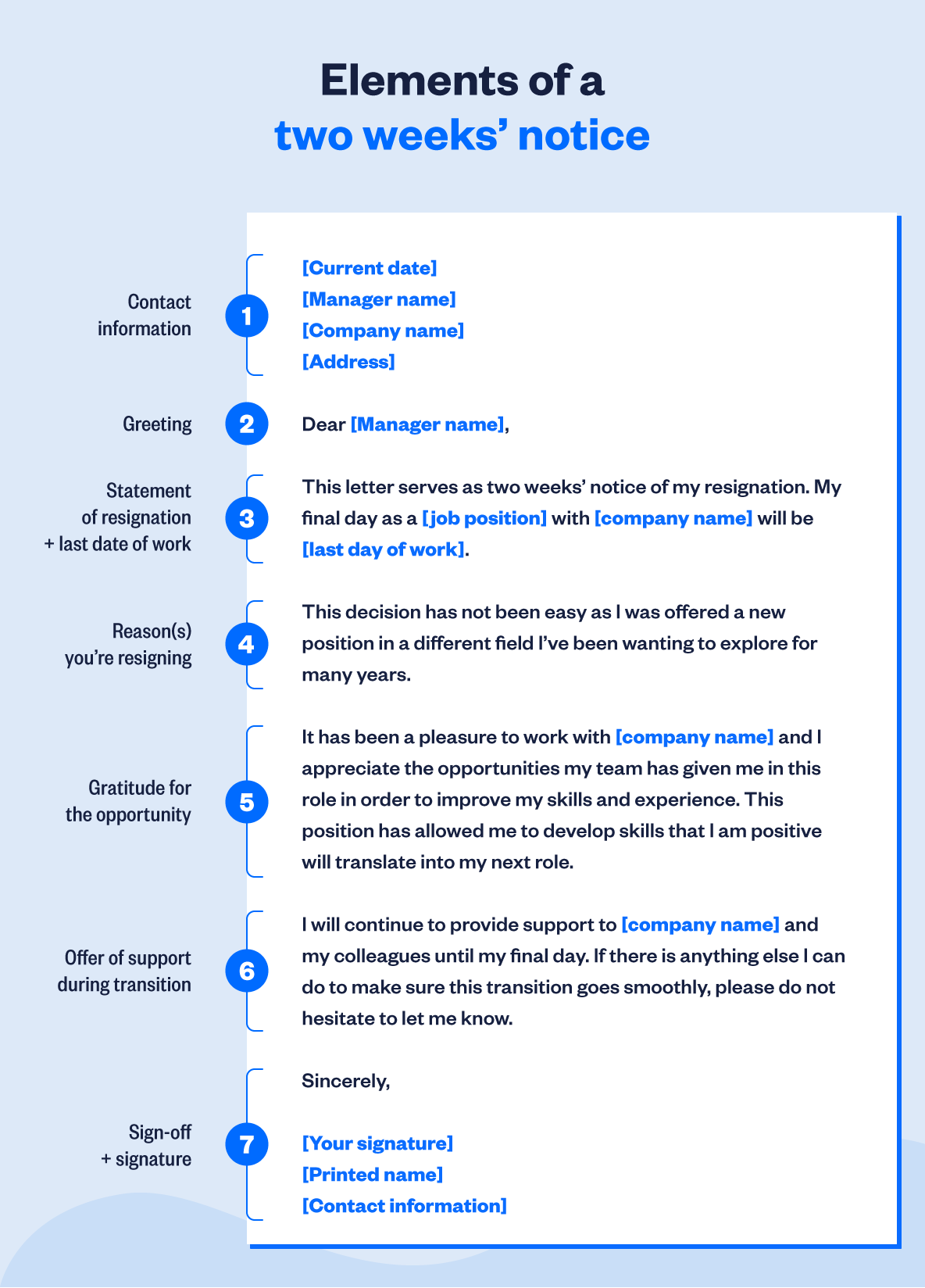
- What to say: “I’m writing to formally resign from my position as [Job Title]. My last day will be [Date]. I’ve enjoyed my time here, but I’ve accepted an opportunity that aligns better with my current financial and professional goals. Over the next two weeks, I am fully committed to ensuring a smooth hand-off of all my accounts and projects.”
- Why this works: It frames the move as a logical step for your “financial goals,” which is a professional way of signaling that the move is about growth, not dissatisfaction.
The Formal Resignation Letter (The Paper Trail)
Following the meeting, you must send a formal email. This is a legal and financial document that triggers your final paycheck and benefit termination.
- What to say: “Please accept this email as formal notification that I am resigning from my position, effective two weeks from today. My final date of employment will be [Date]. Please provide a summary of my final compensation, including any accrued PTO payouts and the status of my 401(k) contributions for this final period.”
- Why this works: It forces the HR department to put your final financial settlement in writing, reducing the risk of “clerical errors” in your last paycheck.
Handling the “Where Are You Going?” Question
You are under no financial or legal obligation to disclose your new salary or your new employer. In fact, revealing too much can sometimes lead to your current employer attempting to “sabotage” the move or stop a bonus payout if they perceive you are going to a direct competitor.
- What to say: “I’m not at liberty to share the specific details quite yet, but I’m very excited about the new direction. Right now, I want to focus on making sure my departure doesn’t leave the team in a bind.”
- Why this works: It pivots the conversation back to your value as a worker, maintaining a position of strength.
3. Managing the Benefits Bridge: Protecting Your Net Worth
A significant portion of your “income” is actually hidden in benefits. When you give your two-week notice, you are effectively ending your current insurance and retirement contributions. You must speak to HR specifically about the “bridge” between this job and the next to avoid out-of-pocket expenses.
Health Insurance and COBRA Costs
Most employer-sponsored health insurance ends on the last day of the month in which you resign. If your last day is the 30th, you may lose coverage on the 31st. If your last day is the 2nd, you might be covered for the rest of that month.
- What to ask HR: “Can you clarify the exact date my health, dental, and vision coverage will terminate? I would also like the paperwork for COBRA enrollment should there be a gap before my next plan begins.”
- Financial Tip: Knowing these dates allows you to schedule any expensive medical appointments before your last day, saving you thousands in potential premiums.
401(k) Rollovers and Loan Repayments
If you have an outstanding loan against your 401(k), giving your two-week notice often triggers a requirement to pay the full balance immediately, or it will be treated as a taxable distribution (plus a 10% penalty if you are under 59.5).
- What to say: “I need to discuss the status of my 401(k). If I have any outstanding balances or specific rollover requirements, I’d like to begin that paperwork now to avoid any tax implications.”
- Why this matters: A mistake here can lead to a massive tax bill in April, effectively negating the “raise” you might be getting at your new job.
The HSA and Flexible Spending Accounts (FSA)
Health Savings Accounts (HSAs) belong to you and move with you. However, Flexible Spending Accounts (FSAs) are usually “use it or lose it.” If you have money left in an FSA, you must spend it on qualifying expenses before your last day.
- The Action Plan: Don’t mention the FSA to your boss, but ensure you’ve submitted all receipts for reimbursement before your final day. Once you leave, that money typically reverts to the employer.
4. Maximizing the Exit: Negotiations and Future Income
The final two weeks are not just about winding down; they are about setting up future revenue streams. How you handle the “counter-offer” and the “exit interview” can impact your future earnings.
Navigating the Counter-Offer Trap
When you give notice, a company may offer you more money to stay. From a financial perspective, accepting a counter-offer is often a mistake. Statistics show that 80% of employees who accept a counter-offer leave within six months anyway, often because the underlying issues weren’t addressed.
- What to say: “I appreciate the offer and the company’s willingness to invest in me. However, my decision is final. I’ve made a commitment to my new path, and I believe it’s the best financial move for my future.”
- The Financial Logic: If they had the budget to pay you more, they should have been doing it already. Accepting a counter-offer often marks you as “disloyal,” making you the first on the list for future layoffs.
Transitioning to a Consultant Role
If your skills are specialized, your employer may realize they cannot replace you in two weeks. This is an opportunity to generate “Online Income” or “Side Hustle” revenue.
- What to say: “I understand that two weeks is a short window for a full knowledge transfer. If you find you need additional support after my departure, I would be open to discussing a 1099 consulting arrangement at an hourly rate of [1.5x to 2x your current hourly rate].”
- Why this works: It turns a resignation into a business opportunity. You move from an “at-will” employee to a “vendor,” which is a powerful shift in your professional financial portfolio.
The Exit Interview: A Policy Review
During the exit interview, focus your feedback on “Business Finance” and “Corporate Strategy” rather than personal grievances.
- What to say: “I’ve noticed that our compensation structures are becoming less competitive compared to the current market. To retain top talent in the future, the company might consider revising its RSU vesting schedules or 401(k) matching.”
- The Goal: This keeps your reputation as a high-level thinker intact. In the future, if you ever want to return at a much higher salary (a “boomerang” hire), you will be remembered as someone who understood the business’s bottom line.

Conclusion: Exiting with Financial Integrity
Resigning is a pivotal moment in your wealth-building journey. By focusing on what you say and how you time your departure, you ensure that your “Two-Week Notice” serves as a bridge to greater financial heights rather than a period of economic uncertainty.
Always remember: your job is a contract for your time and skills. When that contract ends, your primary responsibility is to ensure that all financial obligations are met, all benefits are accounted for, and your professional reputation—your most valuable asset—remains untarnished. Use these scripts and strategies to take control of your career transition and secure your financial future.
aViewFromTheCave is a participant in the Amazon Services LLC Associates Program, an affiliate advertising program designed to provide a means for sites to earn advertising fees by advertising and linking to Amazon.com. Amazon, the Amazon logo, AmazonSupply, and the AmazonSupply logo are trademarks of Amazon.com, Inc. or its affiliates. As an Amazon Associate we earn affiliate commissions from qualifying purchases.