
In the modern corporate landscape, every interaction is an opportunity for brand management. While most professionals focus their branding efforts on LinkedIn profiles, resumes, and high-stakes presentations, the subtle nuances of interpersonal communication often carry the most weight in shaping one’s reputation. Boss’s Day, an annual observance often overlooked or treated as a perfunctory chore, represents a strategic “brand touchpoint.” Writing a message in a Boss’s Day card is not merely an act of social grace; it is an exercise in personal branding, emotional intelligence, and upward organizational alignment.

When you decide what to write in a boss’s day card, you are choosing how to position yourself within the internal hierarchy. Are you a visionary who appreciates leadership? Are you a detail-oriented executor who values mentorship? Or are you a culture-builder who strengthens the social fabric of the team? By treating this card as a professional communication asset, you can reinforce your corporate identity while fostering a stronger relationship with your primary internal stakeholder.
The Strategic Importance of Internal Branding Through Gratitude
Internal branding is the process of managing how you are perceived by your colleagues and superiors. In a competitive business environment, your “brand equity” depends on the perceived value you bring to the organization and the quality of your professional relationships. Boss’s Day provides a unique, low-pressure environment to solidify this equity.
Why Boss’s Day is a Brand Touchpoint
In marketing terms, a touchpoint is any point of interaction between a brand and a customer. Within a company, your manager is essentially your most important “client.” A well-crafted message in a Boss’s Day card serves as a positive touchpoint that reinforces your brand values. It signals that you are observant, appreciative, and professionally mature. If your personal brand is built on reliability and professionalism, a thoughtfully written card validates those traits. Conversely, a generic or poorly executed message can signal a lack of effort or a misunderstanding of corporate culture.
Aligning Your Message with Corporate Identity
Every organization has a distinct corporate identity—a “brand voice” that dictates how employees interact. Some companies favor a formal, hierarchical approach, while others thrive on a flat, casual, or “scrappy” startup culture. Your message must be an extension of this identity. If you work for a traditional financial institution, your personal brand should lean toward formal respect and appreciation for leadership. If you are in a creative agency, your brand might allow for more wit and personality. Aligning your gratitude with the company’s cultural DNA shows that you are “on-brand” and fully integrated into the firm’s mission.
Crafting Your Narrative: Messaging Based on Leadership Styles
Effective branding requires understanding your audience. To write a message that resonates, you must tailor your personal brand voice to the specific leadership style of your manager. This demonstrates high emotional intelligence (EQ)—a trait highly valued in leadership development.
The Visionary Leader: Inspirational Messaging
If your boss is a visionary who focuses on the big picture and long-term strategy, your message should reflect your alignment with that vision. Your personal brand here should be that of a “partner in progress.”
- What to say: “Happy Boss’s Day! I truly appreciate the clarity and vision you provide for the team. It is inspiring to work under a leader who challenges us to look beyond the immediate and strive for long-term impact. Thank you for setting the bar high.”
- Brand Impact: This positions you as someone who understands the “why” behind the work, marking you as a candidate for higher-level strategic roles.

The Practical Mentor: Results-Oriented Messaging
Some managers pride themselves on being hands-on mentors who focus on skill development and operational excellence. For this leader, your brand should emphasize growth, coachability, and appreciation for tactical guidance.
- What to say: “Thank you for being such an incredible mentor over the past year. Your guidance on [Specific Project] was instrumental in my professional growth. I value your direct feedback and your commitment to helping the team refine our craft. Happy Boss’s Day!”
- Brand Impact: This reinforces your identity as a high-potential employee who is eager to learn and capable of translating mentorship into tangible business results.
The Supportive Manager: Empathy-Based Messaging
In cultures that prioritize psychological safety and employee well-being, the “supportive manager” is the backbone of the organization. If your boss excels at empathy and team cohesion, your brand should reflect your value as a team player who appreciates the human element of business.
- What to say: “Happy Boss’s Day! Thank you for creating an environment where we feel supported and empowered to do our best work. Your leadership style makes this team more than just a group of coworkers; you make us a community. I am grateful for your advocacy.”
- Brand Impact: This positions you as a “culture champion,” someone who understands the importance of soft skills in maintaining a high-performing team.
The Dos and Don’ts of Personal Brand Alignment
Just as a brand can be damaged by a misaligned marketing campaign, your professional reputation can suffer if a Boss’s Day card is handled incorrectly. Maintaining professional boundaries while demonstrating genuine appreciation is a delicate balance.
Avoiding the “Sycophant” Trap
One of the greatest risks to your personal brand in a Boss’s Day context is appearing disingenuous. In corporate branding, authenticity is everything. If your message is overly flowery or feels like “kissing up,” it can damage your credibility not only with your boss but also with your peers.
- The Strategy: Focus on specific, verifiable actions. Instead of saying “You are the greatest leader in history,” say “I appreciated how you handled the budget negotiations last month.” Specificity breeds authenticity. By grounding your praise in reality, you maintain a brand of integrity and objective observation.
Consistency Across Digital and Physical Channels
In the digital age, a Boss’s Day message might be delivered via a physical card, an e-card, or a Slack/Teams message. A strong brand remains consistent across all platforms. If you are known for being tech-savvy and efficient, a well-timed, professional digital message may be more “on-brand” than a traditional card. However, if your brand is built on “the personal touch” and high-level relationship management, a handwritten note is indispensable. The medium you choose is a sub-textual message about how you value the relationship and how you navigate professional norms.
Elevating the Executive Connection Through Strategic Gratitude
Beyond the immediate gesture, Boss’s Day is an opportunity for long-term career positioning. In the world of business finance and corporate strategy, we often talk about “Return on Relationship” (ROR). The words you choose can help secure your place in the manager’s “inner circle” of trusted advisors and high-performers.
Highlighting Shared Success
A card is an excellent place to subtly remind a leader of the successes you have achieved together. This isn’t about bragging; it’s about reinforcing the “brand of the team” and your role within it.
- Strategic Phrasing: “It’s been a landmark year for the department, and your leadership was the catalyst. I’m proud of what we accomplished with the [Project Name] and look forward to our next win.”
- Why it works: This creates a psychological link between the boss’s success and your presence on the team. It frames you as an asset to their continued career progression.
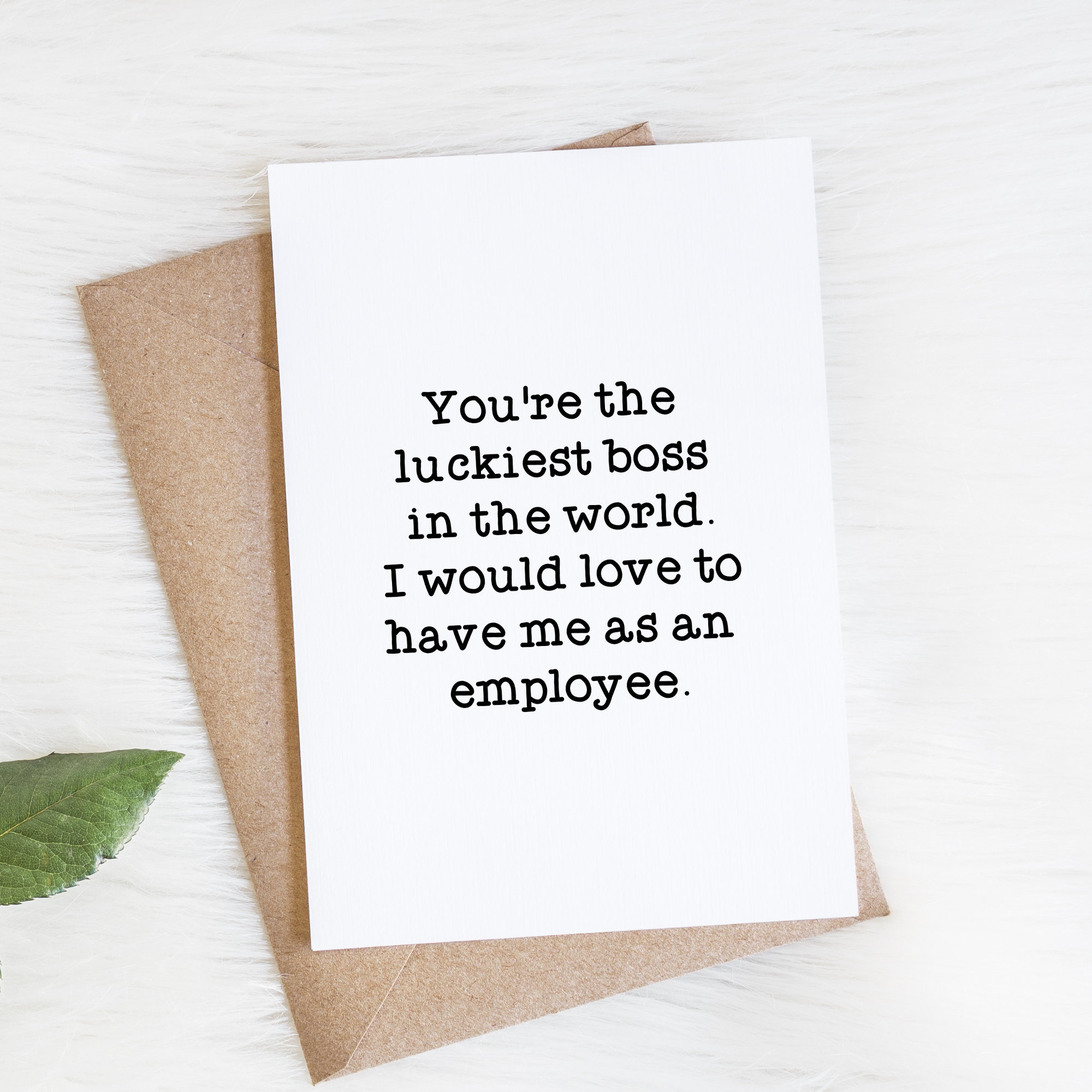
Strengthening the Upward Feedback Loop
The most successful professionals are those who can provide “upward feedback” in a way that is respectful and constructive. A Boss’s Day card is a gentle way to provide positive reinforcement. By telling a leader what they are doing well, you are essentially encouraging more of that behavior.
- The Nuance: Leaders, especially those in high-pressure executive roles, often receive very little positive feedback. By identifying a specific leadership trait you admire—such as their composure under pressure or their ability to simplify complex problems—you are validating their brand as a leader. This creates a powerful bond of mutual respect. When you validate their brand, they are more likely to support and promote yours.
In conclusion, “what to say in a boss’s day card” is a question of strategy rather than sentimentality. By viewing this interaction through the lens of brand management, you can transform a simple card into a tool for career advancement. Whether you choose to highlight your alignment with the company vision, your growth as a mentee, or your commitment to team culture, ensure that your words are a true reflection of the professional brand you wish to project. In the corporate world, the small things are the big things; a well-written note is a testament to your professionalism, your EQ, and your readiness for the next level of leadership.
aViewFromTheCave is a participant in the Amazon Services LLC Associates Program, an affiliate advertising program designed to provide a means for sites to earn advertising fees by advertising and linking to Amazon.com. Amazon, the Amazon logo, AmazonSupply, and the AmazonSupply logo are trademarks of Amazon.com, Inc. or its affiliates. As an Amazon Associate we earn affiliate commissions from qualifying purchases.