
In the intricate dance of human interaction, a simple “thank you” often marks the end of a transaction, a completed favor, or a successful collaboration. Yet, for individuals and organizations keen on cultivating a powerful and positive brand, what comes after those two appreciative words is not merely an afterthought—it’s a critical strategic touchpoint. This seemingly minor interaction holds immense power to reinforce professionalism, deepen relationships, and distinguish your personal or corporate brand in a competitive landscape. Far from a mere formality, the art of responding to gratitude is a cornerstone of exceptional brand communication, shaping perceptions and fostering loyalty long after the initial exchange.

The Strategic Importance of Post-Gratitude Responses in Branding
Every interaction with a client, colleague, customer, or partner is an opportunity to articulate your brand’s values, personality, and commitment. The moments following a “thank you” are particularly potent because they occur when the other party is already feeling positive emotions of appreciation. How you handle these moments can amplify that positivity or inadvertently diminish it.
Reinforcing Professionalism and Reliability
A well-crafted response to “thank you” signals professionalism. It demonstrates that you are not just capable of delivering a service or favor, but also adept at managing the entire interaction gracefully. For a personal brand, this solidifies your reputation as someone reliable, thoughtful, and easy to work with. For a corporate brand, it reinforces an image of polished efficiency and customer-centricity. It shows that your commitment extends beyond the task at hand to the overall experience, projecting an image of thoroughness and attention to detail that customers and colleagues will remember and trust. An awkward pause or a dismissive “no problem” can subtly chip away at this carefully constructed professional facade, suggesting a lack of refinement or genuine care.
Building Stronger Relationships and Networks
At the heart of every successful brand, personal or corporate, lies a network of strong relationships. Responding graciously to gratitude is a fundamental building block for these connections. When you acknowledge appreciation thoughtfully, you validate the other person’s feelings and their perception of your value. This validation fosters a sense of rapport and mutual respect. For personal branding, it means colleagues are more likely to collaborate with you, and mentors are more inclined to offer guidance. For businesses, it translates into repeat customers, positive referrals, and a loyal community. It transforms a transactional exchange into a relational one, turning a one-off interaction into the foundation for future engagement.
Differentiating Your Personal and Corporate Brand
In today’s crowded market, differentiation is key. Many can offer similar services or possess comparable skills. What often sets truly successful brands apart is the experience they provide. How you communicate, especially in these subtle but significant moments, becomes a powerful differentiator. While others might default to a generic “you’re welcome,” a more nuanced, personalized, and value-driven response can make your brand memorable. It demonstrates a level of care and sophistication that elevates your brand above the ordinary, positioning you as not just competent, but also genuinely invested in positive interactions. This distinctiveness contributes significantly to your overall brand equity and market positioning.
Avoiding the Pitfalls of Awkward Silence or Over-Apology
The alternative to a well-thought-out response can be detrimental. An awkward silence after a “thank you” can create discomfort, leaving the other party wondering if their appreciation was received or valued. Conversely, an over-apologetic response (e.g., “Oh, it was nothing, really, don’t even worry about it”) can inadvertently diminish the value of your contribution, making your efforts seem less significant than they were. Both scenarios can dilute the positive impact you’ve just made, leading to a less favorable perception of your brand. The goal is a confident, appreciative, and open response that maintains the positive momentum of the interaction.
Crafting Your Brand’s Voice: Tailoring Responses for Impact
The power of your post-gratitude response lies not in a single, universal phrase, but in its ability to reflect your brand’s unique voice and adapt to diverse contexts. This requires intentionality and a deep understanding of your brand identity.
The “You’re Welcome” Spectrum: Beyond the Basics
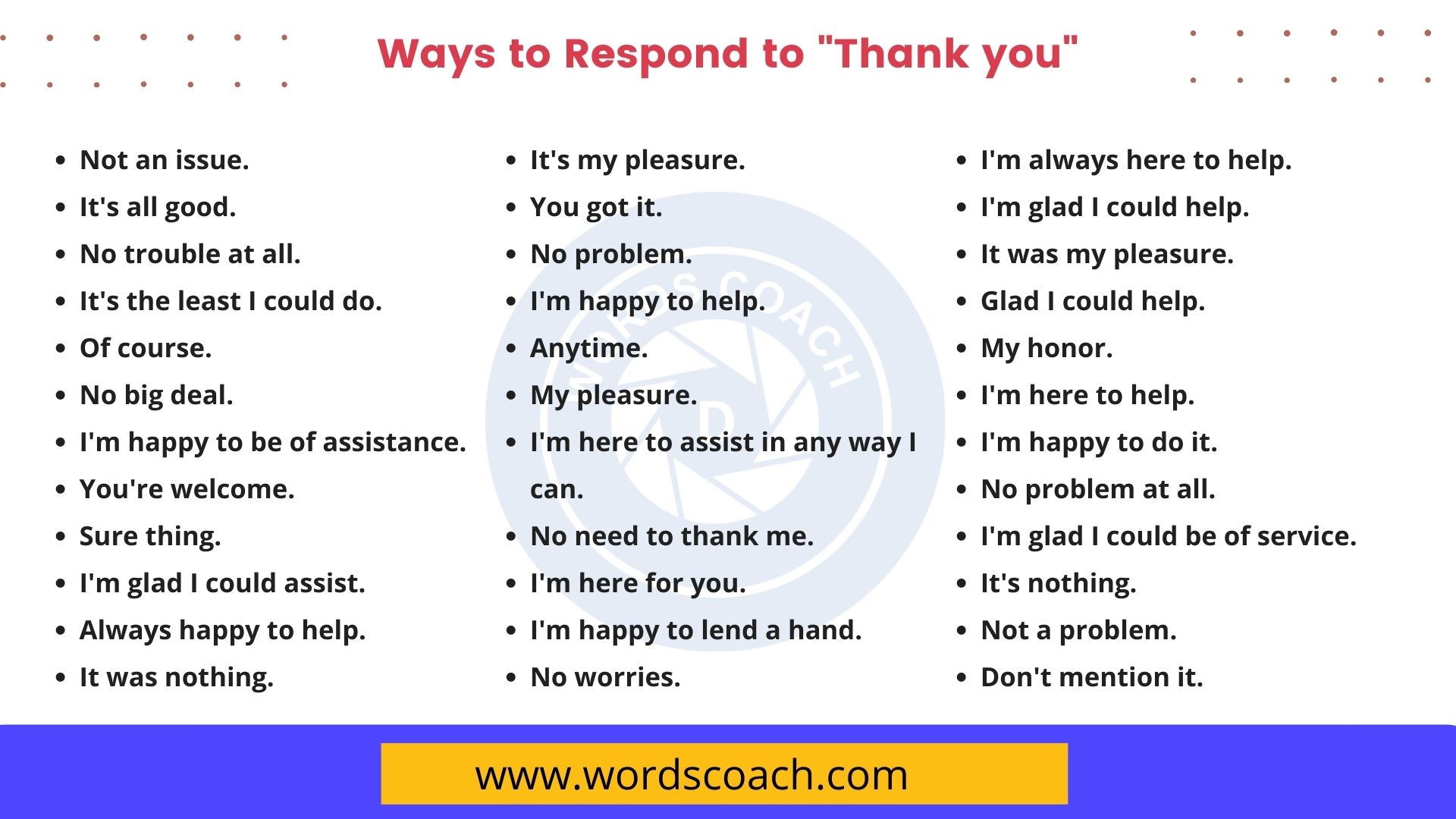
While “you’re welcome” is polite, it’s often perceived as standard and can sometimes lack warmth or personality. A truly effective brand uses a broader spectrum of responses to convey genuine sentiment and reinforce its identity:
-
“My pleasure”: Conveys enthusiasm and a service-oriented mindset, ideal for brands that prioritize customer delight.
-
“Glad I could help”: Highlights your helpfulness and direct impact, suitable for brands focused on problem-solving or support.
-
“Happy to assist”: Similar to “glad I could help,” but can carry a slightly more formal, professional tone.
-
“You got it” / “No problem”: More casual, suitable for informal internal team interactions or long-standing client relationships where a relaxed brand personality is appropriate. Use with caution, as “no problem” can sometimes imply there could have been a problem.
-
“Anytime”: Suggests an ongoing willingness to help, building a sense of reliable support.
-
“It was truly my pleasure/honor”: For situations where a significant effort or favor was extended, adding gravitas and sincerity.
Injecting Brand Personality: Authenticity and Tone
Your response should sound like you or your brand. If your personal brand is known for being witty and approachable, a slightly humorous or informal reply might be appropriate. If your corporate brand emphasizes luxury and sophistication, your language should be polished and refined. Authenticity is paramount. A forced or generic response will feel disingenuous. Consider:
-
Tone: Is your brand playful, serious, empathetic, authoritative, humble? Let your tone shine through.
-
Vocabulary: Do you use specific industry jargon (when appropriate for the audience) or plain language?
-
Values: Does your response subtly reflect your brand’s core values, such as innovation, integrity, or community?
Context is King: Formal vs. Informal Settings
The environment dictates the appropriate level of formality.
-
Formal settings (e.g., a board meeting, a first-time client interaction, a high-stakes negotiation) demand responses that are respectful, concise, and professional: “My pleasure, I’m glad we could facilitate this,” or “You’re most welcome, it was an important objective.”
-
Informal settings (e.g., a casual team chat, a long-term client relationship, an internal favor) allow for more relaxed language: “You got it, team effort!” or “Happy to help out anytime.”
Mixing these up can create dissonance. Using overly casual language in a formal setting can undermine your credibility, while being overly stiff in an informal context can make your brand seem unapproachable.
Leveraging Digital Communication: Email, Social Media, and Messaging
Digital platforms offer unique opportunities and challenges.
-
Email: Allows for slightly longer, more thoughtful responses. You can reiterate value, offer further assistance, or subtly include a call to action. “You’re welcome, [Client Name]. It was a pleasure to get this project across the finish line. Please don’t hesitate to reach out if any further questions arise.”
-
Social Media: Often requires brevity and speed. A quick, positive emoji combined with a concise phrase can work wonders. Public responses also serve as testimonials, showcasing your brand’s responsiveness.
-
Messaging Apps: Tend to be more informal. A concise text or even a voice note can convey genuine warmth.
Ensure that your digital responses are consistent with your overall brand guidelines, maintaining the same tone and professionalism you would in person.
Practical Frameworks for Graceful Brand Communication
Moving beyond the theoretical, having practical models for structuring your responses can make this aspect of brand communication seamless and highly effective.
The “Acknowledge, Affirm, Advance” Model
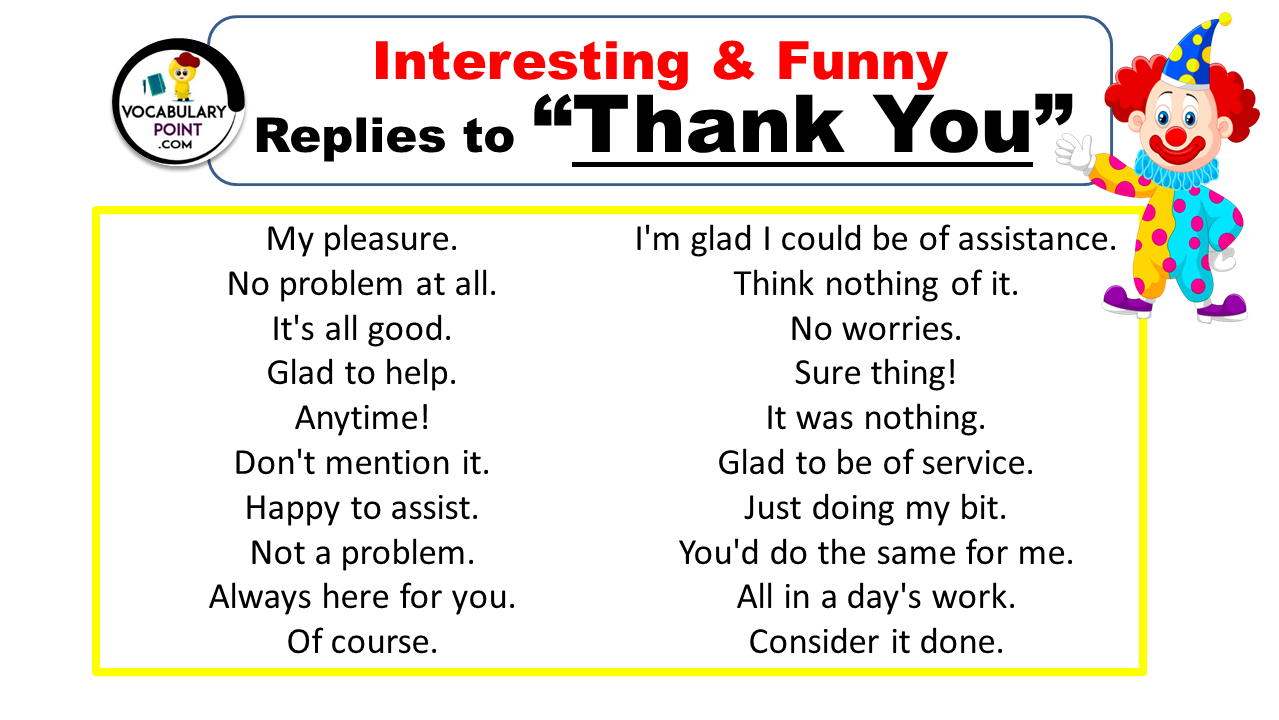
This three-part framework provides a robust structure for post-gratitude communication, ensuring you acknowledge the appreciation, affirm your role, and gently open the door for future interaction, all while reinforcing your brand.
-
Acknowledge: Start by directly acknowledging their “thank you.”
- Examples: “Of course,” “My pleasure,” “You got it,” “Absolutely.”
-
Affirm: Briefly affirm the value of your contribution or express satisfaction in helping. This reinforces your helpfulness and competence.
- Examples: “Glad I could help you achieve X,” “Happy to assist with such an important matter,” “It was a rewarding experience working on this.”
-
Advance: Offer further assistance, express confidence in their future success, or subtly suggest continued engagement. This positions your brand as a reliable, ongoing resource.
- Examples: “Let me know if you need anything else,” “Always here to support your team,” “I’m confident you’ll see great results.”
- Combined Example: “My pleasure, [Client Name]. I was truly glad I could help you navigate that complex regulatory landscape. Please don’t hesitate to reach out if any further questions arise as you implement the changes.”
When the “Thank You” is for a Service or Product
When a customer thanks you for your product or service, your response is a vital part of the customer retention strategy.
-
Reinforcing Customer Satisfaction and Loyalty: “We’re so glad you’re enjoying [Product Name]! Your satisfaction is our top priority.” This validates their choice and reinforces their positive experience.
-
Opening Avenues for Feedback and Upselling (Subtly): “You’re very welcome! We strive to make [process] as smooth as possible. We’d love to hear your thoughts in a quick review, and remember, our [related product/service] could help you achieve even more.” This must be done delicately, ensuring the primary focus remains on gratitude.
-
Expressing Team Effort: “It was our pleasure to serve you. Our entire team works hard to ensure experiences like yours are consistently positive.” This builds a sense of a cohesive, dedicated brand behind the product.
Handling Professional Referrals and Introductions
When someone thanks you for a referral or introduction, your response impacts your brand’s network and reputation.
-
Expressing Reciprocity and Continued Support: “Of course! I was happy to connect you with [Name]. I believe you’ll find them a valuable resource. Do keep me updated on how things progress, and I’ll certainly keep you in mind for other opportunities.” This shows you’re invested in the success of your network and reinforces your role as a connector.
-
Reinforcing Trust: “My pleasure. I trust that [Referred Person] will be a great fit for your needs. Building strong connections is what it’s all about.” This demonstrates that your referrals are carefully considered and trustworthy.
Training Your Team: Scaling Gracious Communication Across Your Brand
For corporate brands, ensuring consistency in these interactions is paramount. A single awkward response can contradict an otherwise meticulously crafted brand image. Training your team is essential to scale gracious communication effectively.
Developing Internal Communication Guidelines
Create a style guide that includes examples of appropriate post-gratitude responses for various scenarios (customer service, sales, internal comms, external partnerships). This guide should reflect your brand’s unique tone, personality, and values. It acts as a blueprint for all employees, ensuring a unified brand voice.
Role-Playing and Scenario Training
Theoretical knowledge alone isn’t enough. Implement regular training sessions that include role-playing common scenarios. Practice handling different types of “thank yous,” from simple acknowledgments to more significant expressions of gratitude. This builds confidence and ensures that responses become second nature, even under pressure.
Fostering a Culture of Gratitude and Service
Beyond specific phrases, instill a broader culture where gratitude and service are core values. Encourage employees to genuinely appreciate customers and colleagues. When every team member understands the brand’s commitment to positive interactions, their responses will naturally align with brand expectations. Recognition programs for excellent communication can also reinforce this culture.
Measuring Impact: Feedback and Brand Perception
Integrate feedback mechanisms to gauge the effectiveness of your communication strategies. Customer surveys, social media monitoring, and direct client feedback can provide insights into how your brand’s responses are being perceived. Adjust guidelines and training based on this data to continually refine your brand’s communication excellence.
The Long-Term Brand Equity of Graciousness
Mastering what to say after someone says “thank you” is more than just good manners; it’s a strategic investment in your brand’s long-term equity. Each gracious interaction, no matter how small, contributes to the cumulative perception of your brand.
Cultivating a Reputation for Excellence and Approachability
Consistently thoughtful responses build a reputation not just for competence, but also for being a pleasure to work with. This creates a brand that is perceived as both excellent in its offerings and approachable in its interactions—a powerful combination that attracts and retains talent, clients, and partners.
Enhancing Word-of-Mouth Marketing
People remember how you make them feel. A positive, graceful interaction following a “thank you” leaves a lasting impression, making individuals more likely to speak highly of your brand to others. This organic word-of-mouth marketing is invaluable, often more credible and impactful than traditional advertising.
The Ripple Effect: From Individual Interactions to Brand Loyalty
What begins as a single polite exchange can have a ripple effect, building trust, fostering goodwill, and eventually cementing deep brand loyalty. In a world where genuine human connection is increasingly valued, the ability to respond gracefully to gratitude is not just a soft skill—it’s a hard competitive advantage. By embracing this art, individuals and organizations can significantly elevate their brand, creating an enduring legacy of professionalism, warmth, and distinction.
aViewFromTheCave is a participant in the Amazon Services LLC Associates Program, an affiliate advertising program designed to provide a means for sites to earn advertising fees by advertising and linking to Amazon.com. Amazon, the Amazon logo, AmazonSupply, and the AmazonSupply logo are trademarks of Amazon.com, Inc. or its affiliates. As an Amazon Associate we earn affiliate commissions from qualifying purchases.