
A meticulously crafted business plan is more than just a document; it’s the financial blueprint, strategic roadmap, and persuasive narrative for any aspiring or expanding enterprise. For entrepreneurs seeking capital, clarity, or a robust framework for growth, understanding its core components is paramount. This comprehensive guide delves into the essential elements that transform an idea into a structured, financially viable, and compelling business proposition, all viewed through the lens of sound financial planning and resource management.
The Foundational Elements: Vision, Operations, and Management
Before delving into intricate financial models, a business plan must first establish the core identity and operational framework of your venture. These foundational sections provide context and credibility, demonstrating a clear understanding of your purpose and the mechanisms by which you intend to operate.
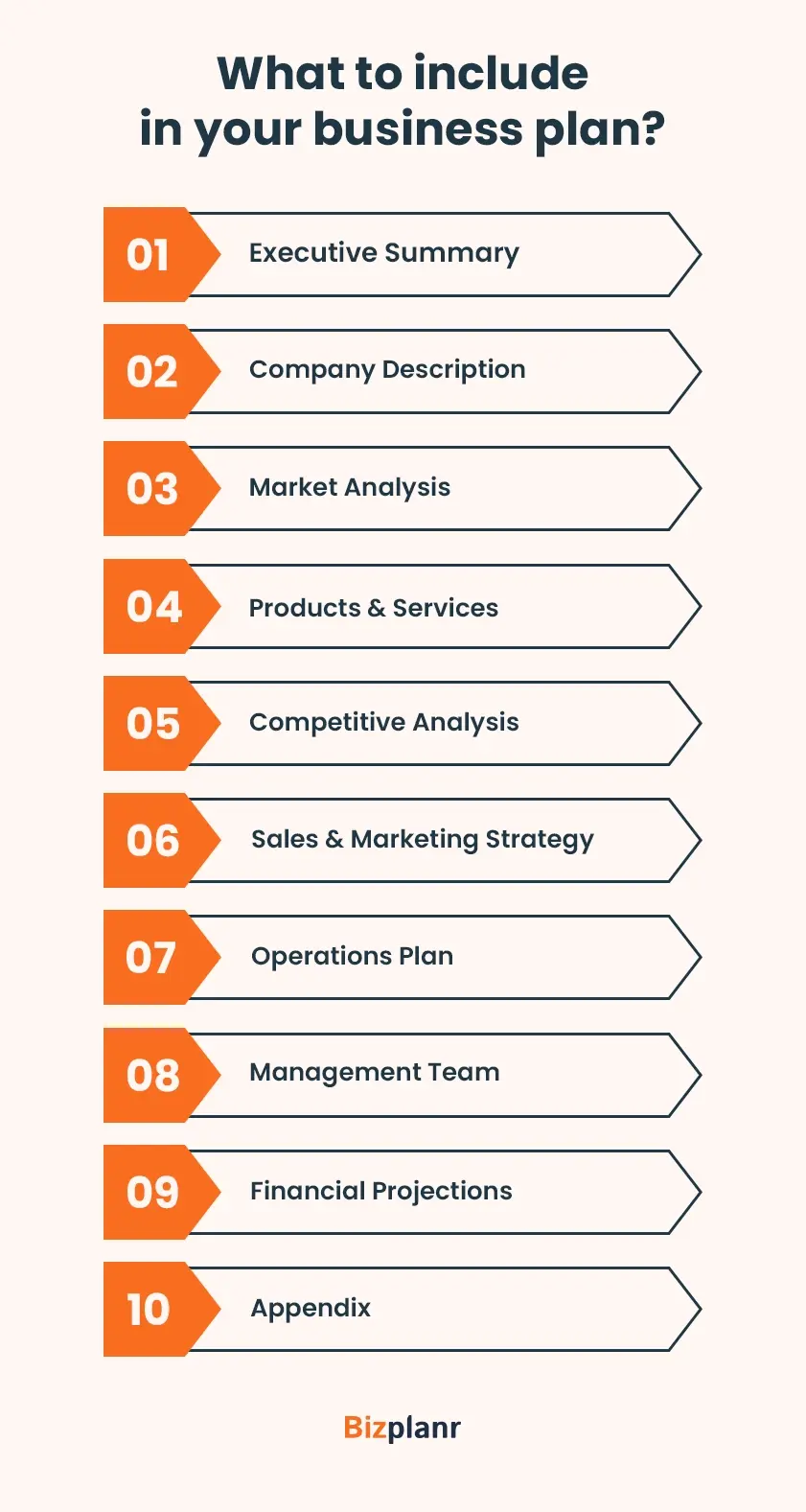
Executive Summary: Your Business Story in a Nutshell
The executive summary is arguably the most critical section of your business plan, often written last but presented first. It serves as a concise, compelling overview, designed to capture the reader’s attention and provide a high-level understanding of your entire business. For investors and lenders, this section is a make-or-break filter, requiring you to articulate your financial ask and projected returns with clarity.
It must briefly touch upon:
- Your Vision and Mission: What problem do you solve, and for whom?
- Products or Services: A brief description of what you offer.
- Target Market: Who are your customers?
- Competitive Advantage: What makes you unique and sustainable?
- Management Team: Who is leading the charge, highlighting relevant experience.
- Financial Highlights: Crucially, your funding request (if any) and an overview of your most compelling financial projections – key metrics like revenue, profit margins, and anticipated growth rates. This demonstrates financial foresight and potential ROI.
Company Description: Defining Your Core Identity
This section dives deeper into the specifics of your business, outlining its fundamental characteristics. It’s where you define what you are, what you stand for, and your operational scope. From a financial perspective, this section lays the groundwork for understanding the operational costs, legal implications, and long-term financial commitments.
Key components include:
- Business Name and Legal Structure: Is it a sole proprietorship, partnership, LLC, or corporation? Each has distinct financial and tax implications.
- Mission Statement: Your purpose, your “why.”
- Vision Statement: Your long-term aspirations.
- Values: The guiding principles of your operations.
- Business Objectives: Specific, measurable, achievable, relevant, and time-bound (SMART) goals. These might include financial targets like market share, revenue milestones, or profitability goals.
- Legal Standing: Licenses, permits, and any regulatory compliance, all of which often entail associated costs.
Products and Services: What You Offer, How It Creates Value
Here, you detail what you are selling, its benefits, and its lifecycle. This section is vital for understanding your revenue streams and the costs associated with development, production, and delivery. It ties directly into your pricing strategy and ultimately, your profitability.
Consider including:
- Detailed Description: Explain your offerings, focusing on features and, more importantly, the benefits to the customer.
- Lifecycle Stage: Is it in development, launch, growth, or maturity? This affects funding needs and market strategy.
- Proprietary Aspects: Patents, copyrights, trade secrets that create a competitive edge and potentially justify premium pricing.
- Future Development: How your products/services will evolve, outlining R&D budgets and future revenue opportunities.
Organization and Management: The Team Driving Success
Investors don’t just invest in ideas; they invest in people. This section introduces your leadership team, their expertise, and the organizational structure. From a financial viewpoint, the experience and capabilities of your team directly impact the perceived risk and potential for financial success. A strong team can secure more favorable funding terms.
Elements to include:
- Organizational Chart: Illustrating reporting lines and roles.
- Key Personnel Biographies: Highlight relevant experience, skills, and past successes, especially those related to financial management, fundraising, and operational scaling.
- Board of Directors/Advisors: Their expertise can add significant credibility and strategic guidance, potentially offsetting perceived risks for investors.
- Compensation and Equity Structure: How the team is incentivized, which has direct financial implications for the business.
Understanding Your Market and Strategy
A robust business plan demonstrates a deep understanding of the market landscape and a clear strategy for engaging with customers and outmaneuvering competitors. While these sections might seem less “financial” on the surface, they directly inform revenue projections, marketing budgets, and the overall financial viability of your strategic approach.
Market Analysis: Knowing Your Landscape and Customer
This section proves you’ve done your homework. It’s about understanding the industry, identifying your target customers, and assessing the competition. Financial forecasts are heavily reliant on accurate market sizing and realistic market share estimations.
Essential components:
- Industry Overview: Size, growth trends, regulatory environment, and economic factors impacting your industry.
- Target Market Analysis: Who are your ideal customers? Detail their demographics, psychographics, needs, and buying behaviors. Quantify the market size and the segment you aim to capture, as this underpins your sales forecasts.
- Competitive Analysis: Identify direct and indirect competitors. Analyze their strengths, weaknesses, pricing strategies, market share, and financial performance (if publicly available). How will you differentiate, and what financial resources will be required to maintain that differentiation?
- SWOT Analysis: Strengths, Weaknesses, Opportunities, and Threats relevant to your market position and financial outlook.
Marketing and Sales Strategy: Reaching and Converting Your Audience

Your marketing and sales plan outlines how you will attract customers and generate revenue. Every strategy presented here should be underpinned by a clear understanding of its associated costs and expected return on investment (ROI). This is where financial discipline meets creative outreach.
Key elements:
- Positioning Strategy: How you want your product/service to be perceived in the market relative to competitors, influencing pricing.
- Pricing Strategy: How you will price your offerings (cost-plus, value-based, competitive, penetration, skimming). Justify your chosen approach, considering profit margins and market acceptance.
- Distribution Strategy: How your products/services will reach the customer (e-commerce, physical retail, direct sales). This impacts logistical costs and inventory management.
- Promotional Strategy: Your marketing mix (advertising, public relations, social media, content marketing, sales promotions). Detail your marketing budget, expected customer acquisition cost (CAC), and projected customer lifetime value (CLTV). These financial metrics are critical for assessing the efficiency and effectiveness of your marketing spend.
- Sales Strategy: Your approach to converting leads into paying customers, including sales funnels, quotas, and sales team compensation.
The Financial Blueprint: Securing and Managing Capital
This is the heart of the “Money” category in a business plan. It’s where you translate all your visions, strategies, and operational plans into concrete numbers, demonstrating financial viability, potential for profitability, and a clear path to managing funds. For investors, this section is non-negotiable.
Funding Request: Articulating Your Capital Needs
If you are seeking external funding, this section is your direct appeal. It must be precise, justified, and transparent. Investors need to know exactly how much you need and, more importantly, how that money will be deployed to generate a return.
Include:
- The Amount Requested: A specific figure.
- Use of Funds: A detailed breakdown of how the money will be allocated (e.g., product development, marketing campaigns, inventory, working capital, hiring, capital expenditures). This shows financial prudence and strategic allocation.
- Future Funding Needs: Anticipate any subsequent rounds of funding.
- Investor Exit Strategy: For equity investors, how will they get their money back, and what kind of return can they expect (e.g., acquisition, IPO, dividend payouts)? This is a critical financial consideration.
Financial Projections: Forecasting Your Future
This section provides a forward-looking view of your company’s financial health, demonstrating its potential for profitability and sustainability. These projections must be realistic, well-substantiated, and typically cover a three-to-five-year period.
Crucial financial statements and analyses include:
- Sales Forecast: Detailed projections of revenue from each product/service line, broken down monthly for the first year, then quarterly or annually. Justify your assumptions with market research and sales strategies.
- Profit and Loss Statement (Income Statement): Projects your revenues, costs of goods sold (COGS), operating expenses, and ultimately, your net profit or loss. This shows your projected profitability.
- Cash Flow Statement: Essential for understanding your liquidity. It tracks the movement of cash in and out of your business from operating, investing, and financing activities. Critical for showing if you can pay bills, even if profitable on paper.
- Balance Sheet: A snapshot of your company’s assets, liabilities, and equity at a specific point in time. It provides insight into the company’s financial position and structure.
- Break-Even Analysis: Determines the sales volume (units or revenue) required to cover all costs, showing when your business becomes financially self-sufficient.
- Key Financial Ratios: Include metrics like gross profit margin, net profit margin, return on investment (ROI), current ratio, debt-to-equity ratio, and customer acquisition cost (CAC), providing deeper insight into financial performance and efficiency.
Revenue Model and Pricing Strategy: How You Make Money
This subsection within the financial plan specifically details the mechanics of how your business generates income. It’s the bridge between your product/service offering and your financial statements.
Elaborate on:
- Primary Revenue Streams: Subscription fees, one-time sales, advertising, commission, licensing, etc.
- Pricing Structure: How prices are determined (e.g., tiered pricing, premium, economy, value-based), discounts, payment terms.
- Cost Structure: Identify all fixed and variable costs associated with generating revenue. Understanding these is crucial for setting profitable prices and managing margins.
Operationalizing Your Plan: Execution and Risk Mitigation
The final elements of your business plan focus on the practical execution of your strategies and the foresight to anticipate and mitigate potential challenges. These operational details directly impact cost efficiency, resource allocation, and ultimately, your financial success.
Operational Plan: How Your Business Functions Day-to-Day
This section describes the day-to-day processes that will bring your product or service to life. It ensures that your financial projections are grounded in a realistic understanding of resource requirements and logistical challenges.
Cover aspects such as:
- Production Process: For physical products, detail manufacturing, supply chain, inventory management, and quality control. For services, outline delivery processes.
- Facilities and Equipment: Describe necessary office space, machinery, technology, and their associated acquisition or leasing costs.
- Technology and Systems: What software or platforms are critical for operations, sales, or financial management, and their associated costs.
- Legal and Regulatory Requirements: Any specific operational licenses or compliance needs.
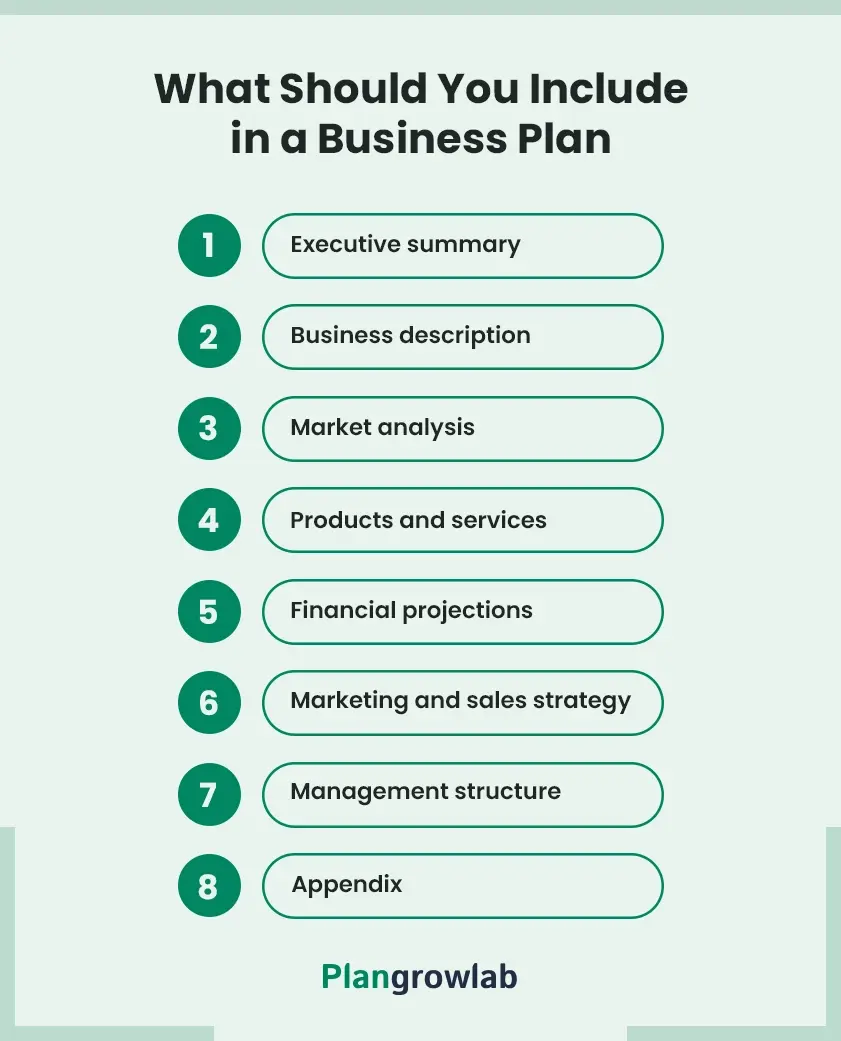
Appendix: Supporting Documentation and Due Diligence
While not strictly part of the main narrative, the appendix provides supplementary material that supports the claims made in your business plan. It’s a place for detailed evidence that substantiates your financial assumptions and operational capabilities.
Examples include:
- Resumes of Key Personnel: More detailed than what’s in the management section.
- Market Research Data: Raw data, survey results, or analyst reports.
- Letters of Intent/Contracts: With suppliers, customers, or partners.
- Legal Documents: Patents, trademarks, business registrations.
- Detailed Financial Spreadsheets: Supporting the summarized projections.
- Product Blueprints or Designs.
In conclusion, a comprehensive business plan is an indispensable tool for financial management, strategic direction, and fundraising. By meticulously detailing each of these components, with a keen eye on their financial implications, entrepreneurs can build a robust, persuasive, and actionable document that guides their venture toward sustained success and profitability within the dynamic financial landscape.
aViewFromTheCave is a participant in the Amazon Services LLC Associates Program, an affiliate advertising program designed to provide a means for sites to earn advertising fees by advertising and linking to Amazon.com. Amazon, the Amazon logo, AmazonSupply, and the AmazonSupply logo are trademarks of Amazon.com, Inc. or its affiliates. As an Amazon Associate we earn affiliate commissions from qualifying purchases.