
The financial markets currently stand at a complex crossroads, leaving many investors grappling with a fundamental question: what is the most prudent move for a stock portfolio today? Between shifting interest rate projections, geopolitical tensions, and the rapid ascent of generative artificial intelligence, the landscape is far from predictable. To navigate this environment effectively, one must look beyond the daily noise of the ticker tape and focus on a disciplined, evidence-based approach to capital preservation and growth.
Right now, the priority for any serious investor should be a meticulous evaluation of risk exposure and a refocusing on long-term fundamentals. Whether you are looking to protect gains from a recent rally or seeking entry points in a pullback, the strategy must be rooted in logic rather than emotion.

Assessing the Macroeconomic Landscape
The “right now” of the stock market is heavily dictated by the Federal Reserve and the broader macroeconomic climate. For the first time in over a decade, we are operating in a world where “cash is no longer trash,” and the cost of capital is a significant factor in corporate profitability.
Interest Rates and the Discounted Cash Flow Reality
The era of zero-interest-rate policy (ZIRP) is behind us, and this has fundamentally changed how stocks are valued. When interest rates rise or remain elevated, the future earnings of companies—especially high-growth tech firms—are discounted at a higher rate, which can compress price-to-earnings (P/E) multiples. Right now, investors must look for companies with strong balance sheets that do not rely on cheap debt to fund their operations. “Zombie companies” that survive only on low-interest credit are increasingly at risk, making it essential to audit your holdings for debt-to-equity ratios.
Inflation and Corporate Pricing Power
While inflation has shown signs of cooling, its sticky nature remains a concern. In this environment, the stocks you want to hold are those with significant pricing power. This refers to a company’s ability to raise prices without seeing a substantial drop in demand. Brands with high consumer loyalty or companies providing essential infrastructure are better positioned to pass on increased costs to customers, thereby protecting their profit margins. If a company in your portfolio is struggling to maintain margins in an inflationary environment, it may be time to reconsider its place in your long-term strategy.
Strategic Asset Allocation in an Uncertain Market
Asset allocation remains the single most important driver of portfolio returns and risk management. In a market characterized by high concentration—where a handful of mega-cap technology stocks drive the majority of index gains—diversification requires more intentionality than ever.
The Case for Rebalancing
If you have held a standard S&P 500 index fund over the last year, your portfolio may have become “top-heavy” due to the outperformance of the “Magnificent Seven.” Rebalancing right now involves selling a portion of these high-flyers to lock in gains and redistributing that capital into undervalued sectors. This is not a bet against technology; it is a mathematical necessity to ensure that a single sector’s correction does not derail your entire financial future.
Balancing Growth and Defensive Positions
A balanced portfolio right now should ideally feature a mix of secular growth and defensive stability. While AI and digital transformation offer long-term growth prospects, defensive sectors such as Healthcare, Consumer Staples, and Utilities provide a cushion during market downturns. These sectors often pay reliable dividends, which can be reinvested to purchase more shares when prices are low. The goal is to build an “all-weather” portfolio that can capture upside during bull runs while mitigating the “drawdown” during bear phases.
Exploring International and Small-Cap Opportunities
For years, U.S. large-cap stocks have outperformed almost everything else. However, looking at the market right now, valuation gaps have widened significantly. International markets, particularly in Europe and emerging economies, are trading at much lower multiples. Similarly, U.S. small-cap stocks (as represented by the Russell 2000) have historically traded at a premium to large caps but are currently at a rare discount. Adding exposure to these areas can provide a diversification benefit that large-cap tech cannot offer.
The Psychology of the Investor: Avoiding Emotional Pitfalls
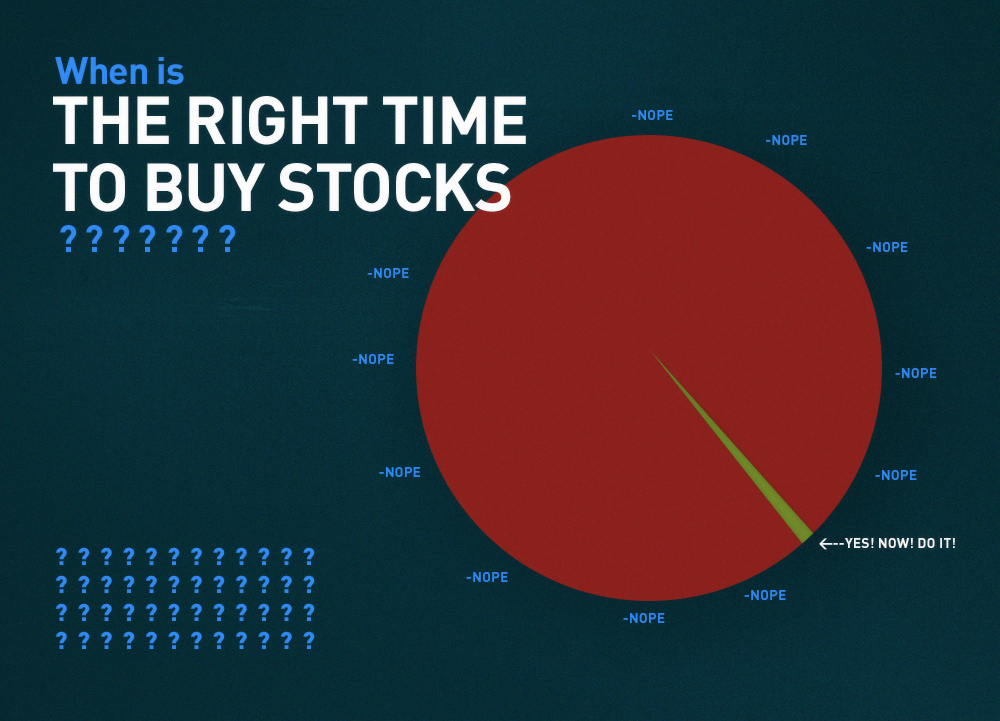
The most significant threat to your portfolio right now isn’t the market itself; it is your reaction to it. Market volatility often triggers two destructive emotions: fear of loss and the fear of missing out (FOMO).
The Dangers of Market Timing
Many investors are currently tempted to “sit on the sidelines” in cash until “things settle down.” History proves that this is a losing strategy. The market’s best days often follow its worst days, and missing just a handful of those high-growth days can drastically reduce your long-term annualized returns. Instead of trying to time the bottom, focus on “time in the market.” If you have excess cash, consider the current volatility as an opportunity to acquire high-quality assets at a lower cost basis.
Dollar-Cost Averaging as a Tool for Stability
One of the most effective things to do with stocks right now is to automate your investing through dollar-cost averaging (DCA). By investing a fixed amount at regular intervals, you naturally buy more shares when prices are low and fewer when prices are high. This removes the emotional burden of deciding “when” to buy. In a fluctuating market, DCA reduces the impact of volatility and ensures that you are consistently building your positions regardless of short-term headlines.
Managing the “Noise”
We live in an era of 24-hour financial news and instant social media updates. This constant stream of information can make every market dip feel like a catastrophe. To succeed right now, it is vital to distinguish between “signal” and “noise.” A signal is a fundamental change in a company’s business model or a structural shift in the economy. Noise is a daily fluctuation based on a single economic data point or a geopolitical rumor. Successful investors stay focused on the signal.
Identifying High-Conviction Opportunities
While broad market indices provide safety, individual stock selection right now requires a focus on quality and resilience. The “easy money” phase of the market cycle is over, and the “stock-picker’s market” has arrived.
Dividend Aristocrats and Passive Income
For those concerned about volatility, Dividend Aristocrats—companies that have increased their dividends for at least 25 consecutive years—offer a compelling proposition. These companies have survived multiple recessions, wars, and technological shifts. Their ability to consistently grow dividends is a hallmark of a robust business model. Right now, these stocks provide a psychological and financial safety net, offering a steady stream of income even if the share price remains flat.
Technology and Innovation as Long-Term Drivers
It would be a mistake to ignore the transformative power of technology, specifically Artificial Intelligence. However, the strategy right now should be to look for the “arms dealers” of the AI revolution—the companies providing the chips, data centers, and software infrastructure—rather than speculative startups with no path to profitability. Focus on companies that are already integrating AI to improve their own operational efficiency and margins.
The Energy Transition
The global shift toward renewable energy and the modernization of the electrical grid represents a multi-decade investment theme. While solar and wind stocks can be volatile, the companies involved in the materials (like copper and lithium) and the physical infrastructure of the grid offer a more grounded way to play this trend. As electricity demand surges due to electric vehicles and AI data centers, the energy sector is becoming a strategic cornerstone for modern portfolios.

Building a Resilient Financial Future
The answer to “what to do with stocks right now” is ultimately found in your personal financial goals and time horizon. If you are decades away from retirement, current market fluctuations are merely a discount on future wealth. If you are closer to retirement, your focus should shift toward capital preservation and income generation.
Reviewing your portfolio right now should not be an exercise in panic, but an exercise in alignment. Ensure your investments match your risk tolerance. Verify that your diversification is real and not just an illusion of different names in the same sector. Most importantly, maintain the discipline to stay invested through the cycles.
The markets have always rewarded those who can remain calm when others are frantic. By focusing on quality companies, maintaining a diversified allocation, and ignoring short-term emotional triggers, you position yourself to not just survive market volatility, but to thrive because of it. The current environment is a test of strategy and temperament—passing that test is the key to long-term financial independence.
aViewFromTheCave is a participant in the Amazon Services LLC Associates Program, an affiliate advertising program designed to provide a means for sites to earn advertising fees by advertising and linking to Amazon.com. Amazon, the Amazon logo, AmazonSupply, and the AmazonSupply logo are trademarks of Amazon.com, Inc. or its affiliates. As an Amazon Associate we earn affiliate commissions from qualifying purchases.