
For decades, the refrigerator was a relatively simple mechanical appliance—a compressor, some coils, and a basic thermostat. However, in the contemporary era of the Internet of Things (IoT) and smart home integration, the refrigerator has evolved into a sophisticated piece of technology. When a modern refrigerator stops cooling, the issue is often less about a mechanical leak and more about sensor calibration, firmware glitches, or hardware-software desynchronization.
Understanding what to do when your cooling system fails requires a transition from the mindset of a handyman to that of a technician. This guide explores the technological architecture of modern refrigeration, diagnostic protocols for smart systems, and how to leverage hardware insights to restore your kitchen’s most vital tech hub.

The Architecture of Cooling: Understanding the Tech Behind the Frost
To effectively troubleshoot a non-cooling unit, one must first understand the digital and mechanical synergy that defines modern appliances. We are no longer dealing with simple on/off switches; we are dealing with complex feedback loops managed by microprocessors.
Sensor Arrays and Thermistor Logic
The “brain” of a modern refrigerator relies on a series of thermistors—thermal resistors that change their electrical resistance based on temperature. Unlike old-fashioned bi-metal thermostats, thermistors send precise data to the main control board (PCB). If your refrigerator stops cooling, the failure often lies in a “drift” in sensor accuracy.
When a thermistor sends an incorrect voltage to the PCB, the system may believe it has reached the target temperature when it is actually ten degrees too warm. Tech-focused troubleshooting involves using a multimeter to check these components for resistance values that align with the manufacturer’s technical data sheets. If the resistance doesn’t match the temperature curve, the digital feedback loop is broken, and the cooling cycle will never initiate.
Variable Capacity Compressors and Inverter Technology
Traditional refrigerators used single-speed compressors that were either 100% on or 100% off. Modern high-tech units use Inverter Linear Compressors or Variable Capacity Compressors (VCC). These operate more like a computer’s CPU fan, ramping speed up or down based on cooling demand.
The complexity here is found in the Inverter Board, a separate piece of hardware that converts AC power to DC and modulates frequency. If your fridge isn’t cooling, the issue may not be the compressor itself, but a failure in the inverter’s power-switching transistors. Identifying a failure in this tech stack requires observing the “blink codes” on the inverter’s diagnostic LED, which provides a digital readout of the hardware’s health.
Software Diagnostics: Navigating the Smart Fridge Ecosystem
When hardware seems functional but the temperature continues to rise, the problem may be rooted in the appliance’s software. As refrigerators become more like smartphones, they become susceptible to the same digital hiccups that affect any operating system.
App-Based Troubleshooting and Error Codes
Most premium smart refrigerators from brands like Samsung (Family Hub) or LG (ThinQ) come equipped with proprietary diagnostic software. When cooling stops, the first step is no longer looking for a leak, but opening the companion app on your smartphone.
These systems utilize “Smart Diagnosis” technology, where the refrigerator emits a series of audible tones or digital packets to the app. This tech analyzes the frequency and duration of the signals to identify whether the cooling failure is due to an evaporator fan error, a defrost heater malfunction, or a communication error between the door display and the main controller. Utilizing these digital logs is the most efficient way to pinpoint a failure in the tech stack before disassembling the unit.
Firmware Updates and System Resets
It may sound counterintuitive to “reboot” a refrigerator, but in the tech niche, this is a standard recovery procedure. Modern refrigerators run on proprietary operating systems (such as Tizen or specialized Linux kernels). A software bug in the defrost logic can cause ice to build up on the evaporator coils, effectively insulating them and preventing cold air from circulating.
Sometimes, a manufacturer releases a firmware update to patch these logic errors. If your fridge stops cooling, check if a software update is pending. If the system is unresponsive, a “hard reset”—disconnecting power for ten minutes to clear the RAM and capacitors on the control board—can often recalibrate the sensors and restart the cooling algorithm.
Hardware Maintenance in the Age of IoT
While software is critical, the physical components of modern refrigerators are more integrated and sensitive than ever before. Maintaining the “hardware” of your cooling system is akin to cleaning the dust out of a high-end gaming PC.
Cleaning the Digital Heart: Condenser Coils and Airflow Sensors
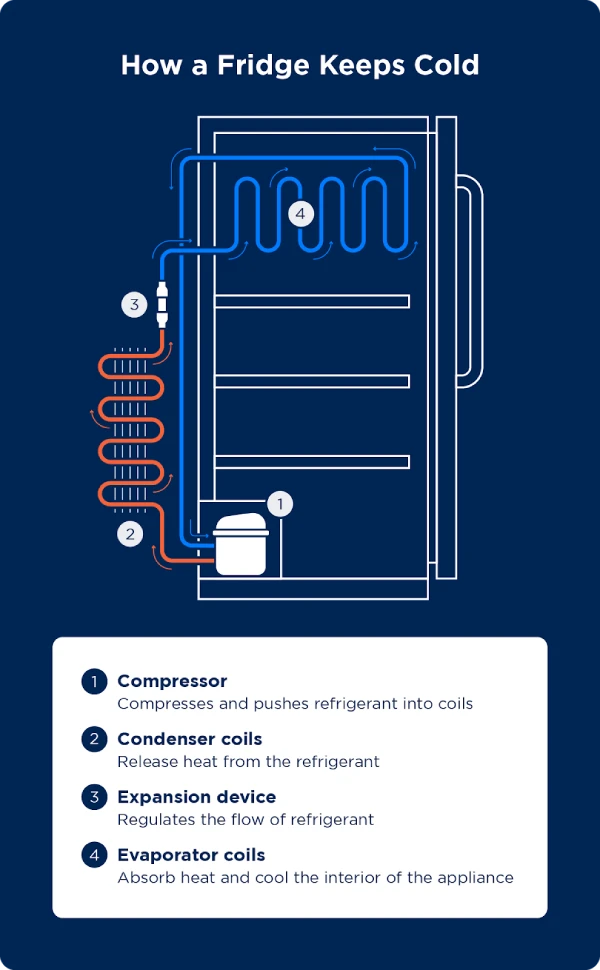
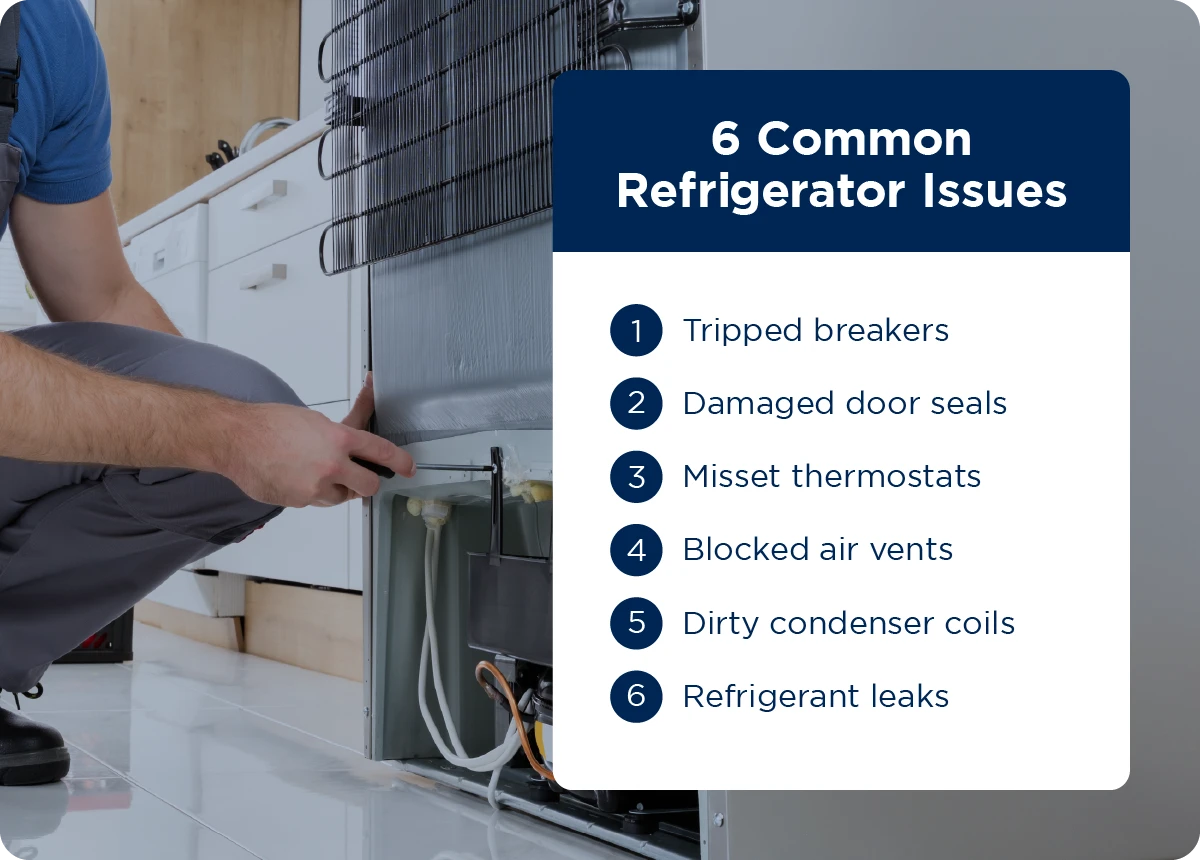
The condenser coils are the heat exchangers of the system. In modern, compact designs, these coils are often tucked away with minimal clearance. When dust accumulates, the heat cannot dissipate, causing the compressor to overheat and enter a “thermal protection” shutdown mode.
From a technical perspective, this is a failure of the heat management system. Many modern units have airflow sensors that detect when the fan isn’t moving enough air. If these sensors are tripped by dust or debris, the software may throttle the cooling capacity to prevent hardware damage. Regularly using compressed air or specialized vacuums to maintain these components is essential for the longevity of the appliance’s electronic components.
Managing Integrated Ice Makers and Water Filtration Tech
Modern cooling systems are often interconnected with complex water-management hardware. A failure in the ice maker’s heating element (used to harvest cubes) can sometimes create a “ground fault” or an “open circuit” that the main PCB interprets as a critical system error, leading it to shut down the entire cooling loop as a safety precaution.
Furthermore, the sensors in the water filtration system track more than just time; they measure flow rate and pressure. If a filter is clogged, the drop in pressure can sometimes trigger an error code that affects the broader cooling logic in high-end, interconnected models. Understanding these dependencies is key to troubleshooting a system that has stopped cooling for seemingly unrelated reasons.
The Future of Cold: AI and Predictive Maintenance
The trajectory of refrigeration technology is moving toward a proactive rather than reactive model. We are entering an era where your refrigerator will tell you it is going to stop cooling before it actually does.
Machine Learning in Food Preservation
Newer iterations of cooling tech utilize machine learning (ML) to monitor usage patterns. For example, if the doors are opened frequently between 5:00 PM and 7:00 PM, the AI learns to pre-chill the cabinet to compensate for the upcoming loss of cold air.
When these systems fail to cool, it may be because the ML model has encountered an anomaly—perhaps a door sensor is malfunctioning, leading the AI to believe the door is open when it is closed. This prevents the cooling cycle from engaging to save energy. Diagnosing these “intelligent” errors requires a deep dive into the settings menu of the fridge’s touchscreen interface to verify sensor status.
Smart Grid Integration and Energy Management
The “Money” and “Tech” of refrigeration often overlap in the realm of Smart Grid integration. Many modern refrigerators are designed to communicate with utility companies via Wi-Fi to reduce power consumption during peak hours.
If your refrigerator stops cooling during a hot afternoon, it may not be broken; it might be in a “Demand Response” mode. This is a tech-driven feature where the utility company sends a signal to the appliance to cycle off the compressor to prevent a grid overload. Understanding your appliance’s “Eco” or “Grid Connect” settings is a vital part of modern troubleshooting. If the tech is doing its job too well, it might sacrifice immediate cooling for long-term grid stability and energy savings.
Conclusion
When a modern refrigerator stops cooling, the solution is rarely found with a wrench alone. By approaching the problem through the lens of technology—checking sensor resistance, analyzing software error codes, updating firmware, and understanding inverter logic—you can diagnose and often fix issues that would baffle a traditional repairman.
As our homes become more connected, the refrigerator stands as a testament to the integration of mechanical engineering and digital sophistication. Keeping it cool is no longer just about refrigerant; it’s about maintaining the delicate balance of a complex technological ecosystem. Whether it’s a simple system reset or a deep dive into the circuit board’s diagnostic LEDs, the key to modern appliance repair is a technical mind and a data-driven approach.
aViewFromTheCave is a participant in the Amazon Services LLC Associates Program, an affiliate advertising program designed to provide a means for sites to earn advertising fees by advertising and linking to Amazon.com. Amazon, the Amazon logo, AmazonSupply, and the AmazonSupply logo are trademarks of Amazon.com, Inc. or its affiliates. As an Amazon Associate we earn affiliate commissions from qualifying purchases.