
New York City has evolved from a concrete jungle into a sprawling digital ecosystem. For the modern traveler or the tech-savvy local, the question of “what to do today” is no longer answered by paper maps and word-of-mouth recommendations. Instead, the city is best experienced through the lens of cutting-edge software, augmented reality, and the sophisticated infrastructure of a Tier-1 smart city. Navigating Manhattan and the outer boroughs today requires a digital-first mindset, leveraging the latest in AI-driven discovery and high-bandwidth connectivity to unlock experiences that remain invisible to the analog eye.

Mastering the Flow: Real-Time Navigation and Smart Transit
The foundational layer of any New York City experience is movement. To maximize a single day in the city, one must interface with the Metropolitan Transportation Authority (MTA) and the various micro-mobility platforms through a highly optimized digital stack.
The OMNY Ecosystem and Contactless Logistics
Gone are the days of the physical MetroCard and the friction of the vending machine interface. The OMNY (One Metro New York) system represents a significant leap in NFC (Near Field Communication) utility. When deciding what to do today, your first step is ensuring your digital wallet is configured. The MTA’s contactless system allows for seamless taps via smartphones and wearables, but the real tech advantage lies in “fare capping.” By using the same device for every journey, the system automatically stops charging you after 12 trips in a week, effectively turning your mobile device into a smart transit pass without the need for pre-purchase.
AI-Integrated Mapping and Predictive Transit
Standard GPS is often insufficient in the “urban canyons” of Midtown, where skyscrapers cause signal reflection and “GPS drift.” For a more precise experience, power users turn to apps like Citymapper or the latest iterations of Google Maps that utilize Visual Positioning System (VPS). By using your phone’s camera to recognize storefronts and signage, these tools orient you with centimeter-level accuracy, directing you to the exact subway entrance or hidden “POPS” (Privately Owned Public Space) that offer high-speed Wi-Fi and charging stations. Furthermore, checking the “Live View” feature in AR can help you navigate the complex multi-level exits of the Oculus or Grand Central Madison, ensuring no time is wasted in transit.
Micro-Mobility and the Last-Mile Algorithm
If the subway doesn’t reach your specific destination, the city’s bike-share and scooter-share algorithms come into play. Exploring the Hudson River Park or the Brooklyn Navy Yard is best done via the Lyft-integrated Citi Bike network. Before heading out, use real-time data visualizations to check dock availability. Advanced users leverage third-party widgets that predict bike availability based on historical commute patterns, ensuring that when you arrive at a station, a suite of e-bikes is ready for deployment.
Immersive Experiences: Where Art Meets Advanced Technology
New York City currently serves as a global headquarters for “Phygital” entertainment—experiences that blend physical environments with digital overlays. When looking for what to do today, prioritize venues that push the boundaries of hardware and software integration.
The Rise of Digital Art Sanctuaries
Traditional museums are being complemented by dedicated tech-art spaces. Mercer Labs, located in the Financial District, is a prime example of high-definition projection mapping and spatial audio design. Today, you can witness 4D environmental simulations that utilize hundreds of synchronized projectors and haptic floors. These installations are not merely “Instagrammable” moments; they represent the pinnacle of GPU-accelerated rendering and generative AI art, where the environment reacts in real-time to the movement of the audience.
Augmented Reality in Public Spaces
The High Line and Central Park have become testing grounds for AR developers. By utilizing specific AR apps or Snapchat Lenses designed for the city’s landmarks, you can view digital sculptures that don’t exist in the physical world. Some of these projects use geofencing to trigger historical recreations, allowing you to hold your phone up to a modern street corner and see a digital twin of how it looked in 1920, rendered with high-fidelity textures and period-accurate lighting.
Observation Decks as Technological Marvels
The “view from the top” has been digitized. Summit One Vanderbilt is less a viewing platform and more a multisensory tech exhibit. From the “Air” installation featuring mirrored rooms that create an infinite digital feedback loop to the “Unity” exhibit where your face is scanned and rendered into a cloud-based digital collective displayed on massive LED screens, the tech stack behind these attractions is as impressive as the view itself. The use of high-speed elevators with integrated LED displays and synchronized soundscapes provides a vertical transit experience that is a marvel of engineering and UX design.
The Digital Concierge: Leveraging AI for Dining and Discovery
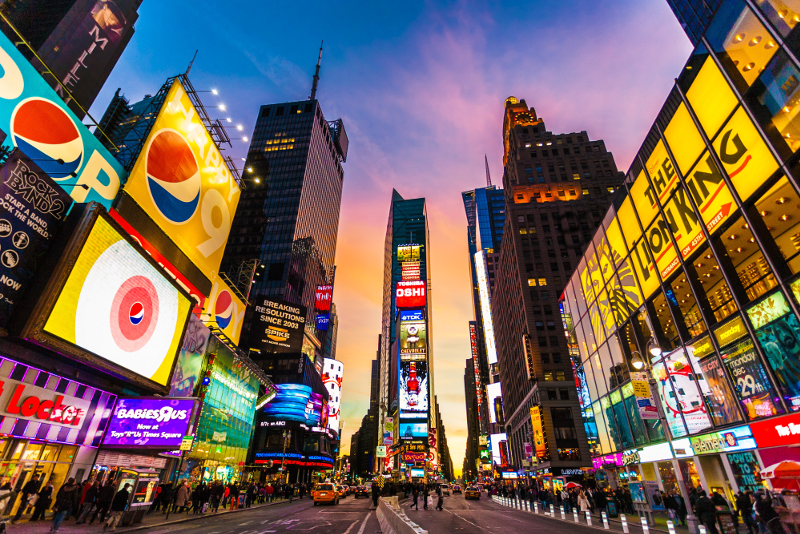
Deciding where to eat or visit in a city with over 25,000 restaurants is a data problem. Today, the most efficient way to curate your itinerary is through the use of generative AI and specialized booking algorithms.
Generative AI Itineraries
Instead of scrolling through static “best of” lists, use a customized AI prompt to build a hyper-niche schedule. By feeding your preferences—such as “specialty coffee with Wi-Fi 6,” “low-light photography spots,” or “tech-themed bars”—into a large language model (LLM), you can generate a logic-based route that minimizes travel time and maximizes relevance. Many new AI travel tools now offer real-time API integrations with platforms like OpenTable or Resy, allowing you to book a table at a trending West Village bistro directly through the chat interface.
The Gamification of Exploration
For those who want a more interactive day, apps like Seeker or various “urban gaming” platforms turn the city into a digital scavenger hunt. Using GPS-based “check-ins” and AR challenges, these tools lead you to hidden gems like the “Hole in the Wall” tech cafes in Lower Manhattan or the secret tech history sites, such as the location of the first telephone exchange or Nikola Tesla’s former laboratories. This gamified layer adds a level of engagement that transcends traditional sightseeing.
Staying Connected: Infrastructure and Digital Security
To operate effectively in a tech-centric NYC today, one must be aware of the city’s underlying hardware and the security protocols necessary to navigate it safely.
LinkNYC and the 5G Rollout
New York is blanketed in high-speed connectivity, much of it provided by LinkNYC kiosks. These 9.5-foot-tall monoliths are more than just ad displays; they provide free encrypted Wi-Fi, USB charging ports, and tablets for city services. As the city rolls out “Link5G,” these structures are becoming essential hubs for high-bandwidth activities, such as uploading high-resolution video or attending a remote meeting from a public bench.
Cybersecurity in the High-Density Wild
In a city with millions of active Bluetooth and Wi-Fi signals, digital hygiene is paramount. When exploring NYC today, the use of a robust VPN (Virtual Private Network) is non-negotiable, especially when connecting to public networks in transit hubs like Moynihan Train Hall. Furthermore, be aware of “juice jacking” risks; using a personal power bank or a “USB data blocker” when charging at public kiosks is a standard practice for the security-conscious traveler. For payments, prioritize encrypted mobile wallets over physical card swipes to mitigate the risk of “shimmers” or “skimmers” at high-traffic kiosks.
The eSIM Advantage
For international visitors or those with data-capped plans, the adoption of eSIM technology has simplified NYC exploration. Within minutes, one can download a local data profile that provides 5G access without the need for a physical SIM swap. This allows for uninterrupted access to the mapping and AI tools that are essential for a modern NYC itinerary.
The Professional Pulse: Remote Work Tech and Innovation Hubs
For many, “what to do today” includes a mix of productivity and leisure. New York’s tech scene is centered around “Silicon Alley,” but it has expanded into high-tech coworking ecosystems across all boroughs.
Smart Coworking and On-Demand Offices
The rise of platforms like LiquidSpace or Industrious allows you to book professional-grade workstations by the hour. These are not mere offices; they are tech hubs equipped with ergonomic hardware, high-speed fiber optics, and often, recording studios for podcasters or streamers. If your day in NY involves a high-stakes Zoom call or a collaborative coding session, these on-demand spaces provide the necessary infrastructure that a standard coffee shop cannot.
Networking in the Tech Capital
NYC is home to a constant stream of tech meetups, hackathons, and product launches. Using platforms like Meetup or Eventbrite, you can find “demo days” in Chelsea or AI workshops in DUMBO. Participating in these events offers a glimpse into the city’s role as a leader in FinTech, AdTech, and increasingly, BioTech. Visiting the Cornell Tech campus on Roosevelt Island is another way to see the future of urban tech integrated with sustainable architecture and academic innovation.

The Future of Retail: Tech-Driven Shopping
Retail in NY has become a showcase for software-driven consumer experiences. From the Amazon Go “Just Walk Out” technology to the flagship stores in SoHo that use smart mirrors and RFID-tagged fitting rooms, the act of “doing something” in the city often involves interacting with the latest in retail tech. These stores use data analytics to curate inventory in real-time, offering a personalized shopping experience that feels more like an app than a brick-and-mortar shop.
By approaching New York City as a complex, data-rich platform, you can transform a standard day of sightseeing into a sophisticated exploration of the modern digital landscape. Whether it’s through AI-optimized transit, immersive AR art, or the security-conscious use of smart city infrastructure, the best things to do in NY today are those that leverage the power of technology to reveal the city’s true potential.
aViewFromTheCave is a participant in the Amazon Services LLC Associates Program, an affiliate advertising program designed to provide a means for sites to earn advertising fees by advertising and linking to Amazon.com. Amazon, the Amazon logo, AmazonSupply, and the AmazonSupply logo are trademarks of Amazon.com, Inc. or its affiliates. As an Amazon Associate we earn affiliate commissions from qualifying purchases.