
The W2 form is an essential document for every American taxpayer. It summarizes your annual wages and the amount of taxes withheld by your employer, serving as the cornerstone for accurately filing your federal and state income tax returns. The dread of tax season can be compounded when this crucial document fails to arrive by its designated deadline. Without it, determining your tax liability or claimable refund becomes a complex, often stressful, endeavor.
Receiving your W2 is not just a formality; it’s a legal requirement for employers and a foundational piece of personal financial management for employees. The IRS mandates that employers mail W2 forms to their employees by January 31st each year. If this date has passed and your mailbox remains stubbornly empty, don’t panic. This guide will walk you through the necessary steps to take, ensuring you can still meet your tax obligations accurately and on time, even when your W2 goes missing. Understanding the process, knowing who to contact, and preparing for alternative filing methods can transform a potentially chaotic situation into a manageable one.
Understanding the Importance of Your W2
Before diving into troubleshooting, it’s vital to grasp precisely what a W2 form is and why it holds such significance in your financial life. This understanding will underscore the urgency and systematic approach required when it’s delayed or lost.
What is a W2 Form?
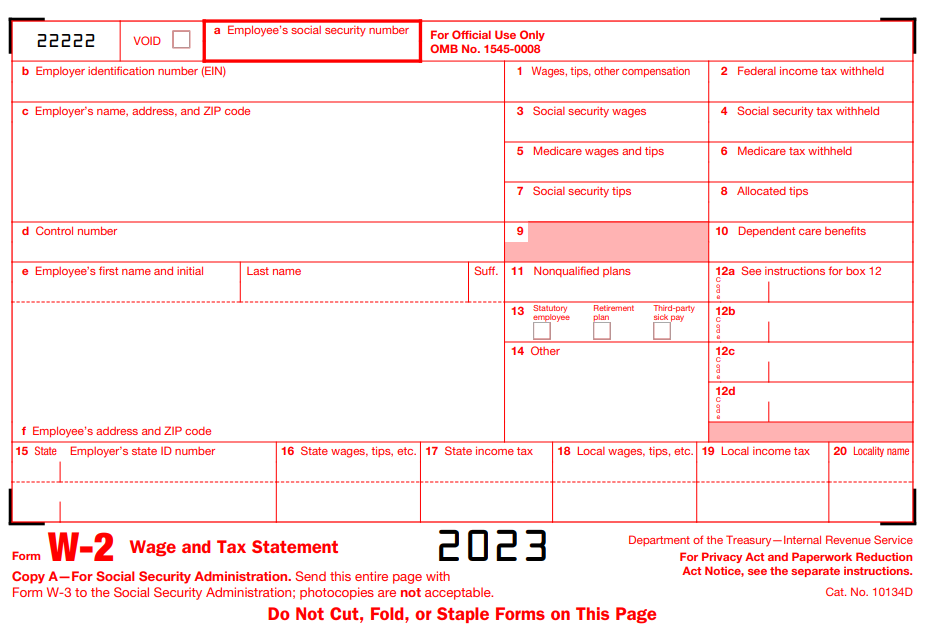
A Form W-2, officially titled “Wage and Tax Statement,” is an IRS tax form that an employer must send to each employee and to the Internal Revenue Service (IRS) at the end of each calendar year. It reports the employee’s annual wages and the amount of federal, state, and other taxes withheld from their paycheck. Each box on the W2 form serves a specific purpose, detailing everything from your gross wages and taxable fringe benefits to social security wages and Medicare taxes. It also includes information about any contributions to retirement plans, dependent care benefits, and other pre-tax deductions that affect your taxable income. This comprehensive summary is crucial because it provides the IRS with a snapshot of your annual earnings and tax payments, ensuring compliance and transparency in the tax system. For the employee, it’s the definitive record needed to complete their annual tax return.
Why You Need Your W2 for Tax Filing
The W2 form is the primary document used to report your income and withheld taxes to the IRS. Without it, you cannot accurately complete Form 1040, the U.S. Individual Income Tax Return. The figures from your W2 directly populate key lines on your tax return, influencing calculations for your gross income, adjusted gross income (AGI), and ultimately, your tax liability or refund. For example, your Box 1 wages directly contribute to your total income, while Box 2 shows the federal income tax already paid, which will be credited against your total tax due. Similarly, state and local wage and tax information is used for filing respective state and local tax returns. Attempting to file without this information risks inaccuracies, which could lead to delays in processing your return, the rejection of your return, penalties from the IRS, or even an audit. Beyond income tax, W2 data is also critical for applying for financial aid, loans, or even understanding your social security benefits, as it confirms your earned income for the year.
Key Deadlines and Employer Obligations
The IRS mandates that employers must furnish employees with their W2 forms by January 31st of the calendar year following the one for which the wages were paid. For example, W2s for 2023 wages must be postmarked or electronically delivered by January 31, 2024. This deadline ensures that employees have sufficient time to prepare and file their tax returns before the April 15th tax deadline. Employers face penalties if they fail to issue W2s by this date, or if they issue incorrect forms. These penalties can vary depending on the size of the business and the extent of the delay or error. It’s also important to note that if January 31st falls on a weekend or holiday, the deadline shifts to the next business day. While employers generally comply, unforeseen circumstances, administrative errors, or postal service issues can lead to delays in receipt for employees. Knowing this deadline empowers you to act promptly if your W2 is missing, rather than waiting indefinitely.
Initial Steps When Your W2 Is Missing
If January 31st has passed and your W2 is nowhere to be found, proactive investigation is your best immediate course of action. Starting with these simple checks can often resolve the issue quickly.
Verify Your Address and Personal Information
One of the most common reasons for a missing W2 is an incorrect mailing address on file with your employer. People often move and forget to update their address with HR or payroll, especially if they left a job during the year. Before reaching out to anyone, take a moment to confirm with yourself that your employer has your current, correct mailing address. If you’ve moved recently, especially in the last year, this is a prime suspect. Also, double-check your name and Social Security Number (SSN) as they appear on your last pay stub. Any discrepancy, however minor, could lead to your W2 being misrouted or held back. Ensuring this foundational information is accurate can often resolve the issue without further escalation.
Contact Your Employer (HR or Payroll)
Your employer, specifically the Human Resources (HR) or Payroll department, should be your first point of contact after verifying your address. They are the most direct and efficient source for obtaining your W2. When you reach out, be prepared to provide:
-
Your full name and employee ID (if applicable).
-
Your Social Security Number (SSN).
-
Your current mailing address.
-
The year for which you need the W2.
Clearly explain that you have not received your W2 by the January 31st deadline. Ask them to confirm the address they have on file and when they mailed the original form. Many employers can reissue a W2, either by mail or electronically. Some may have an online portal where you can securely download or print your W2 yourself. If they mailed it, inquire about the possibility of it being returned to them as undeliverable. Be polite but firm in your request, as it is their legal obligation to provide you with this document. Keep a record of your communication, including dates, names of people you spoke with, and what was discussed.
Check Online Portals and Digital Delivery Options
In today’s digital age, many employers offer electronic W2s through secure online portals. This method is often faster, more environmentally friendly, and reduces the risk of mail loss. If your employer provides this option, you might have signed up for it during onboarding or during a previous open enrollment period. Check your old emails or your employer’s intranet for instructions on how to access these portals. You typically need to create an account or log in using existing credentials. These platforms usually allow you to view, download, and print your W2 immediately. Even if you opted for a paper copy, it’s worth checking if an electronic version is available, as it could be the quickest way to resolve your issue.
Allow for Mail Delays
While the January 31st deadline is firm for employers, the postal service can experience delays, especially during peak season or due to adverse weather conditions. If you’ve contacted your employer and they confirmed the W2 was mailed on time to the correct address, it might simply be held up in transit. The IRS generally advises taxpayers to wait until mid-February before taking more drastic steps, accounting for potential postal delays. If your W2 was mailed around the deadline, giving it an extra week or two is a reasonable first step after contacting your employer. However, if it’s well into February and still no W2, it’s time to consider that it may be genuinely lost or never sent.
What to Do If Your Employer Can’t Help
If you’ve contacted your employer and they are unable to provide a duplicate W2, or they are unresponsive, it’s time to involve the IRS directly. This step requires a bit more effort but is crucial for ensuring you can file your taxes.
Contact the IRS Directly

If you still haven’t received your W2 by February 14th (or a reasonable time after your employer said they re-mailed it), it’s advisable to contact the IRS. You can do this by calling them at 1-800-829-1040. When you call, be prepared to provide the following information:
-
Your full name, address, and Social Security Number.
-
The name, address, and phone number of your employer.
-
Your employer identification number (EIN) – if you have it (it’s usually on your pay stub).
-
The dates you worked for that employer during the year for which you need the W2.
-
An estimate of your wages and federal income tax withheld. You can typically find this information on your last pay stub for the year.
The IRS will then contact your employer on your behalf and request the missing W2. They will also send you a Form 4852, “Substitute for Form W-2, Wage and Tax Statement,” along with instructions on how to proceed. It’s important to understand that contacting the IRS doesn’t immediately get you a W2; it initiates a formal process to compel your employer to fulfill their obligation.
Filing Form 4852 (Substitute for Form W-2, Wage and Tax Statement)
If you haven’t received your W2 by the April 15th tax deadline, or if your employer refuses to provide it after the IRS has contacted them, you can use Form 4852 to file your tax return. This form is essentially a substitute W2, where you provide your best estimate of your wages and taxes withheld. You’ll attach Form 4852 to your Form 1040 when you file your return. The IRS will use this information to process your return. It’s crucial that the information you provide on Form 4852 is as accurate as possible, as it will be matched against the information eventually submitted by your employer. If there’s a significant discrepancy, it could trigger an inquiry from the IRS.
Gathering Necessary Information for Form 4852
To complete Form 4852 accurately, you’ll need to gather as much information as possible. Your last pay stub for the tax year in question is your most valuable resource. It typically provides year-to-date totals for:
-
Gross Wages: This is usually labeled “YTD Gross,” “Total Earnings,” or similar.
-
Federal Income Tax Withheld: Look for “YTD Federal Tax,” “FIT,” or “Federal Withholding.”
-
Social Security Wages and Tax Withheld: Often labeled “YTD Social Security Wages” and “YTD Social Security Tax.”
-
Medicare Wages and Tax Withheld: Look for “YTD Medicare Wages” and “YTD Medicare Tax.”
-
State Wages and Tax Withheld: Similar labels for state income tax.
-
Other Deductions: Any pre-tax deductions for health insurance, 401(k) contributions, etc., which affect your taxable income.
If you don’t have your last pay stub, you can reconstruct this information from previous pay stubs or bank statements showing direct deposits. The goal is to provide the most precise estimates possible. You’ll also need to explain on Form 4852 the steps you took to try and obtain your W2 and why you are filing with estimates. Documentation of your attempts to contact your employer and the IRS (dates, names, outcomes) should be kept with your tax records.
Filing Your Taxes Without a W2
Even with a missing W2, the April 15th deadline (or the extended deadline if you file an extension) still looms. You have options to ensure you meet your obligations, though some come with caveats.
Estimating Your Income and Withholdings
When you file Form 4852, you’re essentially providing the IRS with your best guess of your annual income and tax withholdings. This estimation is critical. As discussed, your year-end pay stub is the most reliable source for these figures. If you can’t find your last pay stub, meticulously go through all your pay stubs for the year and add up the totals for each category (gross wages, federal tax withheld, state tax withheld, etc.). If you only have direct deposit amounts, try to reconstruct your gross pay by adding back any pre-tax deductions and considering your regular pay cycle. While it’s an estimate, the closer you are to the actual figures, the less likely you are to encounter issues with the IRS. Keep detailed notes of how you arrived at your estimates, as this documentation will be invaluable if the IRS questions your return.
The Ramifications of Late Filing vs. Filing with Estimates
It’s generally better to file your tax return on time, even with estimated figures using Form 4852, rather than filing late. The IRS imposes penalties for failure to file on time and failure to pay on time.
-
Failure to File Penalty: This is 5% of the unpaid taxes for each month or part of a month that a tax return is late, capped at 25% of your unpaid tax.
-
Failure to Pay Penalty: This is 0.5% of the unpaid taxes for each month or part of a month that taxes remain unpaid, also capped at 25% of your unpaid tax.
These penalties can quickly add up.
If you anticipate needing more time, you can file Form 4868, Application for Automatic Extension of Time to File U.S. Individual Income Tax Return, which grants an automatic six-month extension to file (usually until October 15th). However, an extension to file is not an extension to pay. If you expect to owe taxes, you must still estimate and pay those taxes by April 15th to avoid failure-to-pay penalties and interest. Filing Form 4852 with your return on time (or by the extended deadline) demonstrates a good faith effort to comply with tax laws, even without the official W2.
Amending Your Return Once Your W2 Arrives
After you’ve filed your tax return using Form 4852 and your estimated figures, your employer’s official W2 may eventually arrive. If the information on the official W2 differs from what you reported on Form 4852, you will need to amend your tax return. This is done by filing Form 1040-X, Amended U.S. Individual Income Tax Return. You’ll need to compare the figures from your actual W2 to what you reported and calculate the differences. If the changes result in you owing more tax, you’ll need to pay the additional amount, possibly with interest. If the changes result in a larger refund, the IRS will send you the additional amount. It’s crucial to file an amended return promptly to avoid future issues. While amending a return might seem like an extra step, it ensures accuracy and compliance, and it’s a common procedure for taxpayers who initially had to file with estimates.
Proactive Measures for Future Tax Seasons
Experiencing a missing W2 can be a stressful ordeal. To prevent similar headaches in future tax seasons, consider adopting these proactive financial habits.
Maintaining Good Records Throughout the Year
The best defense against a missing W2 is maintaining meticulous financial records throughout the year. This includes keeping all your pay stubs, bank statements, and any other income-related documentation. Your last pay stub of the year is particularly valuable, as it usually summarizes your year-to-date earnings and withholdings, making it an excellent backup if your W2 is delayed. Create a dedicated folder, either physical or digital, for all your tax-related documents. This habit not only helps with missing W2 situations but also streamlines the entire tax preparation process, making it easier to gather information for deductions, credits, and overall income verification.
Opting for Electronic W2s
Many employers now offer the option to receive your W2 electronically through a secure online portal. Opting for an electronic W2 (e-W2) can be a significant time-saver and stress-reducer.
-
Speed: E-W2s are typically available earlier than mailed copies, sometimes even before the January 31st deadline.
-
Accessibility: You can access and print your W2 from anywhere with an internet connection, eliminating reliance on postal service.
-
Security: Digital portals often have robust security measures, potentially reducing the risk of your sensitive financial information being lost or stolen in the mail.
If your employer offers this option, consider enrolling for the next tax year. You usually do this through your HR portal or by specific instructions provided by your payroll department. Just ensure you keep your login credentials secure.

Understanding Different Income Reporting Forms (1099s, etc.)
While the W2 is crucial for traditional employment, it’s also important to understand other income reporting forms, especially if you have diverse income streams.
-
Form 1099-NEC (Nonemployee Compensation): Used if you did freelance work or were an independent contractor.
-
Form 1099-MISC (Miscellaneous Information): Reports various types of income, such as rents, royalties, or awards.
-
Form 1099-INT (Interest Income): Reports interest income from banks and other financial institutions.
-
Form 1099-DIV (Dividends and Distributions): Reports dividends and capital gain distributions from stocks and mutual funds.
-
Form 1099-R (Distributions from Pensions, Annuities, Retirement or Profit-Sharing Plans, IRAs, Insurance Contracts, etc.): Reports distributions from retirement accounts.
Just like W2s, these forms also have a January 31st deadline (though some 1099s may have later deadlines for the payer to send them to you). Being aware of all potential income-reporting forms you might receive ensures you have all necessary documentation for your complete tax picture. If you’re expecting a 1099 and don’t receive it, the process for following up is similar to that for a W2: contact the payer first, then the IRS if necessary. This comprehensive approach to managing your financial documents will make future tax seasons smoother and more predictable.
The absence of a W2 form can undoubtedly cause anxiety as tax deadlines approach. However, by understanding the sequential steps outlined above – from initial checks with your employer to engaging the IRS and, if necessary, filing with estimates – you can navigate this challenge effectively. Proactive record-keeping and utilizing modern electronic options further fortify your position for a stress-free tax season. Remember, the goal is to file an accurate return on time, and armed with this knowledge, you are well-equipped to do so, regardless of whether your W2 makes its grand appearance.
aViewFromTheCave is a participant in the Amazon Services LLC Associates Program, an affiliate advertising program designed to provide a means for sites to earn advertising fees by advertising and linking to Amazon.com. Amazon, the Amazon logo, AmazonSupply, and the AmazonSupply logo are trademarks of Amazon.com, Inc. or its affiliates. As an Amazon Associate we earn affiliate commissions from qualifying purchases.