
Maintaining a guitar goes beyond simply wiping it down; it involves understanding the specific materials and finishes used in its construction and employing the right tools and techniques to preserve its playability, appearance, and value. This guide delves into the essential cleaning technologies and methods, ensuring your instrument remains in pristine condition, extending its lifespan and enhancing your playing experience.
Understanding Guitar Surfaces and Materials
Before selecting any cleaning product or tool, it’s crucial to identify the various surfaces of your guitar. Different materials react differently to cleaning agents, and using the wrong product can cause irreversible damage.

Finishes: Gloss, Matte, Nitrocellulose, Polyurethane
The body and neck of most guitars are covered in a protective finish, which can vary significantly.
- Gloss Finishes: These are the most common, offering a shiny, reflective surface. They are typically durable but can show fingerprints and smudges easily. Modern gloss finishes are often polyurethane-based, known for their hardness and resistance to wear. Older or high-end instruments might feature nitrocellulose lacquer, which is thinner, allows the wood to “breathe” more, but is also more delicate and prone to checking, yellowing, and reacting with certain plastics or rubber.
- Matte/Satin Finishes: These finishes lack the shine of gloss counterparts, providing a softer, often more natural feel. They can be more challenging to clean effectively without creating shiny spots from friction, which can ruin their aesthetic.
- Open Pore Finishes: Some acoustic guitars or bass guitars feature an “open pore” finish, where the wood grain is intentionally left visible and textured. These are highly susceptible to dirt accumulation in the pores and require very gentle, non-liquid-saturating cleaning methods.
Fretboard: Rosewood, Ebony, Maple
The fretboard is one of the most touched parts of the guitar and accumulates skin oils, dirt, and dead skin cells.
- Unfinished Fretboards (Rosewood, Ebony): These dark woods are typically left untreated to allow them to breathe and interact directly with the player’s fingers. They are prone to drying out and benefiting from conditioning. They also readily absorb grime.
- Finished Fretboards (Maple): Maple fretboards are often lacquered (polyurethane or nitrocellulose) to match the neck finish. This sealing protects the wood but requires a different approach than unfinished woods.
Hardware: Metal, Plastic
Tuners, bridges, tailpieces, pickup covers, knobs, and pickguards are made from various metals (chrome, nickel, gold-plated) and plastics. These components can tarnish, oxidize, or accumulate grime and dust, affecting both aesthetics and function.
Strings
Strings are the most frequently replaced component, but proper cleaning can extend their life and maintain their tone. They are constantly exposed to finger oils, sweat, and environmental contaminants.
Essential Cleaning Tools and Products for the Body and Neck
For the guitar’s main body and neck, a combination of gentle cleaning and protective agents is ideal, carefully chosen to match the finish type.
Microfiber Cloths
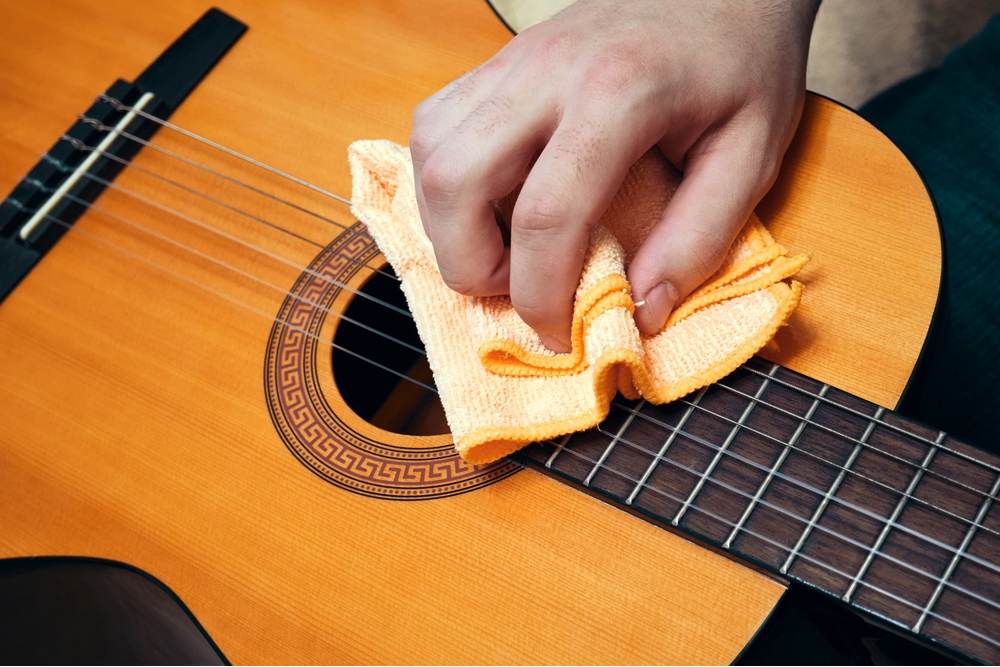
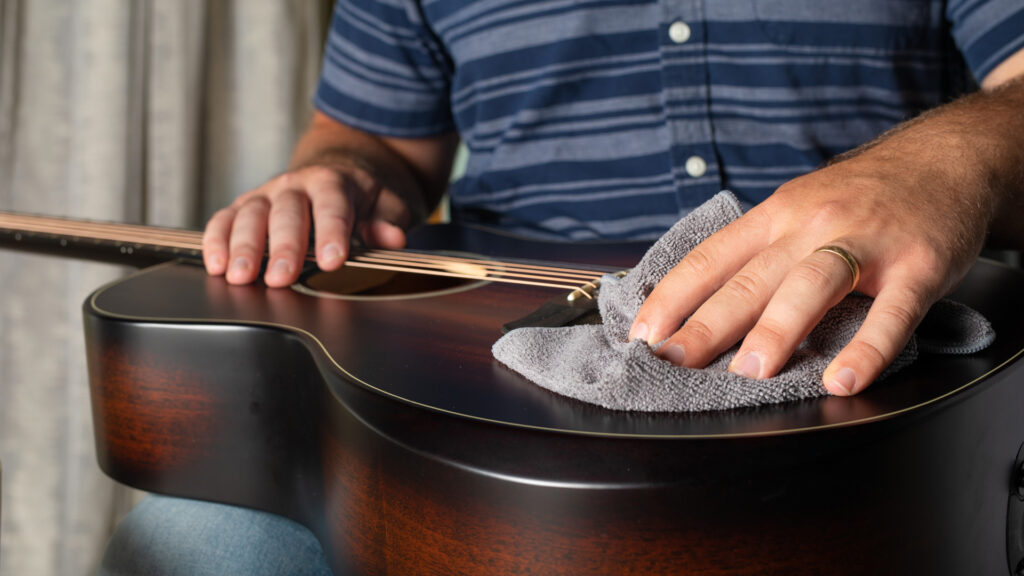
The foundational tool for any guitar cleaning regimen. High-quality microfiber cloths are specifically engineered to trap dust, oils, and grime without scratching delicate finishes. Their microscopic fibers are far superior to cotton rags, which can merely push dirt around or leave lint. Always use dedicated, clean cloths for your guitar to avoid transferring abrasive particles. For optimal results, use separate cloths for cleaning and buffing.
Guitar Polish/Cleaner
These specialized formulations are designed to clean finishes without stripping them or causing damage.
- For Polyurethane Gloss Finishes: A standard guitar polish or cleaner formulated for gloss finishes will effectively remove fingerprints, smudges, and light grime. Many contain mild abrasives or solvents that are safe for these durable surfaces. Apply with a microfiber cloth and buff to a shine.
- For Nitrocellulose Gloss Finishes: Extreme caution is advised. Many standard polishes contain silicone or harsh solvents that can react negatively with nitrocellulose lacquer, leading to clouding or softening the finish. Opt for polishes explicitly labeled “nitrocellulose safe” or use a very diluted solution of mild soap and water (e.g., dish soap) sparingly, followed by immediate drying.
- For Matte/Satin Finishes: Avoid polishes or waxes designed for gloss finishes, as they will create shiny spots. Instead, use a very lightly dampened microfiber cloth (with plain water) to wipe down the surface. For deeper cleaning, some manufacturers offer specialized matte finish cleaners that maintain the non-reflective quality. Test in an inconspicuous area first.
Guitar Wax
While not always necessary, a high-quality carnauba-based guitar wax can provide an additional layer of protection and deepen the luster of gloss finishes. Waxes help repel moisture, sweat, and dust, making subsequent cleanings easier. They are typically applied after cleaning and polishing. Ensure the wax is compatible with your guitar’s finish, especially for nitrocellulose. Avoid waxes on matte or open-pore finishes.
Spray Detailers
For quick touch-ups between deeper cleans, guitar spray detailers are invaluable. These products are designed for rapid application, quickly removing smudges and fingerprints, and leaving a light protective sheen. They are excellent for stage use or casual maintenance. Like polishes, ensure compatibility with your guitar’s finish.
Specialized Care for the Fretboard
The fretboard requires distinct care to prevent drying, cracking, and to maintain its smooth playing surface.
Lemon Oil/Fretboard Conditioner
For unfinished fretboards (rosewood, ebony), lemon oil or dedicated fretboard conditioners are essential. These products moisturize the wood, preventing it from drying out and cracking, especially in low-humidity environments. They also help to lift ingrained dirt and restore the wood’s natural luster. Apply a small amount to a clean cloth, rub into the fretboard, let it penetrate for a few minutes, then wipe off any excess thoroughly. Do this every few string changes or when the fretboard appears dry. Never use lemon oil on finished maple fretboards, as it can soften or damage the lacquer.
Fine Steel Wool / Ultra-fine Abrasives
When fretboards accumulate heavy grime that conditioners can’t remove, or when frets need polishing, very fine steel wool (0000 grade) or specialized fret polishing pads can be used.
- For Grime Removal: Mask off the pickups and body, then gently rub the steel wool along the grain of the unfinished fretboard to lift stubborn dirt. Follow up with lemon oil.
- For Fret Polishing: With the fretboard protected (e.g., using fret guards), rub the steel wool or polishing pads over the frets to remove oxidation and smooth out minor imperfections, restoring their shine and improving string bending. Use extreme caution and ensure no steel wool particles get embedded in pickups or other magnetic components.
Guitar Fretboard Wipes/Cleaners
Several brands offer convenient pre-moistened wipes or spray cleaners specifically formulated for fretboards. These are often a blend of cleaning agents and conditioners, providing an all-in-one solution for light to moderate grime. They are particularly useful for quick cleans during string changes.
Maintaining Hardware and Strings
Neglecting hardware and strings can lead to tuning instability, poor intonation, and reduced tone.
Metal Cleaner/Polish
For metal hardware (tuners, bridge saddles, tailpieces, pickup covers), a non-abrasive metal cleaner or polish designed for musical instruments can restore shine and remove tarnish. Apply sparingly with a cotton swab or soft cloth, ensuring no product gets into electronic components or unlacquered wood. For heavily tarnished parts, a dedicated metal polishing cloth can be effective. Avoid harsh household metal cleaners, which can be too aggressive and remove plating.
String Cleaners/Lubricants
These products are designed to prolong string life and maintain their tone. Applied after playing, they remove finger oils and sweat, which are the primary culprits for string corrosion and dullness. Some formulations also contain lubricants that reduce friction, improving playability and tuning stability. Common applications involve a small applicator that wipes along the entire length of the string.
Soft Brushes/Cotton Swabs
For intricate areas like tuner posts, bridge saddles, under the strings at the nut, or around pickup poles, a soft-bristled brush (like a dedicated guitar cleaning brush or a clean, soft toothbrush) or cotton swabs (dry or lightly moistened with an appropriate cleaner) are invaluable. These allow for precise cleaning without damaging delicate parts or electronic components.
Best Practices and Tips for Longevity
Consistent and correct cleaning practices are key to a guitar’s long-term health.
Regular Wiping Down
The simplest yet most effective cleaning habit is to wipe down your guitar with a clean microfiber cloth after every playing session. Focus on the strings, fretboard, and any areas where your hands contact the finish. This removes superficial oils and sweat before they can dry and bond to the surfaces, significantly reducing the need for deep cleaning.
Deep Cleaning Schedule
A thorough deep clean, involving fretboard conditioning and hardware polishing, should be performed less frequently – typically during string changes. This ensures that the more intensive cleaning processes are done when the strings are off, providing better access to the fretboard and hardware.
Avoiding Harsh Chemicals
Never use household cleaning products like glass cleaner (unless specifically formulated for guitar finishes), furniture polish, or abrasive scrubbers on your guitar. These can contain ammonia, silicone, strong solvents, or abrasives that can irreparably damage finishes, plastics, and delicate hardware. Stick to products specifically designed for musical instruments.
Proper Storage and Humidity Control
Beyond cleaning, proper storage is paramount. Store your guitar in its case or on a stand away from direct sunlight, extreme temperatures, and sudden humidity fluctuations. Using a humidifier or dehumidifier in your guitar’s case or room can prevent the wood from drying out or swelling, which can lead to cracks and structural issues, irrespective of how clean the surface is. A well-maintained environment reduces the buildup of dust and grime, making cleaning easier and less frequent.
aViewFromTheCave is a participant in the Amazon Services LLC Associates Program, an affiliate advertising program designed to provide a means for sites to earn advertising fees by advertising and linking to Amazon.com. Amazon, the Amazon logo, AmazonSupply, and the AmazonSupply logo are trademarks of Amazon.com, Inc. or its affiliates. As an Amazon Associate we earn affiliate commissions from qualifying purchases.