
In the interconnected landscape of modern technology, time is more than just a measurement of the day; it is a critical data point that governs synchronization, server communication, and global collaboration. One of the most frequently referenced timezones in the Western Hemisphere is CDT, or Central Daylight Time. While a casual observer might simply see it as a clock setting, for tech professionals, software developers, and system administrators, understanding the nuances of CDT is essential for maintaining the integrity of digital ecosystems.
Central Daylight Time is a North American time zone that is observed during the warmer months of the year. To understand CDT, one must first understand its relationship to Coordinated Universal Time (UTC), the primary time standard by which the world regulates clocks and time. CDT is exactly five hours behind UTC (UTC-5). During the winter months, this region shifts to Central Standard Time (CST), which is six hours behind UTC (UTC-6). This shift, known as Daylight Saving Time (DST), has profound implications for how software handles scheduling, how logs are recorded, and how global teams interact.

Understanding CDT: The Mechanics of Central Daylight Time
To master the technical application of CDT, one must first dissect its geographic and temporal boundaries. CDT is not a static entity; it is a dynamic adjustment designed to maximize daylight, which complicates the logic required in programming and systems architecture.
Defining Central Daylight Time (UTC-5)
The technical definition of CDT is UTC-5. This means that when it is noon in Greenwich, England (the reference point for UTC), it is 7:00 AM in the Central Daylight Time zone. The transition into CDT typically occurs on the second Sunday of March and ends on the first Sunday of November. For developers, this transition is a notorious source of “edge case” bugs, as the clock jumps forward or backward, potentially creating hour-long gaps or overlaps in system logs.
Geographic Coverage and Tech Hubs
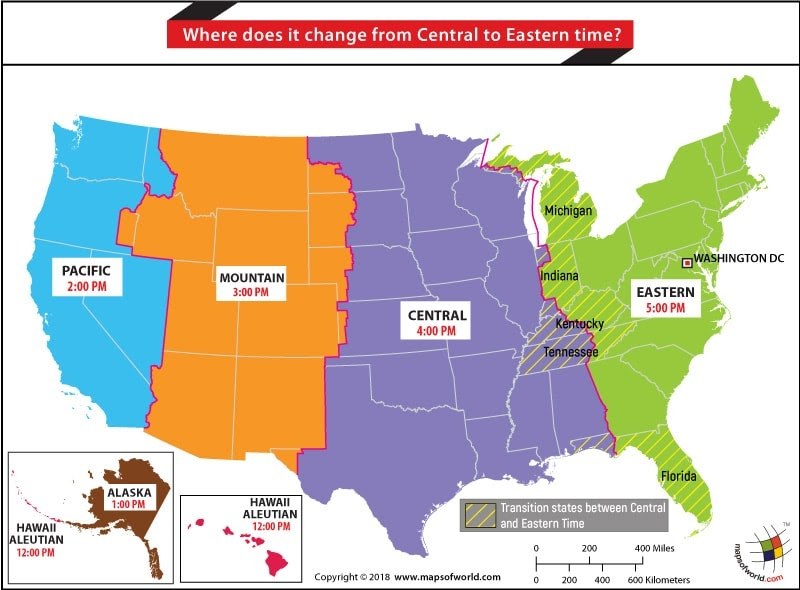
CDT covers a vast expanse of North America, including parts of the United States, Canada, Mexico, and Central America. In the U.S., it encompasses major tech corridors such as Chicago, Austin, Dallas, and Minneapolis. These cities are home to massive data centers and corporate headquarters that dictate the pulse of the American economy. When a tech company in Austin schedules a “system update at 02:00 CDT,” they are operating within this specific UTC-5 window, requiring global partners to calculate their local offsets accordingly.
The History and Logic of Daylight Saving Transitions
The “Daylight” aspect of CDT distinguishes it from “Standard” time. The transition is automated in most modern operating systems via the IANA Time Zone Database (often called the Zoneinfo or Olson database). This database tracks the historical and predicted changes to timezones globally. In a technical sense, CDT is an offset change triggered by a specific set of rules. For a machine, “CDT” is less a name and more a rule-set that tells the kernel to subtract five hours from the hardware clock’s UTC reference.
The Role of Timezones in Global Tech Infrastructure
In the world of technology, time is the ultimate arbiter of truth. Whether it is a blockchain transaction, a high-frequency trading algorithm, or a simple database entry, the timezone must be handled with surgical precision.
Server Synchronization and NTP Protocols
Servers do not inherently “know” what time it is. They rely on the Network Time Protocol (NTP) to synchronize with atomic clocks. While most backend infrastructure runs on UTC to avoid the complexities of Daylight Saving Time, the “presentation layer”—the part of the software that the user interacts with—must often translate that UTC data into CDT. If a server in a Dallas data center is misconfigured to CST when it should be CDT, the resulting one-hour discrepancy can cause authentication tokens to expire prematurely or scheduled cron jobs to fire at the wrong time.
Managing Time Metadata in Software Development
Effective software engineering requires a “UTC-first” mentality. Best practices dictate that all timestamps should be stored in the database as UTC. CDT should only be applied at the UI (User Interface) level. For instance, when using JavaScript’s Date object or Python’s datetime library, developers must ensure that the application detects the user’s locale and applies the UTC-5 offset correctly. Failure to do so leads to “time-drift” errors, where a user in Chicago sees a message timestamped for the future or the past.
Database Management: Storing UTC vs. Local Time
In SQL or NoSQL databases, the choice of data type for time is crucial. Using TIMESTAMP WITH TIME ZONE (TZ) allows the database to handle the conversion logic. If a system is specifically serving a CDT-heavy demographic—such as a regional logistics platform in the Midwest—the database must be robust enough to handle the transition day in March. On that day, the 2:00 AM hour technically doesn’t exist, which can cause “out of range” errors in legacy systems that aren’t programmed to skip that specific hour.

CDT in Remote Work and Collaboration Tools
The rise of distributed teams has turned timezone management into a core competency for tech workers. CDT acts as a central bridge between the Silicon Valley (Pacific Time) and the financial hubs of the East Coast (Eastern Time).
Mastering Asynchronous Communication Across Zones
For a developer working in CDT, their workday overlaps significantly with both the West and East Coasts. However, coordinating with teams in London (BST) or Bangalore (IST) requires a deep understanding of the UTC-5 offset. Tech professionals use CDT as a “middle ground” for scheduling sprints and deployments. Because CDT is exactly one hour behind EDT and two hours ahead of PDT, it often serves as the anchor for nationwide project management in the United States.
Tech Tools for Timezone Management
To mitigate the mental tax of calculating CDT offsets, a variety of apps and integrations have become standard in the tech stack.
- World Clock Pro: A desktop utility that allows developers to see how CDT aligns with their server locations in real-time.
- Calendly/SavvyCal: These tools automate the conversion of CDT to the invitee’s local time, preventing the “Is that 10 AM your time or mine?” confusion.
- Slack Timezone Integration: Slack automatically displays a user’s local time (e.g., CDT) on their profile, allowing colleagues to gauge whether it is an appropriate time for a synchronous huddle.
Automating Meeting Invites for CDT Users
Modern calendar APIs (Google Calendar, Outlook) use the iCalendar (iCal) format. When an event is created in CDT, the API stores the event in UTC along with the timezone definition. This ensures that if the meeting is scheduled for July (CDT) but the invite is viewed in December (CST), the software correctly accounts for the shift in Daylight Saving Time, ensuring the meeting remains at the intended hour.
Cybersecurity and Log Analysis: The Importance of Precision
In the realm of digital security, a one-hour error in understanding CDT can be the difference between identifying a hacker and losing the trail entirely.
Auditing Logs in a CDT Environment
When a security operations center (SOC) investigates a breach, they analyze logs from firewalls, servers, and applications. If the web server is logging in UTC but the local workstation logs are in CDT, the investigator must manually normalize the data. An entry at 04:00 UTC corresponds to 23:00 CDT (the previous day). Sophisticated Security Information and Event Management (SIEM) tools like Splunk or Elastic Search are designed to handle these conversions, but they must be configured with the correct DST rules to ensure that CDT-recorded events align perfectly with global timestamps.
Incident Response and Timestamp Accuracy
During a live cyberattack, every second counts. If an incident responder in Chicago (CDT) is communicating with a forensic expert in Berlin, they must use a unified time standard—usually UTC—to coordinate their actions. However, the “local evidence” often remains in CDT. Precision in identifying when a specific file was accessed or when a malicious script was executed requires a clear understanding of whether the system was observing CDT (UTC-5) or CST (UTC-6) at the time of the event.
The Future of Time Tracking in a Globalized Tech Landscape
As technology evolves, the very concept of regional timezones like CDT is being challenged by the need for a more streamlined, “always-on” global clock.
Is Daylight Saving Time Becoming Obsolete?
There is a growing movement in the tech community and among policymakers to abolish the biannual clock shift. If “Permanent Daylight Time” were adopted, the region currently using CDT would stay at UTC-5 year-round. From a software perspective, this would simplify millions of lines of code that currently exist solely to handle the “Spring Forward” and “Fall Back” logic. Developers would no longer need to account for the “lost hour” in March, leading to more stable and predictable systems.
The Shift Toward Universal Standard Time
In high-level systems architecture, there is a push to move away from regional labels like CDT entirely, favoring the use of UTC for all internal processes. As we move toward a more decentralized, cloud-native world, the “physical” location of a user becomes less relevant than their “digital” offset. While CDT will remain a vital reference point for human scheduling, the underlying tech will likely continue to abstract time into a single, continuous, and unwavering stream of UTC data.
In conclusion, CDT is more than just “the time in Chicago.” It is a vital parameter in the configuration of our digital world. For the tech-savvy individual, understanding CDT—from its UTC-5 offset to its impact on server logs and remote collaboration—is essential for navigating the complexities of modern software and global infrastructure. As we move forward, the precision with which we manage these timezones will continue to define the reliability and security of the global tech ecosystem.
aViewFromTheCave is a participant in the Amazon Services LLC Associates Program, an affiliate advertising program designed to provide a means for sites to earn advertising fees by advertising and linking to Amazon.com. Amazon, the Amazon logo, AmazonSupply, and the AmazonSupply logo are trademarks of Amazon.com, Inc. or its affiliates. As an Amazon Associate we earn affiliate commissions from qualifying purchases.