
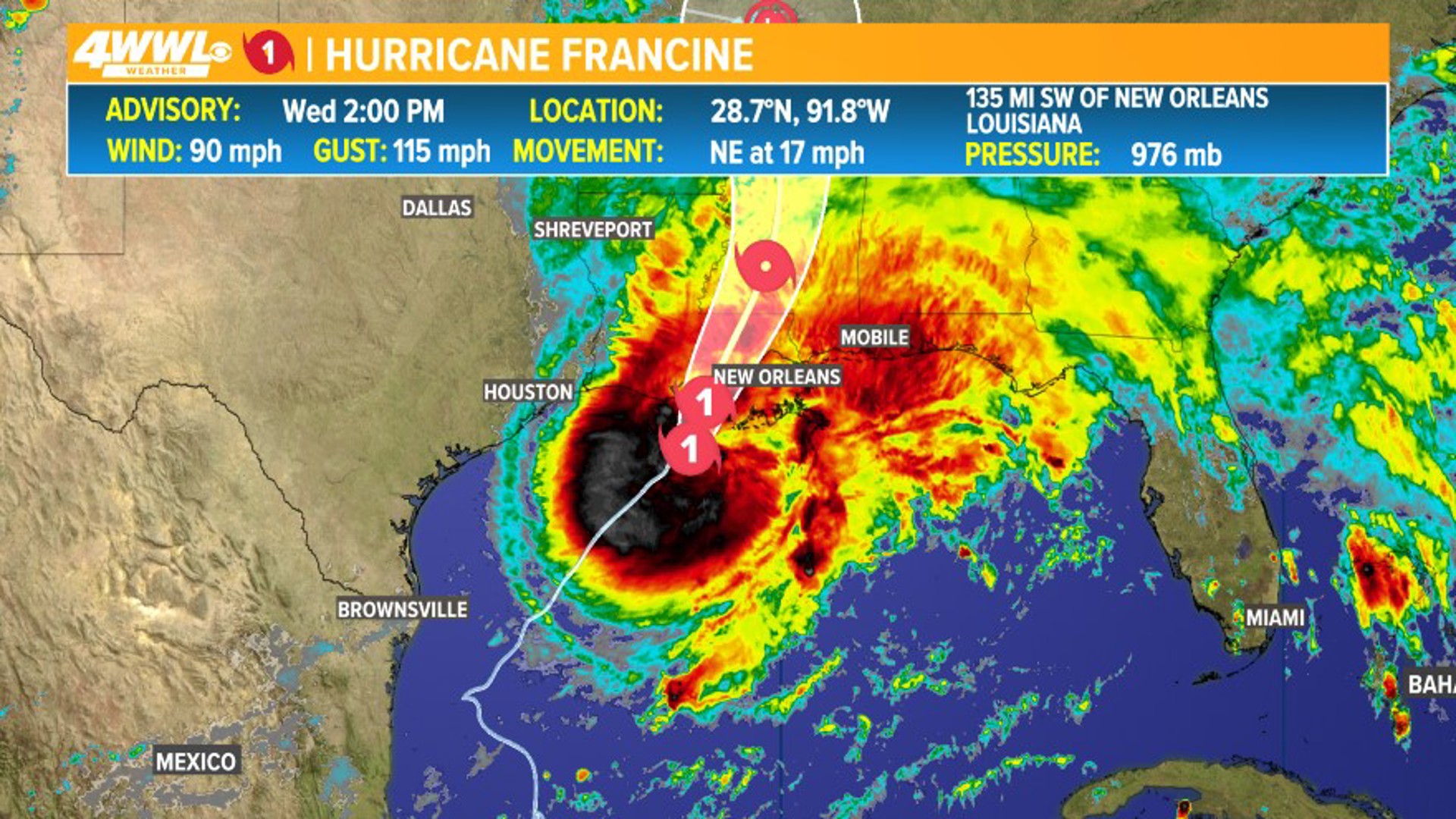
The question “what time will the hurricane make landfall?” is no longer a matter of waiting for the evening news or a siren on the coastline. In an era defined by high-frequency data streams, satellite imagery, and predictive modeling, the ability to pinpoint the exact moment of impact has transitioned from meteorological guesswork to a sophisticated intersection of big data and artificial intelligence. For technology professionals, emergency planners, and the general public, understanding how we track these catastrophic events reveals the immense power of modern digital infrastructure.

The Evolution of Predictive Modeling in Meteorology
Modern storm tracking is a marvel of computational power. To determine a hurricane’s precise landfall time, meteorologists rely on Numerical Weather Prediction (NWP) models—complex sets of mathematical equations that simulate the atmosphere.
Supercomputing and Data Assimilation
The backbone of landfall prediction is the supercomputer. Models such as the Global Forecast System (GFS) and the European Centre for Medium-Range Weather Forecasts (ECMWF) ingest billions of data points every few hours. This data is harvested from a global network of weather balloons, commercial aircraft, oceanic buoys, and polar-orbiting satellites. The “assimilation” process involves cleaning this messy, global data and forcing it into a grid that represents the planet’s atmosphere. The more granular the grid, the more accurate the timing becomes.
The Rise of Ensemble Forecasting
Gone are the days when a single “spaghetti model” line was the only visual indicator of a storm’s path. Today, meteorologists use ensemble forecasting. By running the same model dozens of times with slight variations in the initial conditions, computers can generate a probability map. If 90% of the ensemble members show landfall occurring within a two-hour window, the confidence in that timing increases exponentially. This shift from deterministic, single-line forecasting to probabilistic data analysis has fundamentally changed how we prepare for disaster.
AI and Machine Learning: Accelerating Data Analysis
While traditional physics-based models are crucial, they are computationally expensive and slow to run. This is where Artificial Intelligence is making its most significant mark in the field of atmospheric science.
Neural Networks for Pattern Recognition
Machine learning algorithms are currently being trained on decades of historical satellite imagery and storm track data. These neural networks can identify subtle patterns that human forecasters or traditional models might overlook. For example, by analyzing the “eye” of a hurricane—its structure, thermal cooling patterns, and cloud-top brightness—AI can predict rapid intensification with greater accuracy than traditional physics equations alone.
Real-Time Downscaling
AI excels at “downscaling.” While global models provide a broad view of a hurricane, they struggle to predict the hyper-local impacts of landfall, such as storm surge in a specific bay or localized wind gusts. AI tools are now being used to bridge this gap, taking the broad, coarse-scale data from global supercomputers and projecting it onto high-resolution, street-level maps. This allows emergency management agencies to predict not just the hour of landfall, but the specific blocks most likely to experience flooding, down to the minute.
Digital Infrastructure and Disaster Connectivity
Knowing the time of landfall is useless if the information cannot reach those in the path of the storm. The tech industry has built a resilient, multi-layered communication architecture designed to survive even when regional grids fail.

Mesh Networks and Edge Computing
During a hurricane, cellular towers and fiber optic lines are often the first to fail. Emerging technology trends in decentralized networking offer a solution. Mesh networks—where individual devices communicate directly with one another rather than relying on a centralized cell tower—are becoming standard in disaster-resilient tech. By utilizing Bluetooth and Wi-Fi Direct protocols, citizens can receive critical updates about landfall timing even when the internet backbone is severed.
Cloud-Based Early Warning Systems
The migration of government and private weather data to the cloud has ensured that critical forecasts are never localized to a single data center. If a hurricane threatens a physical office or server farm in a coastal city, the high-availability architecture of modern cloud platforms ensures that the forecast distribution remains uninterrupted. By distributing the data across geographic regions, the tech behind landfall predictions remains “always-on,” regardless of the environmental chaos unfolding below.
Leveraging IoT for Precision Monitoring
The “Internet of Things” (IoT) has extended the sensory reach of meteorology directly into the path of the storm. The era of static weather stations is being replaced by dynamic, mobile, and intelligent sensors.
Autonomous Drone Swarms
We no longer rely solely on manned “hurricane hunter” aircraft. Autonomous drone swarms are being deployed into the eyewall of storms to collect real-time pressure, humidity, and wind velocity data. Because these drones are expendable and agile, they can fly closer to the surface of the ocean than human pilots ever could. The data harvested by these drones is transmitted via satellite links in real-time, feeding directly into the predictive models that determine the landfall timeline.
Connected Infrastructure and Automated Response
As smart cities become more prevalent, the timing of a hurricane landfall is now synced with automated urban systems. When an AI-backed prediction determines that landfall will occur at 4:00 AM, connected municipal systems can trigger automated sequences: traffic lights can be set to “emergency evacuate” patterns, floodgates can be lowered ahead of the storm surge, and power grids can be rerouted to prevent cascading failures. This integration represents the pinnacle of technology meeting physical reality: the data point of “landfall time” essentially acts as a master key that initiates a complex, digitized sequence of survival protocols.
The Ethical Responsibility of High-Tech Forecasting
As our ability to predict the exact moment of landfall improves, the tech community faces an ongoing challenge regarding data integrity and public trust.
Data Visualization and Misinformation
The primary hurdle today is not the ability to calculate the landfall time, but the ability to communicate it accurately. Sophisticated visualizations—like the “cone of uncertainty”—often confuse the public. If the storm drifts slightly, the tech must be transparent enough to explain why the landfall time shifted. The responsibility lies with software developers and data scientists to create user interfaces that convey the urgency of the forecast without inducing unnecessary panic.
Bridging the Digital Divide
There is also a societal mandate to ensure that access to this life-saving tech is equitable. If advanced landfall warnings are gated behind subscription-based apps or require high-end hardware, the most vulnerable populations may be left behind. Open-source initiatives and standardized data protocols are essential to ensure that whether you are checking a high-end smartphone or a basic emergency radio, the data regarding the hurricane’s landfall is accurate, timely, and accessible.
Looking Forward: The Future of Landfall Prediction
The future of determining “what time will the hurricane make landfall” lies in quantum computing and satellite-to-phone direct communication. Quantum algorithms have the potential to process atmospheric variables at a scale that makes current supercomputers look archaic. With this level of computational speed, we may soon be able to predict landfall not just to the hour, but to the specific neighborhood, with near-100% confidence.
Technology has transformed the hurricane from an unpredictable force of nature into a data-driven event. By combining the raw power of supercomputing, the nuance of AI pattern recognition, and the resilience of decentralized communications, we have successfully compressed the uncertainty of the future into a measurable timeline. While we cannot stop the hurricane, we have developed the digital tools necessary to be prepared, to stay connected, and to survive the impact with a level of precision our ancestors could never have imagined.
aViewFromTheCave is a participant in the Amazon Services LLC Associates Program, an affiliate advertising program designed to provide a means for sites to earn advertising fees by advertising and linking to Amazon.com. Amazon, the Amazon logo, AmazonSupply, and the AmazonSupply logo are trademarks of Amazon.com, Inc. or its affiliates. As an Amazon Associate we earn affiliate commissions from qualifying purchases.