
For the modern investor, the question “what time does the stock market close today” is often the starting point of a much deeper journey into the mechanics of global finance. While a quick search might provide a simple numerical answer—4:00 PM Eastern Time for the major U.S. exchanges—the reality of market hours is far more nuanced. Understanding the closing bell is not just about knowing when to stop trading; it is about understanding liquidity, volatility, and the strategic windows that professional traders use to maximize their returns.
In this guide, we will explore the intricate schedule of the financial markets, the significance of extended trading sessions, and how global time zones influence your personal portfolio.
Understanding Standard Trading Hours and the U.S. Market Cycle
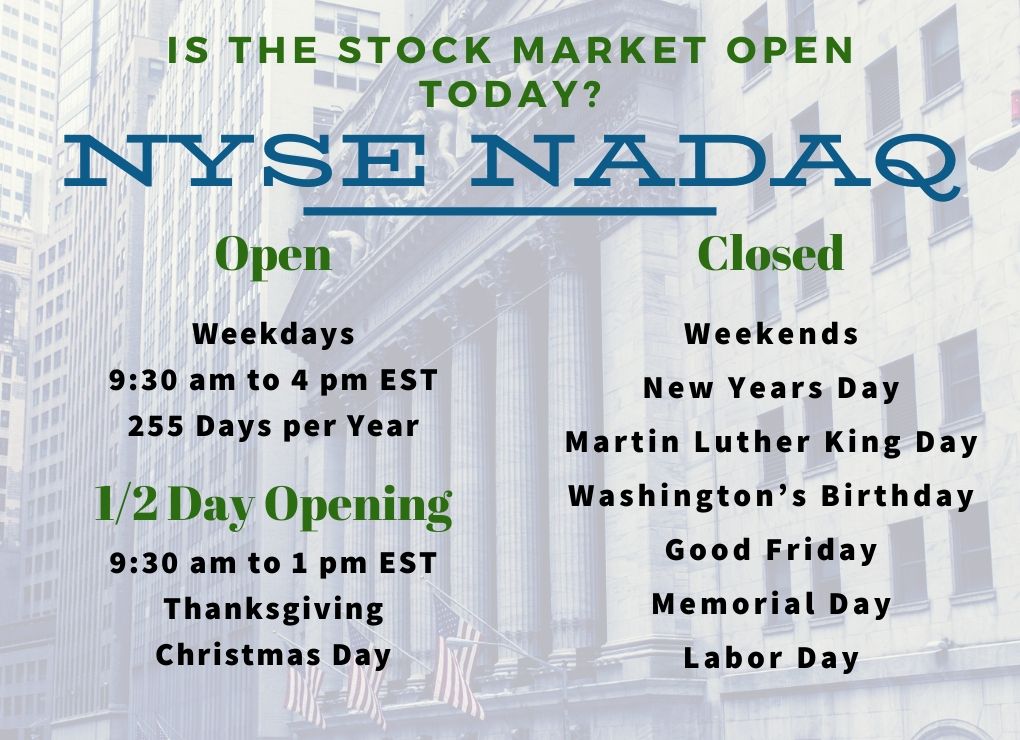
The cornerstone of the American financial system is the standard trading session. For the New York Stock Exchange (NYSE) and the NASDAQ, the two largest stock exchanges in the world, the doors officially open at 9:30 AM ET and close at 4:00 PM ET. This six-and-a-half-hour window is where the vast majority of trading volume occurs and where price discovery is most efficient.
The Significance of the 4:00 PM Closing Bell
The 4:00 PM closing bell is more than just a symbolic end to the day. It represents the moment when “official” daily prices are set. Mutual funds, for example, calculate their Net Asset Value (NAV) based on the closing prices of the securities they hold. For the individual investor, the close is a period of high liquidity, meaning there are many buyers and sellers active at once. This usually results in tighter “spreads”—the difference between the buy and sell price—making it the most cost-effective time to execute large orders.
Holiday Schedules and Early Closures
While the 9:30 AM to 4:00 PM schedule is the norm, it is subject to change based on the federal holiday calendar. Investors must stay vigilant regarding “early dismissal” days. Typically, on the day before Independence Day or the day after Thanksgiving (Black Friday), the U.S. markets close at 1:00 PM ET. Furthermore, markets are closed entirely on major holidays such as Christmas Day, New Year’s Day, Martin Luther King Jr. Day, and Labor Day. Knowing these dates in advance is crucial for managing margin requirements and avoiding unexpected gaps in market exposure.
The “Power Hour” Phenomenon
The final hour of the standard session, from 3:00 PM to 4:00 PM ET, is colloquially known as the “Power Hour.” During this window, trading volume often surges as institutional investors, hedge funds, and day traders square their positions before the day ends. This period is characterized by increased volatility and rapid price movements, offering both significant opportunities and heightened risks for active participants.
Beyond the Bell: The World of Extended Hours Trading
The digital transformation of finance has rendered the traditional 4:00 PM close somewhat porous. Through Electronic Communication Networks (ECNs), investors can now trade outside of standard hours. However, the rules of engagement change significantly once the official session ends.
The Mechanics of After-Hours Trading
After-hours trading typically runs from 4:00 PM to 8:00 PM ET. This session allows investors to react immediately to news that breaks after the market closes, such as quarterly earnings reports or major geopolitical events. While this offers a head start, it comes with a caveat: liquidity is much lower. With fewer participants, a large sell order can cause a disproportionately large drop in a stock’s price, a phenomenon known as “slippage.”
Pre-Market Sessions and Early Bird Opportunities
On the other side of the clock is the pre-market session, which can begin as early as 4:00 AM ET, though most retail activity starts around 8:00 AM ET. This session is often used by traders to gauge the market’s “sentiment” following overnight news from European or Asian markets. Prices in the pre-market often set the stage for the “gap up” or “gap down” seen at the 9:30 AM opening bell.
Risks and Strategy in Extended Sessions
For the average personal finance enthusiast, extended hours trading should be approached with caution. Most brokerage platforms require a special “limit order” for these sessions, meaning you must specify the exact price you are willing to pay or receive. Market orders—which execute at the best available current price—are generally not permitted due to the extreme volatility that can occur when trading volume is thin.
Global Perspectives: How International Markets Influence Your Timing
The stock market is a 24-hour global engine. While you may be focused on the U.S. closing time, the “close” in one part of the world often triggers the “open” in another, creating a continuous loop of financial activity that impacts your domestic holdings.
European and Asian Market Overlap
The London Stock Exchange (LSE) and the Euronext markets typically close around 11:30 AM to 12:00 PM ET. This creates an overlap with the U.S. morning session. This “cross-Atlantic” window is often the most liquid time for global blue-chip stocks. If you are trading companies with heavy international exposure, the European close can often dictate the momentum for the remainder of the U.S. trading day.
The Concept of “Follow the Sun” Investing
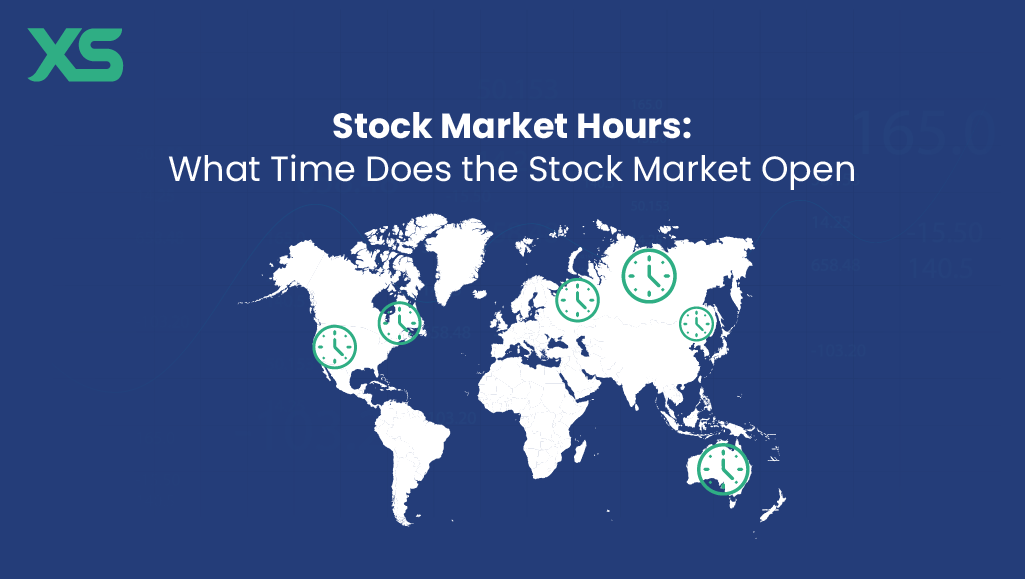
In the modern economy, “what time the market closes” depends entirely on what you are trading. If you hold ADRs (American Depositary Receipts) of Japanese or Chinese companies, the primary price action occurs while most Americans are asleep. The Tokyo Stock Exchange and the Hong Kong Stock Exchange operate on schedules that are roughly 12 to 13 hours ahead of New York. A savvy investor monitors these sessions to anticipate how tech or manufacturing sectors might behave when the U.S. market opens the following morning.
The Impact of Time Zone Shifts
It is also important to account for Daylight Savings Time. Not all countries shift their clocks on the same dates as the United States. This can result in temporary shifts where the gap between the NYSE close and the London open changes by an hour, affecting the timing of economic data releases and international trade executions.
Strategic Implications of the Closing Price for Personal Finance
For those focused on long-term wealth building rather than day trading, the closing time remains a vital metric for portfolio health and decision-making.
Benchmarking and Performance Tracking
The closing price is the gold standard for benchmarking. When you check your retirement account or investment app, the “daily gain/loss” is calculated based on the previous day’s close versus today’s close. For investors practicing “Dollar Cost Averaging,” the closing price on a specific day of the month often determines how many shares their fixed investment amount will purchase.
The “Market-on-Close” (MOC) Order
Institutional investors often use a specific tool called a “Market-on-Close” order. This is an instruction to execute a trade as near to the closing price as possible. Because so much institutional money moves at the close, the 4:00 PM mark acts as a point of price validation. If a stock closes at its daily high, it is often seen as a “bullish” signal that the trend will continue into the next day.
Rebalancing and the “Weekend Effect”
For many, the most important “close” is Friday at 4:00 PM. The “Weekend Effect” refers to the tendency of stocks to follow a specific pattern on Mondays based on the closing sentiment from Friday. Furthermore, many retail investors use the Friday close to rebalance their portfolios, ensuring their asset allocation (the mix of stocks, bonds, and cash) remains aligned with their risk tolerance before the markets pause for two days.
Digital Tools to Navigate Market Hours Effectively
In an era of instant information, you don’t need to stare at a clock to stay informed. Technology has provided tools that make the question of “what time the market closes” almost secondary to the automation of your financial strategy.
Real-Time Alerts and Market Screeners
Most modern brokerage apps allow you to set “Closing Bell Alerts.” These notifications can summarize your portfolio’s performance the moment the market shuts down. Additionally, market screeners can be programmed to identify stocks that are “breaking out” in the final minutes of trading, allowing you to make informed decisions without needing to monitor the ticker all day.
Automating Your Investments
The best way to handle market timing is often to ignore it through automation. By setting up recurring investments, you remove the emotional stress of trying to “beat the clock” or time the perfect entry at 3:59 PM. Financial tools now allow for fractional share investing, meaning your money goes to work regardless of whether the market is at its daily peak or its closing trough.
Staying Informed via Economic Calendars
To truly master market hours, every investor should maintain an economic calendar. These tools track not just the closing times, but the release of the Consumer Price Index (CPI), Federal Reserve interest rate announcements, and employment reports. These events often occur at 8:30 AM ET or 2:00 PM ET, creating “mini-closings” where the market re-prices itself instantly based on new data.
Conclusion: The Closing Bell as a Strategic Milestone
Ultimately, knowing “what time the stock market closes today” is about more than just a schedule—it is about understanding the pulse of the global economy. Whether you are a casual investor checking your 401(k) or an active trader navigating the volatility of the “Power Hour,” the 4:00 PM ET close remains the most significant anchor in the world of finance.
By understanding the standard hours, the risks of extended trading, and the influence of global time zones, you can move from being a reactive participant to a proactive strategist. The market may close at 4:00 PM, but the work of building wealth and managing risk is a continuous process that rewards those who understand the clock.
aViewFromTheCave is a participant in the Amazon Services LLC Associates Program, an affiliate advertising program designed to provide a means for sites to earn advertising fees by advertising and linking to Amazon.com. Amazon, the Amazon logo, AmazonSupply, and the AmazonSupply logo are trademarks of Amazon.com, Inc. or its affiliates. As an Amazon Associate we earn affiliate commissions from qualifying purchases.