
In the world of finance, timing is often as critical as the assets themselves. For the seasoned investor and the novice trader alike, the question of “what time the market closes” is not merely a logistical inquiry; it is a fundamental component of a successful investment strategy. The financial markets do not operate in a vacuum, nor do they follow a universal 24-hour clock. Instead, they are governed by a sophisticated schedule of opening bells, closing crosses, and extended-hours sessions that vary significantly across the globe.
Understanding these timeframes is essential for managing liquidity, mitigating risk, and capitalizing on volatility. This guide explores the intricate schedules of major stock exchanges, the mechanics of after-hours trading, and the strategic importance of the closing bell in the context of modern personal finance and professional investing.
Standard Operating Hours for Major U.S. Exchanges
For the vast majority of retail investors in the United States, the financial day is defined by the operating hours of the two largest exchanges in the world: the New York Stock Exchange (NYSE) and the NASDAQ. While digital technology allows for the movement of capital at the speed of light, these physical and electronic hubs still maintain a traditional schedule that dictates the pulse of the global economy.
The New York Stock Exchange (NYSE) and NASDAQ
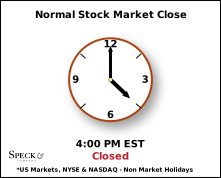
The standard trading session for both the NYSE and the NASDAQ runs from 9:30 AM to 4:00 PM Eastern Time (ET), Monday through Friday. This six-and-a-half-hour window is when the highest volume of trading occurs, providing the liquidity necessary for narrow bid-ask spreads and efficient price discovery. During these hours, institutional “market makers” and algorithmic systems ensure that orders are matched efficiently. For most personal finance goals—such as rebalancing a 401(k) or purchasing shares in an Index ETF—executing trades during these core hours is recommended to ensure the best possible pricing.
The Significance of the Opening and Closing Bells
The “Opening Bell” at 9:30 AM and the “Closing Bell” at 4:00 PM are more than just ceremonial traditions. They mark the beginning and end of the continuous trading session. The first and last 30 minutes of the trading day are typically the most volatile. The market open is characterized by the absorption of news that occurred overnight, while the market close is defined by institutional “rebalancing.”
The “Closing Cross” is a specific electronic process used by the NASDAQ (and a similar auction process at the NYSE) to determine the official closing price of a security. Thousands of orders are aggregated in the final seconds of the day to find a single price that clears the maximum volume of shares. This “Closing Print” is the price reported in newspapers and used by mutual funds to calculate their Net Asset Value (NAV).
Holiday Schedules and Early Closures
Investors must also remain aware of the exchange holiday calendar. In the United States, the markets are closed on federal holidays such as Christmas Day, New Year’s Day, Independence Day, and Thanksgiving. Additionally, the market frequently observes “early closures,” typically at 1:00 PM ET, on the day following Thanksgiving (Black Friday) and sometimes on Christmas Eve. Keeping a calendar of these events is vital for side-hustle traders and professional investors who need to manage margin requirements or option expirations before a long weekend.
Extended-Hours Trading: Pre-Market and After-Hours Sessions
The 4:00 PM bell does not mean that trading stops entirely. In the modern era of Electronic Communication Networks (ECNs), the “market” is technically accessible for many more hours than the traditional floor-trading era allowed. Extended-hours trading allows investors to react to news that breaks outside of standard hours, such as corporate earnings reports or geopolitical events.
How Pre-Market Trading Works
Pre-market trading in the U.S. generally occurs between 4:00 AM and 9:30 AM ET. While it is possible to trade this early, most retail brokerages only open access to their clients starting at 7:00 AM or 8:00 AM ET. Pre-market sessions are characterized by much lower volume than the standard session. This lack of liquidity can lead to “slippage,” where the price you receive is significantly different from the last quoted price. Investors use this time to position themselves based on overseas market performance or early-morning economic data releases, such as the Consumer Price Index (CPI) or employment reports.
Navigating the After-Hours Market
After-hours trading begins immediately after the closing bell at 4:00 PM and typically runs until 8:00 PM ET. This is perhaps the most critical window for stock-specific news. Most public companies release their quarterly earnings results shortly after 4:00 PM to ensure that the information is disseminated when the main market is closed, theoretically allowing for a more “orderly” digestion of the news. However, the reality is often high volatility. A stock might drop 10% in after-hours trading on a poor earnings report, only to recover half of those losses by the next morning’s open.
Risks and Rewards of Trading Outside Standard Hours
While the ability to trade at 7:00 PM offers flexibility, it comes with distinct financial risks:
- Lower Liquidity: Fewer participants mean it is harder to buy or sell large blocks of stock without moving the price.
- Wider Spreads: The difference between the buy price and the sell price is often much wider, increasing the cost of the trade.
- Price Volatility: With fewer trades occurring, a single large order can cause a disproportionate swing in the stock price.
For the average personal finance investor, extended-hours trading is often better used as an observation period rather than an active trading window.
Global Market Synchronicity: When Do International Markets Close?
In an interconnected global economy, the U.S. market is just one piece of the puzzle. Investors who hold international stocks or trade currencies must understand the “relay race” of global finance, where as one market closes, another is preparing to open.
The European Markets (LSE, Euronext)
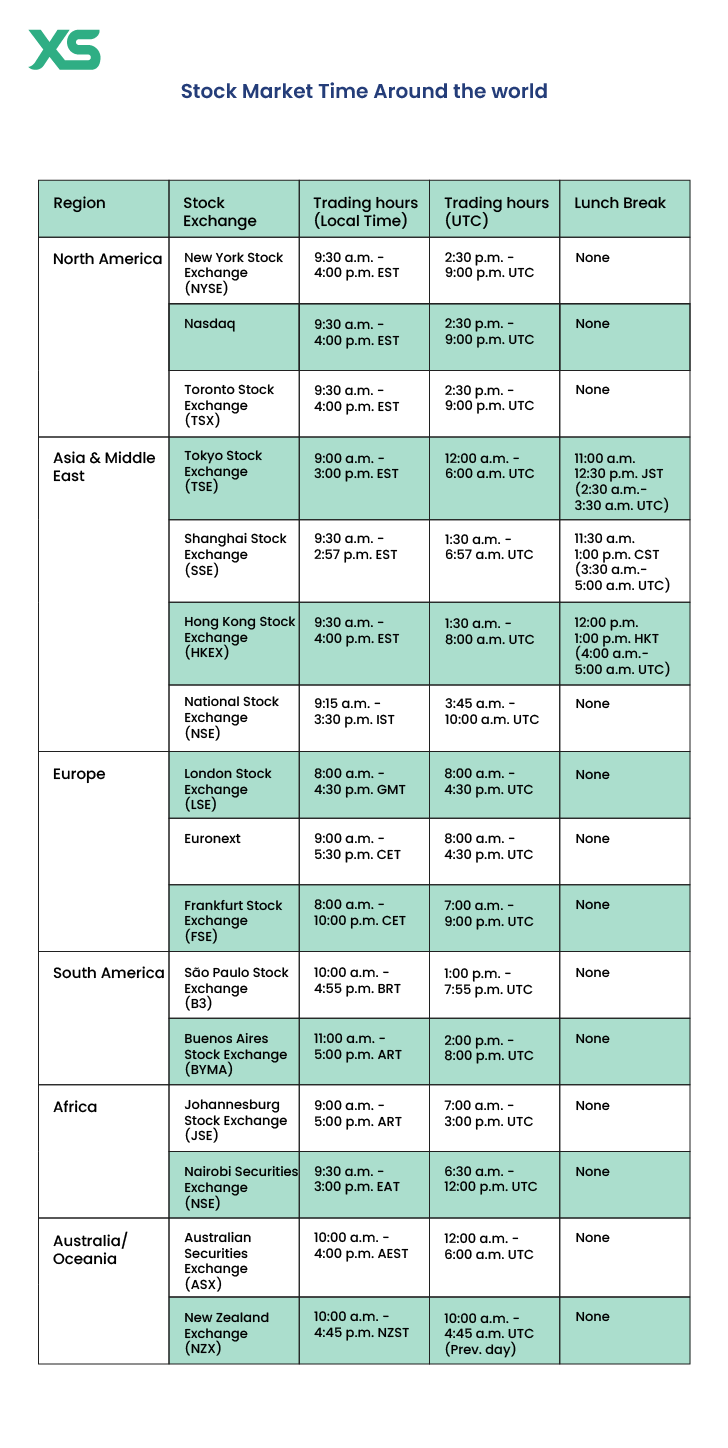
The European markets provide a bridge between the Asian and American sessions. The London Stock Exchange (LSE), one of the world’s most influential hubs, operates from 8:00 AM to 4:30 PM Greenwich Mean Time (GMT). For an investor on the East Coast of the U.S., the London market opens at 3:00 AM ET and closes at 11:30 AM ET. This overlap between 9:30 AM and 11:30 AM ET is often the most liquid time of the day for global forex markets and large-cap multinational stocks.
The Asian Powerhouses (Tokyo, Hong Kong, Shanghai)
The Asian trading day begins while the U.S. is asleep. The Tokyo Stock Exchange (TSE) operates from 9:00 AM to 3:00 PM Japan Standard Time (JST), but with a notable caveat: many Asian exchanges have a scheduled lunch break. The TSE closes for an hour between 11:30 AM and 12:30 PM. The Hong Kong Stock Exchange (HKEX) follows a similar pattern. Understanding these breaks is crucial for traders using “online income” strategies like arbitrage, where price discrepancies between the same stock listed on different global exchanges are exploited.
Time Zone Arbitrage and the 24-Hour Market Cycle
While individual stock exchanges have closing times, some markets never truly close. The Foreign Exchange (Forex) market and the Cryptocurrency market operate 24 hours a day, seven days a week (or five days a week for Forex). For the business finance professional, this means that “market close” is a relative term. The close of the NYSE often triggers a shift in capital toward the Nikkei in Japan or the ASX in Australia, creating a continuous cycle of price discovery that dictates global interest rates and currency valuations.
Why “What Time the Market Closes” Matters for Your Portfolio Strategy
Understanding the clock is not just about knowing when you can hit the “buy” button; it is about understanding the psychology and mechanics of price movement. The time of day significantly impacts the quality of execution and the intent of other market participants.
Volatility at the Close: The “Power Hour”
The final hour of trading, from 3:00 PM to 4:00 PM ET, is colloquially known as the “Power Hour.” This is when institutional investors—pension funds, mutual funds, and hedge funds—execute their largest trades of the day. Because these entities manage billions of dollars, they often wait until the end of the day to finalize their positions to match the closing price. For a retail investor, the Power Hour offers high liquidity but also intense volatility. It is a period where trends are either reinforced or sharply reversed.
Managing Limit Orders and Market Orders
The time of the market close is the deadline for “Day Orders.” If you place a limit order (an order to buy or sell at a specific price) during the day and it is not filled by 4:00 PM, the order is typically canceled by your broker unless you have specifically designated it as “Good ‘Til Canceled” (GTC). Understanding this helps investors manage their side-hustle portfolios more effectively, ensuring they aren’t left with unintended positions overnight when they are unable to react to news.
The Impact of Earnings Reports and Economic Data Releases
Most major economic indicators in the U.S. are released at 8:30 AM ET, exactly one hour before the market opens. This timing is intentional, allowing the “Pre-Market” to absorb the data before the “Main Market” opens. Similarly, corporate earnings are released after the 4:00 PM close. By understanding these timing windows, investors can avoid the “gambling” aspect of trading into a news event and instead wait for the market to establish a clear direction during standard hours.

Conclusion: Integrating Timing into Financial Success
The question of “what time the market closes” serves as a gateway to understanding the broader mechanics of global finance. Whether you are managing personal investments, seeking online income through active trading, or overseeing corporate treasury functions, the clock is a constant factor.
By operating primarily within the standard hours of 9:30 AM to 4:00 PM ET, investors benefit from the protection of high liquidity and the stability of institutional oversight. However, by understanding the “Pre-Market,” the “After-Hours,” and the “Global Relay,” an investor gains a more holistic view of how value is created and contested across time zones. In the modern financial landscape, knowledge of the schedule is just as valuable as knowledge of the balance sheet. Successful investing requires not just the right assets, but the discipline to trade them when the world is watching.
aViewFromTheCave is a participant in the Amazon Services LLC Associates Program, an affiliate advertising program designed to provide a means for sites to earn advertising fees by advertising and linking to Amazon.com. Amazon, the Amazon logo, AmazonSupply, and the AmazonSupply logo are trademarks of Amazon.com, Inc. or its affiliates. As an Amazon Associate we earn affiliate commissions from qualifying purchases.