
In the world of investing, timing is often as critical as the assets you choose to hold. For the modern investor, understanding exactly what time the stock market opens is not merely a matter of checking a clock; it is about understanding the pulse of global liquidity, the mechanics of price discovery, and the strategic windows that can make or break a portfolio. While the digital age allows for 24/7 information flow, the actual execution of trades remains governed by a structured schedule that dictates when the world’s largest financial institutions move trillions of dollars.
Whether you are a retail investor managing a retirement account or a day trader looking for high-volatility opportunities, mastering the market’s schedule is a fundamental pillar of financial literacy. This guide explores the intricacies of U.S. and global market hours, the nuances of extended-hours trading, and the strategic implications of time on your investment journey.
Understanding Standard Market Hours in the United States
For the vast majority of investors, the most important timeframe is the “regular” or “core” trading session. In the United States, the two primary exchanges—the New York Stock Exchange (NYSE) and the Nasdaq—operate on a synchronized schedule that provides a centralized window for price discovery.
The Core Session: 9:30 AM to 4:00 PM ET
The official opening bell for the major U.S. stock exchanges rings at 9:30 AM Eastern Time (ET), Monday through Friday. This 6.5-hour window represents the peak of market activity. During these hours, liquidity is at its highest, meaning there are more buyers and sellers active in the market, resulting in narrower “bid-ask spreads” (the difference between the price a buyer is willing to pay and the price a seller is willing to accept).
For the average personal finance enthusiast, trading during these hours is generally recommended. The high volume ensures that orders are executed quickly and at prices that closely reflect the actual market value of the security.
The Significance of the Opening Bell
The first 30 to 60 minutes after the 9:30 AM open are often the most volatile of the day. This period is characterized by the market reacting to news that broke overnight—including corporate earnings reports, geopolitical events, and economic data releases. Institutional investors use this time to execute large orders that have accumulated since the previous day’s close. While this volatility offers opportunity, it also carries significant risk, as price swings can be aggressive and unpredictable.
The Closing Bell and the Market Wrap
The market closes at 4:00 PM ET. Much like the opening, the final hour of trading, often referred to as the “Power Hour,” sees a massive surge in volume. Many institutional funds and ETFs are required to rebalance their positions or execute “Market-on-Close” (MOC) orders at this time. For investors, the closing price is the official benchmark used to calculate the value of mutual funds and investment portfolios for the day.
Extended Hours Trading: Pre-Market and After-Hours
While the “regular” hours are the most well-known, the stock market does not truly go dark when the bells ring. Through Electronic Communication Networks (ECNs), investors can trade during “extended hours,” which consist of pre-market and after-hours sessions.
Navigating the Pre-Market Session (4:00 AM – 9:30 AM ET)
The pre-market session allows investors to react to early-morning news before the official open. While some brokerages allow trading as early as 4:00 AM ET, most retail activity begins around 8:00 AM ET. Trading during this window is a double-edged sword. On one hand, it allows you to get ahead of a trend if a company releases a positive earnings report at 7:30 AM. On the other hand, the lack of volume means that a single large trade can cause a disproportionate swing in price, potentially leading to “slippage” where your order is filled at a less-than-ideal price.
The After-Hours Session (4:00 PM – 8:00 PM ET)
After the closing bell at 4:00 PM, the after-hours session begins. This is a critical time for corporate news, as most public companies release their quarterly earnings reports shortly after the market closes to allow the news to be digested without causing immediate chaos during the regular session. Professional traders use this window to position themselves based on these reports. However, much like pre-market trading, liquidity is significantly lower than during the day, and the risks of high volatility remain.
Risks and Rewards of Trading Outside Regular Hours
For the personal finance investor, extended hours trading should be approached with caution. The primary risks include:
- Wider Spreads: Because fewer people are trading, the gap between the buy and sell price can be very wide, making it more expensive to enter or exit a position.
- Volatility: Low volume can lead to “fake-outs,” where a stock appears to be skyrocketing or crashing, only to reverse course once the regular market opens and more participants enter.
- Limit Orders Only: Most brokers require the use of “limit orders” (specifying the exact price you are willing to pay) during extended hours to protect investors from sudden price spikes.
Global Market Sessions and Time Zone Considerations
In an increasingly interconnected global economy, the U.S. market does not exist in a vacuum. The movements in European and Asian markets often set the stage for how the U.S. market will open. Understanding the “Global Clock” is essential for any serious investor.
Major International Exchanges
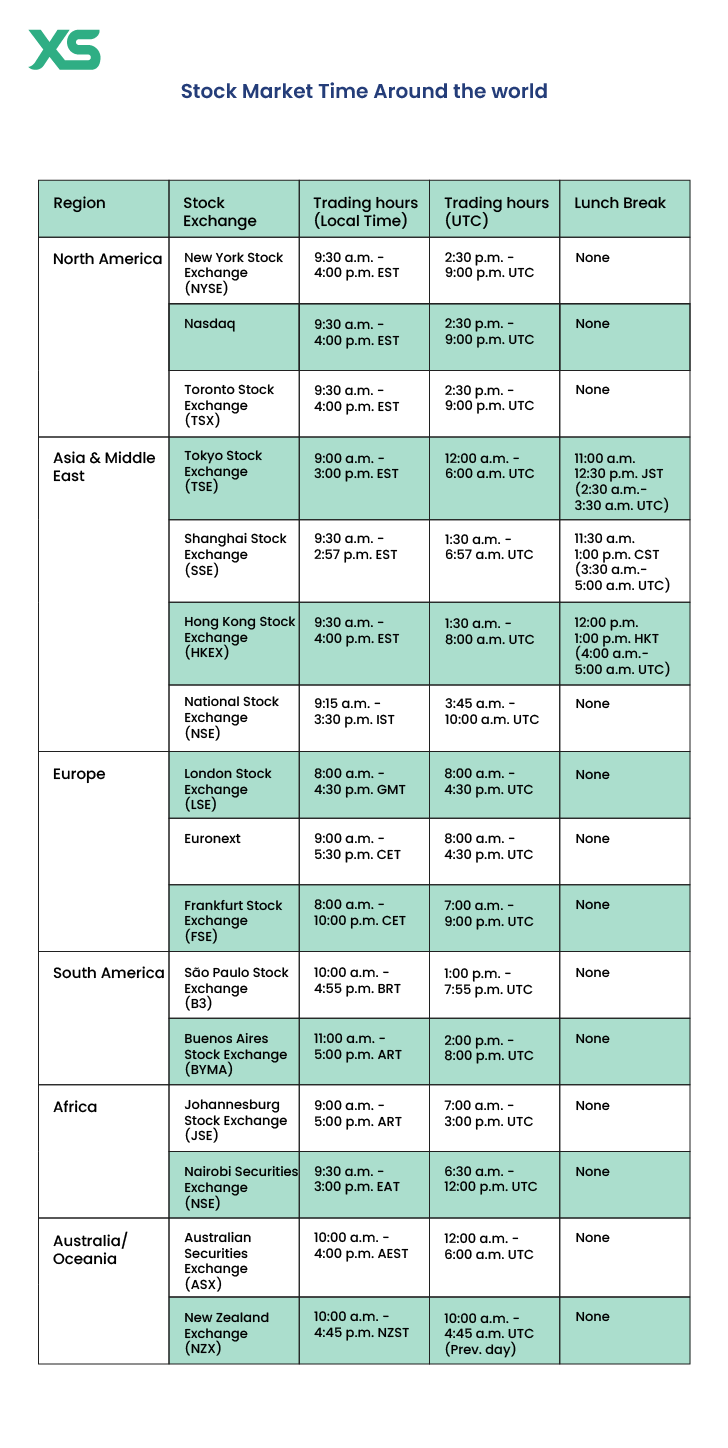
If you are looking to diversify into international equities or follow global trends, you must track these major sessions (all times in ET for comparison):
- London Stock Exchange (LSE): Opens at 3:00 AM and closes at 11:30 AM ET.
- Tokyo Stock Exchange (TSE): Opens at 8:00 PM and closes at 2:00 AM ET (with a lunch break in between).
- Hong Kong Stock Exchange (HKEX): Opens at 9:30 PM and closes at 4:00 AM ET.
- Frankfurt (DAX): Opens at 3:00 AM and closes at 11:30 AM ET.
The “Golden Hours” of Overlapping Sessions
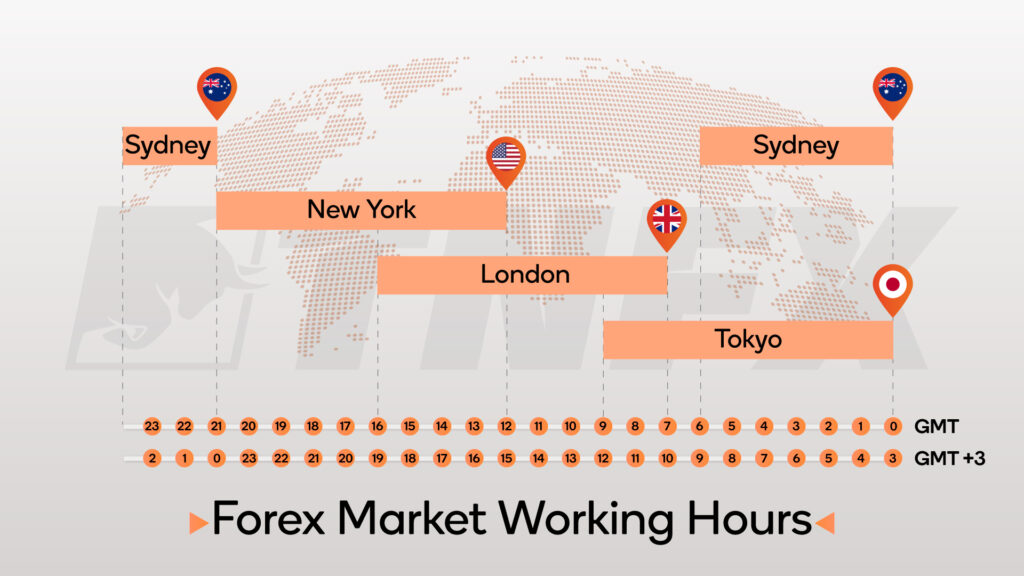
One of the most important periods for global liquidity occurs when the U.S. and European markets are open at the same time. Between 9:30 AM and 11:30 AM ET, both New York and London are active. This “overlap” often sees the highest trading volume of the day for international companies and currency pairs (Forex), making it a prime time for executing large trades with minimal price impact.
Market Holidays and Early Closures
It is equally important to know when the market is not open. The U.S. stock market observes several federal holidays, such as Christmas Day, New Year’s Day, Independence Day, and Thanksgiving. Additionally, the market often has “early close” days (typically at 1:00 PM ET), such as the day after Thanksgiving or Christmas Eve. Keeping a financial calendar is a simple but effective way to ensure you aren’t caught off guard by a closed market when you need to make a move.
Strategic Timing: When is the Best Time to Trade?
Now that we have established when the market opens, the next question is: when is the best time to actually buy or sell? While “time in the market” is generally better than “timing the market” for long-term investors, short-to-medium-term traders can benefit from understanding daily patterns.
The Volatility of the First Hour
As mentioned, 9:30 AM to 10:30 AM ET is the “opening range.” This is the time of maximum emotion and reaction. Many seasoned investors prefer to wait until 10:00 AM or 10:30 AM for the “initial balance” to be set. By waiting for the opening volatility to subside, you can get a clearer picture of the day’s actual trend.
The Mid-Day Lull (The “Lunch Dip”)
Between 12:00 PM and 1:30 PM ET, volume tends to drop significantly as floor traders and institutional desks in New York take lunch breaks. During this time, the market often “drifts” or moves sideways. For those looking for stability and slow execution, this can be a quiet time to enter positions. However, it is usually the worst time for day traders who rely on momentum and movement.
The Final Stretch: The Power Hour
From 3:00 PM to 4:00 PM ET, the intensity picks up again. This is when institutional managers “square their books” for the day. If the market has been trending up all day, the Power Hour often sees a continuation of that trend as traders FOMO (Fear Of Missing Out) into the move. Conversely, if a major sell-off is happening, the final 15 minutes can see a “waterfall” effect as automated systems dump positions before the close.
Practical Tools for Tracking Market Hours
Managing your investments requires the right infrastructure to keep track of these timings. Fortunately, modern technology provides several ways to stay synchronized with the market’s heartbeat.
Financial Apps and Calendars
Most major brokerage apps (like Schwab, Fidelity, or Vanguard) provide built-in clocks and holiday calendars. For a more comprehensive view, tools like TradingView or Bloomberg offer real-time countdowns to the opening and closing bells of every major exchange in the world.
Setting Alerts for Economic Data
In the Money niche, we know that “market time” is often dictated by “data time.” The U.S. Bureau of Labor Statistics and the Federal Reserve often release critical reports (like the CPI or Jobs Report) at 8:30 AM ET—exactly one hour before the market opens. Setting alerts for these releases allows you to anticipate how the 9:30 AM opening bell will behave. If a report is better than expected, you can prepare for a “gap up” open; if it’s worse, you can brace for a “gap down.”
Conclusion: The Value of a Disciplined Schedule
Knowing what time the stock market opens is the first step in moving from a passive observer to a disciplined participant in the financial world. The market is not a random chaotic void; it is a highly structured environment designed to facilitate the exchange of value. By aligning your trading and investing activities with the core hours of 9:30 AM to 4:00 PM ET, you ensure that you are operating when liquidity is highest and spreads are lowest.
However, as we have explored, the savvy investor also looks at the fringes—the pre-market reactions, the global overlaps, and the late-day surges. By understanding these cycles, you can better manage your risk, optimize your entry and exit points, and ultimately build a more robust financial future. In the world of money, time is not just a measurement—it is an asset. Use it wisely.
aViewFromTheCave is a participant in the Amazon Services LLC Associates Program, an affiliate advertising program designed to provide a means for sites to earn advertising fees by advertising and linking to Amazon.com. Amazon, the Amazon logo, AmazonSupply, and the AmazonSupply logo are trademarks of Amazon.com, Inc. or its affiliates. As an Amazon Associate we earn affiliate commissions from qualifying purchases.