
The rhythm of the global economy is dictated by the opening and closing bells of the world’s major stock exchanges. For the modern investor, understanding “what time the share market closes” is not merely a matter of checking a clock; it is a fundamental component of a sophisticated trading strategy. In the world of finance, timing is often just as important as the asset itself. Whether you are a day trader looking to capitalize on end-of-day volatility or a long-term investor managing a diversified portfolio, the closing hours of the market represent a critical window of price discovery, liquidity, and psychological shifts.
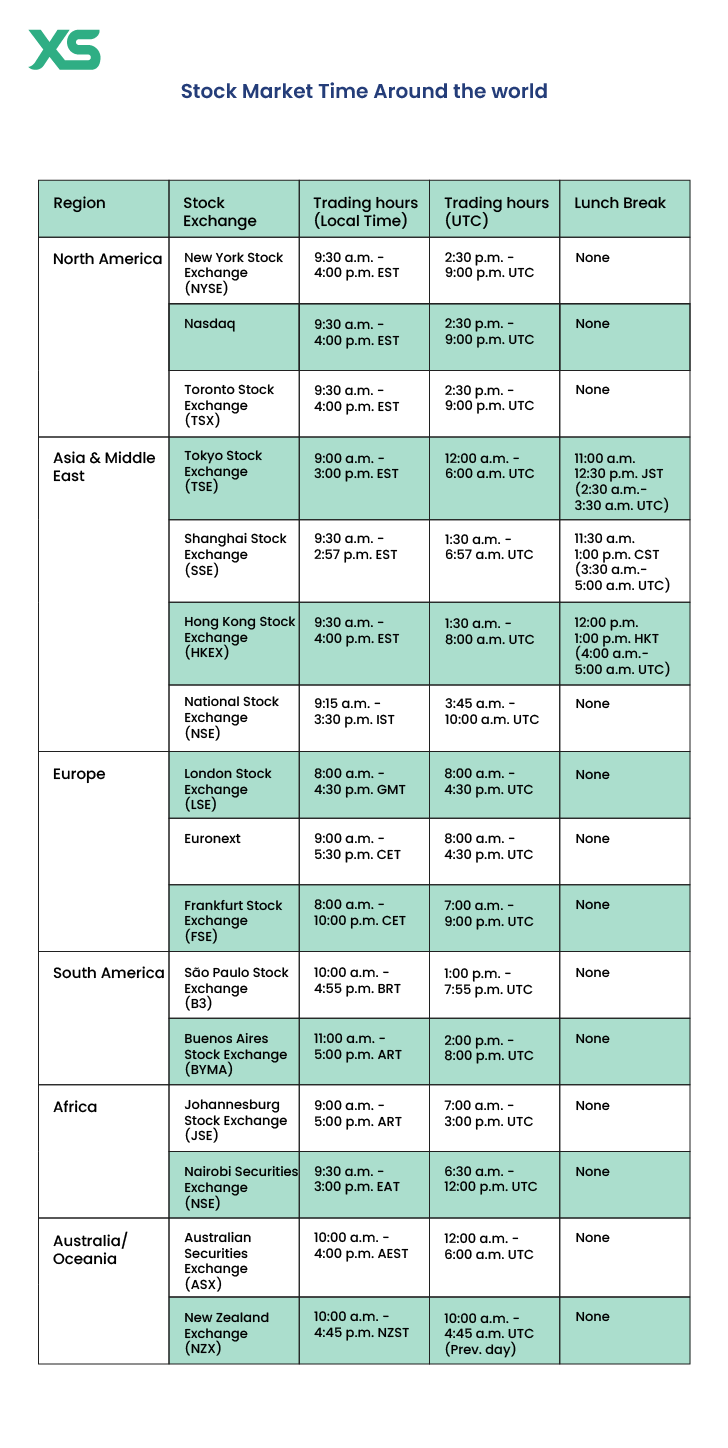
This guide explores the intricacies of market closing times across the globe, the mechanics of the closing auction, and the strategic implications of trading as the sun sets on the financial centers of the world.
The Global Financial Clock: Understanding Exchange Operating Hours
The stock market does not operate in a vacuum; it follows a rigorous schedule dictated by the geographic location of the exchange and the local business customs of the host country. For most investors, the focus remains on the “Big Three” regions: North America, Europe, and Asia.
North American Markets: The Standard Bearers
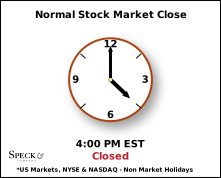
In the United States, the two most prominent exchanges—the New York Stock Exchange (NYSE) and the NASDAQ—operate on a synchronized schedule. The standard trading session begins at 9:30 AM Eastern Time (ET) and concludes at 4:00 PM ET. This 4:00 PM closing time is perhaps the most watched moment in the financial world. It marks the point where daily gains and losses are finalized and the “closing price” is etched into history.
It is important to note that these markets operate from Monday to Friday and are closed on specific federal holidays, such as Thanksgiving, Christmas, and Independence Day. Occasionally, the market observes “early close” days (typically 1:00 PM ET), usually occurring the day before or after a major holiday.
European and Asian Trading Windows
The European markets, led by the London Stock Exchange (LSE), typically operate from 8:00 AM to 4:30 PM Greenwich Mean Time (GMT). Because Europe spans multiple time zones, there is a significant overlap with the early hours of the U.S. market, which often leads to increased volatility in the early afternoon for European traders.
In Asia, the schedule is slightly more complex. Major exchanges like the Tokyo Stock Exchange (TSE) and the Hong Kong Stock Exchange (HKEX) often include a mandatory lunch break. For example, the Tokyo Stock Exchange typically trades from 9:00 AM to 11:30 AM, closes for an hour, and then resumes from 12:30 PM to 3:00 PM local time. Understanding these “mid-day closes” is vital for international investors who may be used to the continuous sessions of the West.
The Impact of Time Zones on Global Portfolios
For an investor based in London trading U.S. tech stocks, the “market close” happens late in the evening. For a Californian trader looking at Nikkei 225 futures, the market opens as they are preparing for dinner. Navigating these time zones requires more than just a converter; it requires an understanding of how news travels. Often, a closing price in Asia will set the “tone” for the opening bell in Europe, creating a domino effect that eventually reaches Wall Street.
The Mechanics of the Close: More Than Just a Bell
While the physical or electronic ringing of a bell signifies the end of the session, the actual process of closing the market is a sophisticated technical exercise known as the “Closing Auction.”
The Closing Auction and Price Discovery
The final price of a stock at 4:00 PM (ET) is rarely the result of a single random trade. Instead, major exchanges utilize a closing auction to ensure that the “closing price” is as fair and representative as possible. During the final minutes of the day, the exchange’s software aggregates all buy and sell orders. The goal is to find the single price point that allows the maximum number of shares to trade.
This process is critical because the closing price is used by mutual funds and ETFs to calculate their Net Asset Value (NAV). If the close were not regulated through an auction, a single small trade could potentially “mark the close” at an artificial price, leading to inaccuracies in billions of dollars worth of fund valuations.
Institutional Rebalancing and the “Power Hour”
The final hour of trading, often referred to as the “Power Hour” (3:00 PM to 4:00 PM ET), is characterized by a massive surge in volume. This is when institutional investors—pension funds, hedge funds, and insurance companies—execute their largest trades. Many of these institutions are required to rebalance their portfolios at the end of the day or are responding to massive inflows and outflows from retail index funds.
For the individual investor, the Power Hour is a double-edged sword. While it provides the highest liquidity of the day, making it easy to enter or exit large positions, it also brings heightened volatility. Prices can swing wildly in the final ten minutes as algorithms and human traders compete to fill orders before the 4:00 PM deadline.
The Psychological Significance of the Closing Price
In technical analysis, the closing price is considered the most important data point of the day. It represents the final consensus on a stock’s value after all the day’s news has been digested. A “strong close”—where a stock finishes near its daily high—is often interpreted as a bullish signal for the following day. Conversely, a “weak close” suggests that sellers are in control and that downward momentum may continue into the next session.
Beyond the Bell: The World of After-Hours Trading
Just because the official share market closes at 4:00 PM doesn’t mean trading stops. We now live in an era of 24-hour financial cycles, facilitated by Electronic Communication Networks (ECNs).
Understanding the Post-Market Session
In the U.S., after-hours trading typically runs from 4:00 PM to 8:00 PM ET. This session allows investors to react to news that breaks after the main bell. The most common catalysts for after-hours movement are corporate earnings reports. Since most major companies release their quarterly results at 4:01 PM or 4:05 PM, the after-hours market is where the initial “shock” of a profit beat or miss is absorbed.
Risks of Trading After the Market Closes
While the ability to trade late into the evening offers flexibility, it comes with significant risks that the average investor must consider:
- Lower Liquidity: Far fewer people trade at 7:00 PM than at 2:00 PM. This means there are fewer buyers and sellers.
- Wider Spreads: Due to low liquidity, the “bid-ask spread” (the difference between what a buyer will pay and what a seller wants) is much wider. You may end up paying significantly more for a stock than its last “official” price.
- Extreme Volatility: Without the stabilizing force of the closing auction and high-volume institutional participation, prices can move violently on relatively small news.
The Rise of 24/5 Trading
Some brokerage platforms have recently introduced “24/5” trading for a select group of highly liquid ETFs and stocks. While this provides unprecedented access, it further blurs the line of what a “market close” actually means. For the professional, the 4:00 PM ET close remains the benchmark, while the 24-hour cycle is seen as a secondary venue for speculation and immediate risk management.
Strategic Considerations for the End of the Trading Day
Knowing what time the market closes allows an investor to implement specific tactical maneuvers that can protect capital and maximize returns.
Managing Limit Orders and Stop-Losses
Many traders use “Day Orders,” which automatically expire when the market closes. If you have a limit order to buy a stock at a specific price and it isn’t reached by the closing bell, that order is cancelled. If you wish for your order to remain active into the next day or the after-hours session, you must specify it as “GTC” (Good ‘Til Canceled) or “EXT” (Extended Hours).
Furthermore, stop-loss orders can be tricky around the close. If a stock’s price “gaps down” (opens significantly lower than it closed the previous day due to bad news overnight), your stop-loss might execute at a much lower price than you intended. Understanding the gap between the close and the next day’s open is essential for risk management.
The “Market on Close” (MOC) Order
Professional traders often use “Market on Close” (MOC) orders. An MOC order guarantees that the trade will be executed as close to the closing price as possible, participating in the closing auction mentioned earlier. This is a favorite tool for those who want to ensure their portfolio value aligns perfectly with the end-of-day benchmarks. However, most exchanges have a cutoff time (e.g., 3:50 PM ET) after which MOC orders cannot be cancelled or modified, requiring a high degree of certainty from the trader.
Preparing for the “Overnight Risk”
The moment the market closes, “overnight risk” begins. This is the risk that an event will occur—a geopolitical conflict, a natural disaster, or a sudden economic shift—while the markets are closed and you are unable to trade easily. Successful investors often reduce their “leverage” (borrowed money) before the market close to ensure they aren’t wiped out by a negative opening gap the following morning.
Conclusion: Mastering the Clock for Financial Success
In the realm of money and investing, time is a finite and powerful resource. Understanding when the share market closes is about more than knowing when to stop working; it is about understanding the flow of liquidity, the mechanics of price settlement, and the transition from public trading to private valuation.
By respecting the closing bell, participating mindfully in the “Power Hour,” and acknowledging the risks of the after-hours session, you can transform a simple schedule into a strategic advantage. Whether the market closes at 4:00 PM in New York or 3:00 PM in Tokyo, the disciplined investor is always prepared for the final tick of the clock, ensuring their financial goals remain on track long after the trading floor goes dark.
aViewFromTheCave is a participant in the Amazon Services LLC Associates Program, an affiliate advertising program designed to provide a means for sites to earn advertising fees by advertising and linking to Amazon.com. Amazon, the Amazon logo, AmazonSupply, and the AmazonSupply logo are trademarks of Amazon.com, Inc. or its affiliates. As an Amazon Associate we earn affiliate commissions from qualifying purchases.