
For anyone involved in the financial markets, from seasoned institutional investors to budding retail traders, knowing the precise operating hours of the New York Stock Exchange (NYSE) is not merely a piece of trivia; it is fundamental to strategic planning, risk management, and successful execution. As one of the world’s most influential financial marketplaces, the NYSE’s opening and closing bells dictate the rhythm of global capital flow, setting the stage for daily market dynamics that can ripple across continents. Understanding these timings, along with the nuances of pre-market, after-hours, and holiday schedules, is an indispensable aspect of effective financial engagement. This article delves into the specifics of when the NYSE opens, why these times matter, and how market participants can leverage this knowledge in their financial endeavors.
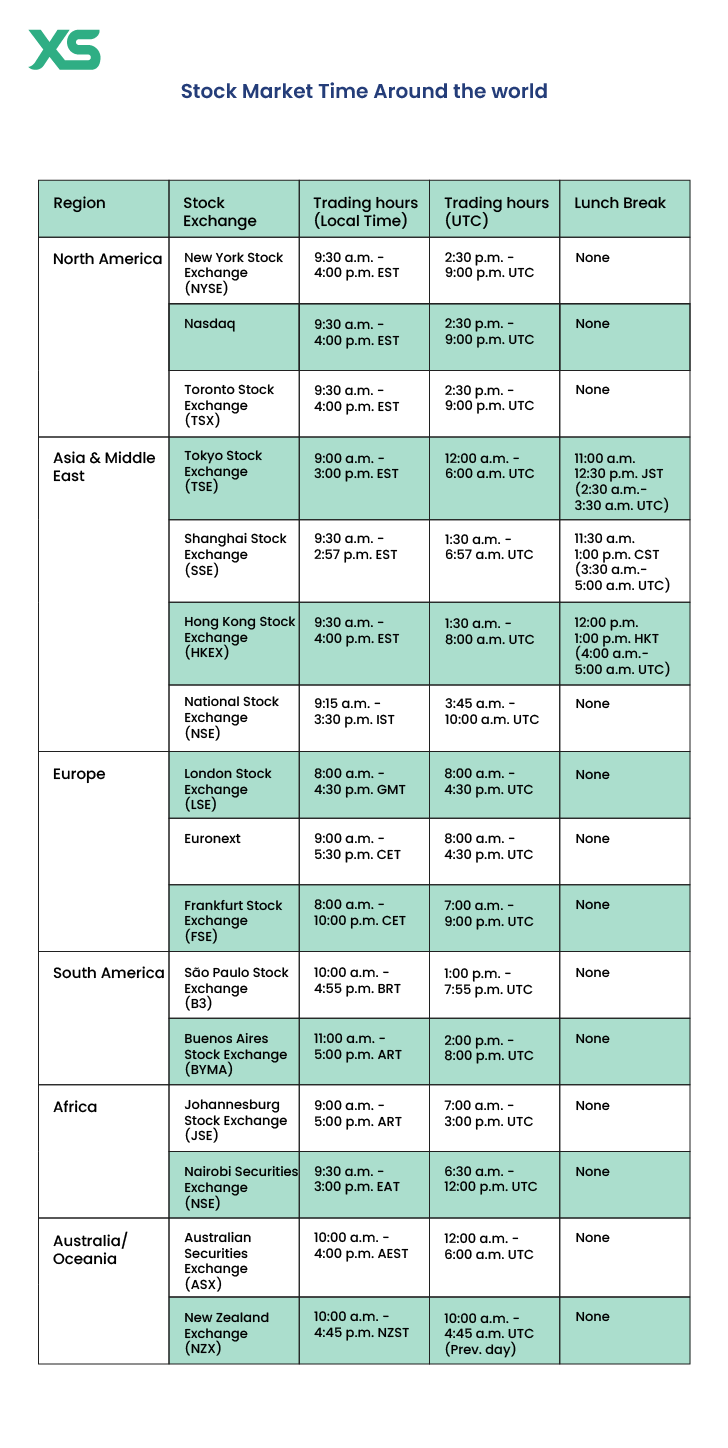
The Standard Trading Hours of the NYSE
The New York Stock Exchange adheres to a clear, established schedule for its regular trading sessions, which are crucial for defining when the vast majority of transactions occur and when market liquidity is at its peak.
Regular Session Commencement
The standard trading day for the New York Stock Exchange officially commences at 9:30 AM Eastern Standard Time (EST). This precise moment is marked by the iconic opening bell ceremony, a tradition steeped in history and symbolism, signifying the start of active buying and selling of listed securities. From Monday through Friday, this 9:30 AM EST opening sets the stage for a bustling trading day, with investors and algorithms alike springing into action, responding to overnight news, economic data, and corporate announcements. The regular session then concludes at 4:00 PM EST, marked by the equally significant closing bell. These seven and a half hours represent the core period where market participants engage in price discovery, execute trades, and manage their portfolios.
Understanding Eastern Standard Time (EST)
The designation of Eastern Standard Time (EST) or Eastern Daylight Time (EDT) during daylight saving periods is a critical detail that international investors and traders must meticulously account for. New York City operates on this time zone, and all NYSE trading hours are anchored to it. For investors situated in different geographical locations, accurately converting their local time to EST/EDT is paramount to avoid missed opportunities or unintended trading actions. For instance, a trader in London (GMT) must add 5 hours to the NYSE opening time (e.S.T is GMT-5, EDT is GMT-4), meaning the market opens at 2:30 PM GMT during standard time. Failing to account for these time zone differences, especially during the biannual daylight saving shifts, can lead to significant operational errors and financial missteps. Financial news outlets and trading platforms typically display NYSE times in EST/EDT, but individuals must perform their own conversions if operating from a different zone.
Pre-Market and After-Hours Trading
While the regular 9:30 AM to 4:00 PM EST session defines the NYSE’s core operations, the market ecosystem extends beyond these hours through pre-market and after-hours trading sessions. Pre-market trading typically begins as early as 4:00 AM EST, allowing market participants to react to overnight news, economic reports released before the market open, and corporate earnings announcements. Similarly, after-hours trading can extend as late as 8:00 PM EST, offering a window for investors to react to post-market earnings calls or breaking news. It’s crucial for investors to understand that these extended hours generally exhibit significantly lower liquidity compared to the regular session. Lower liquidity can lead to wider bid-ask spreads and increased price volatility, making trade execution more challenging and potentially resulting in less favorable prices. While these sessions offer flexibility, they also introduce distinct risks that necessitate careful consideration and a robust understanding of market dynamics.
Why Opening Bell Matters: Implications for Market Participants
The ringing of the NYSE’s opening bell is more than a mere ceremonial act; it signals the commencement of intense market activity with profound implications for all participants. The initial moments of trading are often characterized by heightened volatility, significant price movements, and strategic plays by institutional and retail investors alike.
Volatility and Price Discovery
The period immediately following the NYSE opening at 9:30 AM EST is notoriously volatile. This surge in activity is primarily driven by the accumulation of trading orders and market-moving news that have emerged overnight or in the pre-market hours. Investors react to earnings reports, economic data releases (like unemployment figures or CPI), geopolitical developments, and analyst upgrades/downgrades that have been announced while the market was closed. This concentrated influx of information and pending orders creates an environment of rapid price discovery, where stocks can experience significant “gaps” up or down from their previous closing prices. For day traders and those employing short-term strategies, this volatility presents both substantial opportunities for quick gains and increased risks of rapid losses, necessitating precise entry and exit strategies and robust risk management.
Strategic Trading Opportunities
For astute traders, the market open is often seen as a prime window for strategic plays. One common strategy revolves around “gap trading,” where traders attempt to profit from the price difference between a stock’s previous close and its opening price. If a stock opens significantly higher due to positive news, some traders might look to short it, anticipating a “fill the gap” reversal, while others might join the momentum. Conversely, a stock gapping down might be seen as a buying opportunity by some or a sign to short by others. Another strategy involves analyzing the “opening range,” which defines the high and low prices of the first few minutes of trading. Breaks above or below this range can signal initial direction and momentum for the day. Institutional investors also strategically place large orders at the open to establish positions or liquidate holdings, often contributing to the initial price swings and liquidity.
Impact on Day Traders and Institutions
The opening minutes of the NYSE are particularly critical for day traders, who aim to profit from intra-day price fluctuations, and for institutional investors managing large portfolios. Day traders often thrive on volatility, and the market open provides the most fertile ground for rapid price movements. However, the increased liquidity at the open also allows institutions to execute large block trades without disproportionately moving the market, making it an efficient time for major portfolio adjustments. Algorithmic trading systems are also heavily deployed at the open, programmed to quickly react to pre-market data and initial price action, further contributing to the speed and complexity of the opening moments. For these high-frequency participants, even a few seconds can mean the difference between significant profit and loss, underscoring the absolute precision required in understanding and reacting to the exact opening time.
Navigating Market Holidays and Early Closures
While the NYSE maintains a consistent Monday-Friday schedule, it is not immune to closures or shortened trading days. Understanding these exceptions is as vital as knowing the standard opening hours for effective financial planning and trading.
Major U.S. Federal Holidays
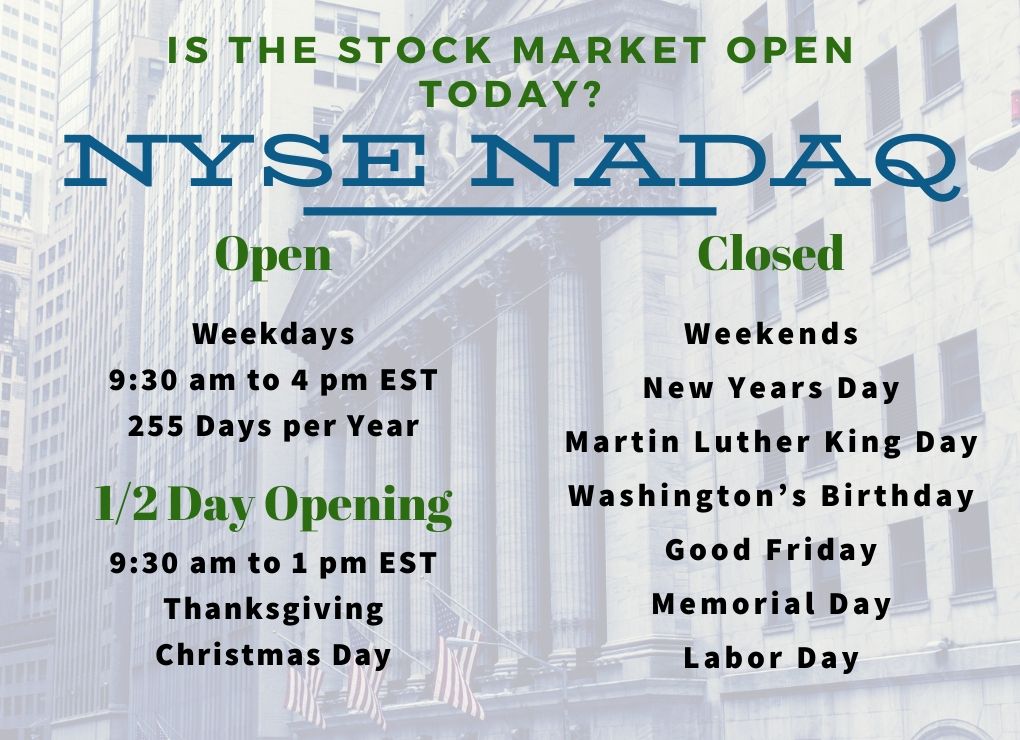
The New York Stock Exchange observes most major U.S. federal holidays, during which it remains completely closed for trading. These include, but are not limited to, New Year’s Day, Martin Luther King, Jr. Day, Presidents’ Day, Good Friday (though not a federal holiday, it’s a traditional market closure), Memorial Day, Juneteenth National Independence Day, Independence Day, Labor Day, Thanksgiving Day, and Christmas Day. Investors must proactively consult the NYSE’s official holiday schedule well in advance, especially around year-end or long weekends, to prevent unexpected delays in transactions or to avoid holding positions through extended periods of market inactivity, which can be risky if significant news breaks. For investors receiving dividends or making regular contributions, these holidays can also impact processing times.
Half-Day Sessions and Special Announcements
In addition to full-day closures, the NYSE occasionally operates on a shortened schedule, typically closing early at 1:00 PM EST. These half-day sessions often occur on days surrounding major holidays, such as the day after Thanksgiving (Black Friday) or on Christmas Eve. Such abbreviated trading days can still present opportunities but are characterized by lower liquidity and potentially higher volatility due to the reduced trading window and absence of many market participants. Furthermore, in rare circumstances, the NYSE may announce unscheduled closures or delayed openings due to extreme weather events (e.g., blizzards, hurricanes affecting New York City), power outages, or other unforeseen emergencies. While infrequent, market participants must stay alert to official announcements from the exchange or reputable financial news sources to react accordingly and adjust their trading plans.
Staying Informed: Official Sources for Market Schedules
Given the critical importance of accurate market hours, relying on official and reputable sources for NYSE schedules is paramount. The primary and most reliable source is the New York Stock Exchange’s official website (nyse.com), which provides a comprehensive calendar of all full and half trading days for the current and upcoming years. Major financial news outlets (e.g., Bloomberg, Reuters, Wall Street Journal, CNBC) and reputable brokerage platforms also regularly publish and update market holiday schedules. Subscribing to market news alerts or setting up calendar reminders based on these official sources can help ensure that investors are always abreast of any deviations from the standard trading hours, thereby mitigating the risk of being caught off guard and allowing for informed decision-making.
The Global Ripple Effect: NYSE Opening and International Markets
The NYSE’s status as a global financial powerhouse means its opening bell reverberates far beyond Wall Street, influencing markets and investor sentiment across the globe. Understanding this interconnectedness is vital for a holistic view of financial markets.
Interconnectedness of Global Exchanges
The NYSE’s opening at 9:30 AM EST often serves as a critical juncture for financial markets worldwide. By the time the NYSE opens, Asian markets (like Tokyo and Shanghai) have already closed, and European markets (like London and Frankfurt) are typically midway through their trading sessions. The performance of these earlier markets often sets the tone, but the NYSE’s opening brings the world’s largest economy into full trading mode. Significant price movements or news emanating from the U.S. pre-market or at the NYSE open can trigger immediate reactions in currently active European markets, causing them to adjust their trajectory. Furthermore, the direction and sentiment established during the NYSE’s initial hours can significantly influence the opening of Asian markets the following day. This interconnectedness means that even investors primarily focused on non-U.S. markets must pay close attention to the NYSE’s behavior around its opening.
Managing Time Zone Differences for Global Investors
For investors and traders located outside North America, effectively managing time zone differences related to the NYSE opening is a daily challenge and a crucial skill. A European trader, for example, might find the NYSE opening coinciding with their lunch break or mid-afternoon, making it a manageable time to monitor. However, an investor in Australia or Asia must often contend with the NYSE opening in the late evening or early morning hours, requiring adjustments to their personal schedules or reliance on automated trading systems. Successful global investing mandates a clear understanding of when critical financial events—such as major economic data releases or corporate news—will occur relative to the NYSE open and their local time. Utilizing reliable time zone converters and setting up alerts for key events are practical steps global investors can take to stay engaged and reactive to market movements.
The Symbolism of the Opening Bell
Beyond its practical implications for trading, the NYSE opening bell carries immense symbolic weight across the global financial landscape. It represents the vibrant heart of capitalism, the daily renewal of opportunity, and the continuous process of capital allocation that drives innovation and economic growth. The televised ringing of the bell, often by prominent figures, CEOs, or even cultural icons, reinforces its status as a global financial beacon. For international media, the NYSE’s opening often serves as a barometer for global economic health, with immediate reporting on early market sentiment influencing headlines and investor confidence worldwide. This symbolism underscores the NYSE’s enduring influence, making its opening not just an event for traders, but a moment that captures the attention of economies and policymakers globally.
Beyond the Bell: Factors Influencing Early Trading
While the opening bell officially kicks off trading, several significant factors coalesce before 9:30 AM EST to heavily influence the market’s initial direction and sentiment. Understanding these pre-opening catalysts is crucial for anticipating market behavior.
Economic Data Releases
Many of the most impactful U.S. economic data points are intentionally released before the NYSE’s opening bell, typically between 8:00 AM and 8:30 AM EST. Key examples include unemployment claims, the Consumer Price Index (CPI), Producer Price Index (PPI), retail sales figures, and various manufacturing indices. The timing allows market participants, particularly institutional traders and algorithmic systems, to analyze the data and formulate their initial trading strategies before the regular session begins. Strong or weak data can immediately impact futures markets, which trade continuously, and set the tone for how stocks will open. A worse-than-expected inflation report, for instance, could lead to a broad market sell-off at the open, while positive employment figures might trigger a rally. Investors need to monitor the economic calendar diligently to anticipate these releases and their potential impact.
Corporate Earnings Announcements
For individual companies, their quarterly earnings reports are often the most significant market-moving events. Many large-cap companies strategically release their earnings results either before the market opens (typically between 7:00 AM and 9:00 AM EST) or after the market closes (after 4:00 PM EST). When earnings are released pre-market, they provide investors with a critical piece of information that can cause a stock to “gap” significantly up or down at the NYSE open, regardless of broader market sentiment. A company beating earnings expectations might see its stock surge, while a miss or lowered guidance could send it tumbling. Traders often focus on these specific stock movements, using the early trading hours to capitalize on the immediate reaction. Knowing when key companies are reporting can provide a significant edge in understanding early-day stock movements.
Geopolitical Events and Overnight News
The interconnectedness of the global financial system means that events unfolding anywhere in the world, particularly overnight while the NYSE is closed, can have a profound impact on its opening. Major geopolitical developments such as international conflicts, political elections in key global economies, or significant policy announcements from central banks (e.g., the European Central Bank or Bank of Japan) can create ripples that affect market sentiment before the NYSE even opens. Similarly, breaking news related to global trade agreements, commodity price shocks (like sudden oil spikes), or natural disasters can shift investor risk appetite dramatically. Futures markets often serve as an early indicator of how the NYSE might react to such overnight developments, giving investors a hint of the likely direction of the opening bell. Staying informed through global news channels is essential for understanding these pre-opening influences.

Conclusion
The opening time of the New York Stock Exchange at 9:30 AM Eastern Standard Time is far more than a simple clock-in; it is the ignition point for daily financial activity that has profound implications for every investor, trader, and economic observer. From the immediate volatility and strategic opportunities it presents, to its global ripple effects and the influence of pre-opening factors like economic data and corporate earnings, the NYSE’s commencement sets the tone for market dynamics worldwide.
For individuals managing their personal finances, understanding these hours ensures that investment decisions are made with full awareness of when orders will be executed and how global events might shape portfolio performance. For active traders, precise knowledge of these timings, coupled with an awareness of market holidays, pre-market activities, and influencing factors, is a non-negotiable prerequisite for navigating the complex landscape of daily trading. In an increasingly interconnected and fast-paced financial world, staying attuned to the pulse of the NYSE, beginning with its iconic opening bell, remains an essential component of informed and successful financial engagement.
aViewFromTheCave is a participant in the Amazon Services LLC Associates Program, an affiliate advertising program designed to provide a means for sites to earn advertising fees by advertising and linking to Amazon.com. Amazon, the Amazon logo, AmazonSupply, and the AmazonSupply logo are trademarks of Amazon.com, Inc. or its affiliates. As an Amazon Associate we earn affiliate commissions from qualifying purchases.