
In the modern financial landscape, few events carry as much weight as the quarterly earnings release of Nvidia Corporation. Once a company synonymous primarily with high-end gaming hardware, Nvidia has evolved into the definitive bellwether for the artificial intelligence revolution and, by extension, the health of the entire technology sector. For investors, traders, and institutional analysts, knowing exactly when the report drops is only the beginning. Understanding the nuances of the timing, the metrics that drive price action, and the broader economic implications is essential for navigating the volatility that inevitably surrounds this event.
Typically, Nvidia releases its fiscal results shortly after the U.S. markets close at 4:00 PM Eastern Time (ET). Most historical data suggests a release window between 4:20 PM and 4:25 PM ET, followed by a highly anticipated conference call at 5:00 PM ET. This window is critical, as it bridges the gap between the raw data of the press release and the qualitative commentary provided by the executive team.
Understanding the Timing and Mechanics of Nvidia’s Earnings Release
The timing of an earnings report is a calculated decision by corporate communications and investor relations teams. By releasing results after the closing bell, Nvidia ensures that the initial surge of information is processed during “extended-hours trading.” This period allows for a more focused reaction, though it is often characterized by lower liquidity and higher volatility compared to standard market hours.
After-Hours Trading Dynamics
When the clock strikes 4:00 PM ET, the regular trading session ends, but for Nvidia investors, the real action is just starting. Between the release of the earnings PDF and the start of the conference call, the stock often undergoes massive price swings. These moves are driven by high-frequency trading algorithms reacting to “beats” or “misses” on headline figures like Revenue and Earnings Per Share (EPS).
Investors must exercise caution during this period. Because the bid-ask spreads are wider in after-hours trading, retail investors can find themselves caught in “head fakes”—situations where the stock price spikes on a revenue beat, only to crater minutes later as analysts digest disappointing guidance or shrinking margins buried deeper in the report.
The Earnings Call vs. The Press Release
While the 4:20 PM ET press release provides the “what,” the 5:00 PM ET conference call provides the “why.” During this hour-long session, CEO Jensen Huang and CFO Colette Kress provide context that the numbers alone cannot convey. For the money-conscious investor, the Q&A session with institutional analysts is often more valuable than the prepared remarks. It is here that details regarding supply chain constraints, the ramp-up of new chip architectures like Blackwell, and the specific spending patterns of “hyperscalers” (like Microsoft, Google, and Amazon) are revealed.
Key Financial Metrics to Watch Beyond the Top and Bottom Line
For a company with a trillion-dollar-plus market capitalization, looking at simple profit and loss is insufficient. To determine if Nvidia is a sound investment at its current valuation, one must look at specific financial drivers that indicate long-term sustainability.
Data Center Revenue: The AI Indicator
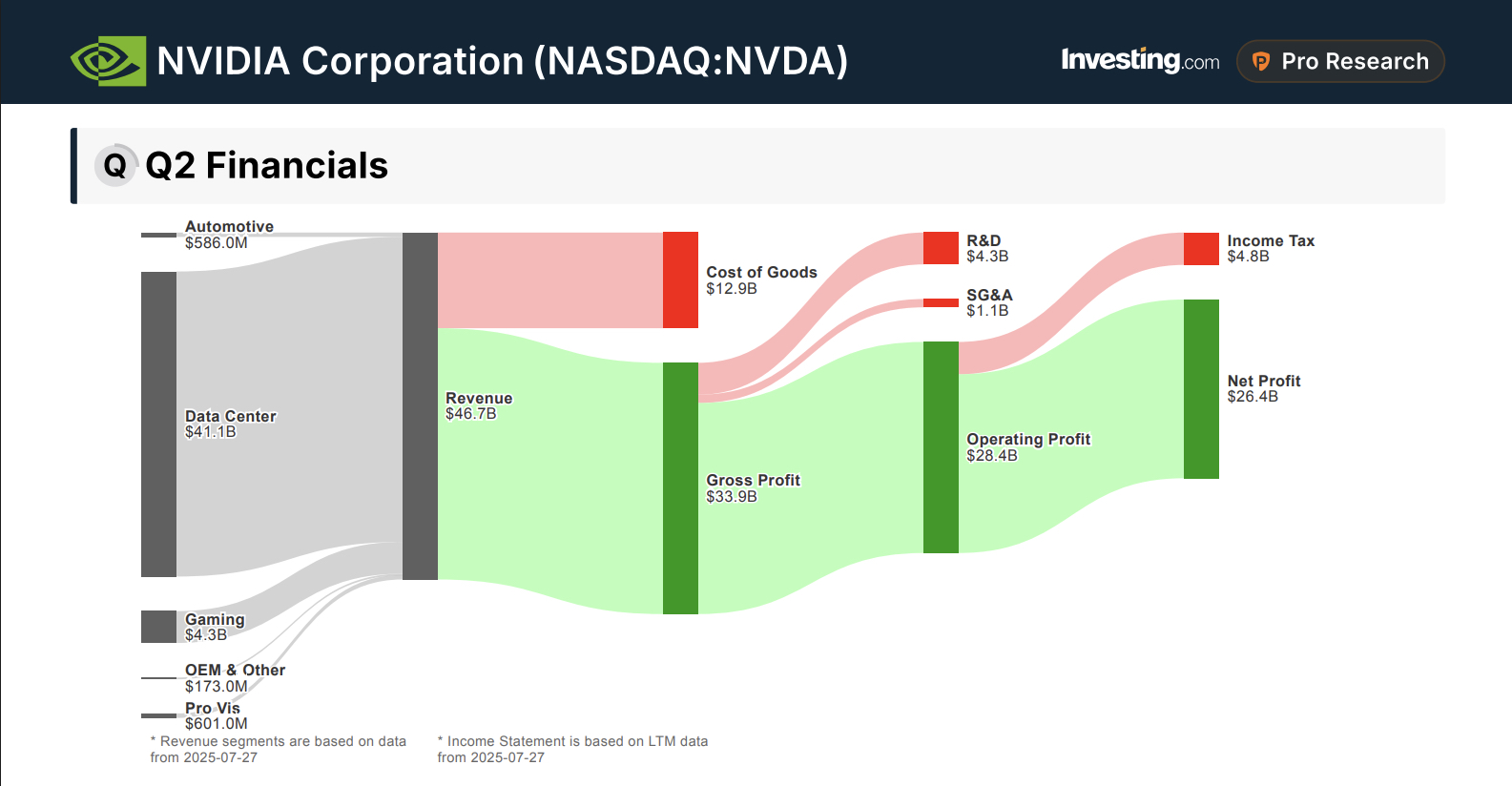
In recent years, Nvidia’s Data Center segment has eclipsed its Gaming division to become the primary engine of growth. When the report is released, this is the first number institutional desks look for. Investors are looking for continued sequential growth. In the context of “Money,” the data center revenue is a direct proxy for global AI capital expenditure. If this number exceeds expectations, it signals that the world’s largest corporations are still in the “build-out” phase of AI infrastructure, which bodes well for the broader tech ecosystem.
Gross Margins and Pricing Power
One of the most impressive aspects of Nvidia’s financial profile has been its gross margins, which have hovered in the 70% to 75% range. In the world of hardware manufacturing, these are nearly unprecedented figures, more akin to high-margin software companies.

Investors must watch for any “margin compression.” If margins begin to slip, it suggests one of two things: either Nvidia is facing increased competition from the likes of AMD or internal silicon efforts at cloud providers, or the costs of manufacturing at cutting-edge nodes (like TSMC’s 3nm or 4nm processes) are rising faster than Nvidia can pass them on to customers. Maintaining these margins is the key to justifying Nvidia’s premium price-to-earnings (P/E) multiple.
Forward Guidance: The Market’s North Star
The most critical component of the earnings report isn’t what happened in the last three months, but what management expects to happen in the next three. Nvidia’s stock is priced for perfection; therefore, “meeting” current estimates is rarely enough to sustain a rally. The company must provide “upward revisions” to its future revenue guidance. In the investing world, a “beat and raise” (beating current quarter estimates and raising future guidance) is the gold standard for high-growth stocks.
The Broader Market Impact: Why Nvidia is the S&P 500’s New North Star
Nvidia’s earnings report is no longer just a “tech event”; it is a macroeconomic event. Due to its massive weight in the S&P 500 and the Nasdaq-100, Nvidia’s performance can single-handedly shift the direction of the major indices.
Volatility and the Options Market
In the days leading up to the report, the options market often prices in an “implied move.” It is not uncommon for the market to expect an 8% to 10% swing in either direction following the announcement. For personal finance enthusiasts and retail traders, this represents both a risk and an opportunity. The “implied volatility” (IV) usually collapses immediately after the report is released—an event known as an “IV crush.” This means that even if an investor correctly guesses the direction of the move, they might still lose money on options contracts if the move isn’t large enough to offset the drop in volatility premium.
The Halo Effect on Semiconductor Stocks
Nvidia’s report sets the tone for the entire semiconductor industry. If Nvidia reports strong demand, it often lifts the share prices of partners and competitors alike, including companies involved in high-bandwidth memory (HBM) like SK Hynix or Micron, and equipment providers like ASML. Conversely, a cautious tone from Nvidia can trigger a sell-off across the “AI trade,” affecting everything from software companies to electrical grid infrastructure providers.
Strategic Positioning for Investors Pre- and Post-Report
Deciding how to handle a position in Nvidia around earnings requires a clear understanding of one’s financial goals and risk tolerance. The stock’s high valuation makes it susceptible to “selling on the news,” where investors take profits even after a positive report.
Long-term Valuation vs. Short-term Noise
For the long-term investor, the specific time the report is released is less important than the “structural thesis” of the company. Is the transition to accelerated computing a decade-long shift or a temporary bubble? If one believes the former, short-term volatility following an earnings call is often viewed as an opportunity to “dollar-cost average” into a position.
However, from a business finance perspective, one must monitor the P/E ratio relative to growth (the PEG ratio). If the stock price grows significantly faster than the earnings, the “valuation gap” becomes a risk. Investors should use the earnings report to recalculate their models and ensure the company is still meeting the growth benchmarks required to justify its market cap.

Risk Management in High-Growth Tech
Diversification remains the most effective tool for managing the risk of a single-stock earnings event. Because Nvidia is so volatile, many conservative investors prefer to gain exposure through ETFs like the SMH (Semiconductor ETF) or QQQ (Nasdaq-100). This allows them to benefit from Nvidia’s growth while mitigating the “gap down” risk that occurs if a specific earnings report fails to live up to the immense hype.
Ultimately, the question of “what time Nvidia earnings report” is the entry point into a complex web of financial analysis. When the numbers are finally released at roughly 4:20 PM ET, they will offer a snapshot of the current state of global innovation. For the disciplined investor, the goal is to look past the immediate price action and focus on the underlying financial health, the competitive moat, and the forward-looking trajectory of a company that has become the cornerstone of the modern digital economy. Success in investing in such high-stakes environments comes down to preparation—knowing the metrics, understanding the market’s expectations, and having a plan for both the “bull” and “bear” scenarios.
aViewFromTheCave is a participant in the Amazon Services LLC Associates Program, an affiliate advertising program designed to provide a means for sites to earn advertising fees by advertising and linking to Amazon.com. Amazon, the Amazon logo, AmazonSupply, and the AmazonSupply logo are trademarks of Amazon.com, Inc. or its affiliates. As an Amazon Associate we earn affiliate commissions from qualifying purchases.