
In the world of finance, time is more than just a measurement; it is a fundamental variable that dictates liquidity, volatility, and opportunity. For the modern investor, understanding “what time markets close” is not merely a matter of checking a clock, but a strategic necessity. Whether you are a day trader looking to capitalize on the final minutes of price discovery or a long-term investor managing a diversified global portfolio, the rhythmic opening and closing of the world’s financial exchanges define the boundaries of your financial activity.
While we live in an era of digital connectivity where information moves at the speed of light, the physical exchanges—and the regulatory frameworks that govern them—still operate on specific schedules. These schedules create a cycle of market activity that influences everything from the “Closing Cross” to the way earnings reports are released. This guide explores the intricate timing of global markets, the nuances of extended-hours trading, and how investors can navigate these windows to optimize their financial outcomes.
Understanding the Standard Trading Session: The Core Hours
The core trading session represents the period of highest liquidity and participation. For the majority of retail investors, this is the window where the bulk of their buying and selling occurs. In the United States, the two primary exchanges, the New York Stock Exchange (NYSE) and the NASDAQ, maintain a synchronized schedule that anchors the North American financial landscape.
The New York Stock Exchange (NYSE) and NASDAQ
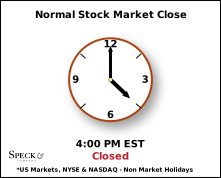
The standard trading hours for the NYSE and NASDAQ are Monday through Friday, from 9:30 AM to 4:00 PM Eastern Time (ET). Unlike some international markets, U.S. exchanges do not close for a lunch break, allowing for a continuous six-and-a-half-hour block of trading. The 4:00 PM “Closing Bell” is one of the most iconic sounds in finance, signaling the end of the regular session and the determination of the official closing price for thousands of publicly traded companies.
Why the 9:30 AM to 4:00 PM Window Exists
This specific timeframe is designed to concentrate liquidity. When all market participants—institutional investors, retail traders, and high-frequency algorithms—operate within the same window, the “bid-ask spread” (the difference between what a buyer is willing to pay and what a seller is willing to accept) tends to be at its narrowest. This efficiency is vital for personal finance management, as it ensures that investors receive the fairest possible price for their assets. Furthermore, these hours allow for a period of rest and reflection, giving the market time to digest news that occurs overnight or during the weekend before the next “Opening Bell.”
The Significance of the Closing Cross
The final minutes before 4:00 PM are often the most active. The “Closing Cross” is a specialized process used by exchanges to facilitate a high volume of trades at a single, stable price. Many institutional funds and ETFs (Exchange-Traded Funds) are required to execute trades at the closing price to match their benchmarks. Understanding this surge in volume is crucial for investors who want to avoid the heightened volatility that often characterizes the last five minutes of the trading day.
Navigating International Markets: A Global Perspective
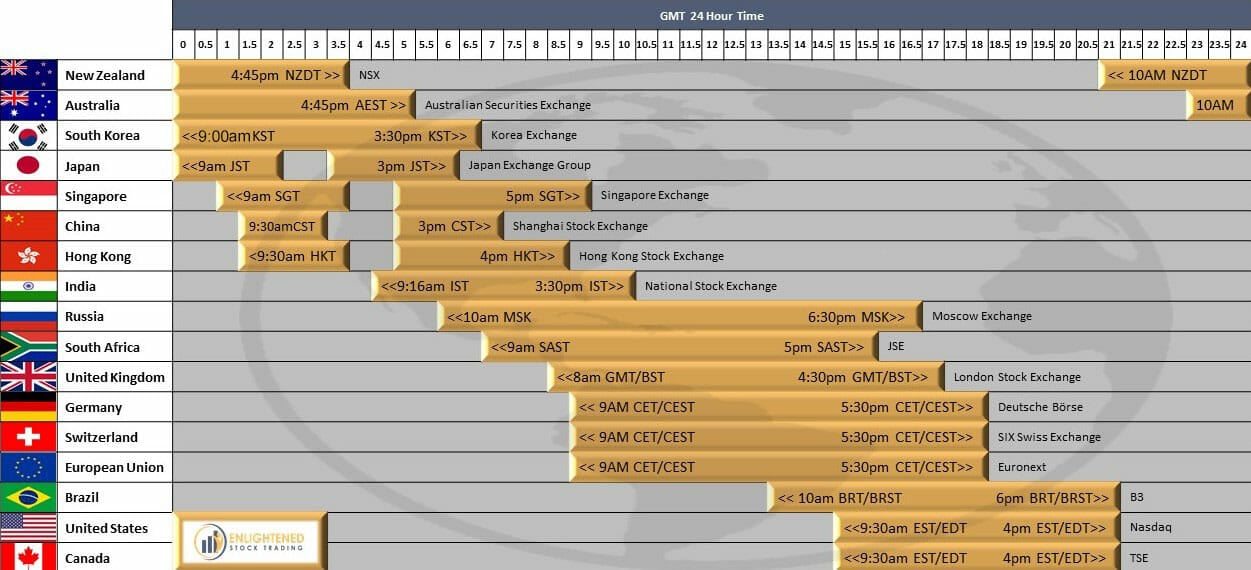
Investing in the 21st century is rarely confined to one’s home country. To build a truly diversified portfolio, many investors look toward European and Asian markets. However, because money never truly sleeps, the global financial cycle operates in a relay-race fashion, with one market opening just as another closes.
European Markets: The LSE and Euronext
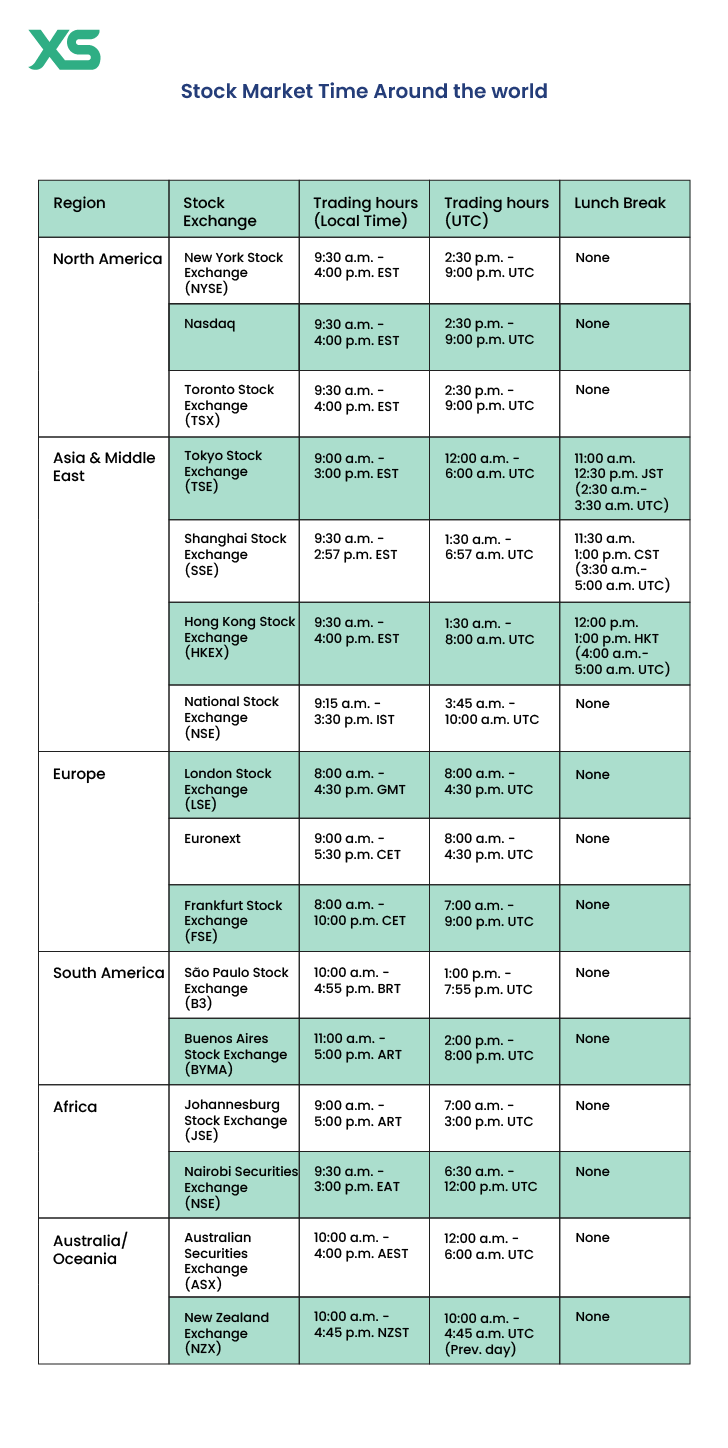
The London Stock Exchange (LSE), one of the world’s oldest and most influential hubs, typically operates from 8:00 AM to 4:30 PM Greenwich Mean Time (GMT). For an investor in New York, this means the London market opens at 3:00 AM ET and closes at 11:30 AM ET. Other major European exchanges, such as the Euronext Paris or the Frankfurt Stock Exchange (DAX), follow similar schedules, usually closing around 5:30 PM local time. Because the European close overlaps with the U.S. morning session, the mid-morning hours in the U.S. often see increased volatility as European traders finalize their positions for the day.
Asian Markets: Tokyo, Hong Kong, and Shanghai
The Asian trading day begins while the West is asleep. The Tokyo Stock Exchange (TSE) generally operates from 9:00 AM to 3:00 PM local time, notably including a lunch break from 11:30 AM to 12:30 PM. Similarly, the Hong Kong Stock Exchange and the Shanghai Stock Exchange maintain split sessions with midday pauses. For U.S.-based investors, these markets primarily trade during the evening and late-night hours. Monitoring the close of the Asian markets is a common practice for Western investors, as it often sets the “tone” or sentiment for the U.S. pre-market session.
The Concept of the “Golden Hour” in Global Overlap
The most significant period for global finance is the overlap between the London and New York sessions. Between 9:30 AM and 11:30 AM ET, the world’s two largest financial centers are both open. This “Golden Hour” provides the highest liquidity of the 24-hour cycle. For those involved in currency trading (Forex) or large-scale equity shifts, this is the window where the most significant moves are often validated by high volume.
Extended Hours Trading: Pre-Market and After-Hours
While the official closing bell rings at 4:00 PM ET in the U.S., the digital reality of modern finance means that trading does not actually stop. Through Electronic Communication Networks (ECNs), investors can participate in extended-hours trading, which consists of the pre-market and after-hours sessions.
The Mechanics of Electronic Communication Networks (ECNs)
Before the advent of digital trading, it was physically impossible to trade after the exchange floor closed. Today, ECNs allow buy and sell orders to be matched automatically outside of the standard exchange environment. Pre-market trading in the U.S. can begin as early as 4:00 AM ET, though most retail activity starts at 8:00 AM ET. After-hours trading begins immediately at 4:00 PM ET and can run until 8:00 PM ET.
Risks and Rewards of Trading After the Close
For the average person managing their personal finance, trading after the market closes is a double-edged sword.
- The Reward: The primary advantage is the ability to react immediately to breaking news. Most companies release their quarterly earnings reports after 4:00 PM to ensure that all investors have equal access to the information. If a company reports stellar profits, its stock price might jump significantly in the after-hours session.
- The Risk: The main danger is low liquidity. With fewer participants, the bid-ask spreads can widen dramatically. A stock that trades with a one-cent spread during the day might have a fifty-cent spread after hours. This means you might end up paying much more (or selling for much less) than the “market price” suggests. For most long-term investors, the volatility of after-hours trading is a risk not worth taking.
Market Holidays and Early Closures
A critical aspect of knowing when markets close is recognizing the days they don’t open at all. Every major exchange follows a holiday schedule that is often unique to its host country’s cultural and national traditions.
Standard Holiday Schedules for Major Exchanges
In the United States, the NYSE and NASDAQ close for several federal holidays, including New Year’s Day, Martin Luther King Jr. Day, Presidents’ Day, Good Friday, Memorial Day, Juneteenth, Independence Day, Labor Day, Thanksgiving, and Christmas. It is essential for investors to track these dates, as a “market holiday” means liquidity disappears, and any standing orders will not execute until the following business day.
The Impact of Half-Day Trading Sessions
There are also specific days where the market closes early—typically at 1:00 PM ET. In the U.S., this usually occurs on the day after Thanksgiving (Black Friday) and sometimes on Christmas Eve, depending on the day of the week. These shortened sessions are notorious for “thin” trading volume. In the world of business finance, these half-days are often used by institutional managers to perform minor portfolio rebalancing rather than making major directional bets. For the retail investor, these days are often best spent away from the screen, as the lack of volume can lead to erratic price movements that don’t necessarily reflect the long-term value of an asset.
Strategic Implications for the Modern Investor
Knowing what time the market closes is only the first step; the second is knowing how to use that information to improve your financial health. The “timing” of your trades can have a measurable impact on your investment returns over time.
Managing Volatility During the Closing Cross
As discussed, the 3:30 PM to 4:00 PM window is a period of intense activity. For personal finance enthusiasts who prefer a “set it and forget it” approach, it is often wise to avoid placing “market orders” during these final 30 minutes. Instead, using “limit orders”—which specify the maximum price you are willing to pay—protects you from the sudden price spikes that can occur as ETFs and mutual funds rush to finish their daily buying.
Tools and Platforms for 24/7 Market Monitoring
In the modern era, you don’t need to be on a trading floor to stay informed. Numerous financial tools and apps provide real-time alerts for market opens and closes across different time zones. High-quality brokerage platforms now offer “all-session” trading for certain highly liquid assets (like major ETFs), allowing for almost 24/5 access to the markets. However, from a wealth-management perspective, just because you can trade at 2:00 AM doesn’t mean you should. Successful investing is often about discipline and recognizing that the best financial decisions are made when the market is at its most transparent and liquid.
Conclusion: The Rhythm of Wealth
The closing bell is more than a signal to stop trading; it is a boundary that separates active participation from passive observation. By understanding the schedules of the NYSE, the LSE, and the TSE, as well as the nuances of extended-hours trading and holiday closures, an investor gains a deeper mastery over their financial environment.
In the realm of money and investing, knowledge of the “when” is just as vital as the “what.” Whether you are navigating the high-volume intensity of the U.S. market close or watching the early-morning signals from Tokyo, respecting the clock is a hallmark of a professional approach to building and sustaining wealth. The markets will always close, but the strategic preparation for the next opening bell is what separates the successful investor from the rest.
aViewFromTheCave is a participant in the Amazon Services LLC Associates Program, an affiliate advertising program designed to provide a means for sites to earn advertising fees by advertising and linking to Amazon.com. Amazon, the Amazon logo, AmazonSupply, and the AmazonSupply logo are trademarks of Amazon.com, Inc. or its affiliates. As an Amazon Associate we earn affiliate commissions from qualifying purchases.