
For the modern investor, timing is often just as critical as the asset itself. Whether you are a seasoned day trader or a long-term retirement planner, the question “What time is the stock market closing today?” is fundamental to your financial strategy. In the United States, the heartbeat of the global economy resides within the New York Stock Exchange (NYSE) and the Nasdaq. Knowing when these institutions open and close—and understanding the nuances of the hours in between—is essential for managing risk and maximizing returns.
This guide explores the standard operating hours of the financial markets, the exceptions created by holidays and early closures, and the strategic implications of timing your trades within the global financial ecosystem.
Understanding Standard Market Hours: The NYSE and Nasdaq Schedule
The standard operating hours for the major U.S. stock exchanges are remarkably consistent, providing a predictable window for domestic and international participants to trade equities.
The Core Trading Session
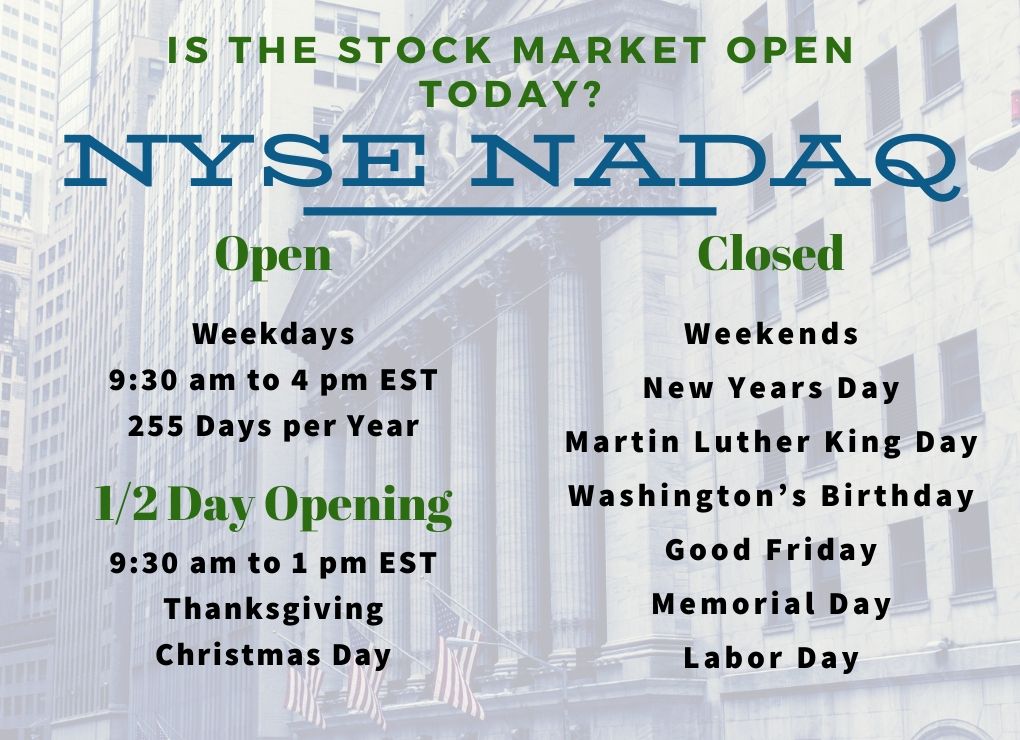
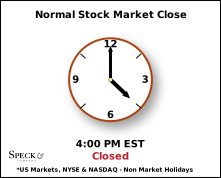
For the New York Stock Exchange and the Nasdaq, the core trading session runs from 9:30 AM to 4:00 PM Eastern Time (ET), Monday through Friday. This 6.5-hour window represents the peak of liquidity. During these hours, the “bid-ask spread”—the difference between what a buyer is willing to pay and what a seller is willing to accept—is typically at its narrowest. For the retail investor, this is the safest and most efficient time to execute trades, as the high volume of participants ensures that prices are reflective of the most current market information.
Opening and Closing Bells: More Than Just a Tradition
The opening bell at 9:30 AM and the closing bell at 4:00 PM are iconic symbols of American capitalism. However, they serve a functional purpose beyond ceremony. The “Closing Auction” is perhaps the most critical minute of the trading day. During the final seconds of the session, the exchange’s computers aggregate all remaining buy and sell orders to determine a single “closing price.” This price is used as the official benchmark for mutual fund valuations, index calculations, and derivative settlements. If you are looking to trade “at the close,” you are participating in one of the most liquid moments in the financial world.
Pre-Market and After-Hours Trading: The Extension of the Day
While 9:30 AM to 4:00 PM are the “official” hours, the digital age has extended the trading day significantly.
- Pre-Market Trading: Often starts as early as 4:00 AM ET and runs until the opening bell.
- After-Hours Trading: Begins at 4:00 PM ET and can last until 8:00 PM ET.
While these sessions offer the flexibility to react to news that breaks outside of standard hours (such as corporate earnings reports or geopolitical shifts), they come with increased risk. Liquidity is much lower, meaning price swings can be extreme, and it may be more difficult to exit a position at a favorable price.
Exceptions to the Rule: Holidays, Early Closures, and Special Events
The stock market does not follow a standard 365-day calendar. To manage your portfolio effectively, you must be aware of when the market takes a break.
The Federal Holiday Calendar
The NYSE and Nasdaq observe several federal holidays during which the markets are closed entirely. These typically include:
- New Year’s Day
- Martin Luther King, Jr. Day
- Presidents’ Day
- Good Friday (though not a federal holiday, it is a traditional market holiday)
- Memorial Day
- Juneteenth National Independence Day
- Independence Day
- Labor Day
- Thanksgiving Day
- Christmas Day
If one of these holidays falls on a Saturday, the market usually closes on the preceding Friday. If it falls on a Sunday, the market closes on the following Monday.
Days with Early Closures (1:00 PM EST)
On certain occasions, usually preceding or following a major holiday, the market holds an abbreviated session. The most common early closures occur on:
- The day after Thanksgiving (Black Friday)
- Christmas Eve (if it falls on a weekday)
- July 3rd (if the 4th of July falls on a Tuesday, Wednesday, or Thursday)
During these sessions, the market closes at 1:00 PM ET. For investors, these days are often characterized by “thin trading,” where low volume can lead to unexpected volatility or stagnant price movement.
Market Halts and “Circuit Breakers”
Sometimes, the market closes or pauses unexpectedly due to extreme volatility. These are known as “Circuit Breakers.” There are three levels:
- Level 1: If the S&P 500 drops 7% from the previous day’s close, trading halts for 15 minutes.
- Level 2: If the drop reaches 13%, trading halts for another 15 minutes.
- Level 3: If the drop reaches 20%, trading is suspended for the remainder of the day.
Understanding these mechanisms is vital for maintaining emotional discipline during periods of financial crisis.
Global Market Timing: Navigating Different Time Zones
We live in a globalized economy where news in Tokyo can affect stock prices in New York. If you are asking what time the stock market closes today, you might also need to consider what is happening in other parts of the world.
Major International Exchanges
The financial world never truly sleeps. As the U.S. markets close, others are just beginning their day:
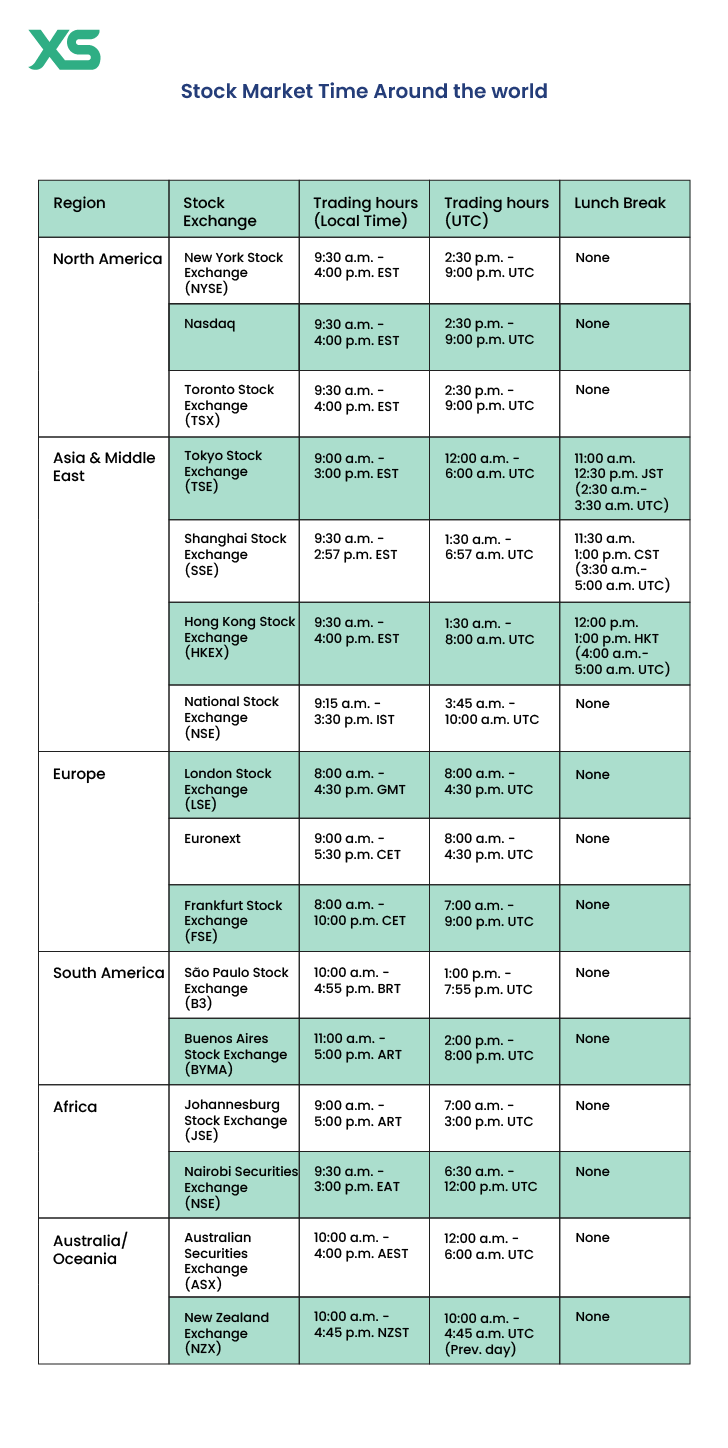
- London Stock Exchange (LSE): Operates from 8:00 AM to 4:30 PM GMT.
- Tokyo Stock Exchange (TSE): Operates from 9:00 AM to 3:00 PM JST (with a lunch break).
- Hong Kong Stock Exchange (HKEX): Operates from 9:30 AM to 4:00 PM HKT.
For a U.S.-based investor, the “overlap” between the London and New York markets (roughly 9:30 AM to 12:00 PM ET) is often the most volatile and liquid time of the day because both European and American institutions are active simultaneously.
The Impact of Time Zone Differences on Domestic Portfolios
Because markets operate in different time zones, “after-hours” news from overseas can lead to a “gap up” or “gap down” in U.S. stock prices at the 9:30 AM open. For example, if the Chinese markets crash overnight, U.S. stocks may open significantly lower than they closed the previous day, regardless of what happened in the domestic economy.
Why 24-Hour Trading is Gaining Momentum
Driven by the rise of cryptocurrency (which trades 24/7) and the demands of retail investors, some brokerages are now offering “24/5” trading for certain popular stocks and ETFs. This allows investors to trade during the “overnight” session. While this provides unprecedented access, it requires a sophisticated understanding of how global sentiment shifts outside of the 9:30–4:00 window.
Strategic Timing: When Should You Place Your Trades?
Knowing the closing time is only half the battle; knowing when within those hours to execute your strategy is where the real money is made or saved.
The Volatility of the First and Last Hour
Professional traders often refer to the first hour (9:30–10:30 AM) and the last hour (3:00–4:00 PM) as “Power Hours.”
- The Opening Hour: This is when the market reacts to all the news that accumulated overnight. It is often the most volatile time, with high volume but unpredictable price swings. Many conservative investors wait until 10:00 AM for the “morning dust to settle” before making a move.
- The Closing Hour: Institutional investors and fund managers often rebalance their portfolios in the final hour. This leads to heavy volume and can dictate the trend for the following day.
The “Mid-Day Lull” Strategy
From roughly 12:00 PM to 2:00 PM ET, volume often tapers off as floor traders take lunch and the initial excitement of the morning fades. For long-term investors looking to avoid volatility, this “lull” can be an ideal time to enter a position quietly without getting caught in the “whipsaw” of high-frequency trading algorithms that dominate the open and close.
Understanding T+1 Settlement and Your Portfolio
In 2024, the U.S. transitioned to a T+1 settlement cycle. This means that when you sell a stock before the 4:00 PM close, the transaction officially settles—and the cash becomes available—just one business day later. Understanding the clock is therefore essential for liquidity management, especially if you need to move money between accounts or settle a debt.
Tools and Resources to Track Market Timing
To ensure you never miss a closing bell or a holiday abbreviated session, you should utilize a suite of financial tools designed for time-sensitive management.
Financial Calendars and Economic Indicators
Most major brokerages provide an integrated economic calendar. These tools don’t just list market holidays; they also list the times for “Market Moving Events,” such as:
- Federal Reserve interest rate announcements (usually at 2:00 PM ET).
- Consumer Price Index (CPI) releases (usually at 8:30 AM ET).
- Jobs reports.
Being aware of these specific times is just as important as knowing the 4:00 PM closing bell, as they can cause massive price movements in seconds.
Real-Time Mobile Alerts
In a world where the market moves at the speed of fiber-optic cables, manual checking is often too slow. Set up alerts on your mobile device for:
- Price Targets: Get notified if a stock hits a certain price before the close.
- Earnings Countdowns: Know exactly when a company you own is releasing its data.
- Market Close Reminders: Especially useful on early-close days like Black Friday.
Conclusion: Mastering the Market Clock
The question “What time is the stock market closing today?” is the gateway to a deeper understanding of market mechanics. The 9:30 AM to 4:00 PM window is the foundation of the financial world, but the nuances of pre-market sessions, holiday schedules, and global overlaps are what separate the informed investor from the amateur.
By aligning your trading activity with peak liquidity, respecting the volatility of the opening and closing bells, and staying vigilant regarding the holiday calendar, you can protect your capital and navigate the markets with professional precision. Remember, in the world of finance, time is not just money—time is opportunity.
aViewFromTheCave is a participant in the Amazon Services LLC Associates Program, an affiliate advertising program designed to provide a means for sites to earn advertising fees by advertising and linking to Amazon.com. Amazon, the Amazon logo, AmazonSupply, and the AmazonSupply logo are trademarks of Amazon.com, Inc. or its affiliates. As an Amazon Associate we earn affiliate commissions from qualifying purchases.