
The Powerball lottery is not just a game of chance; for millions of Americans, it represents a recurring cultural phenomenon and a speculative financial event. If you are asking what time the Powerball lottery is tonight, the drawing occurs at precisely 10:59 PM Eastern Time. These drawings take place three times a week: every Monday, Wednesday, and Saturday. The event is broadcast live from the Florida Lottery studio in Tallahassee, and the results are disseminated across a vast network of digital platforms, news outlets, and official lottery apps within minutes.
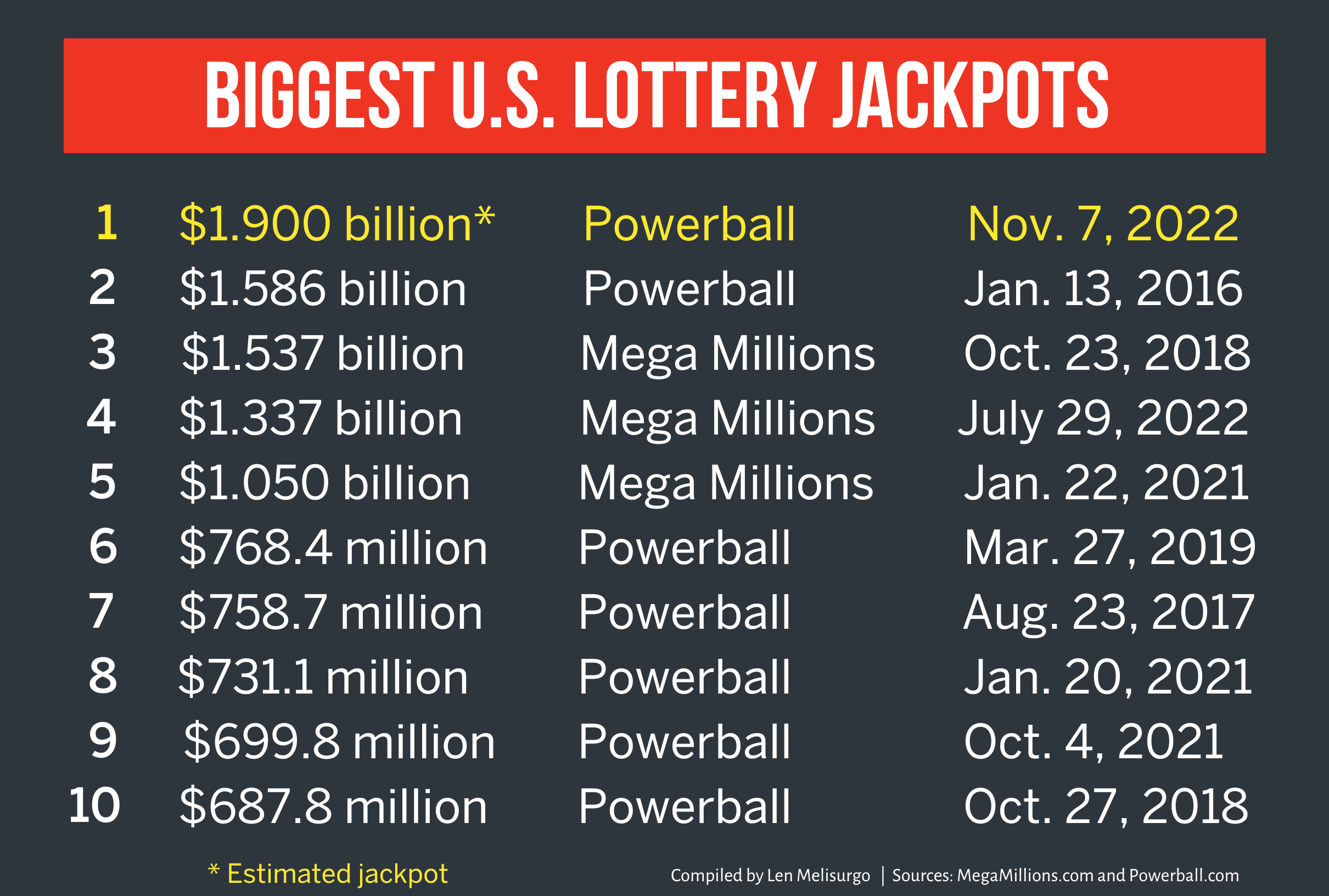
However, understanding the timing of the drawing is only the first step in navigating the complex financial ecosystem that surrounds the Powerball. For those who approach their personal finances with a critical eye, the lottery represents a unique intersection of probability, taxation, and wealth management. Whether you are a casual player or a financial enthusiast studying the mechanics of large-scale windfalls, there is much to unpack regarding how this multi-state game operates as a financial engine.
The Logistics of Participation and Prize Structures
While the drawing occurs at 10:59 PM ET, the window for purchasing tickets closes significantly earlier. Depending on the state in which you reside, the cutoff time for ticket sales usually falls between one to two hours before the drawing. In most jurisdictions, sales stop at 9:59 PM ET, though some states have more restrictive deadlines. Navigating these cutoffs is the first hurdle in what is effectively a high-stakes financial entry.
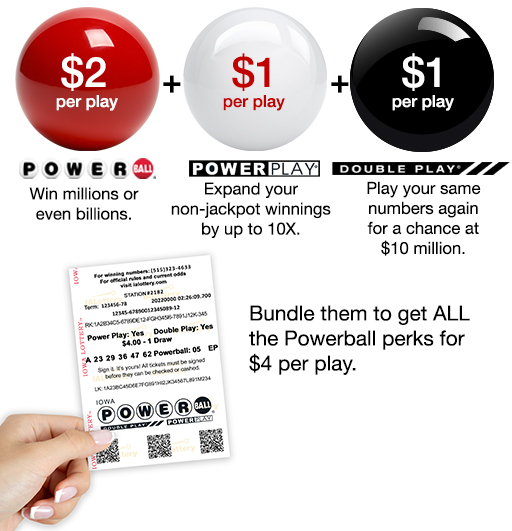
The Powerball structure is designed to generate massive jackpots through a “low-probability, high-reward” model. Players select five numbers from a set of 69 white balls and one number—the Powerball—from a set of 26 red balls. The cost of entry is a standard $2 per play, with an optional $1 “Power Play” multiplier that can increase non-jackpot winnings.
From a personal finance perspective, it is essential to understand that the prize pool is divided into nine different tiers. While the jackpot garners all the headlines, there are significant secondary prizes ranging from $4 (for matching just the Powerball) to $1,000,000 (for matching all five white balls). Understanding these tiers is crucial for any player looking to assess the true “return on investment” of a single ticket purchase.
The Power Play and Expected Value
The Power Play option is a fascinating case study in incremental spending. By adding $1 to the base ticket price, players can multiply non-jackpot prizes by 2, 3, 4, 5, or even 10 times. From a mathematical standpoint, this changes the expected value (EV) of the ticket. While the odds of winning remain the same, the potential payout for lower tiers increases, slightly shifting the risk-reward ratio. For those focused on maximizing the utility of every dollar spent, calculating whether the Power Play adds enough value to justify the 50% increase in ticket cost is a classic exercise in marginal utility.
The Mathematics of Probability vs. Traditional Investing
The odds of winning the Powerball jackpot are 1 in 292,201,338. To put this into a financial context, you are statistically more likely to be struck by lightning, become a professional athlete, or find a rare blue pearl in an oyster than you are to hold the winning ticket. For the disciplined investor, these odds represent a “negative expected value” proposition.
In traditional investing, such as the stock market or real estate, the goal is to place capital into assets where the long-term expected value is positive. The S&P 500, for example, has an average annual return of approximately 10%. Over a 30-year horizon, a $2 weekly investment (the price of one Powerball ticket) would grow to nearly $20,000 through the power of compounding.
The Psychology of Risk
Despite the astronomical odds, the lottery remains popular due to the “optimism bias” and the relatively low cost of entry. In the world of behavioral finance, this is known as “hope value.” The $2 spent is not viewed as a loss but as a fee for the ability to dream about a life of infinite liquidity. However, when viewed through the lens of a rigorous personal finance plan, the lottery should be categorized as entertainment spending rather than an investment strategy. It is a “leak” in a budget that, if left unchecked, can detract from more stable wealth-building activities like funding a Roth IRA or a High-Yield Savings Account (HYSA).
When the Jackpot Becomes “Profitable”
There is a theoretical point where the Powerball jackpot becomes “mathematically fair.” This occurs when the jackpot reaches a size where the expected value of a $2 ticket exceeds $2. However, this calculation is often flawed because it fails to account for two critical factors: “split pots” and “taxation.” If multiple people hold the winning numbers, the prize is divided, instantly slashing the EV. Furthermore, the government’s share of the winnings ensures that the net payout is always significantly lower than the advertised headline number.
The Financial Reality of Winning: Taxes and Payout Options
If you are fortunate enough to beat the 292-million-to-one odds, you are immediately faced with the most significant financial decision of your life: the choice between the lump-sum cash payment and the 30-year annuity. This decision is a masterclass in the time value of money (TVM).
Lump Sum vs. Annuity
The advertised Powerball jackpot is almost always the “annuity value.” This represents the total amount that would be paid out over 29 years in 30 graduated installments. Each payment is 5% larger than the previous one to account for inflation. The “cash option,” on the other hand, is the actual amount of liquid currency the lottery has on hand to fund that annuity.
From a wealth management perspective, most financial advisors recommend the lump sum. The logic is simple: if you take the money now and invest it in a diversified portfolio, you can potentially outperform the 5% annual growth built into the lottery’s annuity. Furthermore, having the cash upfront provides immediate liquidity for asset protection and estate planning. However, the annuity offers a “safety net” against “sudden wealth syndrome,” ensuring that the winner cannot spend the entire fortune in a few years.
The Tax Man Cometh
Taxation is the single largest “expense” a lottery winner will face. The federal government immediately withholds 24% of lottery winnings for federal income tax. However, because the top federal tax bracket is currently 37%, the winner will likely owe an additional 13% when they file their tax return.
Then, there are state taxes. Depending on where the ticket was purchased, state taxes can range from 0% (in states like Florida, Texas, or Washington) to more than 8% (in states like New York or New Jersey). When you combine federal and state obligations, a “billion-dollar” jackpot can quickly dwindle to a net take-home of roughly 40% to 50% of the advertised amount.
Managing a Windfall: The Millionaire Blueprint
Winning the Powerball is a life-altering event that requires a sophisticated financial infrastructure to manage. History is littered with stories of lottery winners who went bankrupt within a decade because they lacked a professional team and a long-term strategy.
Building a Professional Team
The moment a winning ticket is confirmed, the winner should seek out three key professionals:
- A Tax Attorney: To navigate the immediate tax liabilities and explore legal avenues for minimizing the tax bite.
- A Certified Public Accountant (CPA): To manage ongoing filings and complex financial reporting.
- A Fiduciary Financial Advisor: To create a diversified investment portfolio that prioritizes capital preservation over high-risk growth.
Privacy and Asset Protection
In many states, lottery winners’ names are public record. This exposure can lead to a deluge of “investment opportunities,” requests for handouts, and even physical security risks. Financial experts often recommend that winners claim their prize through a legal entity, such as a blind trust or a Limited Liability Company (LLC), if state laws allow. This layer of anonymity is the first step in protecting new wealth from the predatory elements of the financial world.
The “Sovereign Wealth Fund” Approach
A wise winner treats their jackpot not as a bank account for spending, but as a “Sovereign Wealth Fund.” By spending only the interest generated by the principal, the winner can ensure that the wealth lasts for generations. For example, a $100 million net windfall invested at a conservative 4% annual return generates $4 million in annual income without ever touching the original $100 million. This is the essence of true financial freedom.
The Economic Impact of the Powerball
The Powerball is more than a game; it is a significant revenue generator for the states that participate. A portion of every ticket sold—usually around 30% to 40%—goes back to the state government. These funds are typically earmarked for public services, most notably education, infrastructure, and senior citizen programs.
The “Voluntary Tax”
Economists often refer to the lottery as a “regressive tax” or a “voluntary tax.” This is because a disproportionate amount of lottery revenue tends to come from lower-income households. From a public policy perspective, the lottery is a way for states to raise revenue without raising traditional taxes. However, from a personal finance perspective, it is important to recognize that the “house always wins.” The system is mathematically rigged to ensure that the collective pool of players loses money so that the state and a few lucky individuals can win.

Smarter Alternatives for Wealth Building
While waiting for the 10:59 PM ET drawing can be an exciting diversion, true financial security is built on the foundations of discipline and strategy. For those looking to change their financial destiny, there are several “side hustles” and investment vehicles that offer a much higher probability of success than a lottery ticket.
- The S&P 500 Index Fund: A low-cost way to own a piece of the 500 largest companies in the U.S. This is the gold standard for long-term wealth accumulation.
- High-Yield Savings Accounts: In the current interest rate environment, HYSAs offer a risk-free way to earn 4% to 5% on your cash reserves.
- Skill Acquisition: Investing in oneself—whether through a certification, a degree, or learning a high-value digital skill—often yields the highest return on investment of any asset class.
- Real Estate: Building equity in property remains one of the most consistent ways for Americans to build net worth over time.
In conclusion, the answer to “what time is the Powerball lottery tonight” is 10:59 PM ET. But the answer to how one builds lasting wealth is much more complex. It involves understanding the math behind the game, the tax implications of the win, and the discipline required to manage money wisely. Enjoy the thrill of the drawing, but remember that the surest way to a jackpot is through a well-executed financial plan.
aViewFromTheCave is a participant in the Amazon Services LLC Associates Program, an affiliate advertising program designed to provide a means for sites to earn advertising fees by advertising and linking to Amazon.com. Amazon, the Amazon logo, AmazonSupply, and the AmazonSupply logo are trademarks of Amazon.com, Inc. or its affiliates. As an Amazon Associate we earn affiliate commissions from qualifying purchases.