
The New York Stock Exchange (NYSE), often considered the heartbeat of global financial markets, operates on a meticulously structured schedule that dictates when investors can buy and sell publicly traded company shares. Understanding these hours is fundamental for anyone participating in the financial markets, from individual retail investors to large institutional traders. Beyond simply knowing the opening and closing bells, comprehending the nuances of pre-market, after-hours trading, and holiday schedules is crucial for effective strategy and risk management.
The Standard Trading Day: The Core Hours of the NYSE
At its core, the NYSE adheres to a standard trading schedule from Monday to Friday. This period represents the most liquid and active part of the trading day, with millions of transactions occurring minute by minute.

Market Open: The NYSE Bell Ceremony
The trading day officially begins at 9:30 AM Eastern Time (ET). This moment is famously marked by the ringing of the opening bell, a long-standing tradition at the NYSE that often features special guests, from corporate CEOs to celebrities, symbolizing the commencement of another day of commerce and capital formation. The period immediately following the open is often characterized by heightened volatility and significant price movements as investors react to overnight news, economic reports, and corporate announcements made before market hours.
Market Close: The NYSE Closing Bell
Trading on the NYSE concludes at 4:00 PM Eastern Time (ET). Similar to the open, the closing bell ceremony marks the end of regular trading, and the final hour leading up to it, often referred to as “the power hour,” can also see increased activity as traders rush to execute orders, rebalance portfolios, or take profits before the market shuts down for the day. The closing price of a stock, determined at 4:00 PM ET, is often the most referenced price point for daily performance analysis.
These standard hours are the primary focus for most investors, as they offer the deepest liquidity and most efficient price discovery. Trading outside these hours involves different dynamics and considerations.
Beyond the Bell: Pre-Market and After-Hours Trading
While the regular trading session defines the NYSE’s operational core, sophisticated investors and active traders often extend their activities into pre-market and after-hours sessions. These periods, though less liquid, offer opportunities to react to news and events outside standard trading times.
Pre-Market Trading
Pre-market trading typically commences as early as 4:00 AM ET and runs until the market opens at 9:30 AM ET. During this window, investors can place and execute trades, allowing them to react immediately to news released overnight or early in the morning, such as quarterly earnings reports, mergers and acquisitions announcements, or significant geopolitical developments.
Key characteristics of pre-market trading include:
- Lower Liquidity: Fewer participants mean wider bid-ask spreads and potentially less efficient price discovery.
- Increased Volatility: News events can cause exaggerated price swings due to the lower trading volume.
- Limited Order Types: Not all order types available during regular hours may be accessible or effective in pre-market.
- Institutional Dominance: A larger proportion of trading volume during these hours often comes from institutional investors and professional traders with access to direct market access (DMA) tools.
For retail investors, participating in pre-market trading often requires specific brokerage accounts and an understanding of the inherent risks. It’s crucial to exercise caution due to the reduced liquidity and potential for rapid price changes.
After-Hours Trading
After-hours trading picks up immediately after the market closes at 4:00 PM ET and can extend until 8:00 PM ET. This period serves a similar function to pre-market trading, allowing investors to react to news that breaks after the regular session, such as analyst upgrades/downgrades or late-day corporate press releases.
Similar to pre-market, after-hours trading also features:
- Reduced Liquidity: Fewer buyers and sellers lead to less robust markets.
- Higher Volatility: Stock prices can swing dramatically on limited news, potentially leading to significant gains or losses.
- Brokerage Access: Most major online brokers offer after-hours trading, though execution might differ from regular hours.
- Risk of Price Discrepancy: Prices achieved in after-hours trading may not always reflect the opening price the following day, as further news or sentiment changes can occur overnight.
Both pre-market and after-hours sessions are primarily driven by electronic communication networks (ECNs) rather than the physical trading floor of the NYSE. These periods are particularly useful for active traders seeking to capitalize on immediate reactions to news, but they come with elevated risks due to the thinner trading environment.
Holiday Schedules and Early Closures: When the Market Takes a Break
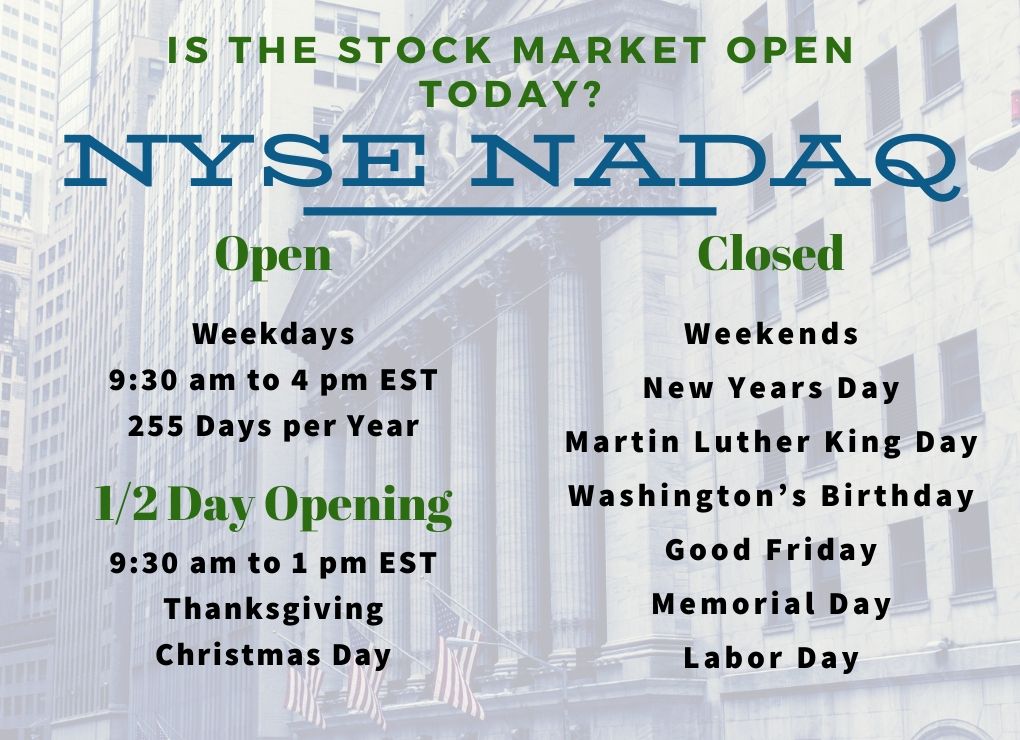
The NYSE does not operate every single weekday of the year. It observes a number of U.S. federal holidays, and occasionally, it may have early closures. Being aware of these exceptions is vital for financial planning and trading strategy.
NYSE Holidays
The NYSE typically closes for the following U.S. federal holidays:
- New Year’s Day
- Martin Luther King, Jr. Day
- Washington’s Birthday (Presidents’ Day)
- Good Friday
- Memorial Day
- Juneteenth National Independence Day
- Independence Day (Fourth of July)
- Labor Day
- Thanksgiving Day
- Christmas Day
It’s important to note that if a holiday falls on a weekend, the NYSE will typically observe it on the preceding Friday or the following Monday, depending on which day is closest to the actual date. For instance, if Christmas Day falls on a Sunday, the market might be closed on the preceding Friday.
Early Closures
In addition to full-day holidays, the NYSE sometimes has scheduled early closures. These often occur on days preceding or following a major holiday, such as the day after Thanksgiving (Black Friday) or Christmas Eve. On these days, the market might close at 1:00 PM ET, significantly shortening the trading session. While not as frequent, these early closures can still impact trading strategies, especially for those who rely on the full trading day for liquidity or to complete specific transactions.
Impact of Holiday Schedules on Trading
Understanding the holiday schedule is critical for several reasons:
- Settlement Dates: Market holidays can delay the settlement of trades (typically T+2 business days), affecting when funds or securities are officially transferred.
- Reduced Trading Activity: The days surrounding holidays often see reduced trading volume and potentially increased volatility, as many participants are out of the market.
- News Releases: Companies and economic agencies generally avoid releasing market-moving news on holidays, but events can still unfold internationally.
- Planning: Investors need to plan their deposits, withdrawals, and trade executions around these non-trading days to avoid unexpected delays.
Staying informed about the official NYSE holiday calendar, usually published well in advance, is a non-negotiable part of effective financial management.
Strategic Implications of NYSE Hours for Investors
Knowing the NYSE’s operational hours is more than just a logistical detail; it has profound strategic implications for various types of investors and their approaches to the market.
For Day Traders and Active Investors
For day traders and other active investors who rely on intraday price movements, the standard 9:30 AM to 4:00 PM ET window is their primary battleground. They often focus on the initial and final hours, known for their higher volatility and liquidity, to execute quick trades. Understanding pre-market and after-hours dynamics is also crucial, as these periods can foreshadow the day’s trends or provide opportunities to react to immediate news, albeit with higher risk. Day traders must be vigilant about liquidity and spreads, especially during non-standard hours, to avoid poor execution.
For Long-Term Investors
Long-term investors, who focus on fundamental analysis and multi-year investment horizons, are less directly impacted by hourly market fluctuations. However, awareness of market hours is still important for them when placing buy or sell orders, especially if they are time-sensitive or involve large blocks of shares. Understanding when news is likely to hit (often before the market open or after the close) can help them anticipate price movements, even if they don’t plan to trade on them immediately. Holidays and early closures affect when their orders will be filled and when their funds will settle, which is relevant for portfolio rebalancing or fund transfers.
For International Investors
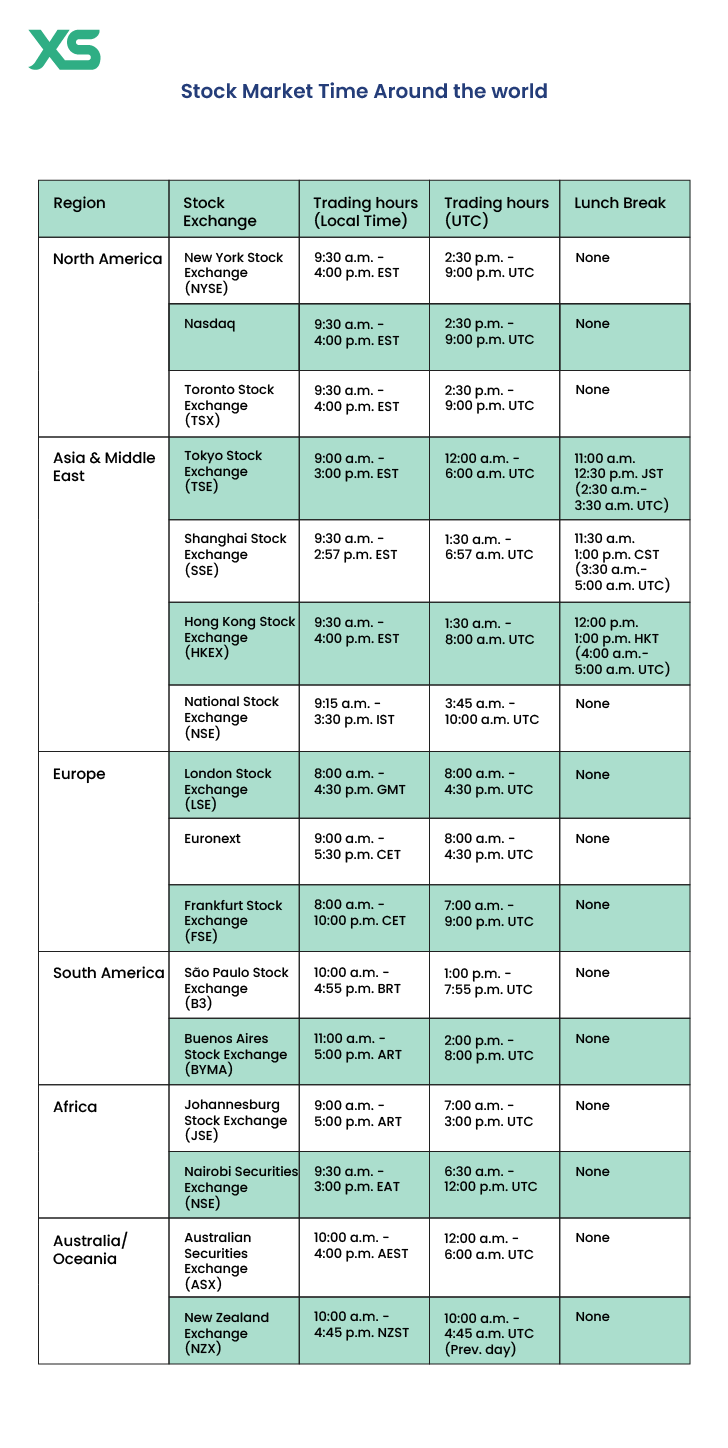
Investors located in different time zones face the challenge of aligning their schedules with Eastern Time. For example, an investor in London would find the NYSE trading from 2:30 PM to 9:00 PM GMT, while someone in Tokyo would be looking at 10:30 PM to 5:00 AM JST the following day. This necessitates relying on sophisticated trading platforms, setting limit orders, or adjusting personal schedules to monitor the market. The ability to trade pre-market and after-hours can be particularly advantageous for international investors, allowing them more flexibility to react during their local daytime.
Risk Management and Information Flow
Market hours are intrinsically linked to information flow and risk. Major economic data releases (e.g., CPI, jobless claims, Fed announcements) are often timed either before the market open (e.g., 8:30 AM ET) or during the trading session. Corporate earnings are frequently released after the close (e.g., 4:05 PM ET) or before the open (e.g., 7:00 AM ET). Knowing these patterns helps investors anticipate volatility and manage their positions accordingly. Attempting to trade during illiquid periods without fully understanding the risks can lead to significant losses.
In conclusion, the operating hours of the NYSE are a foundational element of financial market participation. From the standard 9:30 AM to 4:00 PM ET window to the extended pre-market and after-hours sessions, and the critical observance of holidays, each aspect plays a role in how investors plan, execute, and manage their financial strategies. A comprehensive understanding of “what time is the NYSE open” extends far beyond a simple answer, encompassing a strategic awareness crucial for success in the dynamic world of investing.
aViewFromTheCave is a participant in the Amazon Services LLC Associates Program, an affiliate advertising program designed to provide a means for sites to earn advertising fees by advertising and linking to Amazon.com. Amazon, the Amazon logo, AmazonSupply, and the AmazonSupply logo are trademarks of Amazon.com, Inc. or its affiliates. As an Amazon Associate we earn affiliate commissions from qualifying purchases.