
For the modern investor, timing is often as critical as the asset itself. Whether you are a day trader looking to capitalize on intraday volatility or a long-term investor checking the health of your retirement portfolio, the question “what time does the market close today?” is the heartbeat of your financial routine. While the short answer for those in the United States is typically 4:00 PM Eastern Time, the nuances of the market close—including early closures, holiday schedules, and the frantic activity of the “Closing Cross”—carry significant implications for your wealth.
Understanding the rhythm of the financial markets is a fundamental pillar of personal finance. The closing bell does not merely signal the end of a workday; it represents the final price discovery of the day, a moment where billions of dollars in institutional and retail orders converge to set the “closing price.” In this guide, we will explore the standard operating hours of major exchanges, the mechanics of the market close, and how you can navigate the complexities of global trading schedules to optimize your investment strategy.
Understanding Standard Market Hours: The 9:30 to 4:00 Framework
For the vast majority of equities traded in the United States, the “regular” trading session follows a strict schedule. This window is designed to concentrate liquidity, ensuring that there are enough buyers and sellers present to facilitate fair and efficient pricing.
The New York Stock Exchange (NYSE) and NASDAQ
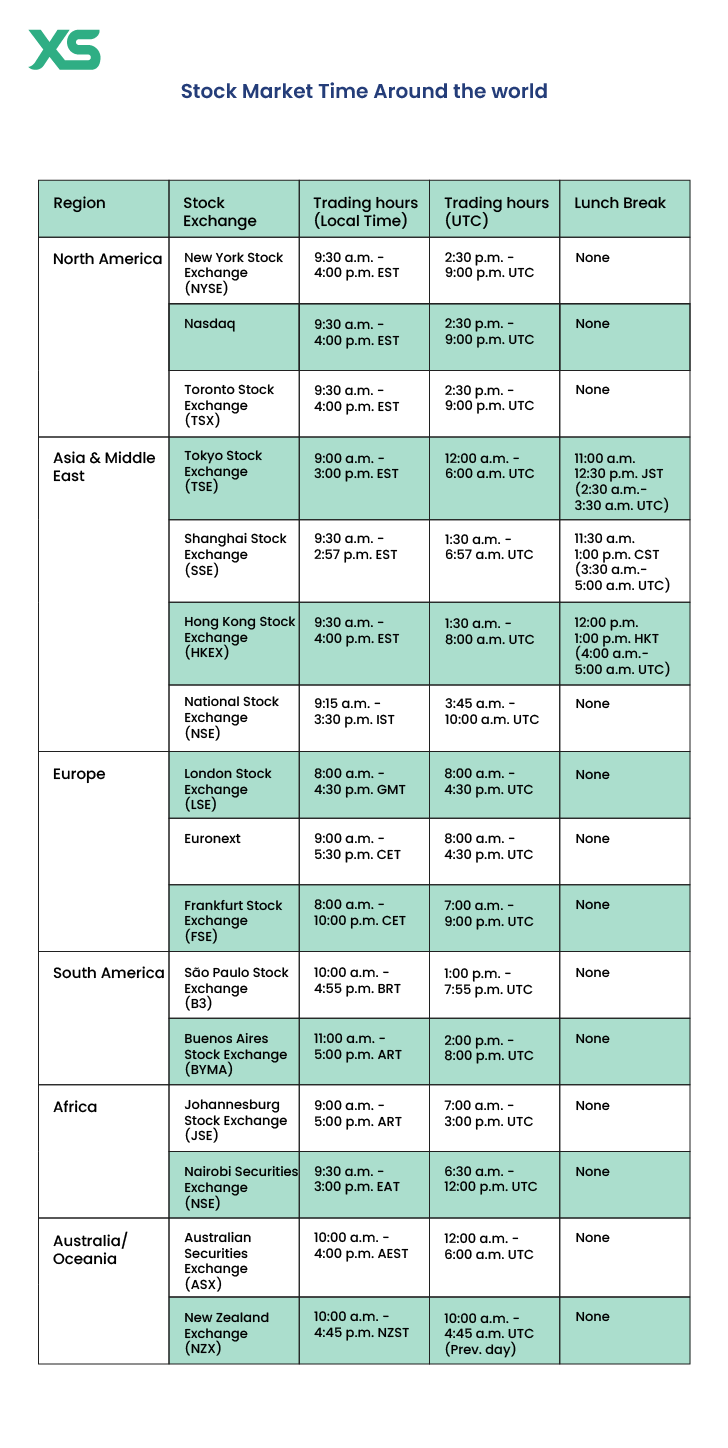
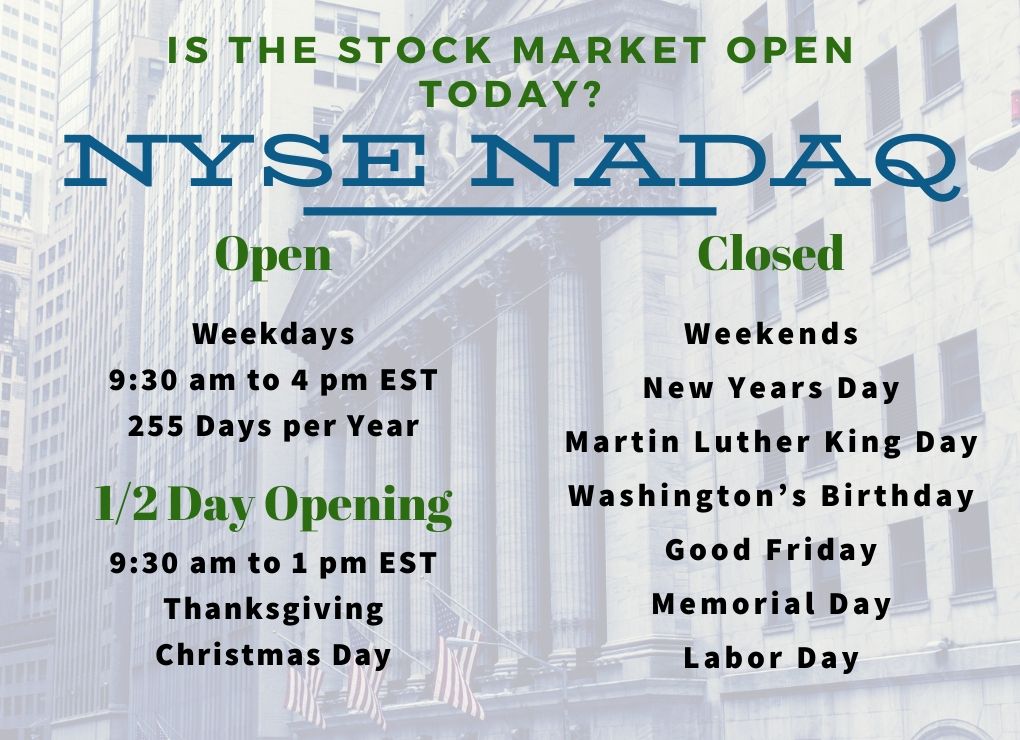
The two primary giants of American finance—the New York Stock Exchange and the NASDAQ—operate from Monday through Friday, 9:30 AM to 4:00 PM Eastern Time (ET). During these six and a half hours, the bulk of global equity volume occurs. Unlike some international markets that take a midday “lunch break,” U.S. markets trade continuously throughout the day. This period is when retail brokerages execute the majority of orders and when market makers are most active in providing narrow bid-ask spreads.
Holiday Schedules and Early Closures
It is vital for investors to monitor the federal holiday calendar, as the market is not always open during standard business days. The NYSE and NASDAQ are closed on major holidays such as New Year’s Day, Martin Luther King Jr. Day, Presidents’ Day, Good Friday, Memorial Day, Juneteenth, Independence Day, Labor Day, Thanksgiving, and Christmas.
Furthermore, the market often observes “early closures.” On days like the day after Thanksgiving (Black Friday) or Christmas Eve (if it falls on a weekday), the market typically closes at 1:00 PM ET. Knowing these dates in advance is crucial for managing “overnight risk,” as you do not want to be stuck in a volatile position when the market is closed for a long three-day weekend.
The Significance of the Closing Bell: Why the Final Hour Matters
The final hour of trading, often referred to as the “Power Hour,” is frequently the most volatile and high-volume period of the day. Professionals and institutional algorithms often wait until the final minutes to execute large blocks of trades, leading to significant price swings that can make or break a day trader’s P&L.
Market Liquidity and Volatility
Liquidity refers to the ease with which an asset can be bought or sold without affecting its price. Toward the market close, liquidity spikes as institutions “square their books”—adjusting their positions to ensure they aren’t over-leveraged or over-exposed before the session ends. For a personal investor, this means that the 3:00 PM to 4:00 PM window offers a high probability of getting an order filled quickly, but it also carries the risk of increased volatility as large “sell-on-close” or “buy-on-close” orders hit the tape.
The Closing Auction: How Prices are Settled
Many retail investors believe that the price they see on their screen at 4:00 PM is simply the last trade that occurred. In reality, the official “closing price” is often determined through a sophisticated mechanism called the Closing Auction (or the Closing Cross on NASDAQ).
In the minutes leading up to 4:00 PM, the exchange gathers all “Market on Close” (MOC) and “Limit on Close” (LOC) orders. It then runs a complex algorithm to find the single price that will satisfy the greatest number of shares. This helps prevent a single small trade from artificially inflating or depressing a stock’s price right at the finish line. Understanding this process is key to realizing why your brokerage app might show a slight price adjustment a few minutes after the bell rings.
After-Hours Trading: Investing Beyond the 4:00 PM Deadline
Just because the physical floor of the NYSE goes quiet doesn’t mean trading has stopped. Electronic Communication Networks (ECNs) allow investors to trade long after the traditional closing bell.
Risks and Rewards of Extended Hours
Post-market trading typically occurs from 4:00 PM to 8:00 PM ET. This session is particularly important during “Earnings Season.” Most major corporations wait until the market closes to release their quarterly financial results to prevent sudden, panicked volatility during regular hours.
If you are an investor in a tech giant that reports a massive profit beat at 4:15 PM, the stock might skyrocket in the after-hours session. However, retail investors should exercise extreme caution. After-hours markets have significantly lower volume, meaning the “spread” between what a buyer wants to pay and what a seller wants to receive can be massive. You may end up paying a much higher price than you intended due to this lack of liquidity.
Tools for Tracking Late-Day Price Action
To navigate the after-hours market, investors should use financial tools that provide “real-time” quotes rather than “delayed” ones. Many high-quality financial websites and brokerage platforms offer extended-hours charts. Observing the “Price Action” during this time can give you a head start on the following day’s market open. If a stock drops 10% in the after-hours on bad news, you can expect the 9:30 AM open the next morning to be equally turbulent.
Global Market Perspectives: When Do International Exchanges Close?
In an interconnected global economy, the U.S. market is only one piece of the puzzle. If you are diversifying your portfolio with international stocks or ETFs, you must be aware of the “closing times” in other major financial hubs.
The London Stock Exchange and European Markets
The London Stock Exchange (LSE) is a primary gateway for European finance. It typically operates from 8:00 AM to 4:30 PM GMT. For an investor on the East Coast of the U.S., the LSE actually closes at 11:30 AM ET. This overlap—between the 9:30 AM U.S. open and the 11:30 AM U.S. European close—is often one of the most active times for global currency markets and large-cap multinational stocks.
Asian Markets: Tokyo, Hong Kong, and Shanghai
If you are looking toward the East, the schedules shift significantly. The Tokyo Stock Exchange (TSE) operates from 9:00 AM to 3:00 PM local time, but it includes a “lunch break” from 11:30 AM to 12:30 PM. For U.S.-based investors, these markets trade while we sleep—typically starting late in the evening and closing in the early hours of the morning. Keeping an eye on the Nikkei 225 or the Hang Seng index can provide a “leading indicator” for how the U.S. markets might open a few hours later.
Strategic Considerations for the Market Close
Armed with the knowledge of when the market closes, the next step is determining how to act. The final minutes of the day are a strategic battleground for capital preservation and growth.
Position Squaring and Overnight Risk
One of the most important decisions an investor makes is whether to “hold overnight.” Between 4:00 PM today and 9:30 AM tomorrow, a lot can happen: geopolitical events, economic data releases from overseas, or unexpected corporate scandals. If you are using margin (borrowed money) to trade, your brokerage may require you to have certain equity levels by the close to avoid a “margin call.” Professional investors often “square their positions”—selling off volatile trades before 4:00 PM—to ensure they can sleep soundly without worrying about a “gap down” the next morning.
Leveraging Technology for Timely Execution
In the era of digital finance, you don’t need to be staring at a clock to manage the market close. Modern financial tools allow you to set “timed orders.” You can set an order to execute specifically at the closing auction (MOC) or set an alert for 3:45 PM to remind you to review your daily gains. Using automated stop-loss orders is also a vital strategy for the close; if a stock begins to tank in the final minutes of trading, an automated system can exit the position for you, protecting your capital even if you aren’t at your desk.
In conclusion, knowing what time the market closes is more than just a logistical detail; it is a gateway to understanding market psychology, liquidity, and risk management. By mastering the schedule of the NYSE, the intricacies of the closing auction, and the dynamics of global exchange hours, you position yourself as a more disciplined and informed participant in the world of finance. Whether the bell rings at 4:00 PM or 1:00 PM, your strategy should remain the same: stay informed, stay prepared, and always respect the power of the closing cross.
aViewFromTheCave is a participant in the Amazon Services LLC Associates Program, an affiliate advertising program designed to provide a means for sites to earn advertising fees by advertising and linking to Amazon.com. Amazon, the Amazon logo, AmazonSupply, and the AmazonSupply logo are trademarks of Amazon.com, Inc. or its affiliates. As an Amazon Associate we earn affiliate commissions from qualifying purchases.