
For centuries, predicting the exact moment of a solar or lunar eclipse was the domain of master mathematicians and astronomers working with complex, manual calculations. Today, the question of “what time is the eclipse in my area” is answered in milliseconds by sophisticated algorithms, global positioning systems, and high-speed data processing. The intersection of celestial mechanics and modern technology has transformed the way we experience astronomical events, shifting the focus from simple observation to high-precision data collection and immersive digital engagement.
The ability to determine the exact timing of an eclipse down to the nanosecond at a specific street address represents one of the most accessible triumphs of modern software engineering. This transition from broad regional predictions to hyper-localized data has been driven by advancements in Geographic Information Systems (GIS), cloud computing, and the proliferation of mobile hardware equipped with high-accuracy sensors.

The Digital Frontier of Eclipse Tracking and Geolocation
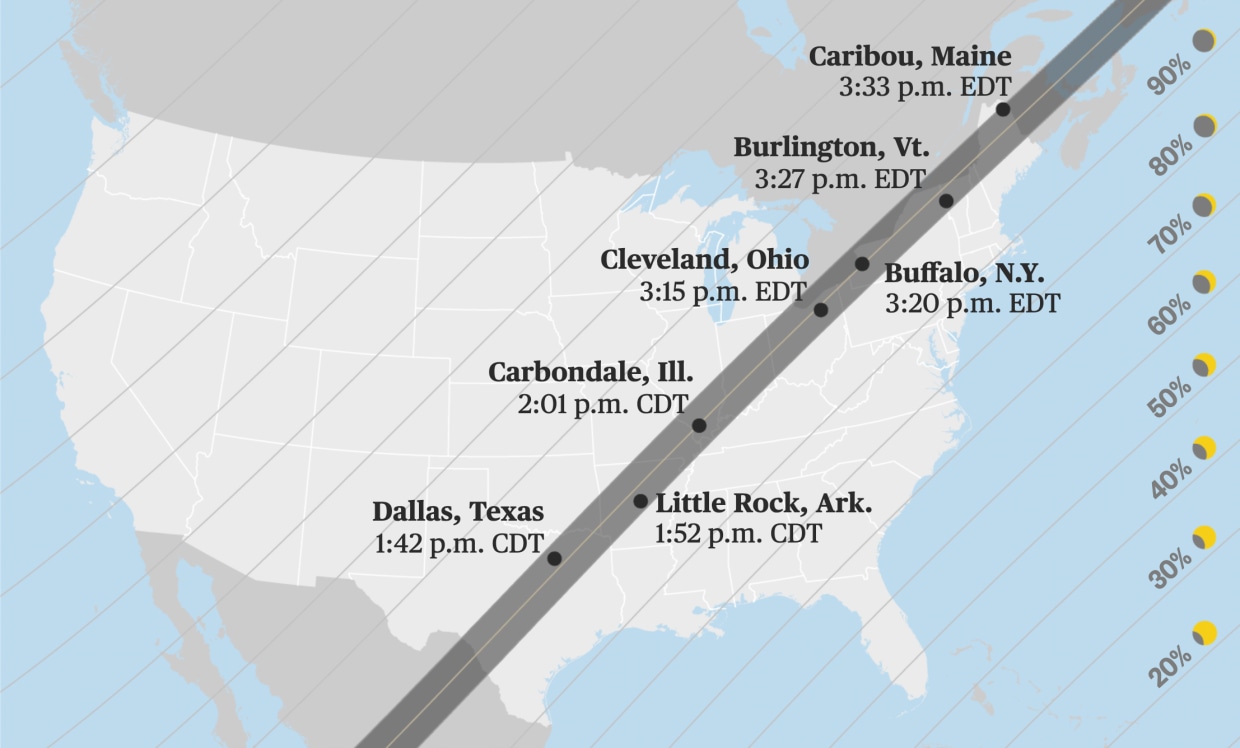
The primary technology responsible for answering the “when and where” of an eclipse is the integration of GPS with astronomical ephemeris data. Ephemeris data—numerical tables providing the positions of celestial bodies—has been digitized into highly efficient libraries used by developers worldwide. When a user asks a digital assistant or an app for the timing of an eclipse, the software performs a three-way handshake between the user’s current coordinates, the lunar limb profile data, and the precise orbital path of the Moon’s shadow (the umbra).
The Role of NASA’s Eyes and JPL Horizons
At the core of eclipse timing tech is the Jet Propulsion Laboratory’s (JPL) Horizons system. This is a highly advanced online solar system data and customization service that provides access to key solar system data and high-precision ephemerides. Developers tap into these APIs to build consumer-facing applications. By utilizing the “Eyes on the Solar System” software, users can virtually position themselves anywhere on Earth to simulate the exact visual progression of the eclipse. This simulation technology relies on massive datasets that account for the Earth’s rotation, its slight wobble (nutation), and the irregular shape of the Moon’s terrain.
Precision Mapping via GIS
Geographic Information Systems (GIS) have revolutionized the visualization of the “Path of Totality.” Modern interactive maps allow users to zoom in to the meter level to see if their specific house or office falls within the shadow’s reach. This is achieved through the overlay of vector data onto satellite imagery. Companies like Esri and Mapbox provide the infrastructure for these interactive experiences, processing millions of requests during celestial events. These maps do more than show a path; they calculate duration, start times (C1), peak times (Maximum Eclipse), and end times (C4) based on the specific elevation of the observer, which can slightly alter the timing of the shadow’s arrival.
High-Precision Apps and Interactive Observation Software
The mobile app ecosystem has become the primary interface for eclipse observers. These tools have evolved from static calendars into dynamic, real-time command centers that guide both amateur and professional astronomers through the event.
Augmented Reality (AR) Integration
One of the most significant leaps in eclipse tech is the use of Augmented Reality. Apps such as SkySafari and Star Walk use the internal gyroscope, accelerometer, and compass of a smartphone to overlay the eclipse’s path onto the live camera view. This allows a user to look at the sky hours before the event and see exactly where the sun will be during totality. This “pre-visualization” is critical for photographers and event planners who need to account for physical obstructions like buildings or trees.
Audio Cues and Real-Time Countdown Timers
For those observing an eclipse, timing is everything. High-end eclipse apps now feature “Audio Cues,” a technology designed to keep the observer’s eyes on the sky rather than the screen. These apps use precise localized timing to announce key milestones, such as “Filter off” for totality or “Baily’s Beads observed.” This requires the software to be extremely lightweight and capable of running offline, as cellular networks often fail during major eclipses due to the high density of people in the path of totality.
The Lunar Limb Profile and the “Besselian Elements”
To achieve sub-second accuracy, modern software incorporates the “Lunar Limb Profile.” The Moon is not a smooth sphere; its mountains and valleys affect exactly when the sun’s light disappears and reappears. Tools like the “LROC” (Lunar Reconnaissance Orbiter Camera) data provide a 3D model of the Moon that apps use to calculate “Baily’s Beads”—the points of light shining through lunar valleys. Software that utilizes Besselian Elements (a mathematical framework for calculating eclipses) ensures that the user’s “what time” query is answered with a level of precision that accounts for these topographical variations.
Hardware Integration: Beyond the Naked Eye

While software tells us when the eclipse will happen, hardware determines how we record and analyze it. The “Tech” of the eclipse extends into specialized cameras, smart telescopes, and sensor protection.
The Rise of Smart Telescopes
The latest trend in astronomical tech is the “Smart Telescope,” exemplified by brands like Unistellar and Vaonis. Unlike traditional telescopes that require manual alignment, these devices use “Autonomous Field Detection” (plate solving) to orient themselves. By syncing with a smartphone’s GPS, these telescopes automatically track the sun during an eclipse, capturing high-resolution digital images that are processed in real-time to reduce noise and enhance detail. These devices are essentially specialized computers that handle the complex task of solar tracking without user intervention.
Digital Sensor Protection and Optical Filters
The technology behind solar filters has advanced significantly. While traditional “eclipse glasses” are well-known, digital photographers now use specialized ND (Neutral Density) filters that can block up to 20 stops of light. Moreover, the CMOS sensors in modern mirrorless cameras are sensitive to the intense heat and light of the sun. Tech-savvy observers now use remote-controlled “electronic shutters” and heat-dissipating sensor mounts to capture high-speed bursts of the corona without damaging the internal components of their hardware.
Automated Astrophotography Pipelines
For professional setups, the eclipse is captured using automated scripts. Software like “Solar Eclipse Maestro” (for macOS) or “Eclipse Orchestrator” (for Windows) controls multiple digital cameras simultaneously. These programs are programmed with the exact timing of the eclipse based on the user’s GPS coordinates. They automatically adjust exposure settings, ISO, and shutter speed as the light levels drop from full sunlight to the darkness of totality, ensuring that the “Diamond Ring” effect is captured perfectly at the exact millisecond it occurs.
Meteorological AI: Solving the Cloud Cover Problem
The biggest challenge to any eclipse observer is weather. Even if the tech tells you the eclipse starts at 2:14 PM, a single cloud can ruin the experience. To solve this, developers are integrating AI-driven meteorological data into eclipse apps.
Micro-Climate Predictions
Modern weather apps now use machine learning models to provide “micro-forecasts.” These models analyze satellite data and atmospheric pressure to predict cloud movement with 15-minute granularity. For an eclipse observer, this tech is invaluable. If the primary viewing site is predicted to be cloudy, AI-powered routing software can suggest an alternative “clear sky” location within driving distance, recalculated in real-time based on current traffic patterns and the moving path of the shadow.
Crowdsourced Atmospheric Data
During major eclipses, citizen science projects like “Globe Observer” utilize the sensors in thousands of smartphones to collect data on temperature drops and light level changes. This massive, decentralized data collection effort provides scientists with a high-resolution map of the eclipse’s impact on Earth’s atmosphere. The technology used to aggregate and clean this data in real-time is a testament to the power of Big Data in modern astronomy.
Digital Best Practices for the Modern Observer
As celestial events become increasingly “digital,” observers must manage their tech footprint to ensure a seamless experience. The convergence of high-demand data and remote locations creates a unique set of technical challenges.
Connectivity and Offline Caching
Because the path of totality often passes through rural areas, cellular towers frequently become overwhelmed. The most advanced eclipse tools now prioritize “Offline Caching.” This tech allows the user to download all necessary mapping and timing data while still on a high-speed Wi-Fi network. The apps then rely on the device’s internal GPS—which does not require a cellular signal—to maintain timing accuracy.
Cybersecurity and App Vetting
The popularity of eclipses often leads to a surge in “pop-up” apps and websites that may contain malware or aggressive trackers. Digital security experts recommend using verified sources like NASA, the American Astronomical Society (AAS), or established developers in the astronomy space. Vetting an app’s data privacy policy is essential, as many “free” eclipse trackers may be designed primarily to harvest location data from the millions of users flocking to the path of totality.
Battery Management and Thermal Throttling
Using AR, GPS, and high-resolution video simultaneously is a significant drain on mobile hardware. Modern power management tech, including high-capacity GaN (Gallium Nitride) portable chargers, has become a staple in the eclipse-goer’s kit. Furthermore, high temperatures during a summer eclipse can lead to “thermal throttling,” where a smartphone slows down its processing to cool off. Tech-aware observers now use external cooling fans or sunshields to keep their devices running at peak performance during the critical minutes of totality.
The transition from “what time is the eclipse” as a general inquiry to a high-precision, tech-driven event marks a new era in human observation. Through the synergy of GPS, AI-driven weather modeling, and automated hardware, we are no longer just passive witnesses to the cosmos; we are digitally integrated participants in a global data event. As we look toward the future, the integration of 5G, satellite internet (like Starlink), and even more advanced AR will continue to refine the way we track, view, and record the shadows of our solar system.
aViewFromTheCave is a participant in the Amazon Services LLC Associates Program, an affiliate advertising program designed to provide a means for sites to earn advertising fees by advertising and linking to Amazon.com. Amazon, the Amazon logo, AmazonSupply, and the AmazonSupply logo are trademarks of Amazon.com, Inc. or its affiliates. As an Amazon Associate we earn affiliate commissions from qualifying purchases.