
In an increasingly digitized and fast-paced world, the seemingly simple question, “What time is Target open until today?”, transcends a mere factual inquiry. For retail giants like Target and countless other brands, it represents a critical touchpoint in the customer journey, a moment where brand promise meets practical utility. This query, often posed through a search engine or a smart assistant, underscores the profound importance of accessible, accurate, and consistent operational information in shaping customer experience, fostering loyalty, and ultimately, defining a brand’s digital presence.
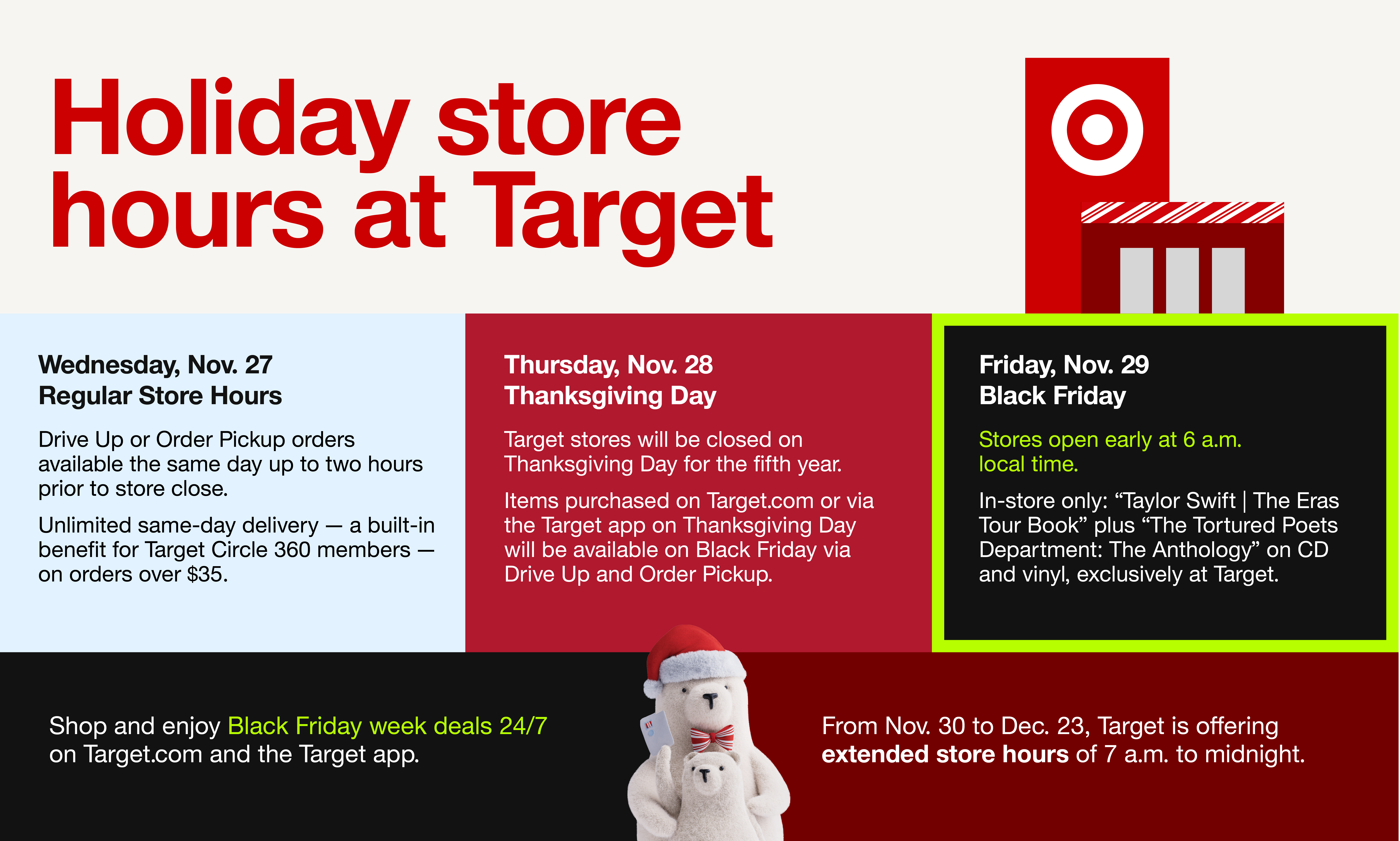
At its core, a brand is a promise—a promise of quality, value, and a certain standard of interaction. When a customer seeks basic information like store hours, they are not just looking for data; they are testing the brand’s commitment to transparency and convenience. In this article, we delve into how leading brands manage and leverage their operational data as a strategic component of their identity, exploring the intricate web of digital communication, customer expectation, and the underlying strategic decisions that govern something as fundamental as “opening hours.” We will dissect why answering this seemingly trivial question correctly and consistently across all platforms is not just good customer service, but an indispensable pillar of modern brand management.
The Imperative of Accessibility: Brand Information in Real-Time
In an era defined by instant gratification, the expectation that a brand’s essential information should be immediately and effortlessly accessible is no longer a luxury but a fundamental consumer right. For brands, this translates into a relentless demand for real-time accuracy and ubiquity of their operational data.
Customer Experience as a Cornerstone of Brand Loyalty
The initial interaction a customer has with a brand, even before setting foot in a store or making a purchase, often involves information gathering. If a customer struggles to find reliable operating hours, or worse, arrives at a closed store due to incorrect information, the negative impact on their experience can be immediate and lasting. This frustration directly erodes trust and can significantly damage brand perception. A seamless experience, however, where precise hours are easily found, contributes positively to a customer’s perception of the brand as reliable, customer-centric, and efficient. Brands understand that every touchpoint, no matter how small, contributes to the overall narrative and emotional connection a consumer has with their identity. When a brand consistently delivers accurate information, it reinforces a perception of competence and care, making customers more likely to return and advocate for the brand.
The Digital-First Expectation: Instant Answers
Today’s consumer is digital-first. Their primary instinct when seeking information is to consult their smartphone, tablet, or smart home device. This means that a brand’s digital footprint—its website, mobile app, social media profiles, and third-party listings—must serve as an unimpeachable source of truth. The question “What time is Target open until today?” exemplifies this expectation for instant answers. Consumers expect to type or speak their query and receive an immediate, unambiguous response. For brands, this necessitates robust digital infrastructure, dynamic content management systems, and a commitment to updating information in real-time, especially for temporary changes such as holiday hours, special events, or unforeseen closures. The absence of such capabilities not only frustrates the customer but also signals a potential disconnect between the brand’s digital strategy and evolving consumer behaviors.
Beyond Just Hours: A Holistic View of Operational Data
While store hours are paramount, the demand for accessible information extends far beyond simple opening and closing times. Modern consumers expect a comprehensive understanding of a brand’s operational status. This includes details like holiday schedules, specific department hours (e.g., pharmacy, optical), in-store services (e.g., curbside pickup, order pickup, deli hours), and even real-time inventory availability for popular items. For a brand like Target, providing clarity on when their “Drive Up” service is available, or when a particular Starbucks cafe inside their store closes, significantly enhances the customer journey. Brands that provide this holistic view proactively address multiple potential customer queries, reducing friction and demonstrating a deeper commitment to convenience and transparency, thereby strengthening their brand appeal and utility.
Crafting a Cohesive Brand Presence Across Channels
In the complex tapestry of the modern digital landscape, a brand’s message and core information must resonate consistently across an ever-expanding array of channels. This omnichannel imperative is particularly critical for operational details, where even minor discrepancies can lead to significant customer dissatisfaction and reputational damage.
Omnichannel Consistency: The Holy Grail of Brand Communication
The challenge for brands today is not just to have a presence on multiple platforms, but to ensure that the information presented on each channel is uniform, up-to-date, and reflects a singular brand identity. For store hours, this means that the information displayed on a brand’s official website must match what is found on its mobile app, its Google My Business listing, its social media pages (Facebook, X, Instagram), and any third-party directory services. Inconsistency—a common pitfall—can lead to confusion, wasted trips for customers, and a significant blow to a brand’s credibility. Achieving omnichannel consistency requires a centralized data management strategy, automated update protocols, and regular audits to ensure that every digital touchpoint projects the same, reliable information. This consistency is a hallmark of strong brand management, demonstrating meticulous attention to detail and a customer-first approach.
Leveraging Local SEO for Brand Visibility
For multi-location brands like Target, optimizing for local search engine optimization (SEO) is not merely a marketing tactic; it’s a foundational element of their brand’s discoverability and accessibility. When a customer searches “Target near me” or “what time is Target open,” their proximity and location data are critical. Brands must ensure that their Google My Business profiles, Yelp listings, Apple Maps entries, and other local directories are meticulously populated with accurate addresses, phone numbers, and crucially, precise operating hours for each individual store location. Inaccurate or incomplete local SEO data can render a store invisible to potential customers, driving them to competitors. A robust local SEO strategy not only boosts organic search visibility but also reinforces the brand’s physical presence and convenience, directly impacting foot traffic and sales. It’s an investment in ensuring the brand is found exactly when and where the customer needs it.
The Role of AI and Chatbots in Customer Service
As customer queries become more sophisticated and varied, brands are increasingly turning to artificial intelligence (AI) and chatbots to provide instant, scalable answers to common questions, including “What time is Target open until today?” These AI-powered tools, embedded on websites, apps, and even messaging platforms, can parse natural language queries and deliver accurate, up-to-the-minute information without human intervention. This not only enhances the customer experience by providing immediate answers 24/7 but also frees up human customer service representatives to handle more complex issues. For brands, integrating AI into their information delivery strategy is a powerful way to uphold their promise of convenience and responsiveness, reinforcing a modern, efficient brand image. However, the success of these tools hinges on being fed accurate, real-time data from a centralized source, underscoring once again the imperative of data integrity across the brand ecosystem.
The Strategic Implications of Operating Hours for Retail Brands
The decision regarding a brand’s operating hours is far more complex than simply picking an opening and closing time. It is a deeply strategic choice, influenced by market dynamics, customer behavior, competitive pressures, and operational efficiency, all of which ultimately impact brand perception and profitability.
Balancing Customer Demand with Operational Efficiency
Setting store hours involves a delicate balancing act. Brands must consider peak shopping times, local demographics, and seasonal variations in demand. Staying open longer might capture more sales but comes with increased operational costs (staffing, utilities, security). Conversely, closing too early might alienate customers and drive them to competitors. For a brand like Target, this means analyzing vast amounts of data—transaction records, foot traffic patterns, online search trends—to optimize hours for each location. For instance, a store in a bustling urban center might justify later closing times than one in a quieter suburban area. The strategic alignment of hours with actual customer demand not only maximizes revenue opportunities but also signals that the brand understands and responds to its community’s needs, thereby strengthening local brand affinity.
Extended Hours as a Competitive Differentiator
In highly competitive retail landscapes, extending operating hours can serve as a significant brand differentiator. Offering earlier opening times, later closing times, or even 24/7 access in certain digital-first models can position a brand as the most convenient option for time-pressed consumers. This strategy is particularly prevalent during holiday seasons, where brands like Target strategically expand hours to capture a larger share of consumer spending and reduce crowding. However, this differentiation strategy must be communicated effectively and consistently across all brand channels. When a brand promotes extended hours, it’s making a promise of availability and convenience; failing to deliver on that promise due to misinformation or operational issues can severely damage its competitive edge and brand reputation. Successful implementation reinforces the brand as a flexible, customer-oriented solution.
Brand Reputation and Trust: The Cost of Misinformation
Perhaps the most critical strategic implication of operating hours lies in their direct impact on brand reputation and trust. Inaccurate information, even for something as seemingly minor as store hours, can have cascading negative effects. A customer who makes a special trip only to find a store closed due to incorrect online information is not merely inconvenienced; they feel betrayed. This singular negative experience can translate into lost sales, negative word-of-mouth (both offline and online reviews), and a significant erosion of trust. In the age of social media, such missteps can quickly amplify, leading to widespread public relations issues. Brands invest heavily in building trust and credibility; operational misinformation can unravel years of effort in moments. Therefore, maintaining impeccable accuracy in operating hours across all platforms is not just an operational task; it’s a fundamental commitment to the brand’s integrity and its relationship with its customers.
Innovating Information Delivery: The Future of Brand Transparency
As technology evolves and consumer expectations heighten, brands are continuously seeking innovative ways to deliver information with greater precision, personalization, and foresight. The future of brand transparency lies in leveraging advanced tools to create seamless, intuitive informational experiences.
Personalized Information Experiences
The next frontier in brand information delivery involves personalization. Imagine a customer opening their Target app and instantly seeing the hours for their preferred or closest store, along with real-time updates on peak shopping times, specific department availability, or even personalized recommendations for services based on past behavior. Brands are moving towards using customer data—with appropriate privacy safeguards—to anticipate informational needs and deliver highly relevant details without explicit prompting. This level of personalized service deepens the customer’s connection to the brand, making them feel uniquely understood and valued. It transforms static information into a dynamic, user-centric experience, reinforcing the brand’s commitment to individual customer convenience.
Voice Search and Smart Assistants: The New Frontier
The proliferation of voice-activated smart assistants (like Google Assistant, Amazon Alexa, and Apple Siri) has fundamentally changed how consumers access information. Queries like “Alexa, what time is Target open until today?” are now commonplace. For brands, this necessitates optimizing their digital presence not just for text-based search but for natural language processing and voice queries. This involves structuring data in a way that smart assistants can easily interpret and vocalize accurate answers. Brands must ensure their information is readily available through APIs and structured data formats that these platforms consume. Failure to optimize for voice search means losing a significant and growing channel of customer interaction, directly impacting brand visibility and accessibility in the hands-free, on-the-go lifestyle that many consumers embrace.
Augmented Reality and In-Store Navigation
While store hours primarily pertain to the gateway to a physical location, future innovations will likely integrate information delivery even deeper into the in-store experience. Augmented Reality (AR) could offer an enhanced way for brands to convey real-time information, such as overlaying current department hours or service availability onto a customer’s smartphone screen as they navigate the store. Imagine an AR overlay showing which service desk is open, or real-time queues for the pharmacy, all seamlessly integrated into the physical environment. While this might seem advanced for simple hours, it exemplifies the broader trend of brands seeking to make every aspect of their physical presence as digitally informed and transparent as possible. By merging the digital and physical realms, brands can offer an unparalleled level of transparency and convenience, further cementing their reputation as forward-thinking and customer-focused.
In conclusion, the simple question “What time is Target open until today?” is a powerful microcosm of the intricate relationship between modern brands and their discerning customers. It highlights the non-negotiable demand for real-time accuracy, omnichannel consistency, and personalized information delivery. For brands, successfully navigating this landscape means recognizing that every piece of operational data, no matter how mundane, contributes significantly to their overall brand identity, customer loyalty, and long-term success. By prioritizing transparency, investing in robust digital infrastructure, and continually innovating how information is shared, brands can transform a basic query into an opportunity to reinforce trust, demonstrate customer-centricity, and ultimately, solidify their position as leaders in the digital age.
aViewFromTheCave is a participant in the Amazon Services LLC Associates Program, an affiliate advertising program designed to provide a means for sites to earn advertising fees by advertising and linking to Amazon.com. Amazon, the Amazon logo, AmazonSupply, and the AmazonSupply logo are trademarks of Amazon.com, Inc. or its affiliates. As an Amazon Associate we earn affiliate commissions from qualifying purchases.