
For the modern investor, the question “What time does the stock market close today?” is often the starting point for a broader strategy. While the short answer for major U.S. exchanges like the New York Stock Exchange (NYSE) and the NASDAQ is 4:00 PM Eastern Time (ET), the reality of financial markets is far more nuanced. Navigating the world of personal finance and institutional investing requires a deep understanding of not just the closing bell, but the various phases of the trading day, holiday schedules, and the strategic implications of timing.
In this guide, we will explore the structural framework of the financial markets, the mechanics of extended hours, and how timing influences liquidity, volatility, and your ultimate bottom line.
1. Standard Trading Hours: The Foundation of the Financial Day
The heartbeat of the global economy is regulated by the standard operating hours of the primary exchanges. For most retail investors in North America, the trading day is defined by a narrow six-and-a-half-hour window.
The 9:30 AM to 4:00 PM ET Window
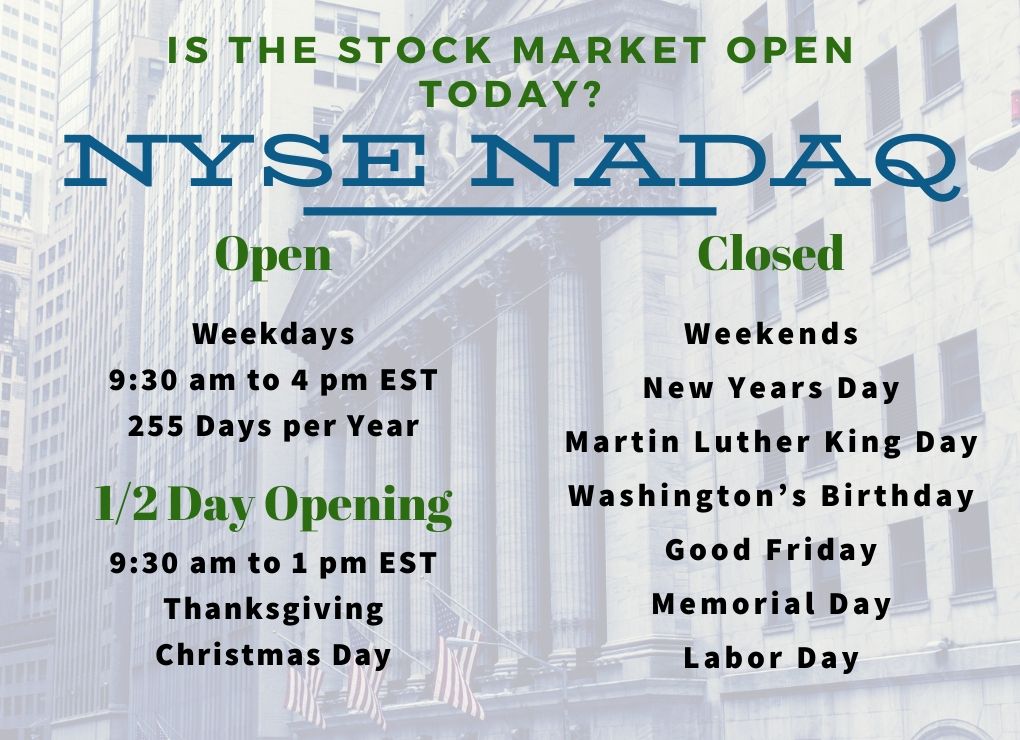
The standard trading session for the NYSE and NASDAQ runs from 9:30 AM to 4:00 PM ET, Monday through Friday. These hours are designed to concentrate liquidity, ensuring that there are enough buyers and sellers to facilitate smooth transactions. When the market is “open,” price discovery is at its most efficient, and bid-ask spreads (the difference between what a buyer is willing to pay and a seller is willing to accept) are typically at their narrowest.
The Significance of the Closing Bell
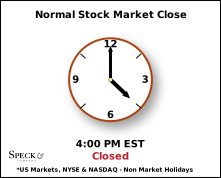
The closing bell at 4:00 PM ET is more than just a tradition; it is a critical data point. The “closing price” of a stock is used by mutual funds to calculate their Net Asset Value (NAV) and by index providers to determine the value of benchmarks like the S&P 500. This final price is often determined by a “closing auction,” a process that aggregates all buy and sell orders in the final minutes of the day to find a single price that clears the most volume.
Weekend and Weekend-Adjacent Limitations
It is important to remember that the stock market is closed on Saturdays and Sundays. While global events continue to unfold over the weekend, prices remain static on major exchanges until the “Sunday Night Futures” begin trading or the Monday morning pre-market session opens. This “weekend risk” is a significant factor for swing traders who must decide whether to hold positions over a period where they cannot react to breaking news.
2. Beyond the Bell: The Mechanics of Extended Hours Trading
While the “official” close is 4:00 PM ET, the digital nature of modern finance allows for trading long after the floor traders have gone home. Extended hours trading consists of pre-market and after-hours sessions.
Understanding the After-Hours Session
The after-hours session typically runs from 4:00 PM to 8:00 PM ET. This period is when major corporations release their quarterly earnings reports. Because these reports often contain market-moving information, the after-hours session can see massive price swings. However, retail investors should proceed with caution: liquidity is much lower than during the standard session, meaning it can be harder to execute a trade at a favorable price.
The Pre-Market Session: Setting the Tone
The pre-market session begins as early as 4:00 AM ET, though the bulk of the activity occurs after 8:00 AM ET. This session allows investors to react to overnight news, such as economic data releases from Europe or geopolitical shifts in Asia. Professional traders often use the pre-market “tape” to gauge the sentiment for the upcoming regular session.
The Risks of Low Liquidity and High Volatility
In both pre-market and after-hours trading, the “spread” widens. Because fewer people are trading, a single large order can move a stock’s price significantly. Most brokerage firms require investors to use “limit orders” during these times—meaning you specify the exact price you are willing to pay—to protect against sudden, unfavorable price movements.
3. Holiday Schedules and Special Early Closures
If you are asking what time the market closes today, it is essential to check the calendar. The U.S. stock market observes several federal holidays, and on certain days, it observes “early close” protocols.
Major Market Holidays
The NYSE and NASDAQ are closed for the following major holidays:
- New Year’s Day
- Martin Luther King, Jr. Day
- Presidents’ Day
- Good Friday
- Memorial Day
- Juneteenth National Independence Day
- Independence Day (July 4th)
- Labor Day
- Thanksgiving Day
- Christmas Day
If a holiday falls on a Saturday, the market is typically closed on the preceding Friday. If it falls on a Sunday, the market is closed on the following Monday.
Early Closure Days
On the day before or after certain holidays, the market may close early at 1:00 PM ET. This most commonly occurs on the day after Thanksgiving (Black Friday) and sometimes on Christmas Eve, depending on which day of the week it falls. During these shortened sessions, trading volume is usually very light, and many institutional desks are minimally staffed, which can lead to unpredictable, albeit usually low-volatility, price action.
The “Bond Market” Distinction
It is worth noting that the bond market (regulated by SIFMA) often follows a slightly different schedule than the stock market. The bond market may close early on days when the stock market remains fully open, particularly around minor holidays like Columbus Day or Veterans Day. For investors involved in fixed-income or balanced portfolios, tracking these discrepancies is vital for managing interest rate risk.
4. The Global Market Ripple Effect: Time Zones and Synchronicity
In the era of globalization, the U.S. market does not exist in a vacuum. The time the market closes in New York is just one piece of a 24-hour global cycle of capital flow.
The European and Asian Overlap
The “London-New York overlap” (roughly 9:30 AM to 11:30 AM ET) is often the most volatile and liquid part of the day. During these two hours, both the European and American markets are open simultaneously. This is when the highest volume of currency (Forex) and cross-border equity trading occurs. Conversely, when the U.S. market closes at 4:00 PM ET, the Asian markets in Tokyo, Hong Kong, and Sydney are preparing to open, creating a continuous loop of financial activity.
The Impact of Time Zones on News Cycles
For a domestic investor, a “close” at 4:00 PM ET doesn’t mean the news stops. Economic shifts in China or policy changes at the European Central Bank (ECB) occur while American investors are asleep. Understanding the closing times of the LSE (London) or the Nikkei (Tokyo) can provide clues as to how the U.S. market will open the following morning.
The Rise of 24/7 Asset Classes
While the stock market has firm closing times, other “Money” sectors do not. The cryptocurrency market never closes, and the Forex market operates 24 hours a day from Sunday evening to Friday evening. Many stock investors are now looking at “24/7” indicators—like Bitcoin or S&P 500 Futures—to understand market sentiment during the hours when the NYSE is dark.
5. Strategic Timing: When Should You Actually Trade?
Knowing what time the market closes is one thing; knowing the best time to execute a trade is another. In the world of professional finance, “when” you trade is often as important as “what” you trade.
The “Power Hour”
The final hour of trading, from 3:00 PM to 4:00 PM ET, is colloquially known as the “Power Hour.” This is typically a period of high volume as institutional investors, hedge funds, and day traders square their positions for the day. For retail investors, this can be a time of significant opportunity or significant risk. Price trends established during the Power Hour often signal the direction the market will take the following day.
Avoiding the “Opening Rush”
Many financial advisors suggest that novice investors avoid trading in the first 30 minutes of the day (9:30 AM to 10:00 AM ET). This period is often characterized by “amateur hour,” where the market reacts emotionally to overnight news. Waiting for the market to “settle” around 10:30 AM can often lead to more rational pricing and more stable entry points for long-term positions.
The Mid-Day Lull
Between 12:00 PM and 1:30 PM ET, trading volume typically drops as floor traders and institutional desks take lunch breaks. During this “mid-day lull,” the market can drift aimlessly. For those looking to move large blocks of stock without causing a massive price swing, this lower-activity period requires a different execution strategy, often involving algorithmic “iceberg” orders that break large trades into smaller, less visible pieces.
Conclusion: Mastering the Market Clock
Understanding what time the stock market closes today is the first step in mastering the temporal landscape of your personal finances. While 4:00 PM ET remains the definitive end of the standard session, the modern investor must look beyond that single point in time.
By accounting for pre-market trends, staying aware of holiday schedules, and respecting the high-volatility nature of the “Power Hour,” you can better protect your capital and capitalize on market inefficiencies. In finance, time is literally money. Whether you are a long-term “buy and hold” investor or a tactical swing trader, keeping your eye on the clock ensures you are never caught off guard by a closing bell or a holiday hiatus. Always verify the specific trading hours with your brokerage, especially during holiday weeks, to ensure your financial strategy remains on track.
aViewFromTheCave is a participant in the Amazon Services LLC Associates Program, an affiliate advertising program designed to provide a means for sites to earn advertising fees by advertising and linking to Amazon.com. Amazon, the Amazon logo, AmazonSupply, and the AmazonSupply logo are trademarks of Amazon.com, Inc. or its affiliates. As an Amazon Associate we earn affiliate commissions from qualifying purchases.