
When a user types the query “what time is Singapore” into a search engine, they are met with a simple digital readout: GMT+8. However, behind that instantaneous response lies a sophisticated web of hardware, software, and international protocols. In the modern tech landscape, time is more than a measurement on a wrist; it is a critical data point that facilitates global commerce, secures blockchain transactions, and synchronizes the vast array of data centers that make Singapore a primary technological hub in Southeast Asia.
Understanding the technology behind Singapore Standard Time (SST) requires a deep dive into how time is manufactured, distributed, and maintained across digital networks. From the atomic oscillators at the National Metrology Centre to the Precision Time Protocol (PTP) used in high-frequency trading, time in Singapore is a masterpiece of technical engineering.
The Science of Synchronization: How Singapore Defines “Now”
The accuracy of the time displayed on your smartphone or laptop is not an accident. It is the result of a rigorous hierarchy of timekeeping that begins with physical science. In Singapore, the ultimate authority on time is the National Metrology Centre (NMC), which operates under the Agency for Science, Technology and Research (A*STAR).
The Role of the National Metrology Centre (NMC)
The NMC is responsible for maintaining the Singapore Standard Time. They do this by using a suite of atomic clocks, primarily cesium beam frequency standards and hydrogen masers. Unlike mechanical or quartz clocks, which drift over time due to environmental factors, atomic clocks measure the vibrations of atoms. These vibrations are incredibly stable, allowing the NMC to maintain a time scale that is accurate to within nanoseconds per day. This local realization of Coordinated Universal Time is known as UTC(SG).
Atomic Clocks and the UTC(SG) Standard
To ensure that “Singapore Time” is globally relevant, the NMC contributes data to the International Bureau of Weights and Measures (BIPM) in France. The BIPM aggregates data from hundreds of atomic clocks worldwide to calculate the global UTC. Singapore’s participation ensures that its digital infrastructure remains perfectly aligned with the rest of the world. For tech developers and system architects, this means that any server located within the Singapore region (such as AWS’s ap-southeast-1) is referencing a time standard that is globally verified and scientifically absolute.
Time as Data: NTP Servers and Digital Latency
Once the precise time is established by atomic clocks, it must be distributed to millions of devices. This is where the Network Time Protocol (NTP) comes into play. NTP is one of the oldest Internet protocols still in use, designed to synchronize the clocks of computers over variable-latency data networks.
Understanding Network Time Protocol (NTP) in Southeast Asia
In Singapore, the distribution of time follows a “stratum” hierarchy. Stratum 0 devices are the atomic clocks themselves. Stratum 1 servers are directly connected to these clocks and act as primary network time servers. Singapore hosts several public and private Stratum 1 and Stratum 2 servers.
When a device in Singapore asks for the time, it sends a packet to an NTP server. The protocol accounts for the “round-trip delay”—the time it takes for the request to travel to the server and back. By calculating this latency, the client software can adjust its local clock to match the server’s time with millisecond precision. This is vital for cybersecurity; many encryption protocols, such as TLS/SSL, will fail if the system time on a client device is too far out of sync with the server.
Why Milliseconds Matter for Singapore’s Data Centers
Singapore is home to one of the highest concentrations of data centers in the world. For these facilities, time synchronization is a core operational requirement. In distributed database systems, such as those used by ride-hailing apps or e-commerce platforms, the sequence of events is paramount. If two users attempt to book the last remaining hotel room at nearly the same time, the system relies on synchronized timestamps to determine who was first. Without precise NTP synchronization across the data center’s cluster, data corruption or “split-brain” scenarios can occur, where different servers have conflicting versions of reality.
Software Engineering Challenges: Navigating GMT+8 in a Globalized Stack
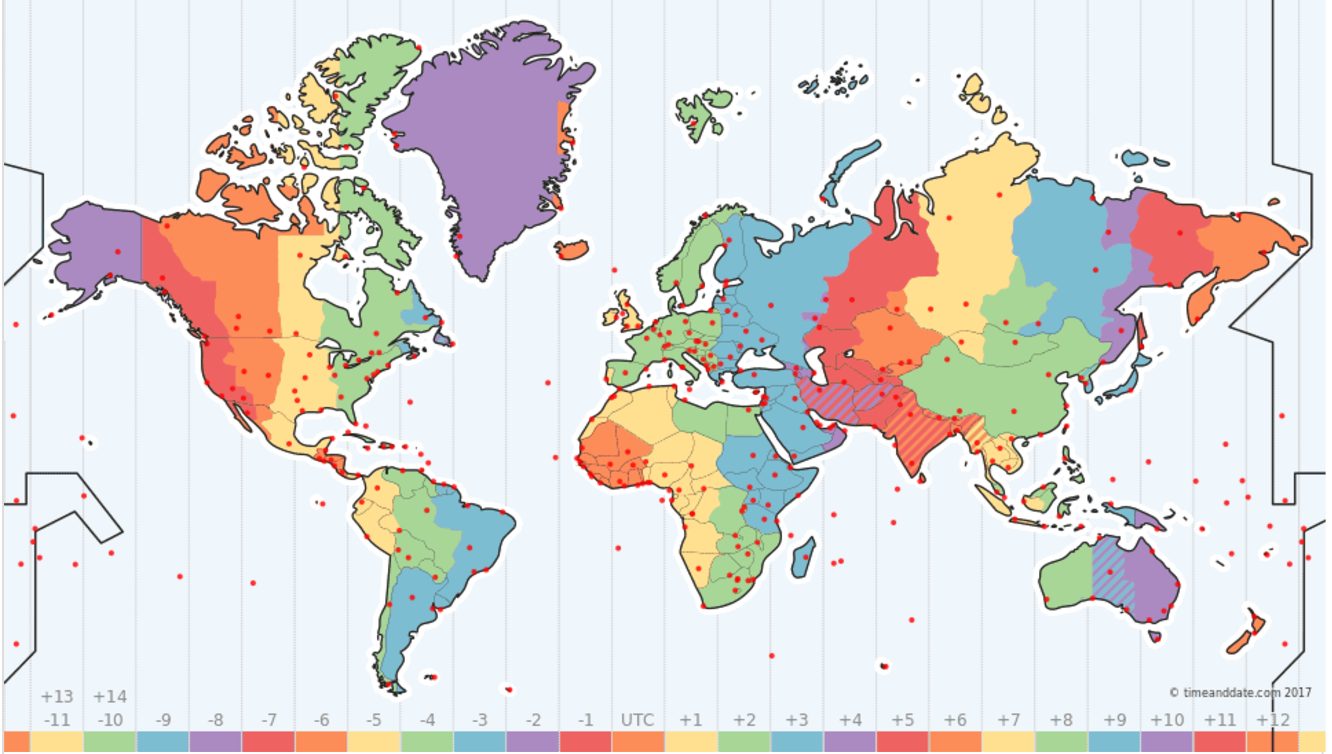
For software developers, the query “what time is Singapore” isn’t just about the current hour; it’s about how to represent that hour in code. Working with time zones is notoriously difficult, and Singapore’s GMT+8 offset presents specific challenges and advantages in a globalized tech stack.
Best Practices for Handling Time Zones in Distributed Systems
A fundamental rule in modern software engineering is to always store and process time in UTC (Coordinated Universal Time) and only convert to local time—such as Singapore Standard Time—at the “edge” (the user interface).
Singapore does not currently observe Daylight Saving Time (DST). This makes it a “stable” time zone for developers, as there are no sudden one-hour jumps that can break scheduled cron jobs or analytics pipelines. However, when building apps in Singapore that serve a global audience, developers must use robust libraries like Luxon, Moment.js (now in maintenance), or the native Intl.DateTimeFormat in JavaScript to handle the conversion from UTC to the user’s local time zone accurately.
Database Management and ISO 8601 Compliance
To ensure interoperability between different systems, Singapore-based tech firms rely on the ISO 8601 standard for representing dates and times. A timestamp for Singapore would typically look like 2023-10-27T14:30:00+08:00. The +08:00 suffix is the crucial piece of metadata that tells a system exactly how many hours ahead of UTC the event occurred. In Big Data environments, where petabytes of logs are analyzed, sticking to this rigid formatting is essential for accurate temporal analysis and debugging.
High-Frequency Trading and Financial Tech Synchronization
Singapore is a global financial powerhouse, and in the world of FinTech, even the millisecond-level precision of NTP is sometimes insufficient. For the Singapore Exchange (SGX) and the many high-frequency trading (HFT) firms located in the city-state, time is measured in microseconds and nanoseconds.
PTP vs. NTP: The Race for Zero-Latency Execution
While NTP is sufficient for general internet use, it can have a jitter (variation in latency) of several milliseconds. In the world of HFT, where millions of dollars can be made or lost in the blink of an eye, firms use Precision Time Protocol (PTP), defined by the IEEE 1588 standard.
PTP allows for sub-microsecond synchronization by using hardware-based timestamping. Many of Singapore’s top-tier data centers provide “Time-as-a-Service,” where they deliver a PTP feed directly to a client’s rack via fiber optic cables. This ensures that every trade executed on a server in Singapore is timestamped with absolute accuracy, providing a level playing field for market participants.
Regulatory Tech: Compliance through Precise Logging
Beyond the competitive advantage of speed, precise timekeeping is a regulatory requirement. Under frameworks like MiFID II (which many Singaporean firms comply with to do business globally), every step of a financial transaction must be logged with a high-accuracy timestamp. This “traceability” allows regulators to reconstruct market events during a flash crash or to detect instances of market manipulation. In this context, Singapore Standard Time is not just a reference; it is a legal safeguard.
The Future of Chronometry: Quantum Clocks and Smart City Integration
As Singapore pushes forward with its “Smart Nation” initiative, the technology of time is evolving. We are moving toward an era where “what time is Singapore” is a question answered by an interconnected web of IoT devices and quantum-secured networks.
IoT and Real-Time Synchronization in Urban Management
In a smart city, everything from autonomous shuttles to smart power grids requires synchronization. If the sensors on a smart traffic light in Jurong are out of sync with the approaching autonomous vehicle, the margin for error disappears. The next generation of Singapore’s tech infrastructure will likely see the deployment of “Edge Time”—where small, high-precision clocks are embedded directly into 5G base stations to provide localized, ultra-reliable time signals to IoT devices.

The Rise of Quantum Timekeeping
Looking even further ahead, researchers in Singapore are exploring quantum chronometry. Quantum clocks, which use the vibrations of ions or molecules trapped by lasers, are orders of magnitude more accurate than today’s cesium clocks. These devices could eventually redefine the national time standard, providing the synchronization necessary for quantum computing networks. For the tech industry, this represents the next frontier: a world where the synchronization of data is so perfect that latency becomes a relic of the past.
In conclusion, “what time is Singapore” is a query that touches upon every layer of the modern technological stack. From the atomic vibrations monitored by A*STAR to the microsecond-accurate logs of the SGX, time is the invisible pulse of the city’s digital economy. For tech professionals, understanding this infrastructure is key to building resilient, scalable, and secure systems that can operate at the speed of the Lion City.
aViewFromTheCave is a participant in the Amazon Services LLC Associates Program, an affiliate advertising program designed to provide a means for sites to earn advertising fees by advertising and linking to Amazon.com. Amazon, the Amazon logo, AmazonSupply, and the AmazonSupply logo are trademarks of Amazon.com, Inc. or its affiliates. As an Amazon Associate we earn affiliate commissions from qualifying purchases.