
For centuries, the determination of prayer times was a task for astronomers and local scholars who relied on the position of the sun and the length of shadows. In the modern era, the question “what time is salat al asr” is no longer answered by a sundial, but by complex algorithms, GPS data, and sophisticated software. The intersection of faith and technology has birthed a niche yet expansive “ReligTech” sector, where high-precision software ensures that millions of users across the globe can observe their rituals with down-to-the-second accuracy.

To understand how technology calculates the time for Asr, we must delve into the world of spherical trigonometry, geolocation services, and the various software architectures that power the apps on our smartphones.
The Algorithmic Foundation: Calculating Shadow Lengths and Solar Declination
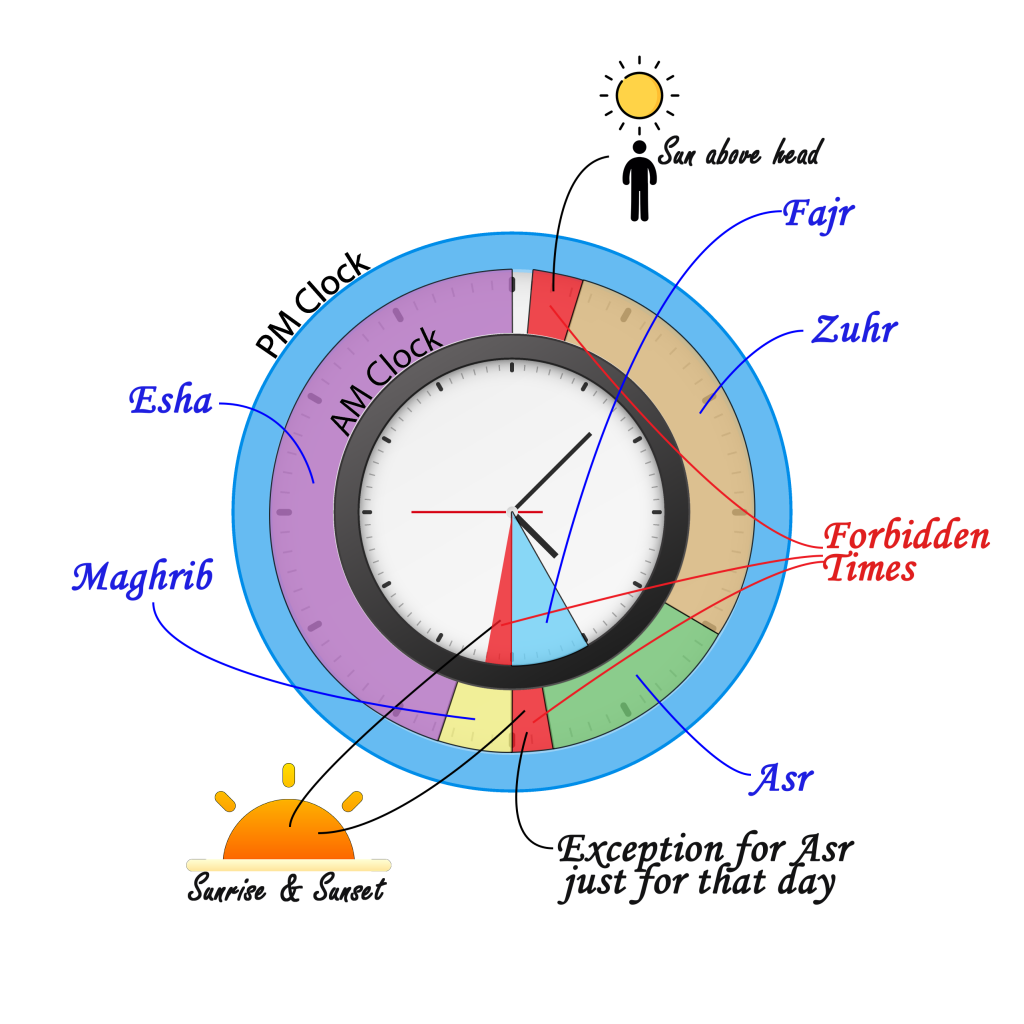
At its core, the calculation of Salat al Asr is a mathematical problem involving the position of the sun relative to an observer on Earth. Unlike other prayers that may be based on the presence of light (dawn or dusk), Asr is uniquely defined by the relationship between an object and its shadow.
Spherical Trigonometry in Code
To determine the time for Asr, software developers must implement formulas that account for the Earth’s tilt, its elliptical orbit, and the user’s specific latitude and longitude. The fundamental formula used in most prayer time libraries (such as the popular Adhan.js or similar Python libraries) involves the inverse cotangent of the shadow length.
Technically, the time for Asr begins when the length of an object’s shadow is equal to the length of the object itself plus the length of the shadow at noon. However, this varies by “Madhab” (school of thought), which introduces a logical variable into the code. Developers must provide an option for “Standard” (Shafi’i, Maliki, Hanbali) or “Hanafi” calculations, where the latter requires the shadow to be twice the length. From a software perspective, this is a simple conditional statement, but it requires precise astronomical data inputs to be accurate.
Solar Declination and the Equation of Time
Software does not just “look” at the sun; it predicts its path. To answer “what time is salat al asr,” a program must calculate the Solar Declination and the Equation of Time for that specific calendar day. The Equation of Time accounts for the discrepancy between “apparent solar time” (what a sundial shows) and “mean solar time” (what our clocks show). Tech platforms use high-fidelity datasets from NASA or the Jet Propulsion Laboratory (JPL) to ensure that these astronomical constants are updated, accounting for leap years and orbital fluctuations.
The Role of Geolocation and Real-Time Data Integration
A calculation is only as good as its coordinates. The evolution of mobile technology has transformed prayer timing from a static “city-based” lookup table to a dynamic, GPS-driven service.
GPS and API Interconnectivity
Modern apps utilize the Global Positioning System (GPS) to pinpoint a user’s exact location. This is crucial because a difference of just a few miles can shift the time of Asr by several minutes. High-end prayer applications use a combination of local GPS chips and network-based location (Wi-Fi/Cellular) to maintain a constant stream of data.
Furthermore, many developers rely on centralized APIs (Application Programming Interfaces), such as the Aladhan API or the MuslimSalat API. These services allow developers to offload the heavy mathematical lifting to specialized servers. When a user opens an app, the client sends the latitude, longitude, and preferred calculation method to the server, which returns a JSON object containing the precise timings for the day. This cloud-based approach ensures that even low-power devices can provide high-precision results.
Atmospheric Refraction and Altitude Corrections
Sophisticated software goes a step further by accounting for altitude. A user on the 100th floor of a skyscraper will see the sun set later than someone on the ground floor. In tech terms, this requires an “altitude correction factor.” Developers integrate elevation data—often pulled from Google Maps Elevation API or Open-Elevation—into their algorithms to adjust the refraction of light through the atmosphere, providing a “high-definition” timing experience that was impossible two decades ago.
The Evolution of User Interface: Notifications, Widgets, and Wearables
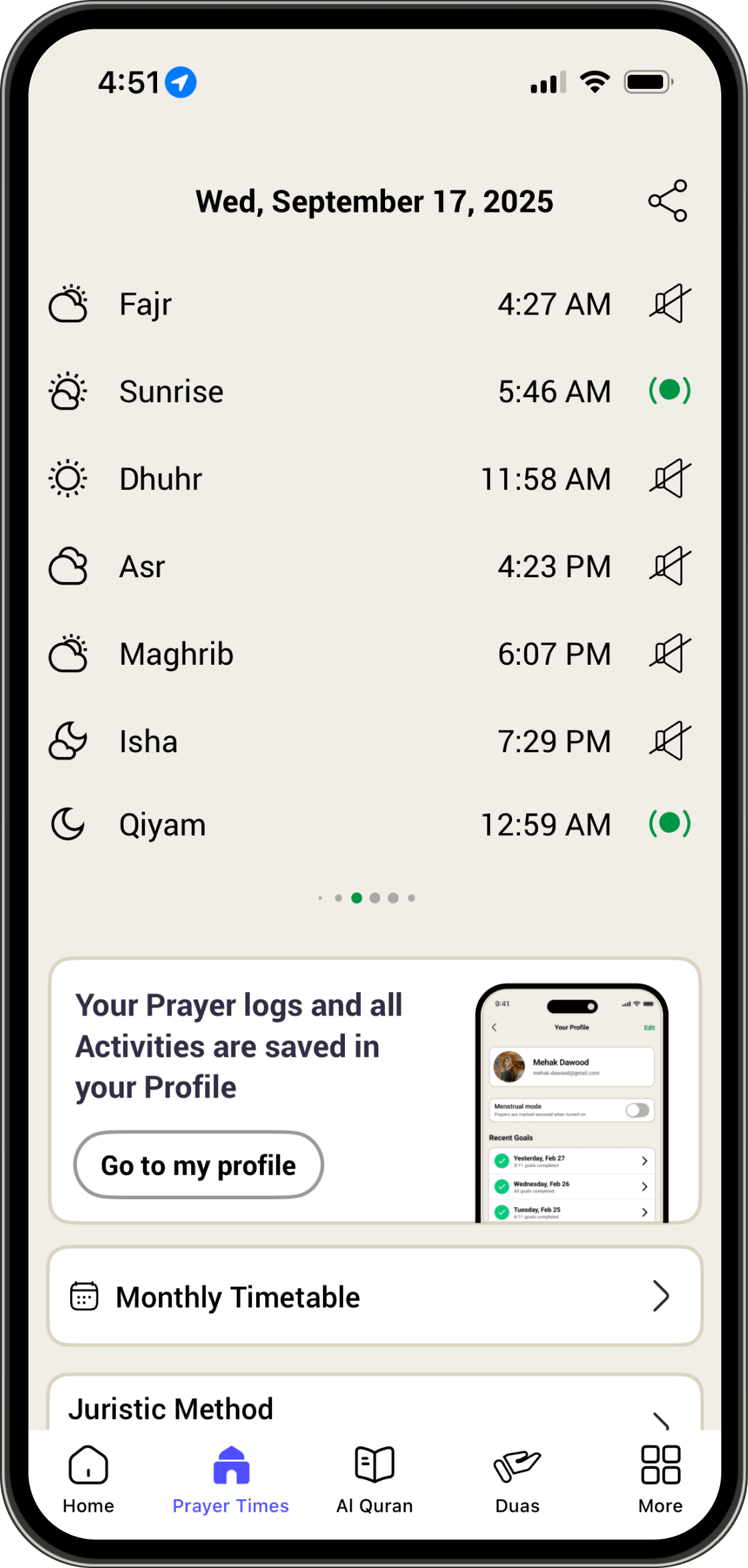
Once the time for Asr is calculated, the challenge shifts to User Experience (UX). How does the technology communicate this information to the user in a way that is seamless and non-intrusive?
Push Notifications and Background Tasks
One of the primary technical hurdles in prayer time apps is the management of background tasks. Both iOS and Android have strict battery-saving protocols that kill background processes. To ensure a notification for Asr triggers at exactly the right moment, developers use “Alarm Managers” (Android) or “Local Notifications” (iOS). This involves scheduling a system-level event that the OS guarantees will fire, even if the app is closed. This is a critical piece of digital infrastructure that ensures the reliability of religious observance in a mobile-first world.
Wearable Tech and IoT Integration
The question of “what time is salat al asr” has moved from the phone screen to the wrist and the smart home. We are now seeing the rise of Apple Watch complications and Wear OS tiles dedicated specifically to prayer tracking. These miniaturized software modules must be highly efficient, pulling data from the main phone app via Bluetooth Low Energy (BLE) to update the time in real-time.
Beyond wearables, the Internet of Things (IoT) has brought “smart Azan clocks” into the home. These devices are connected to the home Wi-Fi and automatically synchronize their internal clocks with global NTP (Network Time Protocol) servers. Some even integrate with smart home ecosystems like Amazon Alexa or Google Home, allowing users to ask, “Alexa, what time is Asr?” and receive a response based on the latest algorithmic data.
Data Privacy and Security in Religious Technology
As with any technology that tracks location, the rise of prayer apps has brought significant discussions regarding data security and digital ethics.
The Ethics of Location Tracking
Because prayer time software requires precise location data to function, these apps collect vast amounts of “Points of Interest” data. In the tech industry, this has raised red flags. There have been documented cases of third-party data brokers purchasing location data from popular religious apps. As a result, the latest trend in prayer tech is “Privacy by Design.”
Ethical developers are now moving toward on-device processing. Instead of sending a user’s coordinates to a central server to calculate the time for Asr, the app downloads a localized database and performs the spherical trigonometry locally on the smartphone’s CPU. This ensures that the user’s location never leaves the device, providing a secure bridge between technological utility and personal privacy.
Open Source and Community-Driven Code
To foster trust, much of the core logic for calculating prayer times has moved to open-source platforms like GitHub. By making the code “Open Source,” developers allow the community to audit the math and the data-handling practices. This transparency is a hallmark of modern software engineering, ensuring that the answer to “what time is salat al asr” is not only accurate but also ethically derived.
The Future of Prayer Tech: AI and Machine Learning
Looking forward, the integration of Artificial Intelligence (AI) is set to further refine how we interact with religious schedules.
Predictive Scheduling
Machine learning models can now analyze a user’s habits—such as when they usually pray or where they are at certain times of the day—to provide “Smart Reminders.” For instance, if the AI detects that a user is usually in a meeting at the start of Asr, it might suggest an earlier or later notification or automatically silence the phone during the prayer window. This level of “contextual awareness” is the next frontier in mobile software.
Augmented Reality (AR) Qibla and Timing
We are also seeing the emergence of Augmented Reality (AR) in this space. By combining the phone’s camera with its internal compass and the calculated time for Asr, apps can overlay the position of the sun and the direction of prayer (Qibla) directly onto the physical world through the viewfinder. This uses a technology called “VIO” (Visual-Inertial Odometry) to track the user’s movement in 3D space, providing a high-tech solution to an ancient requirement.
Conclusion: A Symphony of Logic and Tradition
The simple question, “what time is salat al asr,” serves as a gateway into a complex world of modern technology. From the trigonometric equations running in the background to the GPS satellites orbiting the Earth, and from the secure APIs to the elegant UX of a smartwatch face, technology has become an indispensable tool for the modern observer.
As software continues to evolve, the precision of these tools will only increase. What remains constant is the role of the developer: to translate celestial movements into digital logic, ensuring that tradition and tech continue to walk hand-in-hand in the digital age. By leveraging AI, IoT, and high-precision geolocation, the “ReligTech” sector is proving that even the most ancient of practices can be enhanced by the cutting edge of innovation.
aViewFromTheCave is a participant in the Amazon Services LLC Associates Program, an affiliate advertising program designed to provide a means for sites to earn advertising fees by advertising and linking to Amazon.com. Amazon, the Amazon logo, AmazonSupply, and the AmazonSupply logo are trademarks of Amazon.com, Inc. or its affiliates. As an Amazon Associate we earn affiliate commissions from qualifying purchases.