
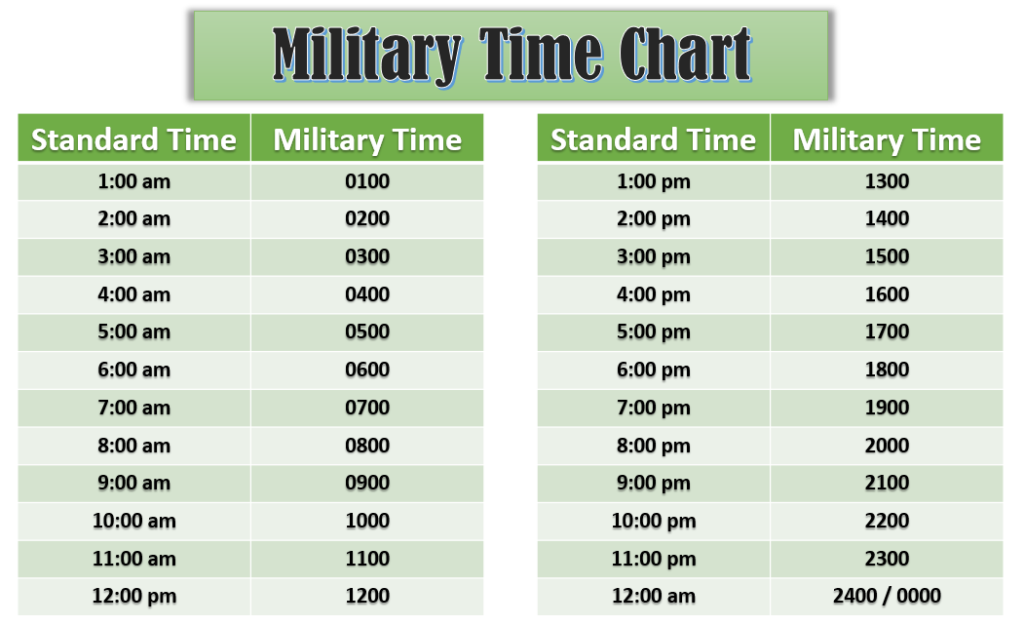
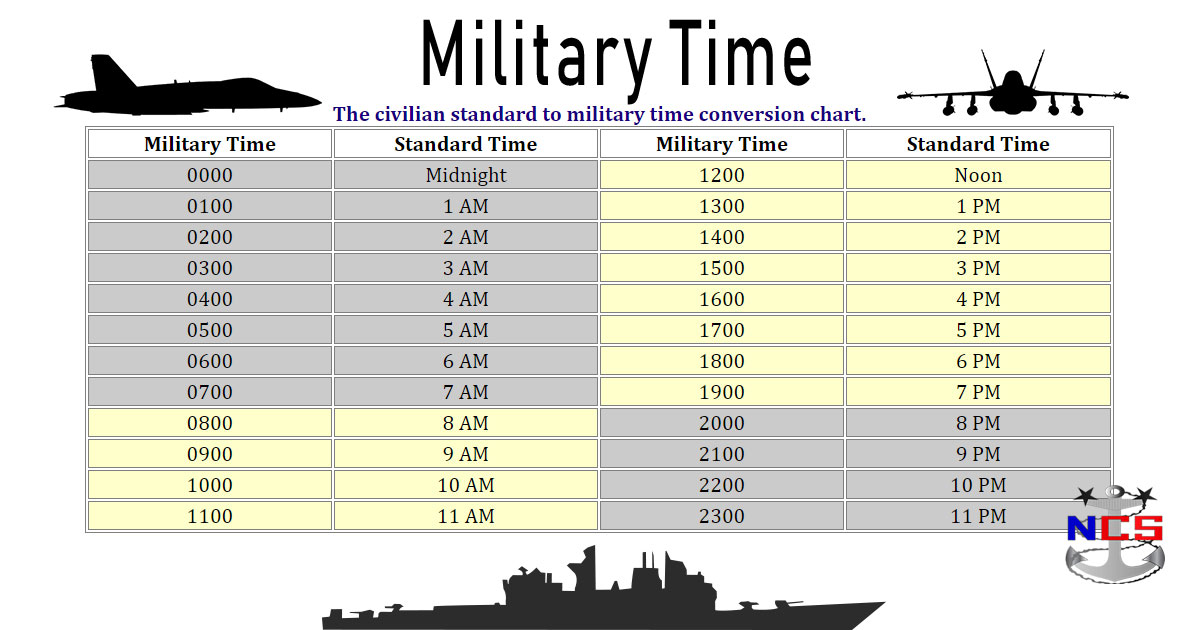
In the world of global telecommunications, software engineering, and high-stakes data management, precision is the primary currency. While most of the civilian population in the United States relies on the 12-hour AM/PM system, the technological backbone of the world operates on a different rhythm. If you are asking, “What time is 5 AM in military time?” the answer is simple yet foundational to digital infrastructure: 0500 hours.
However, understanding that 5 AM translates to 0500 is only the surface level of a much broader discussion regarding time synchronization in technology. In tech circles, military time is more commonly referred to as the 24-hour clock. It is the language of servers, the standard for international protocols, and the safeguard against the catastrophic errors that can occur when a single “AM” or “PM” is misplaced in a line of code.
Decoding the Syntax: Converting 5 AM to the 24-Hour Format
To understand why 5 AM becomes 0500, we must look at the syntax of the 24-hour clock. Unlike the 12-hour system, which resets twice a day, the 24-hour clock treats the day as a single, continuous loop of 24 units.
The Core Rule of Morning Hours
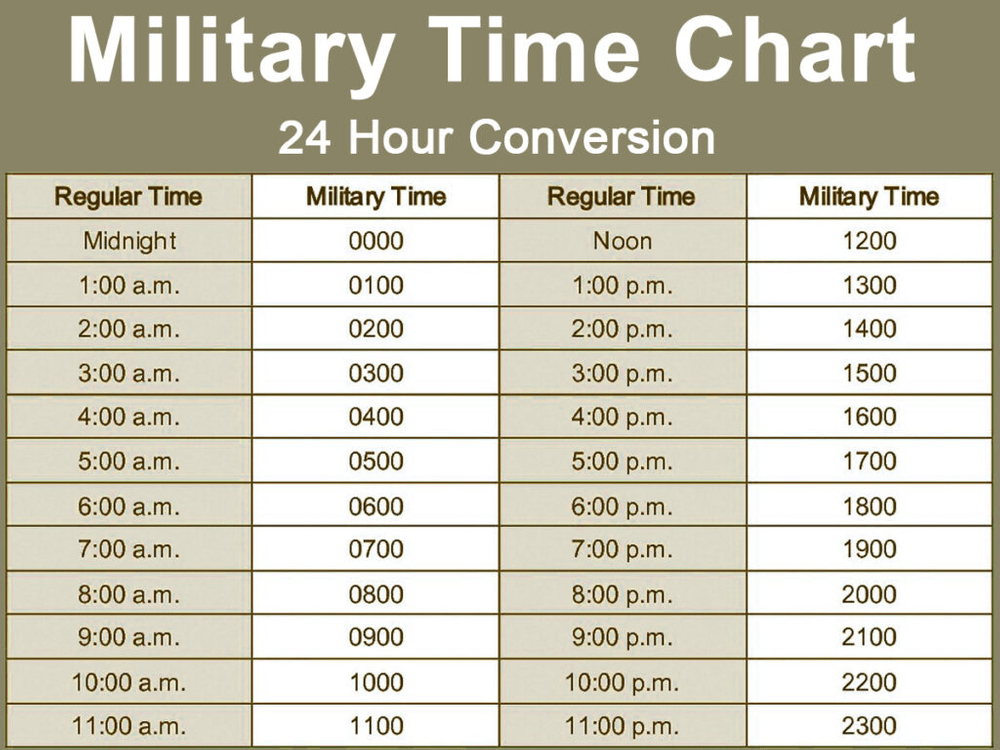
For any time between 1:00 AM and 12:59 PM, the conversion to military time is relatively straightforward. Because the 24-hour clock begins at midnight (0000), the morning hours mirror their 12-hour counterparts. To convert 5 AM, you simply remove the “AM” and ensure the number is expressed in four digits. Thus, 5:00 AM becomes 0500. It is pronounced “zero five hundred” or “oh five hundred.”
Why Zero-Padding Matters in Tech Systems
In software development and database management, the leading zero in “0500” is not merely aesthetic; it is a functional requirement. This is known as “zero-padding.” When a computer sorts data chronologically, it often does so via string manipulation. Without the leading zero, a system might incorrectly sort “500” after “1200” because the digit ‘5’ is higher than ‘1’. By utilizing a consistent four-digit format (0500), developers ensure that time-stamped logs remain in the correct sequential order, preventing data corruption and logic errors in time-sensitive applications.
Why Military Time is the Global Standard for Software and Systems
The tech industry does not use the 24-hour clock out of a sense of tradition or martial preference; it does so out of necessity. In a world where a developer in San Francisco collaborates with a QA engineer in Bangalore and a server is hosted in Frankfurt, the 12-hour clock is a liability.
Eliminating AM/PM Ambiguity in Server Logs
Imagine a server log that records a critical system failure at 12:00. Without the distinction of a 24-hour format, the IT forensics team must clarify if the crash happened at noon or midnight. In a 24-hour system, 12:00 is noon, and 00:00 is midnight. This clarity is vital for uptime maintenance. When a system is programmed to run a backup at 0500, there is zero room for interpretation. If that same system were programmed for “5:00,” and the AM/PM flag failed to register, the backup might run during peak traffic hours at 5:00 PM (1700), potentially causing a massive slowdown in user experience.
ISO 8601: The International Benchmark for Time Representation
The tech industry adheres to the International Organization for Standardization (ISO) 8601. This is the global standard for representing dates and times. ISO 8601 utilizes the 24-hour clock exclusively. For example, a timestamp might look like 2023-10-27T05:00:00Z.
By using the 24-hour format (05:00), the standard ensures that data can be exchanged between different systems—regardless of their country of origin—without any risk of misinterpretation. For tech professionals, mastering this format is as essential as learning a programming language; it is the “common tongue” of the internet’s infrastructure.
Implementation in Modern Applications and API Development
When building applications, developers must decide how to store and display time. While the user interface (UI) might show “5:00 AM” to make the app “user-friendly,” the backend is almost certainly communicating in 24-hour increments.
How JavaScript and Python Handle 24-Hour Time
In modern programming languages, time is often handled via libraries that default to the 24-hour clock. In JavaScript, the Date object provides methods like getHours(), which returns a value from 0 to 23. If you call this method at 5 AM, it returns 5. In Python, the datetime module uses the %H directive to represent hours in a 24-hour format.
Developers prefer this because it simplifies “time arithmetic.” If you want to calculate the duration between 5 AM and 5 PM, using a 12-hour clock requires a complex conditional check for AM and PM. Using the 24-hour clock, it is a simple subtraction: $1700 – 0500 = 12$ hours. This efficiency reduces the “code debt” and lowers the processing power required for complex scheduling algorithms.
Databases and Timezone Synchronization
Relational databases like PostgreSQL or MySQL typically store timestamps in Coordinated Universal Time (UTC) using the 24-hour format. When a user in New York schedules an alarm for 5 AM, the application converts that local time to a UTC 24-hour timestamp. If the user then travels to London, the app calculates the offset against the 24-hour UTC base to ensure the alarm still rings at the correct moment. This “Single Source of Truth” approach would be nearly impossible to manage reliably with the 12-hour clock’s inherent ambiguities.
Security and Precision: The Role of Military Time in Digital Forensics
In the realm of digital security and cybersecurity, the 24-hour clock is a non-negotiable requirement. When a security breach occurs, the timeline is everything.
Timestamp Accuracy in Cybersecurity Audits
During a post-mortem analysis of a cyberattack, security analysts reconstruct the “Kill Chain.” They look at when the initial intrusion occurred, when the lateral movement began, and when the data exfiltration was completed. If the logs are recorded in a 12-hour format, a simple error in the “AM/PM” metadata could throw the entire investigation off by twelve hours. This could lead to analysts looking at the wrong set of network traffic, allowing the attackers to remain undetected for longer. By using 0500 instead of 5 AM, the audit trail remains ironclad.
Avoiding Glitches During Daylight Saving Transitions
Daylight Saving Time (DST) is a nightmare for software engineers. When the clocks “fall back” at 2 AM, the 12-hour clock repeats the 1 AM hour twice. This can lead to primary key violations in databases and duplicate entries in financial ledgers. While the 24-hour clock doesn’t solve the existence of DST, it makes the transition easier to map. Most high-level tech systems avoid this entirely by staying on “Military Time” (UTC) year-round, regardless of local seasonal changes.
Optimizing Your Digital Workflow with the 24-Hour Clock
Beyond the backend code and server racks, adopting military time can significantly improve your personal and professional productivity within the tech ecosystem.
Scheduling Across Global Teams
For project managers using tools like Jira, Trello, or Asana, scheduling a sprint review at “5:00” is a recipe for disaster. Does that mean 5:00 AM for the developer in London or 5:00 PM for the designer in Singapore? By shifting the team culture to use the 24-hour clock, communication becomes “bug-free.” Saying “The deployment is scheduled for 0500 UTC” provides a universal point of reference that no team member can misinterpret.
Configuring Your Hardware and Software Environment
Most professional-grade hardware, from Cisco routers to AWS cloud consoles, defaults to the 24-hour clock. For tech professionals, setting your personal devices (smartphones, laptops, and smartwatches) to military time can help “wire” your brain to think in the same format as the systems you manage.
When you see “05:00” on your phone, you are training your mind to recognize the day as a single 24-hour block. This mental shift often leads to better time blocking and a more realistic understanding of how much time is remaining in the workday. It removes the psychological “reset” that happens at noon, allowing for a more continuous and focused workflow.
Conclusion: The Strategic Value of 0500
What time is 5 AM in military time? It is 0500. But as we have explored, it represents much more than a simple conversion. It represents a commitment to precision, an adherence to global standards, and a fundamental understanding of how the digital world operates.
In the tech industry, the move from 12-hour to 24-hour time is a move from ambiguity to clarity. Whether you are coding an API, investigating a security breach, or managing a global team, the 24-hour clock is an indispensable tool. By mastering the 0500 start, you are not just telling time; you are speaking the language of the future.
aViewFromTheCave is a participant in the Amazon Services LLC Associates Program, an affiliate advertising program designed to provide a means for sites to earn advertising fees by advertising and linking to Amazon.com. Amazon, the Amazon logo, AmazonSupply, and the AmazonSupply logo are trademarks of Amazon.com, Inc. or its affiliates. As an Amazon Associate we earn affiliate commissions from qualifying purchases.