
Understanding the precise closing times of the US financial markets is far more crucial than simply knowing when trading ceases for the day. For investors, traders, and financial professionals, these hours dictate liquidity, volatility patterns, and the critical window for executing strategies. The US market, being the largest and most influential globally, sets a significant rhythm for international finance, and its closing bell often signals a shift in global trading sentiment. Navigating these schedules, especially across various asset classes, is fundamental to effective financial planning and risk management. This guide delves into the specifics of US market closing times, exploring the nuances, exceptions, and strategic implications for anyone engaged with the financial world.
The Standard Trading Hours: Equities and Beyond
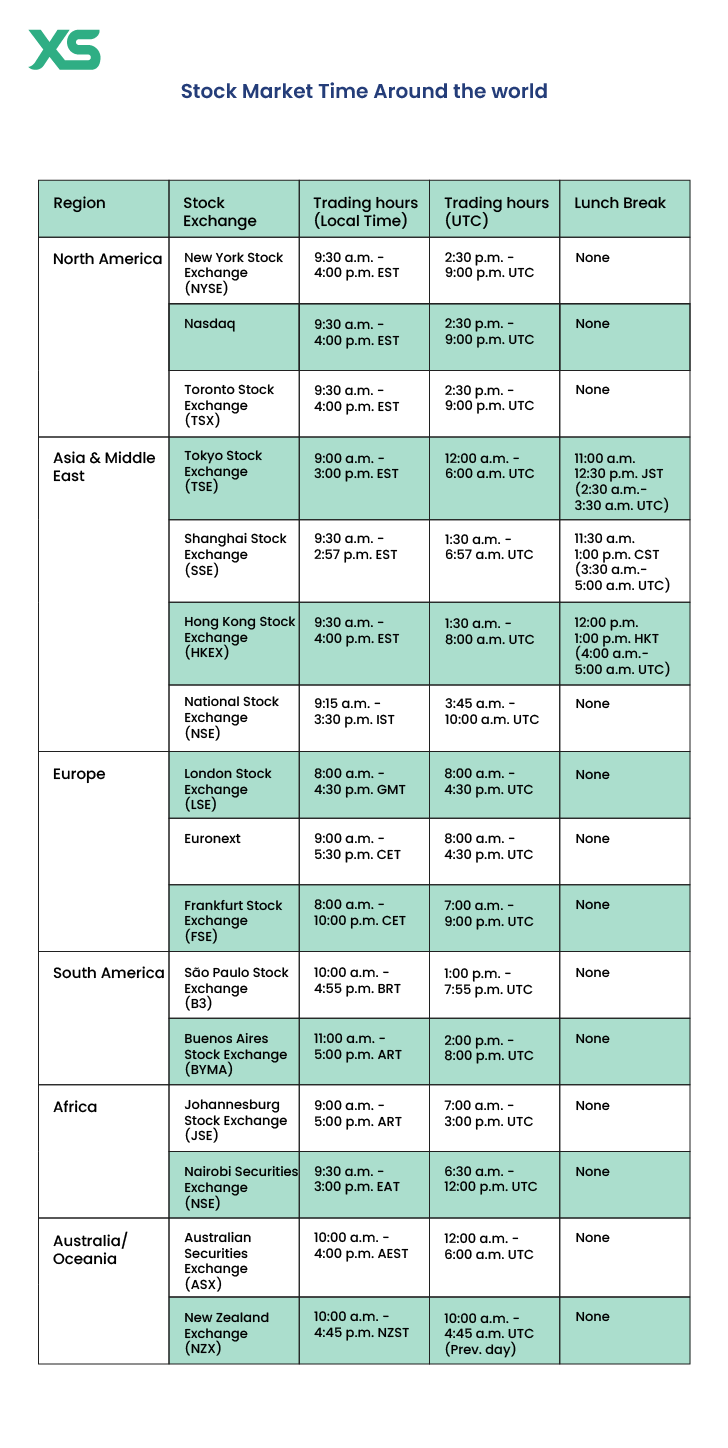
At the heart of the US financial system lie the major stock exchanges, primarily the New York Stock Exchange (NYSE) and the Nasdaq Stock Market. These venues adhere to a widely recognized schedule, forming the backbone of daily trading activity. However, the concept of “market close” extends beyond just these equity markets, encompassing a diverse array of financial instruments, each with its own operational timetable.
Core Equity Market Hours: NYSE and Nasdaq
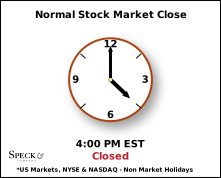
For the vast majority of retail and institutional investors dealing in stocks, the standard trading hours are from 9:30 AM Eastern Time (ET) to 4:00 PM ET, Monday through Friday. During this 6.5-hour window, known as regular trading hours, market participants can buy and sell shares of publicly traded companies with optimal liquidity. The opening bell at 9:30 AM ET often brings a surge of activity as news from overnight or pre-market sessions gets digested, while the closing bell at 4:00 PM ET frequently sees a similar rush as orders are filled and positions adjusted before the market shuts.
Understanding Pre-Market and After-Hours Trading
While 9:30 AM to 4:00 PM ET defines regular trading, the market’s pulse doesn’t entirely stop outside these hours. Pre-market trading typically runs from 4:00 AM ET to 9:30 AM ET, and after-hours trading extends from 4:00 PM ET to 8:00 PM ET. These extended sessions allow investors to react to news released outside of regular hours, such as earnings reports or major economic announcements. However, it’s crucial to note that liquidity in pre-market and after-hours trading is generally much lower than during regular hours. This reduced liquidity can lead to wider bid-ask spreads and increased price volatility, making trades potentially riskier for individual investors. Most brokers offer access to these extended hours, but it’s important to understand the associated risks and the difference in order types (e.g., limit orders are often preferred to market orders during these times).
Other Asset Classes: Futures, Options, and Bonds
The financial market is a vast ecosystem, and while stocks dominate headlines, other asset classes operate on different schedules.
- Futures and Options: Markets for derivatives like futures and options, traded on exchanges such as the Chicago Mercantile Exchange (CCME) and the Chicago Board Options Exchange (CBOE), typically have much longer trading hours, often extending close to 24 hours a day, five days a week. For instance, many E-mini S&P 500 futures contracts trade from Sunday evening (6:00 PM ET) until Friday afternoon (4:15 PM ET), with a brief daily pause. Equity options generally follow the same 9:30 AM to 4:00 PM ET schedule as the underlying stocks, though some index options may trade until 4:15 PM ET.
- Bond Market: The US bond market, particularly the over-the-counter (OTC) market for Treasury bonds and corporate bonds, operates somewhat differently. While there isn’t a single “exchange” with a clear opening and closing bell like for stocks, institutional trading activity for US Treasuries typically runs from around 8:00 AM ET to 5:00 PM ET. However, the Financial Industry Regulatory Authority (FINRA)’s TRACE system, which facilitates corporate bond reporting, has reporting hours from 8:00 AM ET to 6:30 PM ET, influencing when prices are most transparent and liquid. The bond market often closes earlier than the stock market on days preceding market holidays.
Impact of Market Closing Times on Investors
The timing of market closures has profound implications for all market participants, influencing everything from trading strategies to risk assessment and information flow. A comprehensive understanding of these impacts is vital for making informed financial decisions.
Liquidity and Volatility Dynamics
During regular trading hours (9:30 AM – 4:00 PM ET), liquidity is at its peak. There’s a high volume of buyers and sellers, which generally means tighter bid-ask spreads and easier execution of orders without significantly moving prices. However, as the market approaches its closing time, activity can spike again, often leading to increased volatility. Traders looking to close out positions or open new ones before the day’s end contribute to this “closing bell” rush. After hours, as mentioned, liquidity thins out considerably. This can make it difficult to execute large orders without affecting the price, leading to potential slippage and making assets more susceptible to price swings based on relatively small trades or news.
Decision-Making Windows and Information Processing
The market’s closing acts as a natural deadline for investors. Any decision to buy or sell that needs to be executed within the day must be placed before 4:00 PM ET (or the specific closing time for other assets). This creates a concentrated period for processing news, analyzing data, and making trading choices. For long-term investors, the closing time might simply mark the end of market data collection for the day. For active traders, however, it’s the final opportunity to lock in profits, cut losses, or adjust exposure before overnight risks emerge. News released after hours can create a significant gap in price at the next day’s open, a phenomenon known as “gap risk,” which traders must account for.
Risk Management and Overnight Exposure
The period when markets are closed is often referred to as “overnight.” During this time, significant events can unfold globally, impacting stock prices when trading resumes. Geopolitical developments, macroeconomic data releases from other regions, or company-specific news (e.g., late earnings calls, mergers & acquisitions announcements) can all influence how an asset trades at the next open. Investors holding positions overnight are exposed to this “gap risk.” Understanding market closing times helps in managing this exposure. For example, some traders might prefer to close out all positions before the market closes to avoid overnight risk, while others might use options or other hedging strategies to mitigate potential losses from adverse after-hours news. The market close serves as a critical juncture for assessing and adjusting risk profiles.
Factors Influencing Market Hours and Exceptions
While standard trading hours provide a foundational rhythm, the US market is not immune to alterations. Various factors can lead to deviations from the norm, ranging from planned holidays to unexpected events, all of which demand investor awareness.
Market Holidays and Early Closures
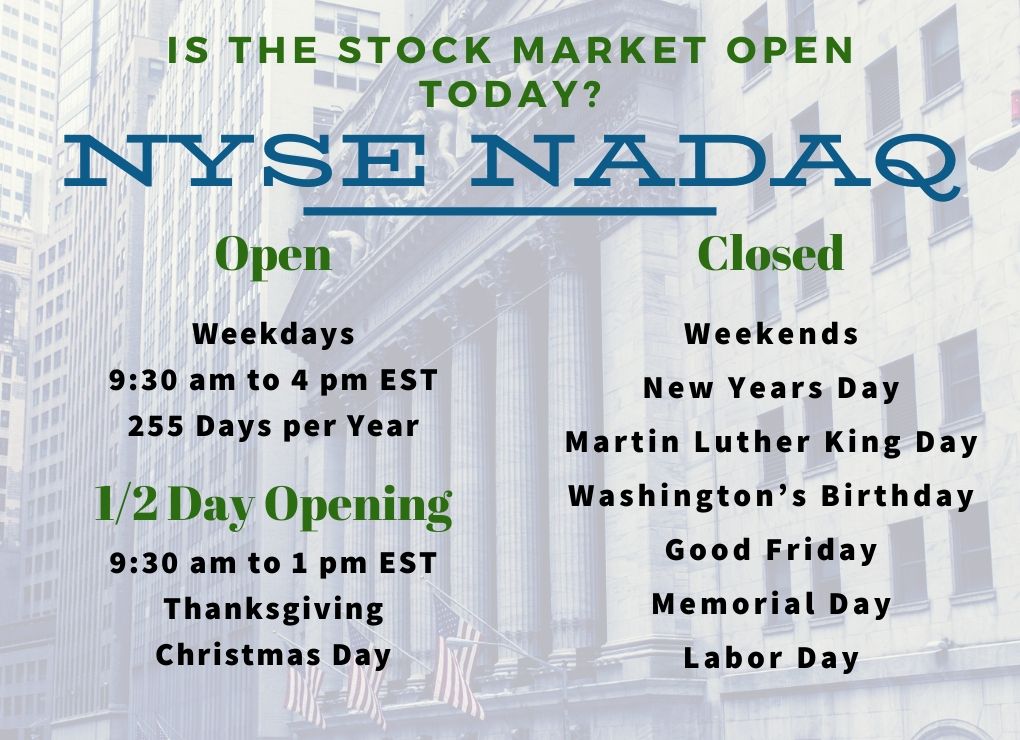
The US financial markets observe several federal holidays, during which regular trading hours are suspended. These typically include New Year’s Day, Martin Luther King, Jr. Day, Presidents’ Day, Good Friday, Memorial Day, Juneteenth, Independence Day, Labor Day, Thanksgiving Day, and Christmas Day. On these days, the exchanges are completely closed.
Additionally, markets often have early closures on the day before or after certain holidays. For instance, the stock market typically closes at 1:00 PM ET on the day before Independence Day (if it falls on a weekday) and on Black Friday (the day after Thanksgiving). The bond market often has even more early closures throughout the year, sometimes closing at 2:00 PM ET on days preceding various federal holidays. These early closures are important for planning trades and understanding when liquidity will begin to thin out.
Daylight Saving Time Adjustments
The biannual shift to and from Daylight Saving Time (DST) in the US can cause temporary confusion, especially for international traders. While the actual trading hours (9:30 AM to 4:00 PM) remain fixed, the absolute clock time relative to Coordinated Universal Time (UTC) changes. Most of the US observes DST, moving clocks forward by an hour in spring and back an hour in fall. Countries that do not observe DST, or observe it on different dates, will experience a shift in the time difference with New York. It’s crucial for global investors to adjust their internal clocks and trading schedules accordingly to ensure they don’t miss key market openings or closings.
Circuit Breakers and Trading Halts
Though rare, extreme market volatility can trigger circuit breakers, which are predefined mechanisms designed to temporarily halt trading across all US equity markets. These halts are implemented at different thresholds of decline (e.g., 7%, 13%, and 20% drops in the S&P 500 index) and are intended to give investors a chance to absorb news and prevent panic selling. A Level 1 (7%) or Level 2 (13%) drop before 3:25 PM ET results in a 15-minute halt. A Level 3 (20%) drop at any time causes trading to halt for the remainder of the day.
Individual stocks can also experience trading halts due to specific company news, pending news, regulatory issues, or extreme price fluctuations. These halts are temporary and can last anywhere from a few minutes to several days, depending on the reason. During a halt, no trading can occur in that specific security. While not directly related to market closing times, these halts effectively stop trading for specific periods and are critical exceptions to continuous trading.
Leveraging Market Hours for Strategic Investing
Understanding market hours isn’t just about avoiding missed trades; it’s about optimizing investment strategies and capitalizing on market dynamics that are often tied to specific times of the day. Smart investors tailor their approach based on these temporal considerations.
Strategies for Active Traders
For day traders and swing traders, the different phases of market hours offer distinct opportunities and challenges.
- Opening Bell Volatility: The first hour (9:30 AM – 10:30 AM ET) is typically characterized by high volatility and heavy volume as orders accumulated overnight are executed and investors react to pre-market news. This period can be ripe for quick profits for experienced traders comfortable with rapid price movements, but it also carries higher risk.
- Mid-Day Lull: The middle hours of the day (roughly 11:00 AM – 2:00 PM ET) often see a decrease in volume and volatility. Many institutional traders take lunch breaks, and the market can enter a consolidation phase. This might be less attractive for momentum traders but could offer opportunities for range-bound strategies or for investors seeking to accumulate positions at more stable prices.
- Closing Bell Rally/Rush: Similar to the open, the final hour (3:00 PM – 4:00 PM ET) often sees another surge in volume and volatility as traders close positions, adjust portfolios, and execute orders before the market shuts. This can present opportunities for short-term trades, but again, caution is advised due to heightened price swings.
- After-Hours/Pre-Market: While riskier due to low liquidity, these sessions can be exploited by traders with specific information or those reacting swiftly to breaking news. However, the use of limit orders is paramount to mitigate price risk.
Considerations for Long-Term Investors
Long-term investors, while less concerned with minute-by-minute price fluctuations, still benefit from understanding market hours.
- Order Placement: Long-term investors typically place orders when liquidity is highest – during regular trading hours. This ensures better execution prices and tighter spreads. Placing large orders in after-hours trading could lead to unfavorable prices due to low volume.
- News Reaction: While not actively trading on it daily, being aware of news releases outside market hours helps long-term investors understand potential price gaps at the next open and can inform their overall portfolio review.
- Dollar-Cost Averaging: For strategies like dollar-cost averaging, where fixed amounts are invested periodically, the exact time of day for placing the order is less critical, as long as it’s within regular hours to ensure good execution.
- Portfolio Rebalancing: When rebalancing a portfolio, executing trades during periods of high liquidity can minimize impact on prices, especially for larger portfolios.
Importance of Staying Informed and Utilizing Tools
Regardless of investment style, staying informed about market hours, holidays, and any unexpected closures is non-negotiable. Reputable financial news outlets, exchange websites (NYSE, Nasdaq, CME), and your brokerage platform are excellent resources. Many brokerages provide calendars detailing upcoming market holidays and early closures. Financial tools and apps often offer real-time market data, pre-market/after-hours quotes, and alerts, helping investors stay updated even when they’re not actively watching the screens. Utilizing these resources effectively allows investors to align their strategies with the market’s pulse, ensuring they are prepared for both regular operations and unforeseen deviations.
In conclusion, the simple question “what time does the US market close?” unravels a complex tapestry of schedules, exceptions, and strategic implications. From the standard equity market hours to the distinct timings of bonds and derivatives, and the critical role of pre-market and after-hours trading, each component shapes the investment landscape. Understanding these nuances empowers investors to manage risk, optimize liquidity, and strategically time their decisions, ultimately contributing to more informed and potentially more successful financial outcomes in the dynamic world of finance.
aViewFromTheCave is a participant in the Amazon Services LLC Associates Program, an affiliate advertising program designed to provide a means for sites to earn advertising fees by advertising and linking to Amazon.com. Amazon, the Amazon logo, AmazonSupply, and the AmazonSupply logo are trademarks of Amazon.com, Inc. or its affiliates. As an Amazon Associate we earn affiliate commissions from qualifying purchases.