
For investors residing in California, understanding the intricacies of the stock market’s operating hours is more than just a matter of curiosity; it’s a critical component of effective financial strategy. While the major U.S. stock exchanges, primarily the New York Stock Exchange (NYSE) and NASDAQ, operate on Eastern Time (ET), California’s position in the Pacific Time Zone (PT) introduces a three-hour differential that significantly impacts when local investors can actively trade and monitor their portfolios. This distinction is crucial for timing trades, reacting to news, and managing investment decisions effectively. This article will demystify the stock market’s closing times for California residents, delve into the reasons behind these schedules, and explore the strategic implications for investors.
Understanding Standard Market Hours in the U.S.
The U.S. stock market adheres to a standardized schedule designed to provide an orderly and efficient trading environment. This schedule is primarily dictated by the operations of the two largest exchanges.
The NYSE and NASDAQ: Pillars of U.S. Trading
The New York Stock Exchange (NYSE), often referred to as “The Big Board,” is a physical trading floor located in New York City, though much of its trading is now electronic. It is the world’s largest stock exchange by market capitalization and a symbol of global capitalism. The NASDAQ Stock Market, on the other hand, is an entirely electronic exchange, known for listing many technology and growth companies. While their operational models differ, both exchanges share identical standard trading hours. These hours are set to ensure sufficient liquidity, allow time for news dissemination, and facilitate market closure for reconciliation and preparation for the next trading day.
The standardized operating hours are vital for several reasons. Firstly, they concentrate trading volume into specific periods, which helps maintain market liquidity and reduces price volatility. Secondly, having fixed hours allows financial institutions, brokers, and individual investors to plan their activities, conduct research, and execute trades within a predictable framework. Thirdly, the closing bell marks an important ritual, signifying the end of active trading and often serving as a psychological marker for market performance over a given day. These hours have evolved over decades, balancing the need for broad access with the practicalities of market operation and oversight.
The 9:30 AM to 4:00 PM ET Window
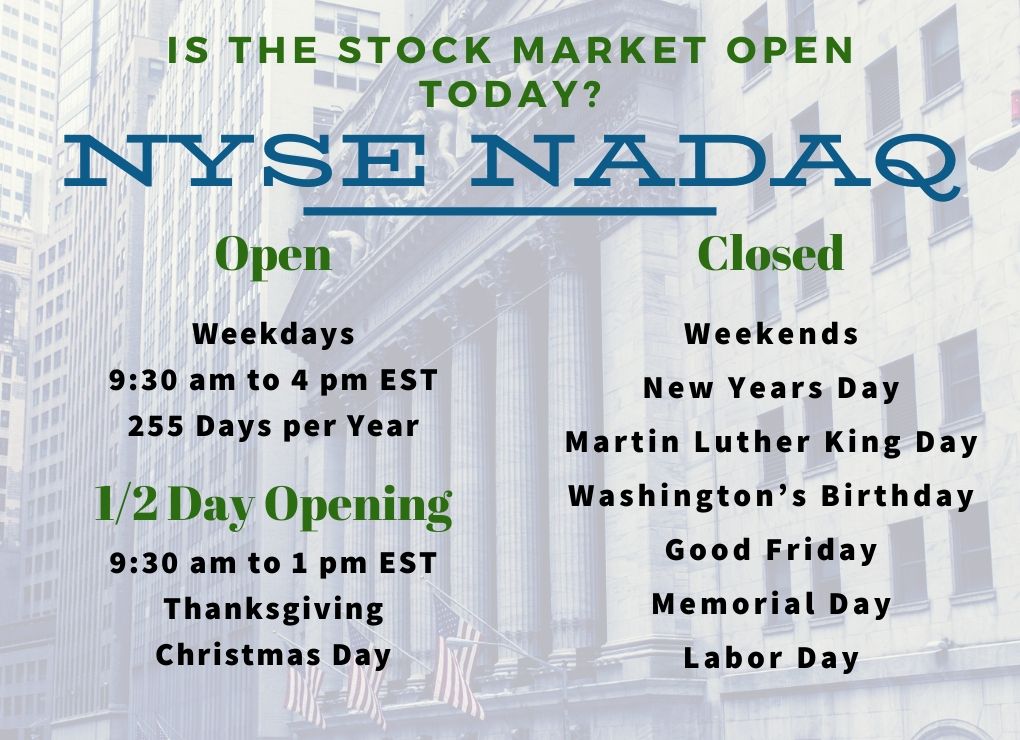
The core trading session for both the NYSE and NASDAQ runs from 9:30 AM Eastern Time (ET) to 4:00 PM ET, Monday through Friday. This seven-and-a-half-hour window represents the official “market hours” during which the vast majority of stock trading occurs. During this period, buy and sell orders are executed, prices fluctuate based on supply and demand, and market participants react to economic data, corporate earnings reports, geopolitical events, and other catalysts.
This specific time frame is a historical artifact, tracing its roots back to the early days of stock trading when manual operations and paper transactions required a structured schedule. While technology has drastically altered how trades are executed, the 9:30 AM to 4:00 PM ET window has remained largely consistent, providing continuity and predictability for global financial markets. It’s a period of intense activity, characterized by high liquidity and often rapid price movements, particularly around the opening and closing bells. Understanding this fundamental schedule is the first step in comprehending when the market “closes” for anyone, anywhere, including California.
Translating Market Hours to California Time
The crucial step for California investors is to convert the standard Eastern Time market hours into their local time zone. This simple time zone adjustment has significant implications for daily routines and trading strategies.
The Pacific Time Zone Advantage (or Disadvantage)
California operates on Pacific Time (PT). During standard market operations, there is a three-hour time difference between Eastern Time and Pacific Time. When it’s 9:30 AM ET on the East Coast, it’s 6:30 AM PT in California. Similarly, when the market closes at 4:00 PM ET, it’s 1:00 PM PT in California. This three-hour offset is consistent, regardless of daylight saving adjustments, as both time zones shift concurrently.
For many California residents, this time difference can be viewed as both an advantage and a disadvantage. The “advantage” lies in the fact that the market opens relatively early in the morning for them (6:30 AM PT), allowing for a full day of trading before the afternoon ends. This early start can be beneficial for those who prefer to engage with the market before other work or personal commitments begin. It also means that the critical early market movements and reactions to overnight news from Asia and Europe can be observed before most business days fully kick off.
However, it can also be a “disadvantage” for those who prefer a later start or whose daily schedules make it challenging to monitor the market intensely in the early morning hours. Furthermore, the market closes in the early afternoon (1:00 PM PT), which means that any significant news or economic data released in the latter half of the U.S. business day (after 1:00 PM PT but before 4:00 PM ET) will impact trading in the East, but California investors won’t be able to react until the next trading day. This requires a proactive approach to staying informed about post-market news and events.
Calculating the California Close
Given the 9:30 AM ET to 4:00 PM ET standard market hours, we can directly calculate the corresponding times for California:
- Market Open: 9:30 AM ET – 3 hours = 6:30 AM PT
- Market Close: 4:00 PM ET – 3 hours = 1:00 PM PT
Therefore, the stock market officially closes at 1:00 PM Pacific Time for investors in California on standard trading days. This means that after 1:00 PM PT, no further trades will be executed on the primary exchanges until the next trading day at 6:30 AM PT, unless participating in extended-hours trading.
This early afternoon closing time for California-based investors necessitates a disciplined approach to market monitoring. For day traders or those making short-term decisions, the window for active participation is compressed into their morning. For long-term investors, the closing time primarily impacts when their orders are filled and when they can observe the final performance metrics for the day. Regardless of investment style, understanding this precise closing time is fundamental to managing expectations and executing a timely investment strategy.
Navigating Exceptions and After-Hours Trading
While the 1:00 PM PT closing time is the standard, the stock market isn’t always rigidly confined to these hours. There are specific days when the market closes early, and there are mechanisms for trading outside the standard session.
Market Holidays and Early Closures
The U.S. stock market observes several holidays throughout the year, during which the exchanges are completely closed. These typically include New Year’s Day, Martin Luther King, Jr. Day, Presidents’ Day, Good Friday, Memorial Day, Juneteenth National Independence Day, Independence Day, Labor Day, Thanksgiving Day, and Christmas Day. On these days, there is no trading, and thus no “closing time” in the conventional sense, as the market doesn’t open at all.
In addition to full holidays, the market occasionally has early closures. These most commonly occur on days preceding or following a full market holiday, or sometimes on significant days like Black Friday (the day after Thanksgiving) or Christmas Eve, when it falls on a weekday. On such days, the market might close at 1:00 PM ET, which translates to 10:00 AM PT for California investors. These early closures shorten the trading day significantly and require investors to adjust their strategies accordingly. Announcements for early closures are typically made well in advance by the exchanges, so investors can plan. Failing to account for these exceptions can lead to missed opportunities or unexpected order delays.
The World of Pre-Market and After-Hours Sessions
The concept of market “closure” primarily refers to the cessation of trading on the primary exchanges. However, modern electronic trading systems allow for extended-hours trading, which includes both pre-market and after-hours sessions.
- Pre-Market Trading: This session typically runs from 4:00 AM ET to 9:30 AM ET (1:00 AM PT to 6:30 AM PT).
- After-Hours Trading: This session usually runs from 4:00 PM ET to 8:00 PM ET (1:00 PM PT to 5:00 PM PT).
These extended sessions enable investors to react to news released outside standard market hours, such as corporate earnings reports that are often published after the market close or before the market opens. Participation in these sessions is facilitated through electronic communication networks (ECNs) and alternative trading systems (ATSs) rather than the main exchanges themselves. For a California investor, this means the trading day can effectively start as early as 1:00 AM PT and extend until 5:00 PM PT, covering a much broader window than the standard 6:30 AM PT to 1:00 PM PT.
Risks and Opportunities in Extended Trading
Extended-hours trading presents both unique opportunities and significant risks:
Opportunities:
- Rapid Reaction to News: Investors can react immediately to earnings announcements, FDA approvals, M&A news, or other significant events that often occur outside standard market hours.
- Flexibility: It offers greater flexibility for investors who cannot trade during regular hours due to work or other commitments.
- Price Discovery: Early trading can help set the tone for the upcoming regular session, offering insights into potential opening prices.
Risks:
- Lower Liquidity: Fewer participants trade during extended hours, leading to lower liquidity. This can result in wider bid-ask spreads and difficulty in executing large orders without significantly impacting the price.
- Higher Volatility: Lower liquidity often translates to higher volatility, making prices more susceptible to large swings on relatively small trading volumes.
- Price Discrepancy: The prices achieved in extended hours may differ significantly from the opening prices during the regular session, and orders placed in extended hours might not execute at the expected price.
- Limited Order Types: Some brokers may offer a more limited range of order types (e.g., only limit orders) for extended-hours trading.
California investors considering extended-hours trading must be acutely aware of these factors. While it offers a way to engage with the market beyond the 1:00 PM PT close, it demands a sophisticated understanding of market mechanics and risk management.
Strategic Implications for California Investors
The 1:00 PM PT market closing time, combined with the earlier 6:30 AM PT opening, presents a distinct set of considerations for California-based investors. Adapting strategies to this time differential is key to optimizing investment performance and managing risk.
Adapting Investment Strategies to Time Differences
California investors must be particularly disciplined about their approach to the market’s temporal rhythm.
- Morning Focus: The early 6:30 AM PT open means that a significant portion of market action, including reactions to overnight global news and early economic data releases, occurs while many are just starting their day. Active traders in California might need to adjust their routines to be at their desks early to capitalize on these initial movements. This includes pre-market research and strategy formulation before the 6:30 AM PT bell.
- Mid-day Review and Execution: The period leading up to the 1:00 PM PT close becomes a critical window for executing final trades, reviewing portfolio performance, and assessing the day’s market trends. For many, this aligns with their lunch break or early afternoon, requiring efficient time management.
- Post-Market News Monitoring: After 1:00 PM PT, while the primary exchanges are closed for California, the East Coast market continues until 4:00 PM ET. Crucially, many significant corporate announcements, Federal Reserve statements, and economic reports are released between 1:00 PM PT and 4:00 PM PT. California investors must monitor these developments diligently, even though they cannot trade on the primary exchanges. Failure to do so could mean being caught off guard by major price changes at the next day’s open.
- Long-Term vs. Short-Term: For long-term investors, the exact closing time might be less critical than for day traders or swing traders. However, understanding it is still important for order execution windows and assessing daily portfolio value. Short-term traders, on the other hand, must build their entire strategy around this shortened active trading window.
Utilizing Financial Tools and Alerts
Modern financial technology offers powerful solutions to help California investors navigate the time difference:
- Real-time News Feeds: Subscribing to financial news services that provide real-time updates, especially those with mobile alerts, can ensure investors are instantly aware of market-moving news, even after the 1:00 PM PT close.
- Watchlists and Automated Alerts: Setting up watchlists for specific stocks and configuring price alerts, volume alerts, or news alerts on brokerage platforms or financial apps can help investors stay informed without constant manual monitoring.
- Advanced Order Types: Utilizing advanced order types like stop-loss orders, take-profit orders, and limit orders allows investors to set predefined conditions for trades, which can then be executed when the market opens, even if they aren’t actively monitoring. For instance, a California investor might set a limit order at 12:55 PM PT for a stock they wish to buy at a certain price, knowing it will be active until the 1:00 PM PT close or for the next day’s open.
- After-Hours Trading Access: For those comfortable with the risks, accessing pre-market and after-hours trading via their brokerage can extend their active participation window.
The Global Market Perspective from California
California’s geographical location also positions it uniquely relative to global markets. While the U.S. market is central, investors with diversified portfolios often consider international equities.
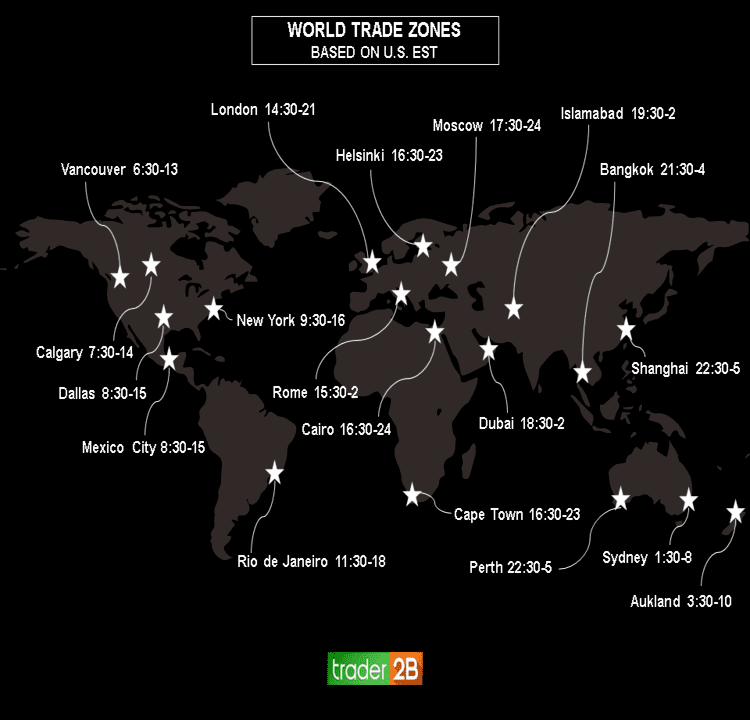
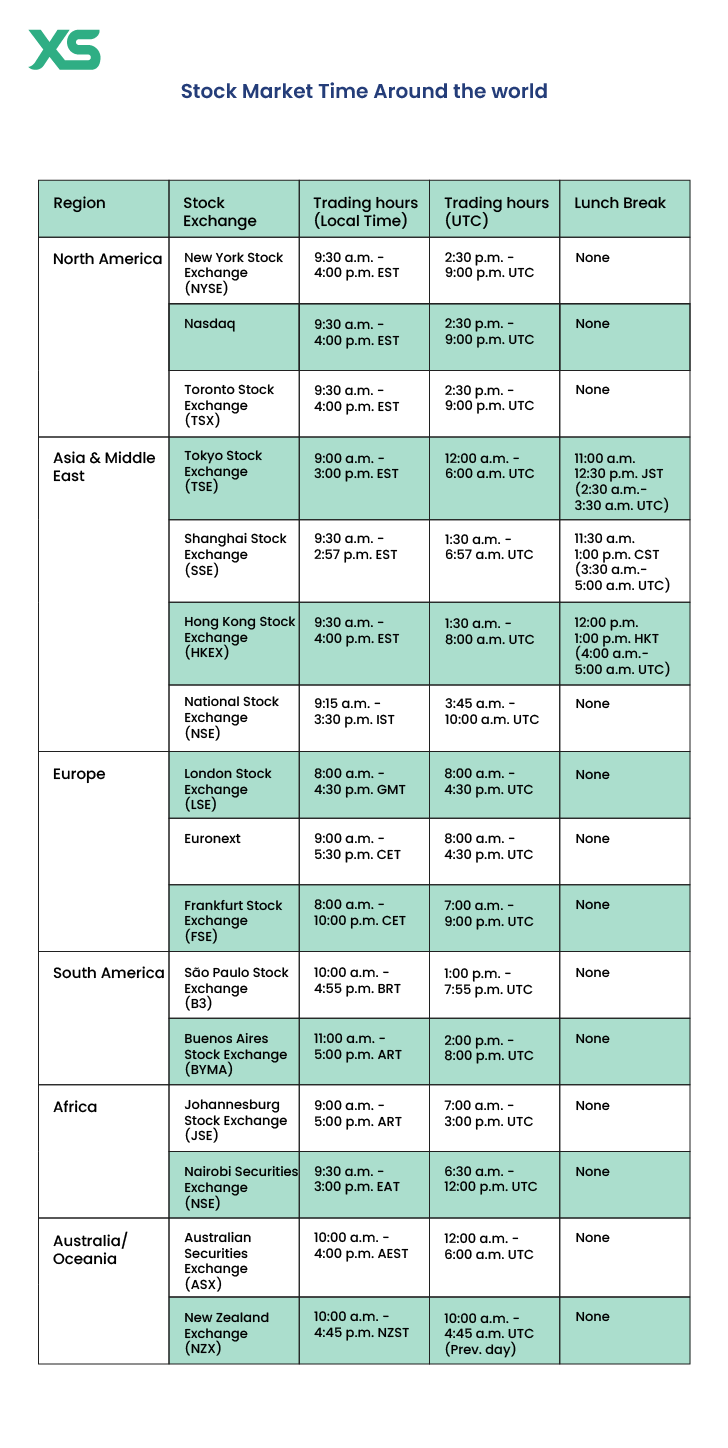
- Asian Markets: Given the time difference, Asian markets (e.g., Tokyo, Shanghai, Hong Kong) close well before the U.S. market opens, allowing California investors to analyze their performance and impact before their own trading day begins.
- European Markets: European markets (e.g., London, Frankfurt, Paris) are typically open during the early morning hours in California, providing an early indicator of global sentiment and trends that might influence the U.S. market’s open.
For sophisticated California investors, integrating this global perspective into their morning routine (even before the 6:30 AM PT U.S. market open) can provide valuable context and foresight, helping them to make more informed decisions during the active U.S. trading window. Understanding the interplay between global time zones and market cycles is an advanced, yet beneficial, layer of financial acumen.
Beyond the Bell: What Happens After Closing?
The closing bell at 1:00 PM PT in California signifies the end of the primary trading session, but it doesn’t mean the market entirely ceases to exist. A lot happens behind the scenes and in other market segments that can influence the next day’s opening.
Order Execution and Settlement Cycles
Even after the main exchanges close, pending orders or complex transactions might still be in various stages of processing. The U.S. stock market operates on a T+2 settlement cycle, meaning that trades executed today (Trade Date, T) will officially settle (be finalized with the transfer of ownership and funds) two business days later (T+2). While the trade itself is executed and confirmed at the time of purchase or sale, the underlying movement of securities and cash takes two additional days. The closing bell helps to set the final prices for the day, which are then used in the ongoing settlement process. Brokers and clearinghouses work diligently after hours to reconcile all transactions, ensuring accurate records and preparing for the next day’s trading.
News and Events Impacting the Next Day
As discussed, a significant amount of market-moving information often emerges during the hours when the primary U.S. exchanges are closed to California investors (1:00 PM PT onwards). This includes:
- Major Corporate Announcements: Many companies choose to release quarterly earnings reports, guidance updates, or significant strategic news after the 4:00 PM ET market close (1:00 PM PT).
- Economic Data Releases: While key U.S. economic data (like inflation or employment reports) often comes out before the 9:30 AM ET open, secondary data or revisions might be published later.
- Federal Reserve Communications: Speeches or announcements from Federal Reserve officials can occur at any time, and their impact can significantly influence market sentiment.
- Geopolitical Developments: Major international news, political events, or natural disasters can unfold overnight or in the late U.S. afternoon, directly impacting futures markets and influencing the next day’s stock market open.
California investors must remain vigilant even after 1:00 PM PT, monitoring these developments. The market’s reaction to such news in after-hours trading (if accessible) or in the futures market provides critical clues about how the U.S. market might open at 6:30 AM PT the following morning.
The Psychological Aspect of Market Closure
The closing bell also serves a crucial psychological function for investors. It provides a definitive end to the day’s market activity, allowing for a mental reset. For some, it’s a signal to step away, process the day’s events, and avoid impulsive decisions based on late-breaking news that can’t be acted upon immediately. For others, it’s a moment to consolidate gains, cut losses, and plan strategies for the next day.
The time difference can amplify this psychological effect for California investors. With the market closing in their early afternoon, there’s a longer “off-market” period within their waking hours compared to East Coast investors. This extended period requires discipline to avoid overthinking or becoming overly anxious about potential overnight shifts. It reinforces the importance of a well-researched, long-term strategy that is not overly reliant on day-to-day market fluctuations or immediate reactions to every piece of news.
In conclusion, while the stock market technically closes at 4:00 PM ET, for investors in California, that means the primary trading window ends at 1:00 PM PT. This seemingly simple time zone adjustment holds profound implications for how investors plan their day, execute trades, and stay informed. By understanding these nuances and leveraging available financial tools, California investors can effectively navigate the temporal landscape of the financial markets and optimize their investment journey.
aViewFromTheCave is a participant in the Amazon Services LLC Associates Program, an affiliate advertising program designed to provide a means for sites to earn advertising fees by advertising and linking to Amazon.com. Amazon, the Amazon logo, AmazonSupply, and the AmazonSupply logo are trademarks of Amazon.com, Inc. or its affiliates. As an Amazon Associate we earn affiliate commissions from qualifying purchases.