
For any investor, from the casual retail trader to the seasoned institutional fund manager, the heartbeat of the global financial system is synchronized with the ringing of a bell on Wall Street. The New York Stock Exchange (NYSE), often referred to as “The Big Board,” is the world’s largest stock exchange by market capitalization. Knowing exactly what time the New York Stock Exchange closes today is not just a matter of checking a clock; it is about understanding the mechanics of liquidity, the volatility of the “Power Hour,” and the strategic windows available for executing profitable trades.
In the fast-paced world of finance, timing is everything. Whether you are looking to liquidate a position before the weekend or seeking to capitalize on late-day earnings reports, understanding the NYSE’s operational schedule is fundamental to your success in the “Money” niche.
Understanding Standard Market Hours and the Daily Cycle
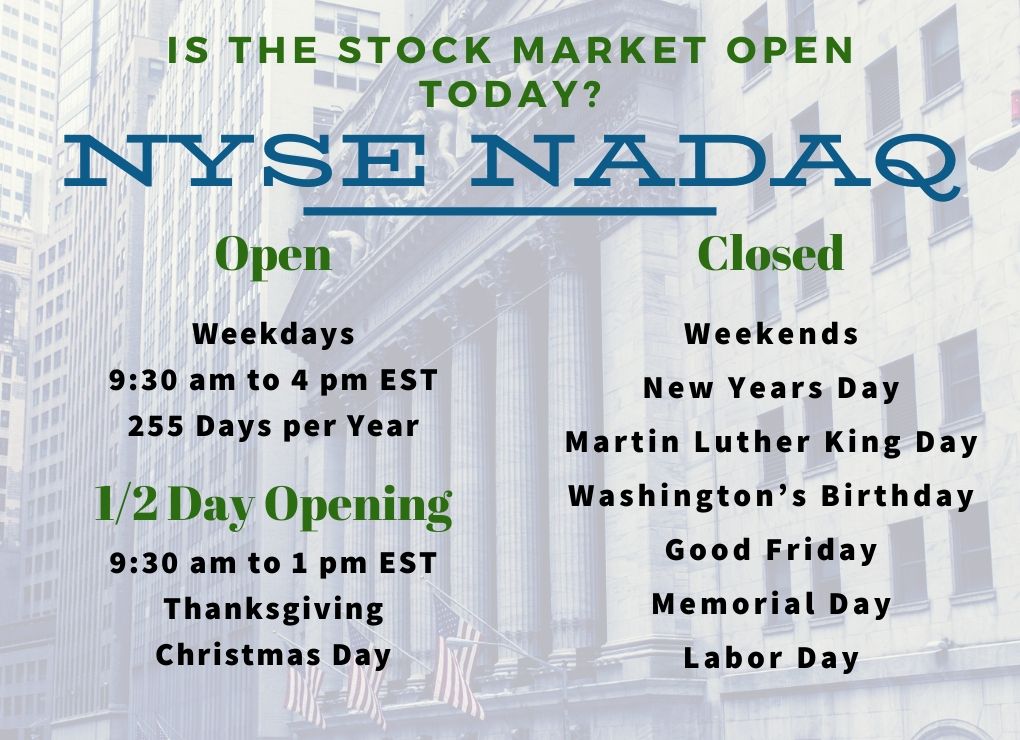
The standard operating hours for the New York Stock Exchange are consistent throughout the business week, providing a reliable framework for domestic and international investors. For the vast majority of trading days, the NYSE follows a strict schedule that ensures orderly price discovery and market stability.
The Opening Bell: 9:30 AM ET
The trading day begins officially at 9:30 AM Eastern Time. This moment is marked by the iconic ringing of the opening bell, a ceremony that often features corporate executives or public figures. From a financial perspective, the opening 30 minutes of the market are characterized by high volatility as the market absorbs news that occurred overnight or during the pre-market session. Investors often see wide “bid-ask spreads” during this time, making it a period of both high risk and high reward.
The Closing Bell: 4:00 PM ET
The NYSE closes its doors for regular trading at 4:00 PM Eastern Time. The closing bell signifies the end of the standard session, but the final moments leading up to this time are among the most important in the financial world. The 4:00 PM close determines the “official” closing price for thousands of publicly traded companies, which is then used to calculate Net Asset Values (NAVs) for mutual funds and benchmarks for various indices like the S&P 500.
The Significance of the “Closing Cross”
In the final minutes before 4:00 PM, the NYSE conducts what is known as the “Closing Auction” or “Closing Cross.” This is a highly regulated process designed to consolidate all remaining buy and sell interest into a single, fair price. For institutional investors who need to move massive blocks of shares without causing a radical price swing, the 4:00 PM closing auction is the most liquid moment of the day. Understanding this mechanism is vital for anyone looking to understand how “smart money” exits their positions.
Beyond the Bell: Extended Trading Sessions
While the “official” hours are 9:30 AM to 4:00 PM, the modern digital landscape of finance means that the market never truly sleeps. Electronic Communication Networks (ECNs) allow for trading outside of standard hours, which can be both an opportunity and a trap for the unwary investor.
Pre-Market Trading: The Early Bird Window
The NYSE Arca system and other electronic exchanges allow for pre-market trading, which can start as early as 4:00 AM ET, though most significant volume begins around 8:00 AM ET. This session is primarily used by traders to react to early morning economic data releases (such as jobs reports or CPI data) or overnight international news. However, because volume is much lower than during standard hours, price movements can be exaggerated and deceptive.
After-Hours Trading: Reacting to Earnings
The after-hours session runs from 4:00 PM to 8:00 PM ET. This is perhaps the most volatile time for individual stocks, as the majority of publicly traded companies release their quarterly earnings reports shortly after the closing bell. If a company misses its revenue targets, the stock might plummet at 4:05 PM. For an investor, knowing the NYSE closes at 4:00 PM is only half the battle; knowing that the real action might happen at 4:15 PM in the after-hours market is what separates professionals from amateurs.
Risks of Extended Hours
In the context of personal finance and risk management, it is crucial to note that “Limit Orders” are highly recommended during extended hours. Because there are fewer participants, a “Market Order” (an order to buy or sell at the current best available price) could result in a much worse execution price than expected. The lack of liquidity means the gap between what a buyer wants to pay and what a seller wants to receive can be wide, potentially eroding your profits instantly.
Navigating Holidays, Weekends, and Early Closures
If you are asking “what time does the NYSE close today,” you must also consider what day “today” is. The stock market does not follow the standard 365-day calendar. It observes specific federal holidays and occasionally holds shortened sessions.
The NYSE Holiday Calendar
The New York Stock Exchange is closed on Saturdays and Sundays. Additionally, it observes several U.S. holidays where no trading occurs. These include:
- New Year’s Day
- Martin Luther King Jr. Day
- Presidents’ Day
- Good Friday
- Memorial Day
- Juneteenth National Independence Day
- Independence Day
- Labor Day
- Thanksgiving Day
- Christmas Day
If “today” falls on one of these holidays, the market will not open at all. For investors, these breaks are essential for mental clarity and for the market to reset its technical indicators.
Early Closure Days: The 1:00 PM Rule
On certain days—most notably the Friday after Thanksgiving (Black Friday) and sometimes Christmas Eve (if it falls on a weekday)—the NYSE operates on an abbreviated schedule. On these specific days, the market closes early at 1:00 PM ET. This shortened window often sees very low volume as many institutional traders are away, which can lead to “drifting” markets where prices move slowly in one direction on very little news.
Global Time Zone Conversions
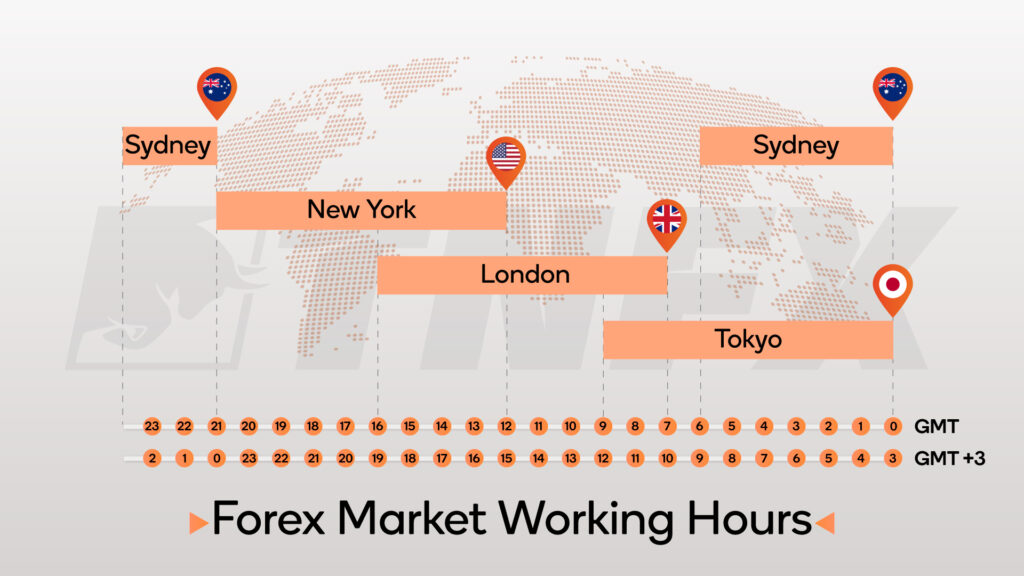
For international investors looking to trade on the NYSE, time zone management is a critical financial tool. While the exchange operates on Eastern Time (New York time), an investor in London must realize the market opens at 2:30 PM GMT and closes at 9:00 PM GMT. During the weeks when the U.S. and Europe shift to Daylight Savings Time at different intervals, these windows can shift by an hour, creating a “danger zone” for those who haven’t updated their trading clocks.
Strategic Timing: How to Use Market Hours to Your Advantage
In the realm of business finance and investing, simply knowing the closing time isn’t enough; you must know how to trade the clock. Professional traders divide the day into segments, each with its own personality and risk profile.
The “Power Hour” (3:00 PM – 4:00 PM ET)
The final hour of trading is colloquially known as the “Power Hour.” This is when volatility tends to spike as day traders close out their positions to avoid “overnight risk” and institutional managers rebalance their portfolios. For a retail investor, this is often the best time to find high liquidity, but it is also the time when the most sophisticated algorithms are most active.
The Mid-Day Lull
Between 12:00 PM and 2:00 PM ET, the market often experiences a “lull.” This corresponds with lunch hours in New York. Volume typically thins out, and price action can become choppy or stagnant. Experienced investors often caution against making major moves during this period, as the lack of conviction in the market can lead to “fake-outs” where a stock looks like it’s breaking out, only to reverse when the high-volume traders return at 2:30 PM.
Market-on-Close (MOC) Orders
A sophisticated financial tool available to many investors is the MOC order. By placing an MOC order, you are instructing your broker to execute your trade as close to the closing price as possible. This is particularly useful for those who practice “passive investing” or who want to ensure their portfolio value aligns exactly with the daily closing figures reported in the news.
The Future of Trading: Is 24/7 Access on the Horizon?
As we look at the mechanics of the NYSE closing time, we must also consider the evolving landscape of financial technology and global demand. The question of “when does the market close” is becoming increasingly complex as the push for 24/7 trading intensifies.
The Rise of 24/5 and 24/7 Platforms
With the advent of cryptocurrency markets, which never close, there is growing pressure on traditional equity exchanges to extend their hours. Some retail brokerages now offer “24/5” trading on select blue-chip stocks and ETFs. While this provides flexibility, it also raises concerns about market fragmentation and the potential for extreme volatility when the “main” NYSE floor is closed.
The Impact of Algorithmic Trading
Today, over 80% of trading volume is driven by algorithms. These machines do not need sleep, and they can execute trades in microseconds. However, the 4:00 PM ET close remains a vital “anchor” for the financial system. It provides a daily point of consensus that allows for the settlement of contracts, the calculation of margin requirements, and the auditing of financial statements.
Final Thoughts for the Savvy Investor
Knowing that the New York Stock Exchange closes today at 4:00 PM ET (assuming it is a standard business day) is the baseline of financial literacy. However, the successful investor looks deeper. They understand that the “close” is an event, not just a time. By mastering the nuances of the opening volatility, the mid-day lull, the after-hours earnings cycles, and the holiday schedule, you position yourself to manage your money with precision and professional insight.
In the world of investing, the clock is just as important as the spreadsheet. Stay aware of the time, respect the closing bell, and always ensure your trading strategy accounts for the unique dynamics of the NYSE’s daily cycle.
aViewFromTheCave is a participant in the Amazon Services LLC Associates Program, an affiliate advertising program designed to provide a means for sites to earn advertising fees by advertising and linking to Amazon.com. Amazon, the Amazon logo, AmazonSupply, and the AmazonSupply logo are trademarks of Amazon.com, Inc. or its affiliates. As an Amazon Associate we earn affiliate commissions from qualifying purchases.